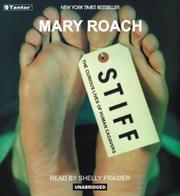
Start with Stiff. It is the shortest and sharpest book Mary Roach has written, and it is where her method arrives fully formed: pick a subject polite conversation forbids, find the people who study it professionally anyway, and follow them to work.
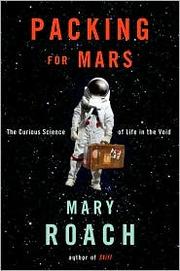
The two obvious alternatives are worse first books for different reasons. Packing for Mars has the most inviting premise and is what most people get steered toward, but it is her most heavily reported and least personal book — you meet the researchers before you meet the writer. Fuzz is the newest, which is the weakest possible reason to start anywhere. Read Stiff first even if the subject repels you, because the repulsion is the point: the book is an argument about whose body it is, who decided, and why donating one is treated as macabre rather than useful. Do not read it at mealtimes. That is practical advice, not a joke.
Good news about order
None of these books is a sequel to any other. Each takes one subject, runs it to the end, and stops. So the sequence below is about appetite and quality, not continuity — you can jump to whichever subject you actually want to read about and lose nothing. What the order does give you is the best books first, which matters with a writer whose range in quality is wider than her reputation suggests.
Stage one: the two that convert people
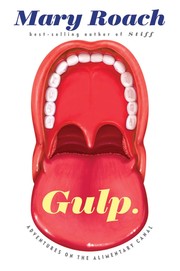
Stiff and Gulp. Both are built from self-contained chapters, so 40 to 50 pages a sitting works and putting the book down mid-chapter costs nothing. Gulp follows the alimentary canal end to end, and its real subject is how much of eating is psychology, culture and disgust rather than nutrition. Read the footnotes in both. They are a second book running underneath the first, carrying the jokes and the strangest sourcing, and skipping them halves the experience.
Stage two: the flagship books
Packing for Mars, Bonk and Grunt, in that order — roughly 940 pages and about a book a week. Packing for Mars is the most reported, Bonk the most personally exposed (she and her husband end up inside an ultrasound machine), and Grunt, on the science of keeping soldiers alive, the most restrained. That restraint is deliberate and worth watching for: Roach drops the comic register entirely whenever a person rather than a specimen is in front of her, and Grunt is where she does it most.
Stage three: the deeper cuts
Spook and Fuzz. Both are worth reading and neither is first-rank. Spook, on scientific attempts to prove an afterlife, is the book most readers rate lowest — the historical material is thin on payoff, and the subject does not push back the way a cadaver lab or a gut does. Fuzz, on human-wildlife conflict, ranges across several continents and is looser than the flagships. Expect 35 to 40 pages a day rather than 50.
Where to stop
After Grunt you have read everything Roach is famous for. That is a perfectly good place to close the shelf. My Planet is the completist tail: a collection of short humour columns, three or four at a sitting, over a weekend. It is not a science book and should not be judged as one — going in expecting Stiff and finding domestic comedy is the most common disappointment on this list.
If the appeal is a serious writer being funny about the body, the nearest neighbour on this site is Oliver Sacks, who worked the same territory from inside medicine rather than outside it.
Follow the full ordered path here: Mary Roach Reading Order: Where to Start.
Ready to learn something deeply?
Build a reading path — free