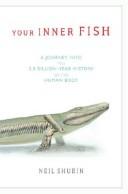
Dinosaurs for grown-ups: real paleontology
This curriculum takes you from the joy of discovery to the cutting edge of paleontological science, building knowledge in deliberate layers. It begins with vivid, accessible narratives that establish the "what" of dinosaurs, then moves into the deeper "how" of fossil science, evolutionary biology, and mass extinction, before arriving at advanced works that challenge assumptions and reveal how radically the field has been transformed in recent decades.
First Footprints — The Big Picture
BeginnerBuild an enthusiastic, accurate mental map of dinosaur diversity, geological time, and why paleontology matters — establishing the vocabulary and wonder needed for everything that follows.
▸ Study plan for this stage
Pace: 8–10 weeks total: Weeks 1–6 for "The Rise and Fall of the Dinosaurs" (~25–30 pages/day, reading each chapter alongside its endnotes for context), then Weeks 7–10 for "Dinosaurs" by Naish (~15–20 pages/day, treating it as a visual and taxonomic companion — linger on illustrations, cladograms, and spe
- Geological deep time — understanding the Triassic, Jurassic, and Cretaceous periods as distinct worlds with different climates, continents, and ecosystems, as introduced through Brusatte's narrative arc
- The origin of dinosaurs from archosaur ancestors and why the end-Triassic extinction was the pivotal event that let dinosaurs dominate, per Brusatte's early chapters
- Dinosaur phylogeny — the two major clades (Saurischia and Ornithischia) and how Naish's taxonomic sections map onto the Brusatte narrative
- Body plans and diversity — sauropods, theropods, ornithopods, ceratopsians, ankylosaurs, and stegosaurs as distinct evolutionary experiments, drawn from Naish's species-level coverage
- The fossil record as evidence — how trace fossils, body fossils, and isotopic data are used to reconstruct behavior, physiology, and environment (both authors discuss methodology)
- Warm-bloodedness, feathers, and the dinosaur–bird connection — Brusatte's dedicated treatment of feathered theropods and the evolutionary continuum to modern birds
- Mass extinction at the K-Pg boundary — the asteroid impact hypothesis, Deccan volcanism, and why some lineages (birds) survived, as synthesized in Brusatte's final chapters
- Why paleontology matters today — evolutionary theory, biodiversity baselines, and the cultural resonance of dinosaurs, woven through both books
- Using the geological timescale introduced by Brusatte, can you place the three Mesozoic periods in order, give approximate dates, and name one key dinosaur group that rose to prominence in each?
- Brusatte argues that dinosaurs did not simply 'beat' their competitors — what does he say actually drove their rise to dominance, and what evidence supports it?
- After reading Naish's taxonomic profiles, can you distinguish a sauropodomorph from a theropod using at least three anatomical features, and name two examples of each from the book?
- Both authors address the dinosaur–bird connection. What fossil evidence (specific specimens or sites mentioned in either book) most strongly supports the theropod origin of birds?
- How do paleontologists reconstruct soft tissue, color, or behavior from fossils? Draw on specific examples or methods described by Brusatte or Naish.
- What combination of factors does Brusatte present as responsible for the end-Cretaceous extinction, and why did non-avian dinosaurs perish while birds and mammals survived?
- Build a personal geological timeline: draw or print a blank Mesozoic timeline and, as you read each chapter of Brusatte, add key events, species, and locations mentioned — cross-reference with Naish's species entries to populate it with specific animals.
- Sketch a basic dinosaur family tree (cladogram) by hand after finishing Naish's taxonomic sections, labeling the major clades. Compare it to the phylogenies printed in Naish and annotate any groups that surprised you.
- Keep a 'paleontology vocabulary journal': each reading session, record 5–10 new terms (e.g., synapomorphy, cladistics, ichthyosaur, K-Pg boundary) with a definition in your own words and a page reference to either book.
- After finishing Brusatte, write a one-page 'elevator pitch' explaining to a curious non-scientist why the dinosaur–bird connection matters and what it tells us about evolution — then revisit and revise it after reading Naish.
- Pick any three dinosaurs profiled in Naish and research the fossil site where they were found (using only information in the book). Locate each site on a modern world map and on your Mesozoic timeline, noting what the paleogeography looked like at that time.
- Watch one documentary or visit one natural history museum exhibit featuring dinosaurs after completing both books, then write a half-page critique: what did the production get right or wrong based on what Brusatte and Naish taught you?
Next up: By the end of this stage the reader has a confident mental map of dinosaur diversity and deep time — the vocabulary, wonder, and 'big picture' scaffolding that will make the more technical anatomy, biomechanics, or clade-specific deep-dives of the next stage immediately accessible rather than overwhelming.

A narrative-driven, scientifically rigorous overview by a leading active researcher — the single best entry point for adults. It introduces geological time, cladistics, and major groups in plain language while telling the story of the field itself.

A beautifully illustrated, museum-quality reference that systematically covers anatomy, behavior, and classification. Reading it second cements the vocabulary Brusatte introduced and fills in groups he skipped.
Reading the Rocks — How Fossil Science Works
BeginnerUnderstand how fossils form, how paleontologists find and interpret them, and how the rock record encodes deep time — shifting from 'what existed' to 'how do we know.'
▸ Study plan for this stage
Pace: 4–5 weeks, ~20–25 pages/day — Gould's prose is rich and argumentative, so pace yourself to read each chapter twice: once for narrative, once to track the scientific reasoning. Budget extra time for the technical anatomical sections in the middle chapters.
- Taphonomy & exceptional preservation: the Burgess Shale represents a rare 'Konservat-Lagerstätte' where soft-body parts were preserved, making it a window into Cambrian life that normal fossil sites cannot provide
- The Cambrian Explosion: a geologically brief interval (~540 Ma) of rapid animal body-plan diversification — Gould uses the Burgess fauna to interrogate what this event really means
- Morphological interpretation & the role of theory: Walcott's original classifications forced Burgess animals into modern phyla; Whittington, Conway Morris, and Briggs's re-examinations show how prior assumptions shape what scientists 'see' in a fossil
- Disparity vs. diversity: Gould's central distinction between the number of fundamentally different body plans (disparity) and the number of species (diversity) — a key analytical tool in reading the rock record
- Contingency in evolution: Gould's argument that the history of life is not a predictable ladder of progress but a series of contingent events; 'replaying the tape' would yield different outcomes
- How paleontologists work: quarrying, preparation, photography, and comparative anatomy as the actual craft of reading fossils — science as a human, revisable practice
- Stratigraphic context: why the Burgess Shale's position in the geological column (Middle Cambrian, Burgess Pass, British Columbia) matters for interpreting the age and significance of its fauna
- Scientific revision as a feature, not a bug: the book is a case study in how a major reinterpretation of existing specimens — without new discoveries — can overturn decades of consensus
- How does the mode of preservation at the Burgess Shale differ from typical fossil sites, and why does that difference make it scientifically extraordinary?
- What specific interpretive errors did Walcott make when he first classified the Burgess fauna, and what does Gould argue those errors reveal about the sociology of science?
- In your own words, explain Gould's distinction between 'disparity' and 'diversity.' Why does he argue the Cambrian shows higher disparity than today, and what are the implications for reading the fossil record?
- What is the 'cone of increasing diversity' model that Gould critiques, and what alternative picture of life's history does he propose instead?
- How does the argument for contingency challenge a purely gradualist or progressive reading of the rock record? Use at least one Burgess animal (e.g., Anomalocaris, Opabinia, Hallucigenia) as a concrete example.
- What does 'Wonderful Life' teach you about the difference between a fossil as a physical object and a fossil as a scientific interpretation — and why does that distinction matter for understanding how paleontology works?
- Fossil formation sketch: Draw a simple 4-panel comic strip showing how a soft-bodied Cambrian organism could become a Burgess-style compression fossil — include sediment, oxygen levels, burial speed, and diagenesis. Label each stage using vocabulary from Gould's descriptions.
- Disparity vs. diversity chart: After finishing the book, list 8–10 Burgess animals Gould discusses. For each, note its proposed body plan and whether it has living relatives. Build a simple two-column table contrasting 'body plans represented then' vs. 'body plans represented now' to visualize Gould's disparity argument.
- Reinterpretation journal: Each time Gould describes a fossil being re-examined (e.g., Hallucigenia flipped, Anomalocaris assembled from separate pieces), write a 2–3 sentence entry explaining (a) what the old interpretation was, (b) what evidence changed it, and (c) what assumption had been blocking the correct reading.
- Contingency thought experiment: Choose one Burgess animal that left no descendants. Write a one-page speculative essay: if that lineage had survived, what ecological role might it play today? Then reflect — does imagining this make Gould's contingency argument feel more or less convincing to you, and why?
- Rock record timeline: Using the geological timescale, create a hand-drawn timeline from the Precambrian to the present. Mark the Burgess Shale's position (~508 Ma), the Cambrian Explosion onset (~538 Ma), and 4–5 other major events Gould references. Annotate each with one sentence about what the rocks at that horizon record.
- Critical reading exercise: Gould is a persuasive essayist, but some of his claims (especially about disparity and the 'decimation' model) have been contested by later paleontologists. After finishing the book, find one peer-reviewed critique of Gould's Burgess Shale interpretation and write a half-page summary of the disagreement — practicing the same spirit of scientific revision Gould himself ch
Next up: By internalizing how a single fossil site can be read, misread, and reread through the lens of theory and method, the reader is now equipped to ask sharper questions about evidence and interpretation when encountering broader surveys of prehistoric life in subsequent stages.
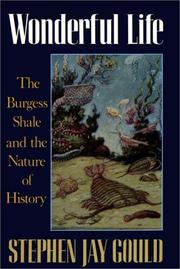
Uses the Burgess Shale — a window into the Cambrian explosion — to teach how scientists read fossils and how contingency shapes evolution. It builds critical thinking about evidence and interpretation before dinosaurs are tackled in depth.
A visually rich, authoritative survey of life across all geological eras that places dinosaurs inside the full sweep of Earth history. It provides the deep-time context that makes later, more focused books fully meaningful.
The Feathered Revolution — Modern Paleontology
IntermediateGrasp the paradigm shifts of the last 40 years — warm-blooded dinosaurs, the dinosaur–bird link, growth rates, and behavior — and understand how new fossil finds have overturned old certainties.
▸ Study plan for this stage
Pace: 10–12 weeks total. Week 1–4: "The Dinosaur Heresies" (~30–35 pages/day, 5 days/week) — it's the densest and most argumentative, so give it room to breathe. Week 5–7: "Feathered Dinosaurs" (~20–25 pages/day) — heavily visual; slow down to study plates and diagrams. Week 8–10: "My Beloved Brontosaurus
- The Dinosaur Renaissance: Bakker's core thesis that dinosaurs were active, warm-blooded (endothermic) animals, not sluggish reptiles — and the evidence (bone histology, posture, predator-prey ratios) he marshals to overturn the 'cold-blooded' consensus
- Phylogenetic bracketing and cladistics: how modern paleontologists use shared derived characters to reconstruct evolutionary relationships, as demonstrated in the dinosaur–bird debate running through all three books
- The dinosaur–bird link as a case study in paradigm shift: from Bakker's early advocacy to the explosive Chinese feathered fossil record documented by Long, showing how a fringe idea became established fact
- Feathered dinosaurs and the origin of flight: the key taxa (Microraptor, Anchiornis, Sinosauropteryx, etc.) described in Long's book, what their integument tells us about the evolution of feathers, and the competing 'trees-down' vs. 'ground-up' flight origin hypotheses
- Bone histology and growth rates: how growth rings and bone tissue structure (fibrolamellar vs. zonal bone) reveal that many dinosaurs grew rapidly like birds and mammals, not slowly like modern reptiles — a theme Bakker introduces and Riley Black revisits with updated science
- Behavioral inferences from fossils: evidence for herding, parental care, and complex social behavior discussed across all three books, and the methodological challenges of inferring behavior from bones alone
- How scientific consensus changes: all three authors — Bakker polemically, Long empirically, Black reflectively — model how new fossil evidence and new analytical tools force paleontologists to abandon cherished assumptions (e.g., Brontosaurus's validity, dinosaur metabolism, feather origins)
- The role of popular science writing in paleontology: Bakker's rhetoric vs. Long's visual documentation vs. Black's personal narrative as three different modes of communicating paradigm shifts to a broad audience
- After reading Bakker, can you articulate at least four independent lines of evidence he uses to argue for dinosaur endothermy, and identify which of those arguments have since been strengthened, modified, or overturned by the fossil record Long and Black describe?
- How do the feathered dinosaur specimens catalogued by Long (e.g., Sinosauropteryx, Microraptor, Anchiornis) directly confirm, complicate, or extend the predictions Bakker made in 'The Dinosaur Heresies' about the dinosaur–bird relationship?
- What does Riley Black's re-examination of iconic dinosaurs like Brontosaurus/Apatosaurus reveal about how public perception of dinosaurs lags behind — and sometimes reshapes — scientific understanding, and how does this compare to Bakker's own experience as a provocateur?
- Across all three books, what methodological tools (cladistics, bone histology, CT scanning, feather pigment analysis) have most dramatically changed paleontology since the 1980s, and which book best illustrates each tool in action?
- How do Long's feathered fossil discoveries bear on the two competing hypotheses for the origin of flight ('trees-down' vs. 'ground-up'), and does the evidence he presents decisively favor one over the other?
- In what ways does 'My Beloved Brontosaurus' serve as a capstone to this stage — which 'heresies' from Bakker have become orthodoxy by the time Black is writing, and which questions remain genuinely open?
- Argument map for Bakker: After finishing 'The Dinosaur Heresies,' draw a visual argument map of his endothermy thesis — list each claim, the evidence he cites, and then annotate each node with a ✓, ~, or ✗ based on whether Long or Black confirm, complicate, or refute it. This forces active cross-book synthesis.
- Fossil ID log for Long: As you read 'Feathered Dinosaurs,' keep a running one-page species sheet for every key taxon Long discusses — sketch or print the fossil photo, note the formation/country, the key anatomical feature, and its significance for the bird-origin debate. By the end you should have 10–15 entries.
- Paradigm-shift timeline: Build a chronological timeline (1960s–2020s) of the major discoveries and theoretical shifts across all three books — mark Bakker's 1986 arguments, the 1996 Sinosauropteryx announcement, the Microraptor four-wing discovery, and the Brontosaurus re-validation. Annotate each event with which book covers it and how.
- Debate prep — metabolism edition: Write a 400-word position paper either defending or attacking the proposition 'All non-avian dinosaurs were fully endothermic,' using only evidence from the three books. Then write a 200-word rebuttal from the opposing side. This surfaces the genuine scientific uncertainty all three authors acknowledge.
- Museum or cast visit: Visit a natural history museum (or explore an online 3D fossil database like Sketchfab's paleontology collection) and find at least one specimen related to each book — a large sauropod or theropod for Bakker, a feathered coelurosaur cast for Long, and any specimen whose classification or biology has changed since the 1980s for Black. Write a paragraph connecting each specimen
- Reflective reading journal — 'What did I used to think?': Before starting each new book, write a paragraph summarizing your current mental model of dinosaurs. After finishing the book, write a second paragraph on what specifically changed. By the end of all three books you will have a personal record of your own paradigm shift, mirroring the discipline's.
Next up: By the end of this stage the reader understands that paleontology is a living, argument-driven science — built on fragmentary evidence, revised by new finds, and shaped by bold hypotheses — which is exactly the critical toolkit needed to engage with more specialized or technical literature on specific dinosaur groups, ecosystems, or extinction events in the next stage.
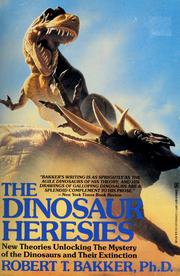
The landmark book that ignited the 'Dinosaur Renaissance,' arguing for active, warm-blooded dinosaurs. Reading the original argument firsthand shows how scientific revolutions happen and sets up everything modern paleontology built on top of it.

Covers the explosive Chinese fossil discoveries that confirmed the dinosaur–bird connection with hard evidence. It bridges Bakker's hypothesis to the physical proof, deepening understanding of how anatomy and phylogeny are reconstructed.
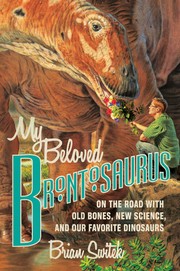
A witty, scientifically current tour of how specific iconic dinosaurs have been revised by new discoveries. It trains the reader to think about how interpretations change and why science is a process, not a fixed set of facts.
Life, Death & Deep Time — Extinction and Earth Systems
IntermediateUnderstand mass extinctions — especially the end-Cretaceous event — as Earth-system crises, and place the dinosaur story inside the broader narrative of how life on Earth has repeatedly collapsed and recovered.
▸ Study plan for this stage
Pace: 6–7 weeks total: Weeks 1–4 cover "The Ends of the World" (~25–30 pages/day, reading in chapter clusters by extinction event); Weeks 5–7 cover "T. Rex and the Crater of Doom" (~20–25 pages/day, slower pace to absorb the detective-story science methodology). Allow one buffer day per week for note cons
- The 'Big Five' mass extinctions (End-Ordovician, Late Devonian, End-Permian, End-Triassic, End-Cretaceous) as recurring Earth-system crises, not isolated accidents — the central framework of Brannen's book
- Earth systems thinking: how the carbon cycle, ocean chemistry, sea-level change, volcanism, and atmospheric composition interact to drive — or recover from — biotic collapse
- The End-Permian extinction as the most severe crisis in animal history ('The Great Dying'), and Brannen's use of it to illustrate how multiple stressors (Siberian Traps volcanism, ocean anoxia, acidification) compound each other
- The Chicxulub impact hypothesis: the chain of evidence Alvarez and colleagues assembled — iridium anomaly, shocked quartz, spherule layers, the crater itself — as a model of how a scientific revolution is built
- Uniformitarianism vs. catastrophism: how the Alvarez discovery forced geology to rehabilitate sudden, violent events as legitimate drivers of Earth history
- Kill mechanisms of the K-Pg impact: impact winter, wildfires, acid rain, and the collapse of photosynthesis — and why non-avian dinosaurs were especially vulnerable while small feathered theropods (birds) survived
- Deep time as a cognitive tool: Brannen's recurring use of scale analogies to make hundreds of millions of years viscerally meaningful, and why this perspective is essential for interpreting the fossil record
- Recovery dynamics after extinction: how surviving lineages radiate into vacated ecological niches, setting the stage for the Cenozoic rise of mammals and birds
- According to Brannen's survey of all five major extinctions, what Earth-system mechanisms appear most consistently as kill drivers — and what does that pattern suggest about the vulnerability of modern ecosystems?
- Walk through the sequence of physical evidence that Alvarez describes: starting from the iridium layer at Gubbio, Italy, how did each new discovery (shocked quartz, global distribution of the layer, spherules, the Yucatán crater) strengthen the impact hypothesis and answer critics?
- How does Brannen use the End-Permian extinction to argue that volcanic carbon release, not just the eruptions themselves, is the true killing agent — and how does that argument reframe how we read the K-Pg event in Alvarez's book?
- What does Alvarez's account of scientific resistance to the impact hypothesis reveal about how paradigm shifts actually work in geology, and how does that compare to the reception of continental drift?
- After reading both books together, how would you explain why the K-Pg extinction eliminated non-avian dinosaurs but allowed birds, crocodilians, turtles, and many mammals to survive — drawing on kill mechanisms from Alvarez and ecological context from Brannen?
- How does the concept of 'deep time' as developed by Brannen change the way you interpret the ~66-million-year recovery of life after the K-Pg impact, and what does that recovery tell us about the resilience and fragility of ecosystems?
- Timeline wall chart: Draw a single geological timeline from the Cambrian to the present. After finishing Brannen, mark each of the Big Five extinctions with its primary kill mechanism(s) and approximate percentage of species lost. After finishing Alvarez, add the Chicxulub event's physical evidence markers (iridium layer, crater discovery date, etc.) to the K-Pg boundary. Keep this chart visible t
- Carbon cycle diagram: Using Brannen's explanations, sketch a simplified diagram of the carbon cycle and annotate it to show how each major extinction perturbed it (volcanic outgassing, ocean acidification, anoxia). Then annotate the K-Pg boundary to show how an impact creates a different but overlapping set of disruptions.
- Evidence chain exercise (Alvarez): Re-read the chapters in 'T. Rex and the Crater of Doom' that trace the discovery sequence, then write a one-page 'case file' as if you are a detective — listing each piece of physical evidence, what hypothesis it supports, and what alternative it rules out. This sharpens scientific reasoning skills central to the book.
- Survivor profile comparison: Choose three animal groups that survived the K-Pg extinction (e.g., birds, crocodilians, small placental mammals) and three that did not (non-avian dinosaurs, mosasaurs, ammonites). Using both books, write a short paragraph for each explaining their fate in terms of body size, diet, habitat, and the specific kill mechanisms Alvarez describes.
- Deep-time scale exercise (inspired by Brannen's analogies): Compress Earth's 4.5-billion-year history into a single calendar year. Calculate where each Big Five extinction falls on that calendar, then calculate how long the post-K-Pg recovery to modern mammal diversity took in 'calendar days.' Reflect in writing on what this scale reveals about the pace of evolutionary recovery.
- Cross-book synthesis essay (300–500 words): After finishing both books, write a short essay answering: 'Is the K-Pg extinction best understood as a unique catastrophe or as an extreme version of the Earth-system crises Brannen describes in earlier extinctions?' Use specific evidence and arguments from both Brannen and Alvarez to support your position.
Next up: By understanding mass extinctions as Earth-system resets — and the K-Pg event in particular as the ecological opening that ended the dinosaur era — the reader is now primed to explore what filled the void: the explosive Cenozoic diversification of mammals and birds, and the deeper evolutionary mechanisms that govern how life innovates after catastrophe.
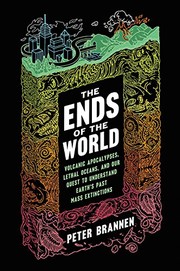
A gripping, science-rich account of all five major mass extinctions, drawing on cutting-edge geology and paleontology. It gives the end-Cretaceous extinction its proper context and explains the kill mechanisms with rigor.
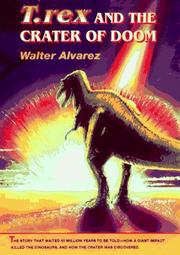
The firsthand story of how the Chicxulub impact hypothesis was discovered and proven — a masterclass in scientific detective work. Reading it after Brannen's broader view lets the reader appreciate exactly what was at stake in this specific debate.
Frontier Science — Advanced Paleobiology
ExpertEngage with the most technically demanding and conceptually ambitious ideas in modern paleontology: biomechanics, evolutionary theory, the origin of major groups, and the future of the field.
▸ Study plan for this stage
Pace: 10–13 weeks total. "The Ancestor's Tale" (685 pp.): 6–7 weeks at ~25–30 pages/day, reading each "Rendezvous" chapter as a self-contained unit before moving on. Olsen's technical monograph (~30–50 pp. of dense primary literature): 2–3 weeks — read once for overview, then re-read section by section (s
- Concestors and the 'rendezvous' framework: Dawkins's method of tracing all life backward to shared common ancestors, emphasizing that evolution is a branching tree, not a ladder of progress
- Cladistics and phylogenetic reasoning: how shared derived characters (synapomorphies) define clades, and why this matters for placing Mesozoic reptiles like eosuchians on the tree of life
- Molecular clocks vs. the fossil record: how Dawkins reconciles molecular divergence dates with stratigraphic first appearances, and the tensions that arise — directly relevant to interpreting Olsen's Newark Supergroup fauna
- The origin of major amniote groups: the evolutionary context of Diapsida, Archosauria, and the reptile lineages that diversified in the Triassic–Jurassic transition documented by Olsen
- Biomechanics and functional morphology in primary literature: how Olsen uses skeletal proportions, limb morphology, and comparative anatomy to infer aquatic lifestyle in a fossil taxon
- Stratigraphic and taphonomic context: reading the Newark Supergroup's lacustrine depositional environment as a preservational filter that shapes what we know about Triassic–Jurassic biodiversity
- Taxonomic methodology in a monograph: how a formal species description is structured (diagnosis, holotype designation, comparative remarks) and how to critically evaluate its arguments
- The Triassic–Jurassic boundary as an evolutionary crucible: mass extinction, ecological release, and the radiation of archosaurs — the macroevolutionary backdrop connecting both books
- After reading Dawkins's 'Rendezvous' chapters on reptiles and amniotes, where does an eosuchian like the one Olsen describes fall on the concestor tree, and what shared ancestors does it hold with crocodilians, dinosaurs, and lizards?
- How does Dawkins's critique of 'the great chain of being' reframe the way we should interpret Olsen's placement of his new taxon within Eosuchian systematics — is the new species 'primitive' or simply a branch?
- What specific osteological features does Olsen cite as evidence for aquatic adaptation, and how would you evaluate the strength of that functional inference using the comparative anatomical logic Dawkins models throughout 'The Ancestor's Tale'?
- How does the Newark Supergroup's Late Triassic–Early Jurassic age bracket interact with the molecular-clock divergence dates Dawkins discusses for major reptile lineages — do they corroborate or conflict?
- What does Olsen's formal taxonomic description teach you about the standards of evidence required to name a new species in primary paleontological literature, and what would falsify his diagnosis?
- How do both works together illustrate the difference between 'deep time' as a narrative device (Dawkins) and 'deep time' as a stratigraphic reality that must be measured and defended with data (Olsen)?
- Phylogenetic mapping exercise: After finishing the relevant Rendezvous chapters in 'The Ancestor's Tale,' draw a cladogram placing Eosuchians among Diapsida using only characters Dawkins discusses; then compare your tree to the systematic position argued by Olsen and note every discrepancy.
- Primary literature annotation: Print or digitally mark up Olsen's monograph paragraph by paragraph — label each sentence as 'morphological observation,' 'functional inference,' 'stratigraphic claim,' or 'taxonomic argument.' Assess how well each inference is supported by direct evidence.
- Concestor timeline: Build a geological timeline from 250 Ma to 200 Ma and plot (a) every Dawkins concestor node relevant to reptiles and (b) the Newark Supergroup formations Olsen references. Identify which concestors are bracketed by the Newark fauna.
- Functional morphology comparison: Choose one living semi-aquatic reptile (e.g., a caiman or water monitor) and one terrestrial relative. List five skeletal features that differ between them. Return to Olsen's description and check which of those features he reports, reports as absent, or cannot assess due to preservation.
- Peer-review simulation: Write a 400-word critical review of Olsen's species diagnosis as if you were a journal referee — identify one strength, one potential weakness in the evidence, and one additional specimen or analysis that would strengthen the paper.
- Synthesis essay: In 600–800 words, argue whether the eosuchian Olsen describes is better understood as (a) a 'living fossil' holdover, (b) an evolutionary experiment enabled by the Triassic–Jurassic transition, or (c) evidence of broader aquatic niche diversification — drawing explicitly on evolutionary concepts from 'The Ancestor's Tale.'
Next up: By mastering the interplay between grand evolutionary narrative (Dawkins) and the granular discipline of primary-literature taxonomy (Olsen), the reader is now equipped to engage independently with any peer-reviewed paleontological study — the essential skill for tackling cutting-edge research on biomechanics, macroevolution, and the deepest open questions in the field.

A reverse pilgrimage through evolutionary history that situates dinosaurs and all life within a rigorous phylogenetic framework. It demands and rewards careful thinking about common ancestry, deep time, and the tree of life.
Focuses on the Triassic origins of dinosaurs — the least-understood and most scientifically active period in dinosaur evolution. It represents the frontier of current research and rewards readers who have built up all the prior context.
Discussion
Keep reading
Paths that share books, cover the same subject, or open a related topic.