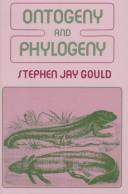
Ontogeny and phylogeny
Stephen Jay Gould · 1977 · 501 pages
As an Amazon Associate we earn from qualifying purchases. Some book links are affiliate links; you pay the same price and we may earn a small commission.
About this book
“Ontogeny recapitulates phylogeny” was Haeckel’s answer—the wrong one—to the most vexing question of nineteenth-century biology: what is the relationship between individual development (ontogeny) and the evolution of species and lineages (phylogeny)? In this, the first major book on the subject in fifty years, Stephen Jay Gould documents the history of the idea of recapitulation from its first appearance among the pre-Socratics to its fall in the early twentieth century. Mr. Gould explores recapitulation as an idea that intrigued politicians and theologians as well as scientists. He shows that Haeckel’s hypothesis—that human fetuses with gill slits are, literally, tiny fish, exact replicas of their water-breathing ancestors—had an influence that extended beyond biology into education, criminology, psychoanalysis (Freud and Jung were devout recapitulationists), and racism. The theory of recapitulation, Gould argues, finally collapsed not from the weight of contrary data, but because the rise of Mendelian genetics rendered it untenable. Turning to modern concepts, Gould demonstrates that, even though the whole subject of parallels between ontogeny and phylogeny fell into disrepute, it is still one of the great themes of evolutionary biology. Heterochrony—changes in developmental timing, producing parallels between ontogeny and phylogeny—is shown to be crucial to an understanding of gene regulation, the key to any rapprochement between molecular and evolutionary biology. Gould a
Appears in these reading paths


Stephen Jay Gould Reading Order: Where to Start
Reader reviews
Ratings and notes from readers — tagged with how deep into the subject they were.
Loading reviews…