Best Books on Mass Extinctions, in Reading Order
Mass extinctions are easiest to understand backwards: start with the one happening now, which you can see evidence of, then walk back through deep time to the five older catastrophes and the arguments about what caused them. The middle stages give you the geological timeline and then the two events that dominate the science — the end-Permian, which nearly ended complex life, and the end-Cretaceous asteroid. The final stage moves from popular accounts to a working paleobiologist's technical case and to the deeper question extinction research keeps raising: how much of the history of life is accident.
The extinction you can see
BeginnerUnderstand what an extinction event actually is, and why researchers argue that one is underway now — before you have to reason about events 250 million years old.
▸ Study plan for this stage
Pace: 8-10 weeks for about 1,050 pages. The Sixth Extinction is 352 pages of reported chapters and reads in three weeks — each chapter is a self-contained field trip, so one per sitting works well. The Song of the Dodo is 704 pages and is much the longer commitment; five to seven weeks at around 100 pages
- What a mass extinction actually is as a technical category: a short interval in which extinction rates rise far above background across many unrelated groups, globally, which is a much stricter definition than the popular use of the phrase
- Background extinction rate as the baseline everything is measured against, and the difficulty of estimating it from an incomplete fossil record
- Kolbert's structural device: each chapter takes one currently vanishing species — the golden frog, the Sumatran rhino, Panamanian amphibians, ocean acidification's victims — and uses it to introduce one past extinction or one mechanism
- The chytrid fungus in amphibians as the clearest case of a human-transported pathogen driving global decline, and of extinction happening through movement rather than through direct killing
- Ocean acidification as the mechanism Kolbert treats most seriously, because it has a direct analogue in the deep-time record and is measurable now
- Quammen's subject, island biogeography, and the MacArthur and Wilson theory that a smaller island supports fewer species — with the crucial corollary that habitat fragmentation manufactures islands out of continents
- Relaxation: the observation that a newly isolated fragment does not lose its species at once but bleeds them for decades, so present extinction figures understate committed losses
- The species-area relationship as the quantitative tool that turns habitat loss into an extinction prediction, and the debate over how reliably it does so
- Give the technical definition of a mass extinction, then say whether the present loss of species meets it on current evidence. Kolbert is careful here — be as careful as she is.
- What is the background extinction rate, how is it estimated, and why does the estimate matter so much for the claim that we are in a sixth extinction?
- Explain the species-area relationship and use it to predict the consequences of halving a forest. Then name the assumptions that could make your prediction wrong.
- What is extinction debt, and why does it mean that current extinction counts understate the situation even if they are accurate?
- Kolbert emphasises the transport of species and pathogens by humans as a distinct mechanism. How is it different in kind from habitat loss or hunting?
- Quammen wrote in the 1990s. Which of his examples have since resolved, and in which direction?
- Write a one-page summary of the species-area relationship including the equation, and work one numerical example of habitat loss to predicted species loss.
- For any three species Kolbert covers, write two sentences each naming the proximate cause of decline and the human activity behind it. The causes will not be the same.
- Look up the current IUCN Red List status of five species named in either book and note what has changed since publication.
- Draw a map of a fragmented habitat near you — roads, fields, development — and mark the resulting islands. Quammen's argument becomes concrete the moment you do this once.
- Write 250 words on the chytrid fungus: where it came from, how it spreads, and why amphibians specifically.
Next up: You now understand extinction as a process you can observe; the next stage takes that understanding four and a half billion years back and gives you a timeline to hang it on.
The best entry point in the subject: Kolbert reports from the field on the ongoing loss of species and uses each case to introduce one of the past five extinctions. You get the whole shape of the topic through stories you can follow before any geology is asked of you.
Read second because it supplies the mechanism Kolbert assumes: island biogeography, and why fragmenting a habitat kills species as surely as killing them directly. Older than the rest of this path, but the theory it explains is still the backbone of extinction biology.
Deep time and the Big Five
BeginnerPlace the five great extinctions on a real timeline, know roughly what each one killed, and stop treating 'prehistory' as a single undifferentiated era.
▸ Study plan for this stage
Pace: 8-10 weeks for about 865 pages. A Brief History of Earth is 272 pages covering 4.5 billion years — read it in two to three weeks and take notes chronologically, because this book's job is to build a scaffold. The Ends of the World is 321 pages and is the hub of the path; three to four weeks, one ext
- The geological timescale as an actual structure — eons, eras, periods, epochs — and the fact that the boundaries between them are usually defined by extinctions
- Knoll's chemical and biological milestones: the Great Oxidation Event, the long Proterozoic middle, Snowball Earth episodes, and the Cambrian explosion
- The two earliest of the Big Five: the end-Ordovician about 445 million years ago, a glaciation and sea-level event killing marine invertebrates in a world with almost no land life, and the Late Devonian, a protracted series of pulses rather than one event, coinciding with the spread of land plants a
- The end-Permian, about 252 million years ago: the worst, with the great majority of marine species lost, and the Siberian Traps as the leading suspect
- The end-Triassic, about 201 million years ago, associated with the Central Atlantic Magmatic Province and the rifting of Pangaea, which cleared the way for dinosaurs
- The end-Cretaceous, 66 million years ago: the Chicxulub impact, the Deccan Traps, and the extinction of all non-avian dinosaurs
- Brannen's recurring finding, which is the thesis of the book: carbon released fast is the common thread through most of these events, and the rate matters more than the total
- Halliday's contribution — the ecosystems between the catastrophes, reconstructed in detail — which converts extinction from an abstraction into the loss of a specific functioning world
- Name the Big Five in order with approximate dates and the dominant proposed cause of each. This is the stage's exit test and you should be able to do it from memory.
- Brannen argues that the rate of carbon release matters more than the amount. What is the mechanism, and what does it imply about comparing past events to the present?
- Why is the end-Ordovician a glaciation event when most of the others involve warming? What does the exception tell you about the mechanisms?
- The Late Devonian is often described as a series of pulses rather than an event. What would distinguish those two patterns in the fossil record?
- Halliday reconstructs ecosystems rather than listing extinctions. What does that method reveal that a taxonomic count cannot?
- Knoll spends much of his book on the three billion years before animals. Why does that period matter to a reader interested in extinctions?
- Draw the geological timescale to scale on a single long strip of paper, with the Big Five marked. Doing it to scale, rather than as a list, is the point — the Precambrian will take most of the strip.
- Build a five-row table: event, date, duration, estimated percentage of species lost, proposed causes, groups most affected. You will annotate this for the rest of the path.
- Write 300 words on the Siberian Traps: their volume, their duration, and the proposed chain from eruption to marine extinction.
- For one of Halliday's sixteen worlds, write half a page describing it as though reporting from it — climate, dominant organisms, what the landscape looked like.
- Plot atmospheric carbon dioxide over the Phanerozoic from Brannen's figures and mark the extinctions on it. Note where the correlation is strong and where it is not.
Next up: With the timeline established, you can go deep on the two events that generate most of the field's research and most of its disagreements.

A short, current survey of four and a half billion years by a Harvard paleontologist. Read it here to build the chronological scaffold — eons, periods, the oxygenation of the atmosphere — that every later book will hang events on.
The single best popular tour of all five mass extinctions, event by event, built from interviews with the researchers who study each one. It is the hub of this path: everything after it goes deeper on one event Brannen sketches.

Reconstructs sixteen vanished ecosystems, working backwards in time. Read after Brannen because it fills in what was actually lost — the worlds between the catastrophes — and because it is recent enough to reflect the current state of the fossil evidence.
The two that dominate the science
IntermediateFollow the evidence and the live disagreement over the end-Permian and end-Cretaceous events, rather than accepting a single tidy cause for either.
▸ Study plan for this stage
Pace: 7-8 weeks for about 760 pages. When Life Nearly Died is 336 pages and is written as a scientific detective story; three weeks. T. Rex and the Crater of Doom is only 185 pages and reads in a week, but read it twice — once for the narrative and once tracking exactly which evidence does the work. Under
- The end-Permian's magnitude and the difficulty of establishing it: extinction percentages are estimates from an incomplete record, and Benton is explicit about how they are derived
- The Siberian Traps as cause: enormous flood basalt volcanism, carbon dioxide and sulphur release, plus the crucial detail that the magma intruded coal and evaporite deposits and cooked additional carbon out of them
- The proposed killing mechanisms in sequence — warming, ocean acidification, ocean anoxia and euxinia, possible ozone damage — and the fact that no single one is agreed to be sufficient
- Alvarez's iridium anomaly: an element rare in Earth's crust and common in meteorites, found in a thin clay layer at the Cretaceous boundary worldwide, which is the observation that started everything
- The chain of confirmation Alvarez describes — shocked quartz, tektites and spherules, the boundary clay's global distribution, and finally the Chicxulub crater itself
- That the book was written in 1997 and the debate has moved: the Deccan Traps volcanism argument has strengthened considerably, and most researchers now weigh both impact and volcanism rather than treating the question as closed
- Ward's counter-thesis: impacts are the exception, and most mass extinctions were greenhouse events — warming, stratified and anoxic oceans, and hydrogen sulphide from sulphate-reducing bacteria reaching the surface and the atmosphere, the green sky of his title, which is the mechanism that makes the
- The methodological difference underneath the factions: Alvarez's case rests on a single decisive geochemical marker, Ward's on the repeated co-occurrence of geochemical proxies for anoxia across multiple events
- Lay out the causal chain from Siberian Traps eruption to marine extinction. Which link is best evidenced and which is weakest?
- What exactly did the iridium anomaly establish, and what did it not? Be precise: the distinction between an impact occurring and an impact causing the extinction is the whole later argument.
- The Deccan Traps were erupting across the Cretaceous boundary. What is the strongest version of the volcanism case, and how would you design a test to separate its effects from the impact's?
- Ward argues impacts are exceptional. What is his evidence, and does it undermine the Chicxulub case or merely limit its generality?
- Alvarez and Ward disagree about what kind of event a mass extinction typically is. Is that a disagreement about evidence, about method, or about which events count as typical?
- If Ward is right that greenhouse extinctions are the norm, what specifically follows for interpreting present-day ocean warming and deoxygenation? State the parallel and then state its limits.
- Draw the end-Permian causal chain as a flow diagram with each link labelled by the evidence supporting it, marking which links are inferred rather than observed.
- Write 300 words on the iridium layer: what it is, how thick, where it has been found, and what concentration.
- Build a two-column comparison of the impact and Deccan Traps cases for the end-Cretaceous, listing evidence for each. Do not conclude — the column with more entries is not automatically right.
- Explain euxinia in 200 words: what it is, how it develops in a stratified ocean, and how it is detected in the rock record.
- For each of the Big Five in your stage-two table, add a column noting whether Ward's greenhouse mechanism has been proposed for it and with what support.
- Find one recent research paper or review on the end-Cretaceous and write half a page on how the state of the argument has moved since Alvarez wrote.
Next up: You have the popular accounts and the factional disagreement; the last stage reads a specialist making his own case and then asks what the whole record implies about how contingent life is.
The standard popular account of the end-Permian, the worst extinction on record, told as the detective story of how it was reconstructed. Benton is a working paleontologist and is explicit about which parts of the case are still contested.
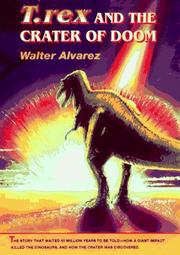
The asteroid hypothesis from the geologist who proposed it — short, first-hand, and the clearest explanation of how the iridium layer settled the argument. Written in 1997, so read it for the case rather than the current state of play: the rival Deccan Traps volcanism argument has strengthened since, and most researchers now weigh both.
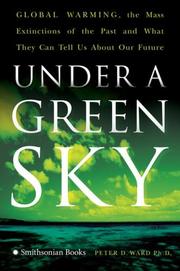
Deliberately placed against Alvarez. Ward argues that impacts are the exception and that most mass extinctions were greenhouse events driven by warming, ocean anoxia and hydrogen sulfide — the mechanism that makes the deep past relevant to the present. Reading the two together is how you see that this field has real factions.
Past the popularizations
IntermediateRead the technical case as a specialist makes it, and take up the question extinction research keeps forcing: how contingent the history of life really is.
▸ Study plan for this stage
Pace: 6-7 weeks for 648 pages. Erwin's Extinction is 296 pages but is written closer to a scientific argument than a narrative; three weeks, slowly, and read it with your end-Permian notes from Benton beside you. Wonderful Life is 352 pages, roughly half of it detailed anatomical description of Burgess Sh
- Erwin's method, which is the reason to read him after Benton: he sets out the evidence, the competing hypotheses and the residual uncertainty rather than committing to a clean narrative
- The problem of dating precision: distinguishing a 60,000-year event from a 500,000-year one determines which mechanisms are even possible, and the geochronology has tightened substantially over the research history Erwin describes
- Selectivity as evidence: which groups died and which survived constrains the mechanism, since acidification, anoxia and warming each predict a different pattern of survivorship
- Gould's Burgess Shale material: an exceptionally preserved Cambrian fauna, and his claim that it contained a far wider range of body plans than survives today
- Contingency as Gould's central concept: rerun the tape of life and a different subset survives, so the modern biota is one sample from a much larger space of possibilities
- The important correction: Gould's specific claim about the disparity of the Burgess fauna lost ground to later reanalyses, notably by Conway Morris, which placed many of the weird organisms within known groups — so the anatomical case is weaker than Gould presents it
- That the contingency argument itself survives the anatomical revision in weakened form, and that Conway Morris's convergence-based counterargument is a serious position rather than a technicality
- The connection back to stage one: if survivorship in past extinctions was substantially contingent, then which species survive the current one is not simply a matter of fitness
- Where is Erwin less confident than Benton about the end-Permian, and what accounts for the difference — new evidence, or different standards of proof?
- How does the pattern of which groups survived constrain the killing mechanism? Work through at least two mechanisms and their predicted survivor profiles.
- State Gould's contingency thesis precisely. What would it take to test it, given that the tape cannot be rerun?
- Gould's claim about Burgess disparity has been substantially revised. Does the contingency argument depend on it, and if not, what does it depend on?
- Conway Morris argues that convergence means the outcome was more constrained than Gould thought. Set out both positions fairly and say what evidence bears on each.
- After the whole path: is the present extinction usefully comparable to the Big Five, or does the comparison mislead? Argue it using the mechanisms, the rates and the definitions, not the rhetoric.
- Build a table of end-Permian hypotheses from Erwin: each proposed cause, the evidence for it, the evidence against, and the predicted selectivity pattern.
- Write 400 words on what would have to be discovered for the end-Permian to be considered solved. Erwin effectively answers this; check your version against his.
- Take three Burgess organisms Gould describes and look up their current taxonomic placement. Write a paragraph on what changed and why.
- Write two 300-word essays, one for Gould's contingency and one for Conway Morris's convergence, without indicating which you find stronger.
- Return to your Big Five table and complete it with everything you have learned, adding a column for how confident the field currently is about each cause.
- Finish with a two-page piece answering whether we are in a sixth mass extinction, citing at least one book from each of the four stages and stating explicitly where the evidence runs out.
Next up: You end able to read an extinction claim critically — knowing what the record can support, where the field is genuinely divided, and which comparisons between the deep past and the present actually hold.

Erwin is one of the principal researchers on the end-Permian, and this is his own account of the evidence — closer to a scientific argument than a narrative, with the uncertainties left in. Read it after Benton, whose story it deepens and occasionally disputes.
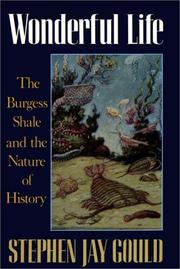
Ends the path on the philosophical payoff: if you reran the tape of life, would anything like us appear? Note what has changed — Gould's specific claim that the Burgess Shale fauna were wildly disparate lost ground to later reanalyses by Conway Morris and others, so read it as the argument that framed the debate rather than as current paleontology.
Discussion
Keep reading
Paths that share books, cover the same subject, or open a related topic.