The Best Books on Sausage Making, in Order
This curriculum takes an intermediate home cook from confident sausage basics through professional-level curing, smoking, and fermentation. Each stage builds on the last: first establishing a solid technical and flavor foundation, then mastering fresh and cooked sausages, then conquering cured and smoked charcuterie, and finally reaching the advanced world of whole-muscle cures and fermented dry sausages.
Foundations & Core Technique
BeginnerEstablish the essential vocabulary, equipment knowledge, and fundamental techniques of grinding, seasoning ratios, and stuffing — the bedrock everything else builds on.
▸ Study plan for this stage
Pace: 2–3 weeks, ~20–25 pages/day (approximately 40–50 pages total for "Home Sausage Making")
- Essential equipment: grinders, stuffers, thermometers, and how to select and maintain them
- Meat selection and preparation: choosing the right cuts, fat-to-meat ratios, and temperature control
- Seasoning fundamentals: salt percentages, curing agents (nitrates/nitrites), spice blending, and flavor balance
- Grinding technique: proper texture, particle size, and how grinding affects final product quality
- Stuffing methods: casing types (natural vs. synthetic), loading techniques, and linking/tying
- Food safety basics: sanitation, temperature management, and preventing contamination
- Basic fresh sausage formulation: understanding how ingredients work together in simple recipes
- What are the key differences between meat grinder types, and which is most suitable for a beginner home sausage maker?
- How do you determine the correct fat-to-meat ratio for a sausage recipe, and why does this ratio matter?
- What is the role of salt and curing agents in sausage making, and what are safe percentages to use?
- Describe the proper grinding technique: what texture should you aim for, and how does temperature affect the process?
- What are the main types of casings, and when would you use natural versus synthetic casings?
- What are the critical food safety practices when making fresh sausage at home?
- Set up and clean your grinder: assemble all parts, practice disassembly, and establish a cleaning routine following Reavis's guidelines
- Prepare and grind a test batch of meat: select appropriate cuts, chill properly, and grind to the correct texture without overworking the meat
- Create a seasoning blend: measure out salt, spices, and curing agents according to a simple recipe from the book; document ratios and taste notes
- Practice stuffing casings: fill 2–3 casings (natural or synthetic) using the method described in the book, focusing on consistent density and proper linking
- Make your first fresh sausage batch: follow one of Reavis's basic recipes from start to finish, keeping notes on temperature, timing, and results
- Taste and evaluate: compare your finished sausage to the book's descriptions; identify what worked and what to adjust in the next batch
Next up: Mastering these foundational techniques and vocabulary equips you to move into specialized sausage styles—cured, smoked, fermented, and regional varieties—where you'll apply these core skills to more complex flavor profiles and preservation methods.

The clearest, most practical starting reference for the home kitchen: covers equipment selection, fat-to-meat ratios, casing types, and a wide range of fresh sausage recipes. Read this first to build confident intuition before moving to more specialized texts.
Fresh & Cooked Sausages — Going Deeper
IntermediateMaster the full range of fresh, emulsified, and cooked sausages (bratwurst, boudin, mortadella-style) with precise temperature control and professional-level consistency.
▸ Study plan for this stage
Pace: 4–5 weeks, ~40–50 pages/day, with 2–3 days per week dedicated to hands-on practice and recipe testing
- The science of emulsification in sausages: how fat, protein, and water bind to create stable, consistent texture
- Temperature control as the critical variable: from grinding and mixing through cooking, and how it affects final product quality
- The distinction between fresh, emulsified (like mortadella), and cooked sausages, and when to use each technique
- Bratwurst and German-style sausage production: ratios, spices, and the balance between meat, fat, and binders
- Boudin and French-style emulsified sausages: liver incorporation, cream, and achieving silky texture
- Curing salts and their role in color development, preservation, and protein denaturation in cooked sausages
- Casings, stuffing, and linking: practical mechanics and how they affect cooking and presentation
- Troubleshooting: why sausages break, split, or fail to emulsify, and how to diagnose and prevent these failures
- What is the role of myosin protein in sausage emulsification, and how does temperature affect its ability to bind fat and water?
- Why is temperature control during grinding and mixing critical for fresh and emulsified sausages, and what happens if meat becomes too warm?
- What are the key differences in technique and ingredient ratios between bratwurst, boudin, and mortadella-style sausages?
- How do curing salts (sodium nitrite/nitrate) function in cooked sausages, and what visual and flavor changes do they produce?
- What are the most common reasons fresh sausages fail (breaking, greasiness, poor binding), and how can you prevent each?
- How do you determine when a sausage is properly emulsified, and what texture and appearance should you expect?
- Make a batch of fresh bratwurst from Ruhlman's recipe, paying close attention to meat temperature before grinding and during mixing; document how texture changes if you let the mixture warm up
- Prepare a German-style fresh sausage and a French boudin side-by-side, comparing the emulsification process, ingredient ratios, and final texture; note the differences in how each handles fat and moisture
- Create a mortadella-style cooked sausage using curing salt; track the color development over time and compare the final texture to a fresh sausage made with identical meat but no cure
- Stuff and link sausages using both natural and synthetic casings; practice the mechanics until you can work quickly and consistently, and evaluate how casing choice affects cooking and appearance
- Deliberately make a 'failed' batch (let meat get too warm, over-mix, or use incorrect ratios) to understand what goes wrong; compare it to a successful batch and identify the specific point of failure
- Cook fresh sausages using three different methods (pan-frying, poaching, grilling) and evaluate how each method affects texture, fat retention, and final flavor; document temperatures and timing
Next up: This stage equips you with the technical mastery and troubleshooting skills needed to move into cured and fermented sausages, where you'll apply these same principles of temperature, emulsification, and salt chemistry to longer-term preservation and flavor development.
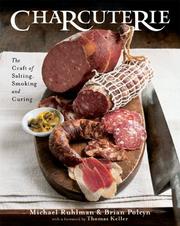
The single most influential English-language book on the craft: introduces the salt-cure ratio system, emulsified forcemeats, and cooked sausages in a rigorous, teachable way. This is where intermediate technique becomes disciplined science.
Smoking — Fresh & Hot-Smoked Sausages
IntermediateUnderstand wood selection, smoker setup, temperature and humidity management, and how to safely hot-smoke fresh and partially cured sausages to perfect internal doneness.
▸ Study plan for this stage
Pace: 6–8 weeks, ~25–30 pages/day, with 2–3 days per week dedicated to hands-on smoking practice
- Wood selection and flavor profiles (oak, hickory, apple, cherry) and how different woods complement sausage types
- Smoker setup, temperature control, and airflow management for consistent hot-smoking conditions (225–275°F range)
- Humidity and moisture management to achieve proper bark formation and prevent case hardening on sausage casings
- Fresh vs. partially cured sausage preparation and why curing affects smoking time and food safety
- Internal temperature targets and doneness indicators (160–165°F for fresh pork sausage) and how to verify safely
- Smoke ring formation, color development, and sensory evaluation of properly smoked sausages
- Troubleshooting common smoking failures (pale color, rubbery texture, off-flavors) and how to correct them
- What are the flavor characteristics of at least three different smoking woods, and which sausage types pair best with each?
- How do you set up and maintain consistent temperature and airflow in a smoker for sausage, and what happens if temperature fluctuates significantly?
- What is the difference between smoking fresh sausages and partially cured sausages, and how does this affect smoking time and food safety protocols?
- How do you determine when hot-smoked sausages have reached safe internal doneness, and what are the visual and textural signs of a properly smoked sausage?
- What causes common smoking defects (pale color, case hardening, rubbery casing) and how would you prevent or fix each one?
- How does humidity control during smoking affect the final texture and appearance of sausage casings?
- Source and compare at least three different smoking woods; document their aroma, burn characteristics, and smoke color
- Set up your smoker and practice maintaining a stable 250°F for 2 hours without opening the door; log temperature readings every 15 minutes
- Make a batch of fresh pork sausages and smoke them to 165°F internal temperature; record time, temperature curve, and final appearance
- Smoke a batch of partially cured sausages alongside fresh ones in the same session; compare smoking time, color development, and texture
- Conduct a blind taste test of sausages smoked with different woods; rate flavor intensity, smoke penetration, and balance
- Deliberately create one smoking failure (e.g., too-high temperature, insufficient humidity) to observe the defect, then correct it in a follow-up batch
- Document a complete smoking session with photos at 30-minute intervals; note color progression, casing appearance, and any adjustments made
Next up: This stage establishes mastery of active smoking techniques and sensory evaluation, preparing you to explore advanced curing methods, cold-smoking for shelf-stable products, and multi-stage smoking processes in the next stage.
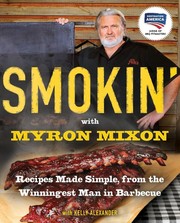
Grounds the learner in practical pit and smoker management — fire, wood, temperature — before applying those skills specifically to sausage. Read first in this stage to separate smoking craft from sausage craft.

Covers a broad spectrum of smoked sausage traditions (andouille, kielbasa, linguiça) with clear technique notes on smoke penetration and color development, reinforcing the smoking principles from Mixon in a sausage-specific context.
Curing, Cold-Smoking & Dry-Cured Sausages
ExpertSafely apply nitrate/nitrite curing chemistry, cold-smoking protocols, and fermentation to produce shelf-stable and semi-dry sausages such as summer sausage, pepperoni, and salami.
▸ Study plan for this stage
Pace: 6–8 weeks, ~40–50 pages/day. Start with Marianski's technical foundation (weeks 1–4), then transition to Ruhlman's integrated approach (weeks 5–8), with 1–2 weeks of overlap for hands-on experimentation.
- Nitrate and nitrite chemistry: roles in curing, safe dosing via Prague Powder #1 and #2, and the Maillard reaction's contribution to flavor
- Fermentation science: lactobacillus activity, pH reduction, and how acid development prevents pathogenic bacteria in dry-cured sausages
- Cold-smoking fundamentals: temperature control (below 30°C), smoke penetration, and timing to avoid case hardening while building flavor
- Water activity (aw) and equilibrium: how salt, nitrate, and drying reduce moisture to create shelf-stable products without refrigeration
- Starter cultures and their selection: impact on fermentation speed, flavor development, and safety in different sausage styles
- Dry-curing timelines and environmental conditions: temperature, humidity, and air circulation requirements for summer sausage, pepperoni, and salami
- Sensory evaluation and troubleshooting: recognizing signs of successful fermentation, detecting off-flavors, and correcting common defects
- Legal and food-safety compliance: regulations around curing agents, documentation, and safe handling to prevent botulism and spoilage
- What is the difference between Prague Powder #1 and #2, and when would you use each in fermented sausage production?
- How does lactobacillus fermentation lower pH, and why is this critical for the safety of dry-cured sausages without refrigeration?
- Describe the relationship between water activity, salt content, and curing time in achieving shelf stability in summer sausage and salami.
- What are the key temperature and humidity parameters for cold-smoking, and how do they differ from hot-smoking?
- How do you select and use starter cultures, and what role do they play in flavor development versus food safety?
- What visual, textural, and aromatic signs indicate that a fermented sausage has cured successfully, and what defects should trigger intervention?
- Calculate precise nitrate/nitrite doses for a 5 kg batch using Marianski's formulas; weigh and document all curing agents to build accuracy and confidence.
- Prepare and inoculate three small test batches (500–1000 g each) with different starter cultures; monitor pH daily for 7–10 days to observe fermentation curves.
- Set up a cold-smoking trial: smoke a small sausage sample at 15–25°C for 2–4 hours daily over 5 days; record temperature, humidity, and smoke color; compare texture and flavor to unsmoked control.
- Conduct a water-activity experiment: measure weight loss and calculate aw for sausages at days 7, 14, and 21 of drying; correlate with environmental conditions (temperature, humidity, air flow).
- Make a full batch of summer sausage or pepperoni following Ruhlman's recipe; document every step (mixing, fermentation, smoking, drying) with photos and notes; taste and evaluate at key milestones.
- Troubleshoot a deliberately 'flawed' batch (e.g., too much salt, insufficient fermentation, or high humidity): identify the problem, predict the outcome, and propose corrections based on Marianski's diagnostic guidance.
Next up: This stage equips you with the chemistry and protocols to produce shelf-stable, fermented sausages; the next stage will likely build on this foundation to explore advanced flavor refinement, regional variations, and scaling production while maintaining safety and consistency.
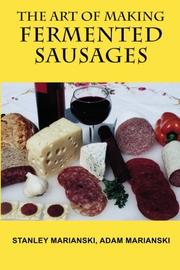
The most thorough English-language treatment of fermented and dry-cured sausages: covers starter cultures, water activity, pH targets, and drying chamber setup. Essential reading before attempting any dry sausage.

Bridges whole-muscle cures and ground dry sausages (salami, 'nduja) with beautiful clarity on the Italian tradition. Read after Marianski to see the science applied with artisan finesse and to round out your cured-sausage repertoire.
Discussion
Keep reading
Paths that share books, cover the same subject, or open a related topic.