Cure your own charcuterie
This curriculum takes a home cook from zero charcuterie knowledge to confident, science-backed meat curing — covering safety fundamentals, classic techniques for bacon and salumi, and finally the microbiology and chemistry that explain *why* everything works. Each stage builds the vocabulary and hands-on intuition needed to tackle the next, so no book feels overwhelming when you reach it.
Foundations: Language, Safety & First Cures
BeginnerUnderstand what curing is, why salt and nitrates matter for safety, and successfully make a first simple cure like bacon or a basic salumi.
▸ Study plan for this stage
Pace: 6–8 weeks total: Weeks 1–4 cover Ruhlman's "Charcuterie" (~25–30 pages/day, focusing on the introductory chapters, the salt/cure ratio sections, and the bacon & basic salumi recipes); Weeks 5–8 cover Marianski's "Home Production of Quality Meats and Sausages" (~20–25 pages/day, prioritizing Part I o
- The role of salt as the primary preservative: osmosis, water activity reduction, and how salt concentration (expressed as a percentage of meat weight) directly controls safety and flavor in both Ruhlman's equilibrium-cure method and Marianski's formulations
- Nitrates vs. nitrites (curing salts): why Prague Powder #1 (pink salt / Cure #1) is used for short-term cures like bacon, while Prague Powder #2 is reserved for long-cured, fermented, or dried products — as explained in both books
- The difference between wet curing (brine/immersion), dry curing (rubbing salt and cure directly onto meat), and smoking — and when each method is appropriate, per Ruhlman's technique chapters
- Equilibrium curing: Ruhlman's signature approach of calculating salt and cure as a precise percentage of meat weight to guarantee consistent, safe results without over-salting
- Meat science fundamentals from Marianski: pH, water activity (Aw), the role of temperature during curing, and why these variables determine whether a product is safe or a vector for pathogens like Clostridium botulinum
- Food safety non-negotiables: proper refrigeration temperatures during curing, sanitation, avoiding the danger zone (40–140 °F / 4–60 °C), and recognizing signs of spoilage — covered in depth by Marianski
- Flavor development: how salt, sugar, spices, smoke, and time interact to build the characteristic taste of cured meats, drawn from Ruhlman's recipe headnotes and Marianski's curing science chapters
- Reading and scaling a cure recipe: understanding weight-based measurements, using a digital scale, and why volume measurements are unreliable for curing — a practical skill reinforced by both authors
- According to Ruhlman's equilibrium-cure method, how do you calculate the correct amount of salt and Prague Powder #1 for a 2 kg pork belly destined for bacon, and why is weighing more reliable than measuring by volume?
- Marianski explains the difference between nitrates and nitrites in terms of their chemistry and application timeline — what is that difference, and which curing salt would you use for a 3-day dry-cured bacon versus a 6-week air-dried lonza, and why?
- What is water activity (Aw), as defined by Marianski, and how does reducing it through salt and drying prevent the growth of Clostridium botulinum?
- Ruhlman distinguishes between dry curing and wet curing (brining) in his foundational chapters — what are the practical trade-offs of each method in terms of texture, flavor penetration, and time?
- After reading both books, what are the critical temperature checkpoints you must maintain from the moment you buy the pork belly to the moment you slice the finished bacon, and what risk does each checkpoint address?
- How do both Ruhlman and Marianski approach the concept of 'enough salt' differently in their writing styles, and what does each author's approach teach you about the philosophy behind safe home curing?
- Equilibrium-cure bacon project (Ruhlman): Using Ruhlman's bacon recipe and his percentage-based formula, cure a pork belly from start to finish — weigh every ingredient on a digital scale, keep a daily log of temperature and appearance, then cold-smoke or oven-finish it. Taste and evaluate the result against his flavor descriptions.
- Salt percentage calculator drill: Take 5 different hypothetical meat weights (e.g., 750 g, 1.2 kg, 2.5 kg, 3 kg, 4.5 kg) and manually calculate the required salt, sugar, and Prague Powder #1 amounts using Ruhlman's equilibrium ratios. Cross-check your math with Marianski's tables to confirm the cure levels fall within safe ranges.
- Safety audit of your workspace: Using Marianski's food safety and sanitation chapters as a checklist, audit your home kitchen — verify refrigerator temperature (should be ≤38 °F / 3 °C), check that you have a dedicated curing container, confirm you have a calibrated digital thermometer, and identify any gaps to fix before curing.
- Brine vs. dry-cure comparison (Ruhlman): Cure two small pork loin pieces simultaneously — one using Ruhlman's wet brine recipe and one using his dry-cure method. After the same number of days, cook both to safe temperature and do a side-by-side tasting. Write a half-page note on differences in texture, saltiness, and moisture.
- Curing salt identification and labeling exercise (Marianski): Source both Prague Powder #1 and Prague Powder #2 (or their commercial equivalents). Read the labels, compare the nitrite/nitrate percentages against Marianski's stated standards, and create a reference card listing: correct usage, maximum safe dose per kg of meat, and which recipes from both books call for each.
- Vocabulary and concept glossary: As you read both books, build a running glossary of at least 20 terms (e.g., Aw, equilibrium cure, cold smoke, hot smoke, brine concentration, cure #1, cure #2, pellicle, collagen, myoglobin) with a one-sentence definition in your own words and a page reference to where each term appears in Ruhlman or Marianski.
Next up: Completing a successful first cure — and understanding *why* it worked at a chemical and safety level — gives you the precise vocabulary, muscle memory with a scale, and safety instincts needed to tackle the next stage's more complex fermented, air-dried, and whole-muscle products, where controlling pH, humidity, and longer anaerobic environments raises the stakes considerably.
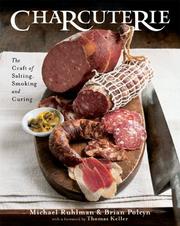
The single best entry point for English-speaking home curers — it defines core vocabulary (equilibrium curing, pink salt, brine ratios) and walks through bacon and simple salumi step by step before anything more complex.

Complements Ruhlman by going deeper on the safety logic behind nitrite/nitrate use and smoking temperatures, giving beginners a solid mental model of *why* each step exists before they move on.
Building Technique: Salumi, Sausages & the Italian Tradition
BeginnerExpand the repertoire to whole-muscle Italian cures (coppa, lonza, bresaola) and fresh sausages, and develop reliable process habits around humidity, airflow, and fermentation.
▸ Study plan for this stage
Pace: 6–8 weeks total: Weeks 1–3 cover "Salumi" by Ruhlman (~20–25 pages/day, including re-reading recipe chapters and technique notes); Weeks 4–7 cover "The Art of Making Fermented Sausages" by Marianski (~15–20 pages/day, pausing to work through formulation tables and safety charts); Week 8 is a consoli
- Whole-muscle Italian cures: understanding the distinct anatomy, salt ratios, and aging requirements for coppa (neck/collar), lonza (loin), and bresaola (eye of round) as presented in Ruhlman's Salumi
- The salt-box vs. equilibrium curing method: Ruhlman's emphasis on weighing salt as a precise percentage of meat weight to achieve consistent, repeatable results rather than guessing
- The role of fat, collagen, and muscle structure in determining cure time, casing choice, and final texture — especially how Ruhlman distinguishes between whole-muscle and ground/emulsified products
- Fresh sausage fundamentals: fat-to-lean ratios, the importance of temperature control during grinding and mixing, and achieving proper protein extraction (the 'sticky' bind) as a foundation before moving to fermented sausages
- Water activity (Aw) and pH as the two primary safety levers in fermented sausage production — Marianski's core framework for understanding why fermentation, drying, and acidification inhibit pathogen growth
- Starter cultures and their function: Marianski's explanation of how Lactobacillus and Staphylococcus strains drive acidification, color development, and flavor, and how temperature during fermentation controls the speed and depth of that process
- Humidity and airflow management during the drying/curing chamber stage: Marianski's guidance on target RH ranges (typically 70–80%), airflow velocity, and the consequences of drying too fast (case hardening) or too slow (mold/spoilage)
- HACCP-minded process habits: Marianski's systematic approach to identifying critical control points — cure levels, fermentation temperature logs, pH testing, and final Aw measurement — as non-negotiable documentation practices for safe home and artisan production
- After reading Ruhlman's Salumi, can you explain why equilibrium curing produces more consistent results than the salt-box method, and calculate the correct salt weight for a 1.2 kg coppa using a 2.75% ratio?
- Ruhlman describes specific environmental conditions for hanging and aging whole-muscle cuts — what temperature and humidity ranges does he recommend, and what visible or textural signs indicate a cure is progressing correctly vs. going wrong?
- Using Marianski's framework, what is the difference between a fermented-and-dried sausage and a cooked sausage in terms of the safety mechanisms at work, and why can you not simply substitute one process for the other?
- Marianski outlines how fermentation temperature affects the final flavor profile of a salami — what happens to sourness and texture if you ferment at 75°F (24°C) vs. 65°F (18°C), and which starter culture strains are suited to each range?
- What is case hardening, what causes it according to Marianski, and what specific adjustments to your drying chamber setup would you make to prevent or correct it mid-process?
- Across both books, a consistent theme is process documentation — what specific measurements, observations, and timestamps should a beginner log at each stage of a whole-muscle cure or fermented sausage batch, and why does each data point matter for both safety and repeatability?
- Equilibrium-cure a whole coppa or lonza using Ruhlman's salt percentage formula: weigh the meat precisely, calculate and apply the cure mix, vacuum-seal or wrap tightly, and refrigerate for the prescribed time — logging weight every 3–4 days to track moisture loss and confirm the cure is progressing
- Make two batches of a simple fresh Italian sausage (e.g., a basic fennel pork sausage) back-to-back: in the first batch, let the meat warm up during mixing; in the second, keep everything below 35°F (2°C) throughout — compare bind, texture, and sliceability to viscerally understand why temperature discipline matters before attempting fermented work
- Build or calibrate a DIY curing chamber (a converted mini-fridge with an Inkbird humidity/temperature controller is the standard beginner setup): set it to Ruhlman's recommended aging parameters, hang a bresaola or lonza inside, and keep a daily log of temp, RH, surface appearance, and weight loss over the full aging period
- Using Marianski's formulation tables, design a simple fermented salami recipe from scratch on paper: choose a fat-to-lean ratio, select a starter culture, calculate cure #2 and salt additions by meat weight, and map out a full fermentation and drying schedule with target pH and Aw checkpoints before mixing a single gram of meat
- Ferment a small test batch (1–2 kg) of a beginner-friendly fermented sausage from Marianski (such as a basic Hungarian salami or a simple pepperoni-style), using a calibrated pH meter to test acidity at the end of the fermentation stage — compare your reading against Marianski's target range and troubleshoot any deviation in writing
- Conduct a side-by-side tasting and dissection of a commercially made bresaola, coppa, and a dry-cured salami: slice each, examine the cross-section for color gradient, fat distribution, and texture, then write a one-page sensory analysis connecting what you observe to the specific process variables (salt level, drying time, fat ratio) discussed in Ruhlman and Marianski
Next up: Mastering the Italian whole-muscle and fermented sausage tradition — and the disciplined process habits around humidity, pH, and documentation — gives the reader the technical vocabulary and environmental control skills needed to tackle more complex, long-aged cures (such as prosciutto, guanciale, and nduja) and to engage confidently with the food-science and safety literature that underpins advan

A focused follow-up that zooms into the Italian whole-muscle tradition; reading Charcuterie first means the techniques here feel like natural extensions rather than new concepts.
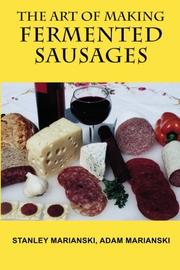
Introduces fermentation and starter cultures — the next layer of complexity after simple salt cures — with clear tables and recipes that reward the process discipline built in the previous stage.
Going Deeper: Professional Craft & Regional Breadth
IntermediateUnderstand professional-level curing chambers, advanced whole-animal butchery for curing, and the broader European charcuterie tradition beyond Italy.
▸ Study plan for this stage
Pace: 6–8 weeks total: Weeks 1–4 on "In the Charcuterie" (~25–30 pages/day, including re-reading technique sections); Weeks 5–8 on "The River Cottage Curing & Smoking Handbook" (~20–25 pages/day, with slower passes over brine ratios and smoking charts)
- Whole-animal butchery as the foundation of charcuterie — understanding primal and sub-primal cuts from Boetticher's perspective and how each muscle group dictates the curing or emulsification method chosen
- Professional curing-chamber management: temperature (50–60 °F), humidity (70–80 % RH), and airflow control as described in 'In the Charcuterie', and how deviations cause case hardening, unwanted mold, or putrefaction
- Forcemeat taxonomy — coarse country pâtés, fine farces, mousselines, and emulsified sausages — and the role of fat-to-lean ratios and temperature discipline during grinding and mixing
- Equilibrium curing vs. immersion brining: salt penetration rates, the math behind cure percentages, and when each method is appropriate for different muscle densities and sizes
- European regional breadth introduced by River Cottage: British bacon and ham traditions (dry-cured back bacon, wiltshire cure), cold-smoked fish, and how terroir and local smoking woods shape flavor identity
- Smoke science fundamentals from River Cottage: cold vs. hot smoking temperature ranges, phenolic compound deposition, and the interplay between surface moisture (pellicle formation) and smoke adhesion
- Nitrate vs. nitrite chemistry — curing salt types (Prague Powder #1 vs. #2), their appropriate applications to short-cure vs. long-cure products, and food-safety rationale
- Flavor development through fermentation and aging: the role of beneficial molds (Penicillium nalgiovense), lactic acid bacteria in fermented sausages, and pH drop as a safety and texture mechanism
- After working through 'In the Charcuterie', can you break down a whole pig into the specific sub-primals Boetticher designates for dry-cured whole muscles versus those best suited for forcemeats, and explain why?
- What environmental parameters must a curing chamber maintain, and what are the visible or measurable consequences — as described in 'In the Charcuterie' — when each parameter drifts out of range?
- Using the cure-percentage framework from either book, how would you calculate the correct amount of salt and curing salt for a 2.3 kg pork loin destined for a 14-day equilibrium cure?
- How does River Cottage's approach to British dry-cured bacon differ in technique, timing, and flavor profile from an Italian-style lonza or lardo covered in the previous curriculum stage?
- What is a pellicle, why does River Cottage emphasize its formation before cold smoking, and what happens to smoke adhesion if you skip this step?
- Across both books, what are the key safety checkpoints — water activity, pH, nitrite levels, and temperature logs — that distinguish a professionally produced cured product from a potentially hazardous one?
- Butchery mapping exercise: using 'In the Charcuterie' as your guide, purchase a bone-in pork shoulder and break it down completely, labeling each muscle and writing a one-sentence curing or forcemeat application for each piece before you cook or cure anything
- Build or calibrate a curing chamber (a converted mini-fridge with an Inkbird controller and ultrasonic humidifier works well): log temperature and humidity every 12 hours for two weeks and compare your readings against the target ranges in 'In the Charcuterie', adjusting airflow or water reservoir as needed
- Cure two side-by-side pork belly slabs using River Cottage's dry-cure bacon recipe — one with the book's exact formula, one where you reduce salt by 20 % — then compare texture, moisture loss percentage, and flavor after the same cure duration to internalize the role of salt concentration
- Cold-smoke a batch of salmon following River Cottage's pellicle and smoking instructions: document pellicle drying time, ambient temperature during smoking, wood species used, and final color/aroma, then taste against an un-smoked control
- Make a coarse country pâté and a fine emulsified farce (such as a boudin blanc) back-to-back from 'In the Charcuterie' recipes, keeping a temperature log of your grind and mix stages; note at what temperature the emulsion in the farce begins to break and how you recover it
- Regional tasting flight: source or produce at least four cured products representing distinct European traditions covered across both books (e.g., British back bacon, a cold-smoked fish, a French-style pâté de campagne, and one Italian product from your prior stage); write tasting notes comparing salt level, smoke character, fat texture, and finish to build sensory vocabulary
Next up: Mastering professional chamber management, whole-animal butchery logic, and the breadth of European curing traditions in this stage equips the reader with the technical vocabulary and hands-on calibration needed to tackle advanced fermented and long-aged products — such as whole-muscle salumi, fermented dry sausages, and extended mold-ripened items — where precise environmental control and microbi

Written by working charcutiers, this book bridges home and professional practice — its detail on muscle selection, fat ratios, and chamber management elevates technique meaningfully at this stage.

Brings in the British and broader European perspective on bacon, ham, and cold-smoked fish, reinforcing safety principles with a different regional lens and filling gaps left by Italy-centric books.
The Science: Microbiology, Chemistry & Mastery
ExpertUnderstand the food science and microbiology underpinning every cure — water activity, pH, nitrite chemistry, and pathogen control — so you can troubleshoot, adapt recipes, and cure with genuine confidence.
▸ Study plan for this stage
Pace: 8–10 weeks total. Weeks 1–4: Read the relevant chapters of "On Food and Cooking" (McGee) — focus on the meat, salt, and preservation chapters (~20–25 pages/day, 4–5 days/week). Weeks 5–10: Read "Dry-Cured Meat Products" (Toldrá) cover to cover — this is dense technical material, so pace at ~15–20 pa
- Water activity (aw): how reducing free moisture below critical thresholds (aw < 0.85–0.91) inhibits specific pathogens and spoilage organisms, as explained through McGee's preservation principles and quantified in Toldrá's curing data
- Nitrite and nitrate chemistry: the conversion pathway NO3→NO2→NO→nitrosomyoglobin, nitrite's dual role in color development and antimicrobial action (especially against Clostridium botulinum), and the kinetics of residual nitrite depletion over cure time as detailed in Toldrá
- pH dynamics: lactic acid bacteria (LAB) fermentation driving pH drop in fermented sausages, the interplay between pH and aw as combined hurdles, and how McGee's acid-denaturation chemistry connects to Toldrá's fermentation process data
- Proteolysis and lipolysis: endogenous muscle enzymes (cathepsins, calpains, lipases) and microbial enzymes driving flavor and texture development during aging — a central theme in Toldrá's biochemical chapters
- The hurdle concept (Leistner): how salt, aw, pH, temperature, nitrite, and competitive microflora stack as sequential and synergistic barriers to pathogen survival
- Pathogen control matrix: specific growth/survival limits for Listeria monocytogenes, Salmonella, C. botulinum, and Staphylococcus aureus in cured meat environments, drawn from Toldrá's food safety chapters
- Maillard reaction and cured-meat flavor chemistry: McGee's foundational explanation of browning and flavor compound formation applied to the cooked and aged cured-meat context
- Myoglobin chemistry and color stability: the oxidation states of myoglobin (oxymyoglobin, metmyoglobin, nitrosomyoglobin) and how curing, oxygen exposure, and pH affect the final color of cured products
- Given a recipe's salt concentration and moisture content, how would you calculate approximate water activity, and at what aw value does C. botulinum growth become inhibited — and where do McGee and Toldrá each address this threshold?
- Trace the complete chemical pathway from added sodium nitrate to the pink color and antimicrobial effect in a dry-cured ham, citing the specific enzymatic and chemical steps Toldrá describes.
- How do lactic acid bacteria lower pH during fermented sausage production, and why does the combination of reduced pH and reduced aw provide stronger pathogen control than either hurdle alone?
- Which endogenous enzymes are primarily responsible for proteolysis and lipolysis during long-aged dry-cured products, and how does Toldrá explain their activity being modulated by temperature, salt, and pH?
- If a batch of dry-cured coppa shows surface greening and off-odors at week three, what microbiological and chemical causes would you investigate first, and which parameters (aw, pH, nitrite level, temperature) would you measure?
- How does McGee's explanation of salt's effect on protein structure and water binding connect mechanistically to the textural changes Toldrá documents in dry-cured muscle products?
- Build a personal 'Hurdle Reference Card': create a one-page table listing each major pathogen (C. botulinum, Listeria, Salmonella, S. aureus), their minimum/maximum aw, pH, and temperature growth limits, sourced directly from Toldrá. Pin it above your curing workspace.
- Water activity calculation drill: take three of your own or published recipes, calculate theoretical aw using the simplified Norrish equation (or a free aw calculator), then cross-reference with Toldrá's safety thresholds to assess whether each recipe clears the critical hurdles.
- Nitrite depletion timeline: using Toldrá's residual nitrite data, plot a graph of expected nitrite concentration vs. cure days for a standard dry-cured product. Annotate the point at which antimicrobial protection shifts from nitrite to aw/pH dominance.
- Comparative dissection of McGee and Toldrá on salt: write a one-page synthesis explaining how McGee's foundational chemistry (osmosis, protein denaturation, ion binding) maps onto the practical salting and equilibration methods Toldrá prescribes — note where they reinforce and where they diverge in emphasis.
- Troubleshooting case-study journal: invent or recall three curing 'failures' (e.g., case hardening, rancidity, insufficient color, slimy surface) and write a one-paragraph root-cause analysis for each using only the science from McGee and Toldrá.
- pH and fermentation monitoring lab: if you have access to a pH meter, make a small batch of fresh fermented sausage (or a simple lactic-acid brine), measure pH every 12 hours for 3–4 days, and plot the curve against the LAB fermentation trajectory Toldrá describes — note any deviations and hypothesize why.
Next up: Mastering the underlying science of water activity, nitrite chemistry, and microbial hurdles gives you the analytical framework to critically evaluate and confidently modify advanced whole-muscle and salumi recipes in the next stage, moving from understanding *why* cures work to executing complex, long-aged projects with precision.
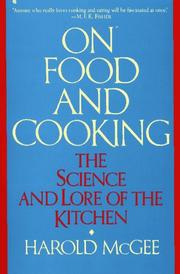
The essential food-science reference: its chapters on meat proteins, salt, and preservation explain the molecular 'why' behind curing reactions, making everything learned so far click into a coherent system.

A rigorous, research-level treatment of cured meat biochemistry and safety — best read last, when hands-on experience gives context to the science and the reader can engage critically with the data.
Discussion
Keep reading
Paths that share books, cover the same subject, or open a related topic.