Master the grill
This curriculum takes a backyard griller from zero to expert across four stages, starting with fundamental fire and heat control, then building flavor intuition, then mastering every category of grillable food, and finally diving into the science and craft that separates good from great. Each stage's books are sequenced so that vocabulary and technique learned early make the next book immediately actionable.
Foundations: Fire, Heat & First Cooks
BeginnerUnderstand how to build and control a fire, distinguish direct from indirect heat, and execute simple grilling confidently and safely.
▸ Study plan for this stage
Pace: 5–6 weeks total: Week 1–3 cover "How to Grill" by Steven Raichlen (~20–25 pages/day, focusing on the introductory fire-building and technique chapters before diving into recipes); Weeks 4–6 cover "Weber's Way to Grill" by Jamie Purviance (~20 pages/day, using its step-by-step visual guides to reinfo
- Fire building basics: how to light, layer, and arrange charcoal (chimney starter method) or ignite a gas grill safely, as taught in Raichlen's opening chapters of 'How to Grill'
- Direct vs. indirect heat: understanding the two fundamental cooking zones — direct for searing and indirect for slow cooking through — a distinction central to both Raichlen and Purviance
- The heat zones of a grill: creating a hot zone, medium zone, and cool safety zone on the grate, a configuration Raichlen demonstrates with his multi-zone fire setups
- Temperature control: managing airflow via vents (charcoal) or burner knobs (gas) to raise or lower heat, covered practically in Weber's Way to Grill
- The Maillard reaction and why searing matters: Raichlen explains the science of crust formation and flavor development that makes grilled food taste distinctly 'grilled'
- Grill safety and maintenance: proper tool use, avoiding flare-ups, cleaning grates, and safe food handling — emphasized throughout both books
- Doneness cues: using the touch test, a meat thermometer, and visual cues (color, juices) to judge when food is ready, as Purviance details with his step-by-step photo guides in Weber's Way to Grill
- Simple first-cook proteins: burgers, bone-in chicken pieces, and steaks as the ideal beginner vehicles — both authors use these as their foundational recipe anchors
- According to Raichlen in 'How to Grill,' what are the key steps to lighting a charcoal chimney starter, and why is it preferred over lighter fluid?
- How do Raichlen and Purviance each define the difference between direct and indirect heat, and when should you use each method?
- Using the guidance in 'Weber's Way to Grill,' how do you adjust the vents on a charcoal grill to raise or lower the cooking temperature?
- What visual and tactile doneness cues does Purviance describe in 'Weber's Way to Grill' for a burger cooked to medium, and how do they differ from a well-done burger?
- How does Raichlen recommend setting up a multi-zone fire, and what practical problem does having a cool zone solve during a cook?
- What safety practices do both books agree on for preventing and managing flare-ups?
- Fire-building drill (Week 1): Using only Raichlen's chimney-starter instructions from 'How to Grill,' light a charcoal grill from cold to cook-ready without lighter fluid — time yourself and note what worked and what didn't.
- Zone mapping exercise (Week 2): Set up a three-zone fire (hot/medium/cool) as described by Raichlen, then hold your hand 6 inches above each zone for 2 seconds to physically feel the heat difference before placing any food.
- Burger benchmark cook (Week 2–3): Grill a batch of burgers using Raichlen's direct-heat burger technique, practicing the single flip rule and using only the touch test and a thermometer — no cutting — to judge doneness.
- Gas grill orientation (Week 4): Following Purviance's setup guide in 'Weber's Way to Grill,' configure a gas grill for both direct and indirect cooking in the same session, cooking a sausage on direct and a bone-in chicken thigh on indirect simultaneously.
- Temperature log (Week 5): During any grill session, take lid-thermometer readings every 5 minutes for 30 minutes while adjusting vents or burners, logging the results in a notebook to internalize how small adjustments affect heat.
- Reflection journal (Ongoing): After each cook, write 3–5 sentences answering: What heat method did I use? How did I judge doneness? What would I do differently? Reference specific tips from Raichlen or Purviance to explain your reasoning.
Next up: Mastering fire control and simple proteins in this stage gives you the heat-management instincts and safety confidence needed to tackle the more complex techniques — smoking, planking, rotisserie, and multi-ingredient cooks — that characterize the intermediate stage ahead.
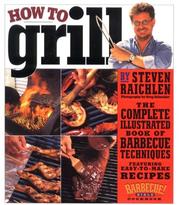
The single best entry point for beginners — it teaches direct vs. indirect heat, charcoal vs. gas setup, and basic timing through hundreds of step-by-step photos before any recipe complexity is introduced.

Builds directly on Raichlen's fire fundamentals with a practical, zone-cooking framework and clear timing charts for everyday proteins and vegetables, reinforcing heat-management habits.
Flavor Fundamentals: Rubs, Marinades & Smoke
BeginnerDevelop a working vocabulary of flavor-building tools — dry rubs, wet marinades, brines, sauces, and wood smoke — and understand when and why to apply each.
▸ Study plan for this stage
Pace: 6–8 weeks total: Weeks 1–4 cover The Barbecue! Bible (~25–30 pages/day, focusing on the introductory flavor chapters and the rub/marinade/sauce sections before diving into recipes); Weeks 5–8 cover Smoke & Spice (~20–25 pages/day, reading the technique-heavy front matter carefully before moving thro
- Dry rubs vs. wet marinades: Raichlen's Barbecue! Bible distinguishes rubs as surface-crust builders that form a bark, while marinades penetrate and tenderize — knowing which to reach for depends on the cut, cook time, and desired texture.
- Brining basics: The Barbecue! Bible introduces salt-based brines as a moisture-retention strategy, especially critical for lean proteins like chicken breast and pork loin that are prone to drying out over direct heat.
- The Maillard reaction and sugar management: Both books highlight how sugars in rubs and sauces caramelize and can burn; Raichlen explicitly warns about applying sweet sauces too early over high heat.
- Wood smoke as a flavor ingredient: Smoke & Spice by the Jamisons treats wood smoke as a seasoning in its own right — the species of wood (hickory, mesquite, apple, cherry) each contribute distinct flavor profiles that must be matched to the protein.
- Timing and layering of flavors: Raichlen's Barbecue! Bible teaches a 'flavor layering' philosophy — rub first, baste during, sauce at the end — so each application serves a different structural role in the final dish.
- Wet vs. dry smoke environments: Smoke & Spice introduces the water pan technique and explains how moisture in the cooking chamber affects smoke adhesion, bark formation, and overall flavor intensity.
- Regional American BBQ flavor traditions: Smoke & Spice grounds its recipes in distinct regional styles (Carolina vinegar, Kansas City sweet, Texas beef-forward), giving the reader a cultural map of how flavor philosophies differ.
- Sauce timing and function: Both books converge on the idea that sauce is a finishing tool, not a cooking medium — understanding this prevents the common beginner mistake of burning sugary sauces onto the grate.
- After reading The Barbecue! Bible, can you explain in your own words why Raichlen recommends applying a dry rub at least 30 minutes — and ideally overnight — before cooking, and what is happening to the meat's surface during that rest?
- Smoke & Spice describes several wood varieties and their flavor intensities. Which woods does Jamison recommend for poultry vs. beef, and what is her reasoning?
- Both books address the risk of burning sugary rubs and sauces. What specific techniques do Raichlen and Jamison each recommend to manage this risk during a cook?
- What is the functional difference between a brine and a marinade as described in The Barbecue! Bible, and when would you choose one over the other for a pork shoulder vs. a chicken breast?
- Smoke & Spice organizes its flavor-building around regional traditions. Name at least three regional styles discussed and identify the dominant flavor-building tool (rub, sauce, smoke wood, etc.) that defines each.
- Drawing from both books, describe a complete flavor-building plan — from prep through service — for a rack of ribs, specifying the rub, any brine or marinade, the smoke wood, and the sauce timing.
- Rub comparison cook: Mix one simple dry rub from The Barbecue! Bible and one from Smoke & Spice. Apply each to a chicken thigh, cook them side by side, and journal the differences in bark, aroma, and taste.
- Marinade vs. brine test: Using Raichlen's guidance in The Barbecue! Bible, prepare two identical pork chops — one brined overnight in a salt-sugar solution, one marinated in an acid-based marinade. Grill both and compare moisture, texture, and flavor penetration.
- Wood smoke tasting flight: Following Jamison's wood pairing notes in Smoke & Spice, smoke three small portions of the same protein (e.g., chicken thighs) over three different wood types (e.g., hickory, apple, mesquite). Take tasting notes on aroma and flavor for each.
- Sauce timing experiment: Grill two racks of spare ribs using the same rub from Smoke & Spice, but apply a sweet Kansas City-style sauce to one rack at the 1-hour mark and to the other only in the final 15 minutes. Observe and document the difference in char, glaze, and flavor.
- Flavor layering journal: For one full cook (any protein), document every flavor-building step in writing — rub application time, any baste applied and at what internal temp, sauce application, and rest time — then evaluate which layer contributed most to the final flavor.
- Regional style recreation: Choose one of the regional BBQ traditions profiled in Smoke & Spice (e.g., Eastern Carolina), source or mix the appropriate rub and sauce, and cook a recipe from that chapter. Research one fact about that region's BBQ history to connect the flavor profile to its cultural roots.
Next up: Mastering rubs, marinades, brines, and smoke as flavor tools gives the reader a confident flavor vocabulary, which is the essential foundation for the next stage — where those tools get applied to specific proteins and cuts, each with their own structural demands and ideal cooking methods.
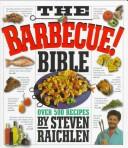
A global tour of grilling traditions that introduces rubs, marinades, and sauces as cultural systems, giving the learner a broad flavor vocabulary right after they can handle fire.
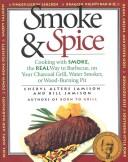
Focuses specifically on wood smoke selection, low-and-slow indirect technique, and dry-rub layering — the natural next step once basic direct-heat cooking is solid.
Mastering Every Grillable: Meat, Fish, Veg & More
IntermediateApply correct heat type, timing, and flavor strategy to every major category of food — beef, pork, poultry, seafood, vegetables, and even fruit and bread.
▸ Study plan for this stage
Pace: 6–8 weeks total: Weeks 1–3 on "The Grilling Book" (~25–30 pages/day, reading category chapters in focused blocks — beef, pork, poultry, seafood, veg, fruit, and bread sequentially); Weeks 4–7 on "Franklin Barbecue" (~20 pages/day, slower pace to absorb the deep-dive philosophy and technique); Week 8
- Direct vs. indirect heat selection by food category — The Grilling Book systematically demonstrates which foods demand which method and why, making this the foundational decision for every cook.
- Doneness cues beyond temperature — both books emphasize visual, tactile, and aromatic signals (the poke test for steaks, bark color on brisket) alongside thermometer readings.
- The two-zone fire as a universal tool — setting up a hot zone and a cool zone, as illustrated throughout The Grilling Book, allows simultaneous searing and gentle finishing for thick proteins.
- Fat management and flare-up control — understanding how fat renders and drips, and how to position food accordingly, is woven through both books' meat chapters.
- Franklin's low-and-slow philosophy for large cuts — Franklin Barbecue reframes time as an ingredient, teaching that collagen-to-gelatin conversion in brisket, ribs, and pork shoulder requires sustained low heat (225–275 °F) over many hours.
- Wood smoke as a flavor layer — Franklin Barbecue dedicates significant attention to wood species selection, smoke ring science, and the timing of smoke absorption, adding a flavor dimension absent from simple grilling.
- Seasoning strategy by food type — The Grilling Book shows that delicate seafood and vegetables need light, fast seasoning while beef and pork benefit from rubs, marinades, or dry-brining hours in advance.
- Resting and carving discipline — both books stress that resting meat (a few minutes for fish, up to an hour for a whole brisket) and slicing against the grain are non-negotiable steps that protect all prior effort.
- After reading The Grilling Book, can you explain why a whole chicken is cooked over indirect heat while chicken thighs can tolerate direct heat, and what internal temperatures signal doneness for each?
- How does Franklin Barbecue define the 'stall' in brisket cooking, what causes it physiologically, and what are Franklin's preferred strategies for managing it without sacrificing bark quality?
- What wood species does Aaron Franklin recommend for beef versus pork, and what reasoning does he give for those pairings?
- Using The Grilling Book as your reference, what are the three biggest mistakes home grillers make with seafood, and how does proper heat management solve each one?
- How do the seasoning timelines differ between a Franklin-style brisket rub applied the night before and the quick olive-oil-and-salt treatment The Grilling Book recommends for grilled vegetables?
- Can you describe a complete cook — fire setup, heat zone, timing, doneness check, rest, and slice — for both a 1-inch ribeye (from The Grilling Book) and a full packer brisket (from Franklin Barbecue), highlighting where the two approaches philosophically diverge?
- Category cook-through (The Grilling Book): Over three weekends, cook one recipe from each major chapter — beef, pork, poultry, seafood, and vegetables. Before each cook, write down your predicted heat type, timing, and doneness target; compare to the book's guidance and note every gap.
- Two-zone fire drill: Set up a two-zone charcoal fire and cook a thick-cut (1.5-inch) pork chop — sear on the hot side, finish on the cool side. Log grill-surface temperature, internal temperature at 5-minute intervals, and the exact moment you moved the chop. Repeat with a salmon fillet to feel how dramatically the timing changes.
- Franklin brisket project: Execute a full packer brisket cook following Franklin Barbecue's method. Keep a cook log every 30 minutes recording fire temperature, meat temperature, smoke color, and bark development. Note when the stall begins and ends and how you responded.
- Wood smoke tasting flight: Grill identical chicken thighs over three different wood types Franklin mentions (e.g., oak, pecan, cherry). Taste blind with a friend and write tasting notes on smoke intensity, sweetness, and finish to internalize wood-flavor relationships.
- Seasoning timeline experiment: Dry-brine two identical steaks — one 45 minutes before grilling, one 24 hours before — using the same salt quantity. Cook both identically and compare crust development, moisture retention, and flavor depth to understand why timing matters.
- Vegetable and fruit grill session: Grill at least five different vegetables (e.g., corn, asparagus, eggplant, peppers, mushrooms) and one fruit (peaches or pineapple) in a single session using The Grilling Book's guidance. Focus on identifying the moment each item transitions from raw to caramelized without crossing into charred, and document the visual and aromatic cues for each.
Next up: By mastering heat type, timing, and flavor strategy across every major food category — from a quick-grilled fillet to a 12-hour brisket — the reader has built a complete mental model of fire and food interaction, which is the essential prerequisite for the next stage: developing personal style, improvising recipes, and troubleshooting cooks without a book in hand.

Bon Appétit's comprehensive reference organizes recipes by ingredient category, making it easy to look up the right heat zone and timing for any food and compare techniques across categories.
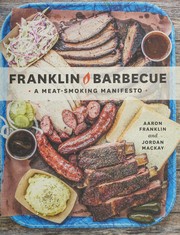
Zeroes in on beef and pork with obsessive detail on fire management, meat selection, and timing — essential reading for understanding why indirect heat and patience transform tough cuts.
The Science & Craft of Great Grilling
ExpertUnderstand the underlying science of heat transfer, the Maillard reaction, collagen breakdown, and moisture retention so you can diagnose problems and invent your own recipes with confidence.
▸ Study plan for this stage
Pace: 10–12 weeks total. Weeks 1–6: "The Food Lab" (~40–50 pages/day, focusing on the grilling, meat science, and heat-transfer chapters — particularly Parts 3, 4, and 5). Weeks 7–12: "Meathead" (~25–35 pages/day, reading linearly but pausing to re-read the science sections in "The Science of Barbecue" an
- Heat transfer modes (conduction, convection, radiation) and how each applies to direct vs. indirect grilling setups, as explained in The Food Lab's foundational chapters
- The Maillard reaction: the temperature threshold (~140–165°C / 285–330°F), the role of surface moisture, pH, and sugar content in browning depth and flavor complexity, covered in depth in both The Food Lab and Meathead
- Collagen-to-gelatin conversion: the time-and-temperature relationship (160–180°F sustained heat) that transforms tough cuts into tender ones, central to Meathead's low-and-slow philosophy
- Moisture retention and the myth of 'searing to seal': The Food Lab's experiments debunking moisture-sealing and the real mechanisms behind juiciness (fat content, fiber structure, resting)
- The 'reverse sear' technique: The Food Lab's case for low-then-high heat to achieve edge-to-edge doneness and superior crust formation
- Salt, brining, and dry-brining science: how osmosis and protein denaturing affect seasoning penetration and moisture retention, detailed in The Food Lab
- The smoke ring and smoke flavor: Meathead's explanation of myoglobin chemistry, nitric oxide, and wood-selection variables that drive smoke penetration and flavor
- Carryover cooking and resting: internal temperature rise after heat removal and how fiber relaxation redistributes juices, addressed in both books
- According to The Food Lab's experiments, why does searing NOT seal in juices, and what actually determines how juicy a grilled steak is?
- Meathead describes the smoke ring as cosmetic rather than a flavor indicator — what chemical reaction creates it, and why does it stop forming at a certain internal temperature?
- Using the heat-transfer principles from The Food Lab, explain why a two-zone fire (direct + indirect) gives you more control than a single-zone setup for thick cuts.
- What specific conditions (temperature, time, pH, surface moisture) must be met to maximize the Maillard reaction on a burger patty, drawing on both books?
- How does dry-brining 24–48 hours ahead (as advocated in The Food Lab) change the protein structure of a steak differently than a wet brine, and what are the practical grilling implications?
- Meathead argues for cooking to precise internal temperatures rather than time-based rules — using the collagen and protein denaturation science from both books, justify this approach for a pork shoulder vs. a chicken breast.
- 'Variable isolation' cook: Grill identical steaks changing only one variable at a time (surface dryness, salt timing, starting temperature) and record crust color, internal temp, and taste — directly testing The Food Lab's claims.
- Reverse-sear vs. traditional sear comparison: Cook two identical thick-cut ribeyes using each method as described in The Food Lab; photograph cross-sections and note the gradient of doneness from edge to center.
- Smoke wood blind tasting: Following Meathead's wood-flavor chart, smoke chicken thighs over three different woods (e.g., hickory, apple, cherry) and conduct a blind tasting with at least one other person to map flavor descriptors to wood type.
- Collagen breakdown experiment: Braise/smoke a cheap collagen-rich cut (beef short rib or pork spare rib) to three different endpoint temperatures (175°F, 195°F, 203°F), probe texture with a toothpick, and taste — visualizing Meathead's time-temperature gelatin curve.
- Dry-brine timeline test: Season four chicken pieces with the same amount of kosher salt at 0 hours, 1 hour, 12 hours, and 48 hours before grilling; compare moisture loss on the grill and final juiciness to validate The Food Lab's dry-brine science.
- Recipe invention challenge: Using only the scientific principles from both books (no copying an existing recipe), design and execute an original marinade or rub for a cut of your choice, writing a one-page 'hypothesis sheet' predicting how each ingredient will affect the Maillard reaction, moisture, and flavor — then evaluate your results honestly.
Next up: ">Mastering the 'why' behind heat, browning, and moisture in these two books gives you the diagnostic framework to confidently tackle more specialized techniques — such as regional barbecue styles, advanced smoke management, or live-fire cooking — without being dependent on recipes telling you what to do.

Explains the physics and chemistry behind searing, resting, brining, and temperature gradients — giving the experienced griller a scientific framework to troubleshoot and optimize any cook.

Applies food science directly and exclusively to live-fire cooking, debunking myths (searing 'seals in juices') and replacing them with data-driven rules for heat, timing, and flavor that cement mastery.
Discussion
Keep reading
Paths that share books, cover the same subject, or open a related topic.