The Best South Indian Cookbooks, in Order
This curriculum starts from a confident cooking baseline and moves from broad South Indian context and technique into the deep regional specifics of Tamil Nadu, Kerala, and beyond. Each stage builds on the last — first establishing the pantry, grammar, and iconic dishes, then diving into state-by-state mastery, and finally reaching the scholarly and artisanal level where fermentation science, temple traditions, and heirloom recipes live.
The South Indian Kitchen: Foundations & Fluency
IntermediateBuild a working pantry, understand the core flavor logic (tempering, coconut, tamarind, curry leaf), and successfully cook the essential canon: dosa, idli, sambar, rasam, and basic coconut curries.
▸ Study plan for this stage
Pace: 4–5 weeks, ~25–30 pages/day, with 2–3 cooking sessions per week
- The tempering (tadka) technique: how to bloom spices in hot oil/ghee to build foundational flavor layers
- Coconut as a core building block: fresh vs. dried, milk extraction, and its role in curries and batters
- Tamarind as the souring agent: paste preparation, balancing acidity, and its use in sambar and rasam
- Curry leaf as an aromatic anchor: its distinct flavor profile and essential role in South Indian tempering
- Fermentation fundamentals: how rice and lentil batters develop flavor and rise for idli and dosa
- The five-dish canon: dosa, idli, sambar, rasam, and coconut curries as the foundation of South Indian home cooking
- Regional variation within South India: how Tamil, Telugu, Kannada, and Malayalam cuisines share core techniques but differ in spice ratios and ingredients
- Pantry essentials: urad dal, rice, tamarind, coconut, curry leaves, mustard seeds, fenugreek, and asafoetida as non-negotiables
- What is tempering (tadka) and why is it the foundational technique in South Indian cooking? How does the sequence of spices matter?
- How do you make fresh coconut milk from scratch, and what is the difference between first and second extraction?
- Explain the role of tamarind in sambar and rasam. How do you prepare tamarind paste and adjust sourness in a dish?
- What makes curry leaf distinct from other herbs, and why is it non-negotiable in South Indian tempering?
- Walk through the fermentation process for dosa and idli batters: what happens chemically, how long does it take, and what signs indicate readiness?
- Describe the basic structure of sambar, rasam, and a coconut curry. What are the common elements and key differences?
- Make a basic tadka (tempering) with mustard seeds, urad dal, curry leaves, and dried red chili in ghee; taste and note how flavors bloom in sequence
- Extract fresh coconut milk in two stages from a whole coconut; compare the richness and use of first vs. second extraction in a test curry
- Prepare tamarind paste from dried tamarind pods; make a simple tamarind water and practice balancing sourness in a small batch of sambar
- Cook a batch of dosa batter from scratch (rice + urad dal); document the fermentation timeline, observe rise and aroma changes, then make 5–6 dosas
- Make idli batter and steam a batch of idlis; compare texture and rise to dosa batter and note the differences in fermentation behavior
- Prepare sambar from scratch using the book's recipe: roast spices, prepare tamarind, build the base, and cook with vegetables; taste and adjust seasoning
- Make a simple rasam (tomato or tamarind-based) following the book's method; practice the tempering and understand how it differs from sambar
- Cook a coconut curry (e.g., a simple vegetable curry with coconut milk and tempering); practice balancing coconut richness with tamarind sourness and spice
Next up: Mastery of these five foundational dishes and the core flavor logic (tempering, coconut, tamarind, curry leaf) equips you to explore regional specialties, advanced vegetable and protein preparations, and the deeper culinary traditions of each South Indian state.
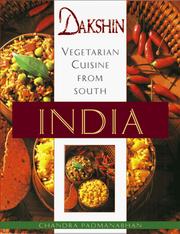
The definitive entry point for South Indian home cooking — covers all four southern states with clear recipes for idli, dosa, sambar, and chutneys. Its regional breadth gives the intermediate cook a reliable map of the whole cuisine before going deeper.
Tamil Nadu: The Heart of the Tradition
IntermediateMaster the Tamil pantry and technique in depth — Chettinad spice blends, temple-style cooking, the full sambar family, and the rice-and-curry meal (saapadu) as a composed system.
▸ Study plan for this stage
Pace: 4–5 weeks, ~25–30 pages/day, with 2–3 cooking sessions per week
- Chettinad spice blends as the foundation: understanding the role of dried chiles, fenugreek, coriander, cumin, and black pepper in creating the distinctive Chettinad flavor profile
- Tempering and layering techniques: how to build complexity through sequential addition of spices, coconut, and aromatics in Chettinad cooking
- The sambar family within Chettinad tradition: regional variations, spice ratios, and the role of sambar powder as a building block
- Temple-style cooking principles: vegetarian discipline, ingredient purity, and the spiritual-culinary connection reflected in Chettinad temple food
- Saapadu (the rice-and-curry meal) as a composed system: how individual dishes—curries, vegetables, pickles, chutneys—work together in a single meal
- Ingredient sourcing and substitution: identifying authentic Chettinad pantry staples and understanding when and how to adapt them
- The Bangala Table's approach to home cooking: translating restaurant/temple techniques into accessible domestic kitchen practice
- What are the core spices in a traditional Chettinad spice blend, and how do their proportions differ from other South Indian regional blends?
- Explain the technique of tempering in Chettinad cooking: why is the sequence of adding spices important, and what happens if you reverse it?
- How does the sambar family manifest in Chettinad cuisine, and what makes a Chettinad sambar distinct from Tamil Nadu sambar variations?
- What is saapadu, and how do the individual components (rice, curry, vegetable, pickle, chutney) function as an integrated meal system?
- Describe the role of vegetarianism and ingredient purity in temple-style cooking as presented in The Bangala Table, and how this influences flavor and technique.
- Given a Chettinad recipe, how would you identify which pantry staples are essential and which could be substituted without compromising the dish's integrity?
- Make a Chettinad spice blend from scratch (using whole spices) and document how the aroma and color change at each stage; compare it to a store-bought blend and taste-test both in a simple curry
- Prepare three different sambar recipes from the book (if available) or adapt sambar recipes to Chettinad style, noting how spice ratios and ingredient choices shift the flavor profile
- Cook a complete saapadu meal (rice, curry, vegetable side, pickle, chutney) from the book, plating and eating it as a composed system; reflect on how each component balances the others
- Practice the tempering technique with coconut and spices in isolation: make two versions of a curry—one with correct tempering sequence, one with reversed order—and compare the results
- Visit a local Indian market or online supplier and source authentic Chettinad pantry staples (dried chiles, fenugreek seeds, specific lentils); create a personal pantry inventory and note substitution options
- Recreate a temple-style vegetarian dish from the book and research the spiritual or ceremonial context behind it; cook it twice—once following the book's instructions, once with intentional modifications—and evaluate how technique and intention affect the outcome
Next up: This stage grounds you in the Tamil pantry and the systematic thinking behind Chettinad cooking, preparing you to explore how these techniques scale across the broader Tamil Nadu tradition and how they compare to or influence neighboring regional cuisines in South India.

A deeper companion to Chettinad Kitchen with more recipes and cultural context around the grand Nattukotai Chettiar feast tradition; builds directly on the spice knowledge from the previous book.
Kerala: Coconut, Coast & Toddy Shop
IntermediateUnderstand Kerala's distinct grammar — coconut milk curries (stew, mappas, molee), the Syrian Christian and Malabar Muslim traditions, seafood, and the contrast between Hindu Nair vegetarian cooking and the meat-rich coastal traditions.
▸ Study plan for this stage
Pace: 4–5 weeks, ~25–30 pages/day, with 2–3 days per week reserved for cooking practice
- Coconut milk as Kerala's foundational ingredient: its role in stews, mappas, and molees, and how it differs from coconut cream or oil
- The Syrian Christian culinary tradition: use of spices, meat preparation (especially chicken and mutton), and signature dishes like appam with stew
- The Malabar Muslim tradition: seafood-forward cooking, use of aromatic spices, and dishes like biryani and fish curries
- The Nair vegetarian Hindu tradition: vegetable-based curries, coconut and spice balance, and the philosophy behind meat avoidance
- Seafood as a defining element: how fish, shrimp, and crab are prepared differently across religious and regional communities
- The toddy shop culture: its social significance and connection to Kerala's coastal identity and informal dining
- Regional variations within Kerala: how geography (backwaters, coast, highlands) shapes ingredient availability and cooking methods
- The grammar of Kerala spicing: the interplay of coconut, black pepper, cardamom, cinnamon, and chiles as a coherent flavor system
- What is the structural difference between a Kerala stew, a mappa, and a molee, and how does coconut milk function differently in each?
- How do Syrian Christian and Malabar Muslim cooking traditions overlap and diverge, particularly in their use of meat and spices?
- What role does the Nair vegetarian tradition play in Kerala's overall culinary landscape, and how does it contrast with coastal meat-based cooking?
- How does Kerala's geography (backwaters, coastline, highlands) directly influence which ingredients and cooking techniques dominate in different regions?
- What is the toddy shop's cultural and social significance in Kerala, and how does it reflect the state's approach to food and community?
- How would you identify a dish as distinctly Kerala based on its spice profile, cooking method, and primary ingredients?
- Cook three versions of coconut milk curries from the book—one stew, one mappa, one molee—and document how the coconut milk behaves differently in each (thickness, emulsification, flavor integration)
- Prepare a Syrian Christian meal (e.g., chicken stew with appam) and a Malabar Muslim seafood dish (e.g., fish curry or biryani) side by side; taste and compare spice profiles, cooking times, and ingredient layering
- Make a vegetarian Nair-style curry (e.g., avial or olan) and a coastal seafood curry; reflect on how the absence or presence of meat changes the spice balance and cooking approach
- Visit or research a local toddy shop (or equivalent casual Kerala dining establishment) and order 2–3 dishes; document the social atmosphere, dish composition, and how it differs from formal restaurant dining
- Cook a seafood dish using three different Kerala techniques from the book (e.g., fish in coconut milk, shrimp in a spiced tomato base, crab in a dry curry); note how preparation method affects texture and flavor absorption
- Create a spice box (masala dabba) with Kerala's core spices (black pepper, cardamom, cinnamon, cloves, nutmeg, chiles) and use it to season 2–3 dishes, noting how proportions shift between vegetarian and meat-based curries
Next up: This stage establishes Kerala as a complete culinary system—one where coconut, spice, and religious/regional tradition form an inseparable grammar—preparing you to explore how these principles extend or transform in other South Indian cuisines and how Kerala's techniques influence modern Indian cooking.
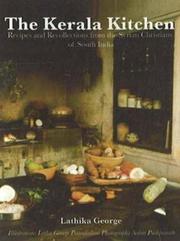
The most comprehensive English-language guide to Kerala cooking, covering all communities — Syrian Christian, Nair, Mappila Muslim — with clear recipes for fish molee, appam, and coconut curries. A perfect bridge from Tamil foundations into Kerala's distinct coconut-forward logic.
Going Deeper: Karnataka, Andhra & the Full South
ExpertExpand mastery to Karnataka's Udupi vegetarian tradition and Andhra's fiery, tamarind-heavy cooking; understand how each state's cuisine diverges from and relates to the Tamil and Kerala cores.
▸ Study plan for this stage
Pace: 6–8 weeks, ~25–30 pages/day, with 2–3 days per week dedicated to hands-on cooking practice
- Hyderabadi biryani as a synthesis of Mughal, Persian, and South Indian techniques—the layering method, dum pukht (slow cooking), and the role of basmati rice
- Tamarind as the foundational souring agent in Andhra cuisine—how it differs from coconut-based souring in Tamil and Kerala traditions
- The fiery spice profile of Andhra cooking: red chillies, black pepper, and cumin as the holy trinity, and their proportions in foundational masalas
- Andhra's vegetable and legume-forward dishes (gongura, brinjal, okra, lentils) and how they reflect the region's agricultural landscape
- The distinction between Hyderabadi court cuisine (influenced by the Nizams) and everyday Andhra home cooking
- Pickling and preservation techniques unique to Andhra (achaar, urundai) as expressions of regional identity and food security
- How Andhra's cooking philosophy balances heat, sourness, and umami differently than other South Indian states
- What are the key differences between Hyderabadi biryani and other South Indian rice dishes, and what cooking techniques make it distinctive?
- How does tamarind function in Andhra cuisine, and in what ways does its use differ from the souring agents preferred in Tamil and Kerala cooking?
- Describe the core spice trinity of Andhra cuisine and explain how the proportions of these spices create the region's characteristic flavor profile
- What role did Mughal and Persian influences play in shaping Hyderabadi cuisine, and how is this reflected in specific dishes from the cookbook?
- How do Andhra's vegetable dishes (such as gongura or okra preparations) reflect the region's climate and agricultural traditions?
- What are the main preservation and pickling techniques in Andhra cuisine, and why are they culturally and practically significant?
- Prepare a traditional Hyderabadi biryani from the cookbook, paying close attention to the layering, dum pukht method, and the balance of aromatics; document how each step differs from a simple pilaf or pulao
- Make a tamarind-based curry (such as a sambar-style preparation or a tamarind-heavy vegetable dish) and compare its flavor profile side-by-side with a coconut-based curry from a Tamil or Kerala source; note the differences in sourness, body, and finish
- Prepare at least three dishes featuring the core Andhra spice trinity (red chillies, black pepper, cumin) in different proportions—such as a dry curry, a wet curry, and a pickle—to understand how ratios shift flavor intensity
- Cook gongura (sorrel leaves) curry or another leafy green dish from the cookbook and research the plant's regional significance; reflect on how local ingredients shape regional identity
- Make an Andhra pickle or preserve (achaar or urundai) following the cookbook's method; document the fermentation or curing process and consider how preservation techniques connect to food security and cultural continuity
- Prepare a Hyderabadi haleem or another slow-cooked meat or legume dish, and compare the cooking philosophy (layering, slow cooking, spice integration) to a quick-cooked Andhra curry to understand the range within the cuisine
Next up: Mastery of Andhra's tamarind-forward, fiery flavor profile and Hyderabadi court cuisine establishes the full spectrum of South Indian regional diversity, positioning you to synthesize all four states' traditions and explore how modern chefs are reinterpreting classical South Indian cooking in the next stage.

A classic, authoritative guide to Andhra and Telangana cooking, with its signature gunpowder (podi), gongura (sorrel) dishes, and searingly hot curries — the sharpest contrast to Kerala's mildness and a crucial final dimension of the South Indian map.
Mastery & Scholarship: Culture, Fermentation & Heirloom Recipes
ExpertReach the scholarly and artisanal level — understand the science of fermentation, the history of South Indian food culture, and recover heirloom recipes that sit outside the mainstream cookbook canon.
▸ Study plan for this stage
Pace: 6–8 weeks, ~25–30 pages/day, with 2–3 days per week dedicated to recipe testing and fermentation experiments
- Food as cultural memory and identity: how South Indian cuisine encodes history, migration, and regional belonging across generations
- Fermentation as both science and tradition: understanding microbial processes in idli, dosa, and other staple preparations, and how fermentation shaped preservation and nutrition in pre-modern South India
- Heirloom recipes as living archives: recognizing recipes as carriers of family, caste, and regional knowledge that exist outside published cookbooks
- The role of spice, coconut, and rice in South Indian food culture: how geography and trade shaped ingredient hierarchies and flavor profiles
- Food and colonialism: how British rule, urbanization, and modernization altered South Indian eating practices and what was lost or transformed
- Women as custodians of culinary knowledge: the gendered labor and oral transmission of cooking expertise in South Indian households
- Regional variation within South India: understanding Tamil, Telugu, Kannada, and Malayalam food traditions as distinct yet interconnected systems
- How does Banerji use personal and family narratives to argue that food is a form of cultural memory? What specific examples does she provide?
- What is the scientific basis for fermentation in South Indian staples like idli and dosa, and why was this process crucial for nutrition and preservation before refrigeration?
- What are heirloom recipes, and why does Banerji argue they are important to document and preserve? How do they differ from recipes in mainstream cookbooks?
- How did colonialism and modernization change South Indian eating practices? What foods or traditions were lost or transformed, and what does Banerji suggest about recovery?
- What role do women play in the transmission of South Indian culinary knowledge, and how does gender shape who is recognized as a 'cook' or 'chef'?
- How do geography, trade, and regional identity shape the use of spices, coconut, and rice differently across Tamil Nadu, Andhra Pradesh, Karnataka, and Kerala?
- Document a family recipe (your own or from an elder): write down the ingredients, method, and the story behind it. Identify what makes it 'heirloom'—what knowledge or history does it carry that wouldn't be in a published cookbook?
- Conduct a fermentation experiment: prepare idli or dosa batter from scratch, document the fermentation process over 12–24 hours (noting smell, texture, rise), and research the microbial science behind the transformation. Compare results with a store-bought batter.
- Create a regional comparison chart: select one dish (e.g., sambar, rasam, or a rice preparation) and research how it varies across Tamil Nadu, Andhra Pradesh, Karnataka, and Kerala. Note ingredient substitutions, flavor profiles, and what these reveal about regional identity.
- Interview an elder (family member, friend, or community member) about their food memories: ask about childhood meals, ingredients that are now hard to find, cooking techniques they learned, and what they wish younger generations knew. Record and transcribe key passages.
- Read and annotate 2–3 passages from *Eating India* that moved you or challenged your assumptions about South Indian food. Write a 500-word reflection on why these passages matter and how they change your understanding of cuisine as culture.
- Prepare a meal using only heirloom or traditional South Indian techniques (hand-grinding spices, fermenting, tempering, coconut extraction). Document the time, labor, and sensory experience—reflect on what modern cooking shortcuts obscure.
Next up: This stage establishes the scholarly foundation and cultural-historical depth needed to engage with advanced texts on fermentation science, regional food anthropology, and the politics of culinary preservation—preparing you to move into specialized studies on specific regional traditions or the intersection of food and identity in South Asian diaspora communities.

A deeply researched culinary travelogue that places South Indian food in its historical, caste, and cultural context — essential reading for a cook who wants to understand *why* the cuisine is the way it is, not just how to cook it.
Discussion
Keep reading
Paths that share books, cover the same subject, or open a related topic.