Best Books on Punk Rock, in Reading Order
This curriculum takes you from punk's raw cultural origins through its defining scenes and bands, into the hardcore/DIY underground, and finally into the rich oral-history tradition that lets participants tell the story in their own words. Each stage builds the historical and musical vocabulary needed to fully appreciate the deeper, more scene-specific books that follow.
Foundations: What Punk Was and Why It Mattered
BeginnerUnderstand the social, cultural, and musical conditions that gave birth to punk on both sides of the Atlantic, and get a vivid feel for the era before diving into specific scenes.
▸ Study plan for this stage
Pace: 4–5 weeks, ~40–50 pages/day (the book is approximately 600 pages; read in 2–3 sittings per week to allow time for reflection and exercises)
- The pre-punk underground: how the New York Dolls, MC5, and proto-punk acts laid the groundwork for punk's explosion
- The role of venues like Max's Kansas City and CBGB in creating a community and launching pad for punk bands
- Punk as a reaction to 1970s cultural malaise, corporate rock bloat, and the decline of countercultural idealism
- The personalities and ethos of early punk pioneers (Iggy Pop, Lou Reed, Joey Ramone, Dee Dee Ramone) and how their lives embodied punk's transgressive spirit
- The intersection of music, fashion, drugs, and attitude in defining what punk *felt* like before it became a commercial phenomenon
- The transatlantic context: how American underground rock influenced British youth and created the conditions for the Sex Pistols and British punk
- Punk as a DIY and anti-establishment movement rooted in genuine alienation and artistic experimentation, not manufactured rebellion
- What were the key musical and cultural influences that led to punk rock's emergence in the early 1970s, and how does *Please Kill Me* illustrate these through specific bands and venues?
- How did CBGB and Max's Kansas City function as incubators for punk, and what role did the community and audience play in shaping the movement?
- What was the relationship between punk's early pioneers (like the Ramones, Iggy Pop, and the New York Dolls) and the drug culture of the era, and how did this affect the music and ethos?
- How did punk emerge as a direct response to the social and cultural conditions of the 1970s, and what specific grievances or frustrations did it articulate?
- What distinguishes punk from the corporate rock and glam rock that preceded it, according to the narrative in *Please Kill Me*?
- How did the American underground punk scene influence the British punk movement, and what does this tell us about punk's transatlantic nature?
- Create a timeline of key pre-punk and early punk bands mentioned in *Please Kill Me* (1960s–1976), marking when they formed, released albums, and played at CBGB or Max's Kansas City. Note how the timeline clusters around specific years.
- Listen to 3–4 albums referenced heavily in the book (e.g., *The Stooges*, *Raw Power*, *New York Dolls*, *Ramones*) while reading relevant chapters. Write 1–2 paragraphs on how the music matches or surprises you given the oral history.
- Map out the social network in *Please Kill Me*: create a diagram showing how key figures (Joey Ramone, Dee Dee Ramone, Iggy Pop, Lou Reed, etc.) knew each other, collaborated, or influenced one another. Annotate with key moments or conflicts.
- Write a 500-word personal reflection: What aspects of the pre-punk era and early punk scene resonate with you? What feels alien or difficult to understand? Use specific anecdotes from the book.
- Research one venue mentioned in the book (CBGB or Max's Kansas City) using archival photos, reviews, or documentaries. Write a short description of what made it a crucial space for punk's birth.
- Identify 3 moments in *Please Kill Me* where you see punk's anti-establishment or DIY ethos emerging. For each, write a sentence explaining why that moment matters to understanding punk's values.
Next up: Having absorbed the raw, lived experience of punk's birth through *Please Kill Me*, you'll be ready to examine how specific punk scenes (New York, London, Los Angeles) developed their own distinct identities and how punk evolved from underground movement to cultural force.
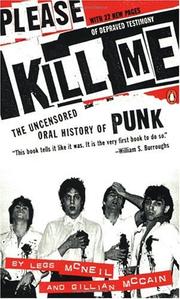
The perfect entry point: a propulsive, first-person oral history that covers the New York proto-punk world (Velvet Underground, Ramones, Television) and bleeds into London. Its conversational format requires no prior knowledge and immediately immerses you in the attitude and language of punk.
New York Origins: The American Side of the Story
BeginnerDeeply understand the New York punk and new wave scene — CBGB, the Ramones, Patti Smith, Television — as the seedbed from which global punk grew.
▸ Study plan for this stage
Pace: 4–5 weeks, ~40–50 pages/day (approximately 300 pages total; allows time for reflection and re-reading passages)
- CBGB as the physical and cultural epicenter of the New York punk scene—its role as a venue that nurtured raw, unpolished artistic expression
- The Ramones as the prototype punk band—their stripped-down sound, DIY ethos, and cultural impact on redefining rock music
- Patti Smith's artistic evolution from poet to punk rock icon and her influence on blending literary sensibility with rock performance
- The interconnection between visual art, photography, fashion, and music in the New York underground—how these disciplines cross-pollinated
- The concept of artistic authenticity and poverty as creative fuel—how economic hardship and outsider status drove innovation
- Television's role in bridging art rock and punk—their technical sophistication versus punk's raw energy
- The relationship between New York's punk scene and the broader countercultural rejection of commercialism and mainstream rock
- How personal relationships and mentorship (Smith and photographer Robert Mapplethorpe's friendship) shaped artistic development
- What made CBGB a unique venue, and how did its physical space and booking philosophy enable the emergence of punk rock?
- How did the Ramones' approach to songwriting, performance, and image differ from mainstream rock bands of the early 1970s, and why was this radical?
- Trace Patti Smith's artistic journey in 'Just Kids'—how did her background in visual art and poetry inform her music and stage presence?
- What was the relationship between Robert Mapplethorpe and Patti Smith, and how did their collaboration influence the aesthetic of the New York punk scene?
- How did the New York punk scene of the mid-1970s position itself against the commercial rock establishment, and what alternatives did it offer?
- What role did visual culture—photography, fashion, and visual art—play in defining the punk aesthetic alongside the music itself?
- Create a visual timeline of the key venues, bands, and figures mentioned in 'Just Kids' (CBGB, the Ramones, Television, Patti Smith, Robert Mapplethorpe)—annotate with dates and their interconnections
- Listen to the Ramones' debut album and Patti Smith's 'Horses' while reading relevant passages; write a 1–2 page reflection on how the music matches or complicates Smith's descriptions in the book
- Research and view Robert Mapplethorpe's photographs from the 1970s New York scene; write about how his visual aesthetic relates to the punk ethos Smith describes
- Write a character sketch of one figure from 'Just Kids' (Smith, Mapplethorpe, or another key person) based on how Smith portrays them—focus on their artistic philosophy and influence
- Visit or research CBGB's history (now closed, but well-documented); create a 'venue profile' that explains why it was essential to punk's emergence, using details from the book
- Identify 3–4 passages in 'Just Kids' where Smith describes the relationship between poverty/struggle and artistic creativity; annotate and discuss how economic hardship shaped the scene's aesthetic
Next up: Understanding the New York origins—the DIY ethos, the fusion of visual art with music, and the rejection of commercialism embodied by CBGB and the Ramones—provides the foundation for exploring how these ideas spread globally and evolved into the diverse punk movements of the late 1970s and beyond.

Smith's memoir of her formative years with Robert Mapplethorpe in late-60s/early-70s New York is the essential human document of the bohemian world that directly preceded and shaped CBGB-era punk. Its literary quality sets a high bar for everything that follows.
London: The Sex Pistols, the Clash, and British Punk
IntermediateMaster the British punk explosion of 1976–79 — its class politics, its key figures (McLaren, Lydon, Strummer), and how it differed from and amplified the New York original.
▸ Study plan for this stage
Pace: 8–10 weeks, ~40–50 pages/day (approximately 3–4 hours of reading per day). Start with *England's Dreaming* (4–5 weeks), then *Rotten* (2 weeks), then *Passion Is a Fashion* (2–3 weeks).
- The role of Malcolm McLaren as impresario and provocateur in shaping the Sex Pistols' image, ideology, and commercial strategy
- John Lydon's persona as Johnny Rotten: his working-class background, anarchist rhetoric, and tension between authenticity and performance
- The class politics of British punk—how it emerged from post-war austerity, deindustrialization, and youth alienation in 1970s Britain
- The Sex Pistols as a manufactured yet genuinely transgressive phenomenon: the interplay between McLaren's manipulation and the band's raw energy
- The Clash's evolution from punk purists to genre-blending experimentalists, and their commitment to political engagement beyond shock value
- How British punk differed from New York punk: emphasis on working-class anger, tabloid scandal, and explicit political messaging versus New York's art-world origins
- The role of the music press, moral panic, and censorship in amplifying punk's cultural impact (1976–79)
- The internal contradictions of punk ideology: anti-commercialism versus record deals, anti-establishment rhetoric versus mainstream success
- How did Malcolm McLaren's background in fashion and art inform his approach to managing the Sex Pistols, and what was his explicit vision for the band?
- What was John Lydon's working-class background, and how did it shape his worldview and his performance as Johnny Rotten?
- How did British punk's class politics and social context (1976–79) differ fundamentally from the New York punk scene that preceded it?
- Trace the Sex Pistols' rise and fall: what were the key moments (album release, TV appearance, tour, breakup) and how did media panic amplify their impact?
- What were the Clash's core political commitments, and how did their musical evolution (from punk to reggae, dub, and rock fusion) reflect or challenge punk orthodoxy?
- How did the British music press and tabloid media contribute to punk's cultural dominance, and what role did censorship play in the movement's mythology?
- Create a timeline of key Sex Pistols events (1975–78) using *England's Dreaming* and *Rotten*, marking moments of media scandal, musical releases, and internal conflict. Annotate each with the class or political significance Savage and Lydon assign to it.
- Write a 500-word character study of Johnny Rotten based on *Rotten*: analyze his claimed motivations, contradictions, and self-presentation. Then compare it to Savage's portrayal in *England's Dreaming*—where do they agree and diverge?
- Listen to the Sex Pistols' *Never Mind the Bollocks* and the Clash's *The Clash* (1977) back-to-back. Identify 3–4 sonic and lyrical differences that reflect their distinct class positions and political philosophies, grounding your observations in the books.
- Research one tabloid scandal from the Sex Pistols' career (e.g., the Bill Grundy interview, the Jubilee tour) using *England's Dreaming* as your primary source. Write a mock tabloid headline and article, then analyze how the actual media coverage shaped the band's mythology.
- Create a comparative chart: list 5–6 key Clash songs from *Passion Is a Fashion* and their political themes (e.g., 'White Riot,' 'London Calling'). For each, note what social/political moment it addressed and how it differed from Sex Pistols shock tactics.
- Conduct a close reading of one chapter from each book (e.g., Savage on the 100 Club Festival, Lydon on his relationship with McLaren, Gilbert on the Clash's recording process). Write 300 words on how each author's perspective and tone shapes the reader's understanding of British punk.
Next up: This stage establishes the ideological and historical foundations of British punk—its class anger, its key personalities, and its media-driven mythology—preparing you to explore how punk spread globally, mutated into post-punk and new wave, and influenced subsequent generations of rock and alternative music.
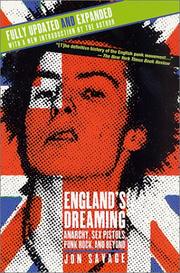
The definitive, scholarly-yet-readable history of British punk, centered on the Sex Pistols but covering the entire London scene. It is the canonical text on this subject and rewards the reader who now has New York context from earlier stages.

John Lydon's own account of the Sex Pistols gives the insider's combative perspective that complicates and enriches Savage's more analytical view — best read immediately after England's Dreaming while the events are fresh.

The authoritative biography of the Clash, the other pillar of British punk. Gilbert's thorough reporting on Strummer, Jones, and the band's political ambition shows how punk expanded beyond nihilism into something with a conscience.
Hardcore and DIY: Punk's Second Wave
IntermediateUnderstand how American hardcore and the global DIY ethic transformed punk from a media spectacle into a self-sustaining underground culture in the 1980s.
▸ Study plan for this stage
Pace: 8–10 weeks, ~40–50 pages/day (approximately 4–5 hours/week of reading plus exercises)
- The DIY ethic as punk's operational philosophy: how bands, labels, and fans rejected major label infrastructure and built independent distribution networks, booking systems, and recording methods
- Hardcore as a musical and cultural rejection of punk's commercialization: understanding how bands like Black Flag, Minor Threat, and Fugazi stripped punk back to raw intensity and ideological purity
- The economics of underground culture: how bands sustained themselves through low-budget touring, self-released records, all-ages venues, and direct fan relationships without radio or MTV support
- Regional scenes and their distinct identities: recognizing how American cities (Washington DC, Los Angeles, Boston, etc.) developed unique hardcore sounds and organizational structures
- The role of the individual artist-activist: how figures like Henry Rollins embodied the DIY ethos through relentless touring, personal integrity, and refusal to compromise with commercial pressures
- Zines, word-of-mouth, and alternative media: how information about shows, bands, and ideas circulated without traditional gatekeepers, creating a self-sustaining information ecosystem
- Tension between artistic integrity and survival: the recurring conflict between staying true to DIY principles and the practical need to pay rent, tour, and record
- How did the DIY ethic fundamentally change how punk bands operated in terms of recording, distribution, and touring compared to the 1970s punk era?
- What were the key differences between the first wave of punk (Sex Pistols, Ramones era) and the hardcore/second wave punk movement in terms of musical style, audience, and cultural goals?
- Using specific examples from the books, explain how bands like Black Flag and Fugazi maintained financial and artistic independence while sustaining their careers
- How did regional scenes (particularly DC and LA as covered in the texts) develop distinct identities within the broader hardcore movement?
- What role did Henry Rollins' personal philosophy and work ethic play in defining the hardcore punk ethos, and how is this reflected in his memoir?
- Describe the alternative infrastructure (venues, labels, distribution methods, zines) that allowed the underground punk scene to thrive without major label or mainstream media support
- Create a detailed timeline of key hardcore bands and labels mentioned in both books, mapping their formation, releases, and regional influence (1980–1990)
- Write a comparative analysis (2–3 pages) of how Henry Rollins' approach to touring and performance in 'Get in the Van' exemplifies the DIY ethic described in 'Our Band Could Be Your Life'
- Research and document one regional hardcore scene (DC, LA, Boston, or another) mentioned in the books; find primary sources (zines, interviews, record sleeves) and create a visual map of its key venues, bands, and labels
- Design a hypothetical DIY record label and tour strategy for a fictional hardcore band, using the economic and logistical principles described in both texts
- Identify 3–5 specific passages from each book that best illustrate the tension between artistic integrity and commercial survival; annotate them and write a reflection on how bands navigated this conflict
- Listen to full albums by at least 4 bands featured prominently in the books (e.g., Black Flag, Minor Threat, Fugazi, Rollins Band) and write listening notes connecting the music to the philosophies and stories described in the texts
Next up: This stage establishes the foundational DIY infrastructure and ideological framework that sustained punk underground culture; the next stage will likely explore how these principles evolved, fragmented, or influenced adjacent genres and global movements, or how the tension between underground purity and mainstream recognition ultimately reshaped punk's legacy.
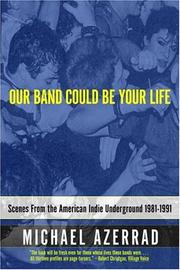
Azerrad's landmark book profiles thirteen American indie and hardcore bands (Black Flag, Minor Threat, Fugazi, Sonic Youth, and more) and is the essential text on DIY ethics and the post-punk underground. The New York and London foundations make every chapter richer.
Rollins's raw tour diary from his years fronting Black Flag is the ground-level, first-person companion to Azerrad's overview — visceral proof of what DIY punk actually felt and smelled like from the inside.
Deep Oral Histories and Critical Synthesis
ExpertSynthesize everything through the most detailed scene-specific oral histories and critical writing, hearing punk's story told by the people who lived it across multiple cities and decades.
▸ Study plan for this stage
Pace: 4–5 weeks, ~40–50 pages/day (with reflection breaks). "American Hardcore" is approximately 400 pages of dense interviews and scene documentation; allocate time to absorb multiple voices and regional variations without rushing through the oral testimony.
- Oral history as primary evidence: how firsthand accounts from musicians, venue owners, and fans reconstruct punk's lived reality across regions and decades
- Regional scene specificity: understanding how hardcore developed distinctly in DC, LA, Boston, New York, and other cities rather than as a monolithic movement
- DIY ethics and infrastructure: how punk communities built their own venues, labels, and distribution networks independent of major industry structures
- Punk as youth rebellion and class consciousness: the social and economic contexts that drove hardcore's emergence and sustained its appeal across generations
- Authenticity and commercialization tensions: how hardcore communities navigated the contradiction between anti-establishment values and inevitable industry interest
- Narrative authority: recognizing how oral histories privilege certain voices and perspectives, and what stories might be absent or marginalized
- How did the hardcore scenes in different cities (DC, LA, Boston, NYC) develop distinct characteristics, and what local factors shaped each region's approach to punk?
- What role did DIY venues, independent labels, and grassroots distribution play in sustaining hardcore communities outside mainstream music industry structures?
- How do the oral histories in 'American Hardcore' reveal the class backgrounds and socioeconomic motivations of punk musicians and fans?
- What tensions emerge in the interviews between punk's anti-commercial ideology and the inevitable pressures of industry attention and commercialization?
- How do the voices and perspectives represented in 'American Hardcore' construct a particular narrative of punk history—and whose stories might be underrepresented?
- What evidence does the book provide for punk as a sustained cultural movement across multiple decades, rather than a passing trend?
- Create a regional scene map: chart the key bands, venues, and figures from at least three different cities mentioned in 'American Hardcore,' noting how each scene's timeline and aesthetic differ
- Conduct a close reading of 3–4 extended interviews: select passages where a single interviewee discusses their motivations, creative process, or scene participation, and analyze what their account reveals about punk values and lived experience
- Trace the DIY infrastructure: document the specific venues, labels, and distribution methods mentioned across interviews, and map how they interconnected to create an alternative music economy
- Compare competing narratives: identify instances where different interviewees offer conflicting accounts of the same event or period, and write a brief analysis of what these disagreements reveal about memory and perspective
- Identify absences: note which voices, regions, or demographics are heavily featured versus underrepresented in the oral histories, and speculate on what alternative narratives might emerge from different perspectives
- Create an annotated timeline: build a chronological chart of key moments, bands, and scene shifts across the decades covered, using direct quotes from interviews to support each entry
Next up: This stage grounds you in the granular, human-centered reality of punk history through direct testimony, preparing you to evaluate how subsequent critical frameworks, theoretical interpretations, or revisionist accounts either honor or distort the lived experiences documented here.
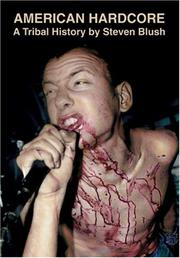
An exhaustive oral history of the American hardcore scene from 1980–86, drawing on hundreds of interviews. With all prior stages complete, the reader can now appreciate the granular scene politics and regional differences Blush documents.
Discussion
Keep reading
Paths that share books, cover the same subject, or open a related topic.