Best Books on Heavy Metal, in Reading Order
This curriculum takes you from a broad cultural grounding in heavy metal's origins all the way through its most extreme and philosophically complex subgenres. Each stage builds on the last — you'll first absorb the big picture and the founding mythology, then drill into specific movements (NWOBHM, thrash, death, black metal), and finally engage with metal as a living cultural and academic subject.
Foundations: The Birth of Heavy Metal
BeginnerUnderstand where heavy metal came from, who invented it, and why Black Sabbath are the genre's ground zero — building the essential vocabulary and historical timeline for everything that follows.
▸ Study plan for this stage
Pace: 4–5 weeks, ~40–50 pages/day (approximately 280–350 pages total across both books)
- Black Sabbath's formation in Birmingham and the industrial/working-class context that shaped their sound
- The role of blues, psychedelia, and classical music as foundational influences on early heavy metal
- How distortion, tuning, and amplification became deliberate artistic tools rather than accidents or flaws
- The concept of 'heaviness' as both sonic and lyrical—darkness, mythology, and social commentary as genre pillars
- Ozzy Osbourne, Tony Iommi, Geezer Butler, and Bill Ward's individual contributions to the Black Sabbath formula
- The distinction between heavy metal's emergence (1968–1970) and the proto-metal and hard rock that preceded it
- How 'Paranoid' and the self-titled album redefined what rock music could express emotionally and thematically
- The early metal scene's relationship to counterculture, drug use, and rejection of mainstream rock conventions
- Why is Black Sabbath considered the true birth of heavy metal rather than earlier hard rock bands, and what specific musical and lyrical innovations set them apart?
- How did the industrial landscape and working-class environment of Birmingham influence Black Sabbath's sound and worldview?
- What role did blues, psychedelia, and classical music play in shaping the early heavy metal sound, and how did Black Sabbath synthesize these influences?
- How did Tony Iommi's guitar technique—including his use of lower tunings and distortion—become a blueprint for heavy metal guitar playing?
- What distinguishes the lyrical themes and social commentary in Black Sabbath's early albums from the rock music of their contemporaries?
- How did the band's relationship with drugs, darkness, and mythology inform their artistic identity and public perception?
- Listen chronologically to Black Sabbath's first three albums (self-titled, 'Paranoid,' 'Master of Reality') while reading relevant chapters, noting how the sound evolves and how specific songs connect to the biographical details in the books
- Create a timeline document mapping key events in Black Sabbath's early years (formation, album releases, lineup changes) alongside broader cultural events (Vietnam War, counterculture movements, music industry shifts) to understand context
- Identify and document 3–4 specific songs from 'Louder than Hell' that exemplify the birth of heavy metal, then analyze their lyrics and instrumentation to explain why they qualify as 'metal' rather than 'hard rock'
- Write a 500-word essay comparing one Black Sabbath song to a blues or psychedelic rock predecessor, explaining how the metal version transformed the source material
- Create a 'influences map' showing how blues artists, psychedelic bands, and classical composers fed into Black Sabbath's sound, with specific examples from both books
- Interview or have a discussion with another reader about which band member (Iommi, Osbourne, Butler, Ward) was most essential to Black Sabbath's sound, using evidence from the books to support your argument
Next up: This stage establishes Black Sabbath as the foundational template for all heavy metal that follows, providing the historical, musical, and cultural vocabulary needed to understand how subsequent subgenres (doom, thrash, progressive, etc.) either built upon or rebelled against these core principles.

Mick Wall's authoritative full biography of Sabbath gives the complete arc from Birmingham working-class roots to global influence, cementing your understanding of why they matter before moving on.

A sweeping oral history told by the musicians themselves, covering every major subgenre in one volume — the ideal panoramic map of the whole territory you are about to explore in depth.
The British Invasion: NWOBHM and the Classic Metal Era
BeginnerGrasp how the New Wave of British Heavy Metal (Iron Maiden, Judas Priest, Motörhead) codified metal's aesthetics, speed, and attitude in the late 1970s and early 1980s.
▸ Study plan for this stage
Pace: 4–5 weeks, ~40–50 pages/day (approximately 250–300 pages total)
- Iron Maiden's rise as the flagship NWOBHM band and their role in defining the movement's sonic identity
- How speed, technical precision, and galloping rhythms became the hallmark of British heavy metal in the late 1970s–early 1980s
- The relationship between punk's DIY ethos and NWOBHM's rejection of progressive rock excess
- Bruce Dickinson's vocal style and stage presence as a defining element of metal's theatrical aesthetic
- The cultural and commercial context that allowed British metal to dominate globally while American metal struggled
- How album artwork, band imagery, and live performance codified metal's visual language and attitude
- The influence of earlier metal pioneers (Black Sabbath, Led Zeppelin) on NWOBHM's evolution
- What specific musical and stylistic elements did Iron Maiden introduce or perfect that became central to NWOBHM and heavy metal broadly?
- How did the New Wave of British Heavy Metal emerge as a reaction to both progressive rock and punk, and what did it retain from each?
- What role did Bruce Dickinson play in Iron Maiden's success, and how did his approach to vocals and performance differ from earlier metal frontmen?
- How did Iron Maiden achieve global commercial success in the early 1980s when American heavy metal was struggling or being dismissed?
- What is the relationship between Iron Maiden's visual aesthetic (album art, stage design, band imagery) and the broader metal culture they helped establish?
- How did Mick Wall's narrative in 'Run to the Hills' illustrate the personal, creative, and commercial pressures that shaped Iron Maiden's classic era?
- Listen chronologically to Iron Maiden's first three albums (1980–1982) while reading, noting how the band's songwriting, production, and Bruce's vocal delivery evolved across each record
- Create a timeline mapping Iron Maiden's key releases, tours, and lineup changes alongside major events in metal and popular music (1975–1985) to contextualize their rise
- Analyze the lyrics and themes of 3–4 signature Iron Maiden songs (e.g., 'Run to the Hills,' 'The Number of the Beast,' 'Hallowed Be Thy Name') and discuss how they reflect the band's worldview and metal's narrative interests
- Compare Iron Maiden's visual identity (album covers, stage presence, merchandise) to a contemporary non-metal band; identify what made metal's aesthetic distinctive and why it resonated
- Write a short character study (500–750 words) of one key figure in the book (e.g., Bruce Dickinson, Steve Harris, or Mick Wall himself) based on how Wall portrays their personality and creative choices
- Research and listen to 2–3 NWOBHM contemporaries (e.g., Judas Priest, Motörhead, Saxon) and compare their approach to Iron Maiden's; note what was universal to the movement and what was unique to Maiden
Next up: Understanding Iron Maiden's codification of speed, technical precision, and theatrical metal aesthetics in the early 1980s prepares you to explore how subsequent metal subgenres (thrash, death, black metal) either accelerated or rejected these NWOBHM foundations.

Iron Maiden are the NWOBHM's defining band; this authorized biography traces their rise from East End pubs to world domination, making the movement concrete and human.
Speed and Brutality: Thrash and Death Metal
IntermediateTrace how American bands pushed metal to its technical and aggressive extremes through thrash (Metallica, Slayer, Megadeth) and the emergence of death metal in Florida and beyond.
▸ Study plan for this stage
Pace: 4–5 weeks, ~40–50 pages/day. Start with "Justice for All" (weeks 1–2, ~250 pages), then "Choosing Death" (weeks 3–5, ~400 pages). Allocate 2–3 days per week for listening and note-taking alongside reading.
- The technical revolution of thrash metal: how Metallica, Slayer, and Megadeth weaponized speed, complexity, and precision to transform metal's sonic palette
- Thrash as a bridge between NWOBHM and extreme metal: understanding how British influences were Americanized and accelerated
- The role of the 'Big Four' (Metallica, Slayer, Megadeth, Anthrax) in establishing thrash as a dominant subgenre and commercial force
- Death metal's emergence from Florida's underground scene: how bands like Death, Morbid Angel, and Deicide synthesized thrash brutality with new vocal and compositional techniques
- The lyrical and ideological shift from thrash's social commentary to death metal's exploration of mortality, darkness, and extremity
- Production, recording, and studio innovation: how albums like 'Master of Puppets,' 'Reign in Blood,' and 'Leprosy' defined the sonic architecture of extreme metal
- The underground network and DIY ethos that sustained thrash and death metal despite mainstream resistance
- The relationship between technical virtuosity and raw aggression: how both genres balanced musicianship with visceral impact
- How did Metallica, Slayer, and Megadeth each contribute distinct approaches to thrash metal, and what made the 'Big Four' commercially and artistically significant?
- What were the key musical and lyrical differences between thrash metal and the death metal that emerged in the mid-to-late 1980s?
- How did the Florida death metal scene (Death, Morbid Angel, Deicide) differentiate itself from thrash, and what new techniques did these bands introduce?
- What role did underground networks, independent labels, and DIY distribution play in the growth of thrash and death metal despite mainstream radio resistance?
- How did production and recording technology influence the sound and impact of landmark thrash and death metal albums?
- What ideological and thematic shifts occurred in metal lyrics as the genre moved from thrash's social critique to death metal's exploration of extremity?
- Create a timeline mapping the release dates and key albums of the Big Four (Metallica, Slayer, Megadeth, Anthrax) alongside major death metal milestones; annotate with how each band's sound evolved
- Listen to 'Master of Puppets,' 'Reign in Blood,' and 'Peace Sells' back-to-back, then write a 500-word comparative analysis of their production, riff structures, and vocal approaches based on McIver's insights
- Trace the genealogy of one Florida death metal band (Death, Morbid Angel, or Deicide) through 'Choosing Death': document their influences, key albums, and innovations in a detailed band profile
- Analyze the lyrics from three thrash songs and three death metal songs; create a chart showing thematic differences (social commentary vs. mortality/darkness) and explain how Mudrian contextualizes this shift
- Interview or write a reflection: if you were a metalhead in 1985–1990, how would you have discovered thrash and death metal through underground networks? Use the books' discussion of zines, tape trading, and DIY distribution to inform your answer
- Produce a 'sonic breakdown' of one thrash and one death metal album: identify specific production choices, guitar techniques, and vocal styles that define each, citing examples from McIver and Mudrian
Next up: This stage establishes the technical and aggressive foundations of extreme metal, preparing you to explore how subsequent genres (black metal, grindcore, metalcore) either rejected or synthesized thrash and death metal's innovations.

The most thorough Metallica biography available, it charts thrash metal's rise from the Bay Area underground to mainstream dominance — the essential thrash case study.
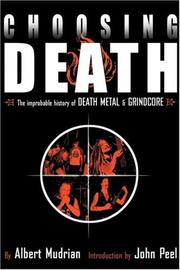
The definitive oral history of death metal and grindcore, built from hundreds of interviews; read after the thrash foundation so you can clearly hear the evolutionary leap.
Into the Abyss: Black Metal and Extreme Culture
IntermediateUnderstand black metal's Norwegian second wave — its ideology, church burnings, murders, and music — and how it became the most philosophically and controversially charged corner of metal.
▸ Study plan for this stage
Pace: 8–10 weeks, ~40–50 pages/day. Start with "Lords of Chaos" (4–5 weeks, ~500 pages), then "Black Metal" (4–5 weeks, ~400 pages). Allocate 1 week for review and synthesis.
- The Norwegian second wave as a deliberate ideological and musical reaction to 1980s thrash and death metal, driven by figures like Euronymous and Darkthrone
- The relationship between black metal's lo-fi production aesthetic and its anti-commercial, anti-establishment ethos
- Church burnings and murders (Euronymous's death, the Fantoft stave church arson) as watershed moments that defined black metal's public image and internal schisms
- Black metal's engagement with paganism, anti-Christianity, and European nationalism as core lyrical and philosophical frameworks
- The tension between black metal's underground DIY ethics and its eventual commodification and mainstream recognition
- Key figures and their competing visions: Euronymous's Satanic theatricality vs. Varg Vikernes's ecological paganism vs. Fenriz's artistic puritanism
- How black metal's extreme ideology and violence became inseparable from its musical identity in the public consciousness
- The role of record labels, zines, and underground networks in spreading black metal's influence and mythology
- What specific musical and ideological factors made the Norwegian second wave distinct from earlier thrash and death metal movements?
- How did the murders and church burnings shape black metal's trajectory, and what were the different ideological positions within the scene regarding these events?
- What were Euronymous's and Varg Vikernes's competing visions for black metal, and how did their conflict reflect deeper philosophical divisions in the genre?
- How did black metal's lo-fi production aesthetic become a deliberate statement rather than a limitation, and what does this reveal about the genre's values?
- What role did paganism, anti-Christianity, and European nationalism play in black metal's ideology, and how did these themes vary among key artists?
- How did black metal navigate the contradiction between its anti-commercial ethos and its eventual mainstream recognition and commodification?
- Create a timeline of key events from 'Lords of Chaos' (band formations, albums, murders, church burnings) and cross-reference with 'Black Metal' to identify how Patterson contextualizes Moynihan's narrative within broader genre evolution
- Write a comparative character study of Euronymous, Varg Vikernes, and Fenriz based on both books, analyzing how their ideological differences shaped their musical and business decisions
- Listen to 3–4 canonical albums from the Norwegian second wave (e.g., Darkthrone's 'A Blaze in the Northern Sky', Burzum's 'Hvis lyset tar oss', Mayhem's 'De Mysteriis Dom Sathanas') while reading relevant chapters, noting how production quality and song structure reflect the philosophical positions described in the texts
- Analyze a specific event (e.g., Euronymous's murder, the Fantoft church burning) by extracting accounts from both 'Lords of Chaos' and 'Black Metal', then write a synthesis essay examining how the two authors' interpretations differ and what those differences reveal about their analytical frameworks
- Create a visual map of the Norwegian black metal network circa 1990–1993 (bands, labels, key figures, rivalries) using details from both books to understand how ideology spread and fractured within a tight-knit scene
- Research and write a 1,000-word reflection on how black metal's anti-commercial stance coexists with its current status as a documented, commodified, and academically studied genre—use specific examples from both texts to ground your argument
Next up: This stage establishes black metal as a philosophically coherent and historically turbulent movement, preparing you to explore how its ideology, aesthetics, and violence influenced subsequent metal subgenres and how the genre has been reinterpreted, commercialized, and theorized in contemporary culture.

The landmark — and controversial — document of the Norwegian black metal scene; essential primary reading that puts you inside the ideology and events before you analyze them critically.

A comprehensive, band-by-band account of black metal's global spread that corrects and expands on Lords of Chaos — read second to get the fuller, more balanced picture.
Metal as Culture: Academic and Critical Perspectives
ExpertEngage with metal as a sociological, philosophical, and musicological phenomenon — understanding its communities, gender politics, global reach, and lasting cultural meaning.
▸ Study plan for this stage
Pace: 8–10 weeks, ~25–30 pages/day (approximately 2 weeks per book with time for reflection and exercises)
- Metal as a distinct subculture with its own values, aesthetics, and social structures
- The role of gender, masculinity, and identity politics within metal communities
- Metal's global expansion and localization across different cultural contexts
- The philosophical and existential themes embedded in metal music and lyrics
- Metal's relationship to mainstream society, rebellion, and social marginalization
- The musicological features that define metal (distortion, virtuosity, production techniques)
- Metal fandom as a form of community-building and social bonding
- The evolution of metal subgenres and their subcultural meanings
- How does Weinstein define metal as a subculture, and what are its core values and aesthetic principles?
- What role does gender play in metal communities, and how do metalheads negotiate masculinity and femininity within the scene?
- According to Arnett's research, what psychological and social functions does metal fandom serve for its adherents?
- How has metal spread globally, and what does localization of metal look like in different regions?
- What philosophical or existential themes are central to metal music and its appeal to listeners?
- How do metalheads construct identity and community through their engagement with the music and subculture?
- What is the relationship between metal's rebellious image and its actual social impact or threat level?
- How do different metal subgenres reflect distinct subcultural values and attract different audiences?
- Create a detailed subcultural profile: Map out the core values, aesthetics, symbols, and social norms of metal culture based on Weinstein's framework. Compare this to another subculture (punk, hip-hop) to identify what makes metal distinct.
- Conduct a gender analysis: Select 3–5 metal songs or album covers and analyze how they represent gender, masculinity, and power. Write a 2–3 page reflection on patterns you notice and how they align with or challenge Arnett's findings.
- Interview or survey metalheads: Conduct 3–5 informal interviews with metal fans about why they identify with the music, what community means to them, and how metal has shaped their identity. Synthesize findings into a brief report.
- Trace metal's global journey: Research how metal has been adopted and transformed in 2–3 non-Western countries (e.g., Indonesia, India, Brazil). Write a case study showing how local contexts reshape metal's meaning and practice.
- Lyrical and philosophical analysis: Select 5–10 songs across different subgenres and identify recurring philosophical themes (nihilism, transcendence, social critique, etc.). Create an annotated document showing how these themes connect to Weinstein's theoretical framework.
- Create a metal subgenre taxonomy: Build a visual map or document organizing metal subgenres by their musicological features, subcultural values, and target audiences. Use examples from both books to justify your categorizations.
- Comparative media analysis: Analyze how metal is portrayed in 2–3 different media sources (documentaries, news articles, academic texts). Discuss how these representations align with or distort the lived reality described by Arnett and Weinstein.
- Personal reflection essay: Write a 3–5 page essay exploring your own relationship to metal culture—whether as an insider, outsider, or observer—and how Weinstein's and Arnett's frameworks have shaped your understanding of the subculture.
Next up: This stage establishes metal as a legitimate subject of academic inquiry and cultural analysis, equipping you with theoretical frameworks and empirical research to understand metal's social meaning; the next stage will likely deepen your engagement by exploring specific historical moments, regional scenes, or contemporary issues within metal culture with greater granularity.

The foundational academic text on metal as a sociological subculture; Weinstein gives you the theoretical tools to understand why metal means what it means to its fans.

A psychologist's empirical study of metal fans that humanizes and complicates the 'dangerous music' narrative — a fitting capstone that asks what metal actually does for people.
Discussion
Keep reading
Paths that share books, cover the same subject, or open a related topic.