More has been written about Hitchcock than about almost any other director, and the books do not agree with each other. Some treat him as a technician, some as an auteur with a coherent moral vision, some as a troubled man whose private conduct explains his films. Reading them in a haphazard order produces a muddle, because each book is arguing against another one you have not read yet.
The clean sequence is: hear Hitchcock explain his own method, then get the life, then get the critical readings that dispute both, then go deep on individual films where the archival record settles what the arguments cannot.
Start with Hitchcock explaining himself
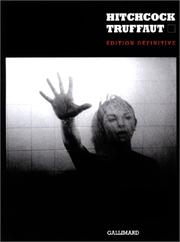
Hitchcock by François Truffaut — the book everyone calls Hitchcock/Truffaut — is a fifty-hour interview covering every film in sequence, illustrated with frame enlargements. Nothing else on this path teaches you more per page about how suspense is actually constructed, because Hitchcock walks through his own decisions shot by shot. Read it first and every later book becomes a response to something you already understand.
Then the life, and its controversy
Dark Side of Genius by Donald Spoto is the major biography, and it is where the darker account of Hitchcock's treatment of his leading actresses, particularly Tippi Hedren, entered the mainstream. It is thorough and it is contested: later biographers and some collaborators have disputed Spoto's emphasis and sourcing, arguing he reads the films back into the man. Read it, and read it knowing the disagreement exists rather than treating it as settled.
Move into the critical readings
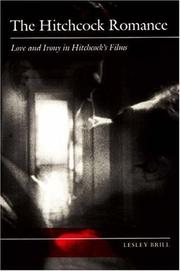
The Hitchcock romance by Lesley Brill argues for Hitchcock as a fundamentally romantic and redemptive filmmaker, which is a deliberate corrective to the reading of him as a cold ironist. Then Hitchcock's films revisited by Robin Wood is the essential critical text: Wood's original book made the case for Hitchcock as a serious artist when that was not the consensus, and the revised edition adds his later reconsiderations, including his own reassessment through a gay and Marxist critical lens. The two books disagree productively; take neither as the final word.
Go into the archive
Hitchcock's notebooks by Dan Auiler is the primary-source volume — treatments, storyboards, memos, script pages — showing the production machinery behind the finished films. It answers questions the criticism can only speculate about, such as how much of a famous sequence was designed on paper before shooting.
Then two single-film books. Auiler's Vertigo reconstructs that production in detail, including the restoration, and Alfred Hitchcock and the Making of Psycho by Stephen Rebello is the best production history on this list: the Ed Gein source material, the studio's resistance, the television crew, the shower sequence and the marketing campaign. Rebello reads like a thriller and remains reliable on the record.
If you are only reading two
Read Hitchcock by Truffaut and Rebello's Alfred Hitchcock and the Making of Psycho. The first gives you the method across a career; the second shows the method under pressure on one film. The biography and criticism are richer once you have both, and much harder to judge without them.
Follow the whole path in order if you want the arguments to land in the sequence their authors intended.
Follow the full ordered path here: Best Books on Alfred Hitchcock, in Reading Order.
Ready to learn something deeply?
Build a reading path — free