Baroque art is easy to enjoy and easy to misread. The drama, the diagonals, the raking light and the theatrical gesture are immediately impressive, which is exactly what they were designed to be. But the style was not a mood. It emerged from a specific argument — the Catholic Church's response to the Reformation, and its decision that images should move the viewer to devotion rather than merely instruct.
That means the context is not background reading. A Bernini altar, a Caravaggio conversion scene and a Rubens altarpiece are all arguments in a religious controversy, and the Protestant Dutch painting of the same decades is what happens when that patronage system is absent. Get the history first and the pictures resolve.
Get the shape of the period
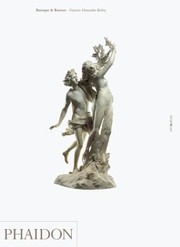
Begin with Baroque And Rococo by Gauvin Alexander Bailey, a well-illustrated survey that covers the period across Europe and, unusually, into Latin America and Asia where Baroque forms travelled with missionary networks. It gives you the chronology, the main figures and the geographic spread before you commit to any single artist.
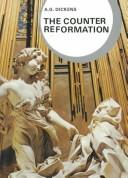
Then The Counter Reformation by A. G. Dickens supplies the religious history the art depends on: the Council of Trent, the new orders, the reform of devotional practice, and the specific decisions about imagery that shaped what artists were asked to produce. Read it and the difference between a Roman altarpiece and a Dutch interior stops being a matter of taste.
Go to Rome, where it started
The Genius of Rome 1592-1623, edited by Beverly Louise Brown, covers the crucial three decades in the city where the style formed — Caravaggio, Annibale Carracci, the Northern painters working in Rome, and the patronage networks that commissioned them. Exhibition catalogues of this quality are the best value in art history: serious scholarship attached to excellent plates of the specific works being discussed.
Then Bernini, who is the Baroque more completely than any painter. Bernini by Franco Mormando is the major modern biography, and it is refreshingly unsentimental about a man who was brilliant, devout, ruthlessly self-promoting and, on the documentary record, capable of appalling violence. Bernini and the art of architecture by Tod Marder handles the other half of his output — the Baldacchino, the Cornaro Chapel, the colonnade at St Peter's, the church at Sant Andrea al Quirinale — where sculpture, architecture and light are designed as a single machine for producing an effect on a body standing in a room.
Cross the Alps
Rubens and Italy by Michael Jaffe tracks the eight years the young Rubens spent absorbing Italian art and shows how the international Baroque style was actually transmitted — through copying, court service and diplomacy as much as through influence in the abstract.
Then the Protestant north. Rembrandt's eyes by Simon Schama is long, discursive and superb, structured as a double biography of Rembrandt and Rubens that makes the contrast between Catholic court painter and Dutch republican independent do real analytical work. Schama's speculative passages have their critics; read them as a historian imagining rather than reporting.
Learn how to look
Close with Painting and experience in fifteenth century Italy by Michael Baxandall. It is not a Baroque book — it is about the Quattrocento — and it earns its place because it teaches the method better than anything on the shelf. Baxandall reconstructs the period eye: what a fifteenth-century viewer knew about gauging barrels, dance gesture and preaching, and how that equipment shaped what a painting could communicate. Apply the same question to Baroque work and everything sharpens.
Follow the full path in order and Baroque drama stops reading as style and starts reading as argument.
Follow the full ordered path here: How to Learn Baroque Art From Books, in Order.