The Bauhaus is the rare design movement whose name outran its own history. Most people meet it as a look — tubular steel, sans-serif type, primary colours on white — and never learn that it was an actual school with three directors, three cities, constant money trouble, and a faculty who disagreed with each other about nearly everything. That gap is why reading order matters here: if you start with the theory books, you get mysticism and geometry with no idea who was arguing with whom, or why.
The other trap is treating the Bauhaus as a single style. It began in 1919 with Expressionist woodcuts and a mystical preliminary course; by 1928 it was pursuing industrial mass production. A good path shows you the institution first, then lets you read the teachers on their own terms, then puts the workshops and the politics back around them.
Start with the school itself
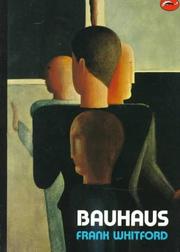
Begin with Bauhaus by Frank Whitford — still the most useful single-volume introduction, because it moves chronologically through Weimar, Dessau and Berlin and keeps the personalities in view. You come away knowing why Gropius hired a Theosophist to teach the foundation course and why that decision later had to be undone.
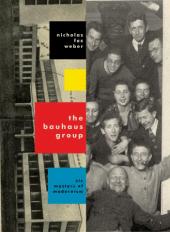
Follow it with The Bauhaus group, Nicholas Fox Weber's collective biography of six central figures — Gropius, Klee, Kandinsky, Albers, Anni Albers and Mies. It is gossipy in the best sense, and it explains the school's contradictions through the people who embodied them. Read these two and the theory that follows stops feeling arbitrary.
Then the masters, in their own words
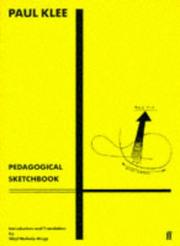
Now go to the teaching texts, which are short and strange and repay slow reading. Pedagogical sketchbook is Paul Klee's compressed notebook on line, movement and growth — forty pages that art students have been arguing about for a century. Point and line to plane is Kandinsky's attempt to build a grammar of abstract form, more systematic than Klee and considerably more dogmatic.
Then The elements of color, Johannes Itten's distillation of his colour course. This is the practical one: contrast types, the colour sphere, exercises you can actually do with paint. If you only want one theory book from this group, take Itten; if you want the one that shaped how artists talk, take Klee.
The workshops, the type, and the politics
The last stretch puts the school back in the world. Bauhaus 1919-1933: Workshops for Modernity is the MoMA exhibition catalogue and the best object-by-object survey — weaving, metalwork, ceramics, stagecraft, the parts usually crowded out by the furniture. It is also where the women of the Bauhaus finally get proportionate space.
The New Typography is Jan Tschichold's 1928 manifesto for asymmetric, sans-serif, grid-based layout — the document that carried Bauhaus thinking into everyday printed matter. Tschichold later repudiated much of it, which makes reading it more interesting, not less.
Close with The Bauhaus idea and Bauhaus politics by Éva Forgács, which asks the question the picture books avoid: what did this school actually believe, and how did those beliefs bend under Weimar-era pressure and then break under the Nazis? Historians disagree about how political the Bauhaus really was — Forgács argues it was thoroughly so, others read it as a mostly aesthetic project that politics happened to. Read her as the strong version of that case.
Work through the whole sequence and the Bauhaus stops being a style and becomes an argument you can follow. Follow the full path for the stage-by-stage plan, or browse the Bauhaus hub for related reading.
Follow the full ordered path here: The Best Bauhaus Books to Read First, in Order.