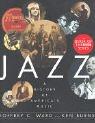
Rock history: the albums, the chaos, the story
This curriculum traces rock music's full arc — from its Delta blues and R&B roots through the classic rock era, punk, and the modern age — across four carefully sequenced stages. Each stage builds on the last: you'll first absorb the big picture, then zoom into the defining eras and scenes, then go deep inside the creative process through memoirs, and finally wrestle with rock's cultural meaning and legacy.
Foundations: The Big Picture
BeginnerGrasp rock and roll's full sweep — its African-American roots, key turning points, and major figures — so every later book has a map to hang on.
▸ Study plan for this stage
Pace: 8–10 weeks total: Weeks 1–6 for Ed Ward's "The History of Rock & Roll" (~30–35 pages/day, 5 days/week), then Weeks 7–10 for Greil Marcus's "Mystery Train" (~20–25 pages/day, 5 days/week — slower pace to absorb the dense cultural analysis).
- The African-American musical lineage (blues, gospel, R&B, boogie-woogie) as the direct seedbed of rock and roll, as traced chronologically in Ward's narrative
- The role of independent record labels, radio DJs (e.g., Alan Freed), and regional scenes in breaking rock and roll into the mainstream during the 1950s
- The tension between Black originators and white commercial appropriation — a thread Ward documents across decades and Marcus interrogates culturally
- Key turning-point moments Ward identifies: the mid-50s explosion, the British Invasion, psychedelia, punk, and MTV's rise, and how each reshuffled the genre's identity
- Greil Marcus's method of 'cultural criticism': reading individual artists (Robert Johnson, Sly Stone, Randy Newman, Elvis Presley, The Band) as mirrors of deeper American myths and contradictions
- Elvis Presley as a dual symbol — Ward treats him as a historical pivot point; Marcus treats him as an American archetype embodying promise and self-destruction
- The concept of 'the old, weird America' (Marcus's invisible republic of folk and vernacular culture) as a hidden foundation beneath rock's surface history
- How rock and roll is simultaneously a commercial product, a cultural force, and a vehicle for identity — a tension both books illuminate from different angles
- According to Ward, what specific musical and social conditions in the late 1940s and early 1950s made the emergence of rock and roll possible, and which figures were most pivotal in that moment?
- How does Ward characterize the impact of the British Invasion on American rock — was it a rupture, a continuation, or both?
- Marcus argues that certain artists carry the weight of American mythology. Using his essays on Elvis and The Band, what specific myths is he identifying, and how do those artists embody or betray them?
- What does Marcus mean by 'the old, weird America,' and how does Robert Johnson's chapter connect that idea to rock's deepest roots?
- Where do Ward's historical account and Marcus's cultural criticism agree or productively contradict each other — for example, on Elvis or on the meaning of the 1960s?
- After reading both books, how would you explain to someone why rock and roll could only have emerged from America at that particular historical moment?
- Build a living timeline: As you read Ward, keep a running one-page timeline (paper or digital) marking every artist, label, and event he flags as a turning point. After finishing Marcus, annotate that same timeline with his cultural observations — this creates your personal 'map' for the rest of the curriculum.
- Listening log: For every major artist Ward names, listen to at least one canonical track before moving to the next chapter. For Marcus's subjects (Robert Johnson, The Band, Sly Stone, Randy Newman, Elvis), listen to the specific albums he analyzes (e.g., 'Music from Big Pink,' 'There's a Riot Goin' On') while reading his essay on that artist.
- Write a one-paragraph 'artist profile' for five figures from Ward's book — one from the 1950s, one from the 60s, one from the 70s, one from the 80s, and one you found surprising. Focus on why Ward considers each historically significant.
- Marcus response journal: After each essay in 'Mystery Train,' write half a page answering: What is the central American myth or contradiction Marcus is exploring here? Do you find his argument convincing? Use at least one specific lyric or moment from the music to support your view.
- Comparison essay (500–700 words): Choose one artist covered by both Ward and Marcus (Elvis is the strongest choice) and write a short essay contrasting how each author frames that artist's significance. What does the historical lens reveal that the cultural lens misses, and vice versa?
- Draw a 'roots map': Create a simple diagram showing the musical genres (blues, gospel, country, R&B, rockabilly, soul, etc.) and how Ward traces their convergence into rock and roll. Add arrows showing influence and note at least one key artist per genre.
Next up: Having built a chronological skeleton from Ward and a cultural interpretive lens from Marcus, the reader is now equipped to approach deeper, more specialized books — whether focused on a single era, subgenre, or artist — with both a historical map and a critical vocabulary already in place.

A comprehensive, chronological narrative written for general readers, covering the music's origins through the 1970s. It gives beginners the essential timeline and cast of characters before diving into any single era.
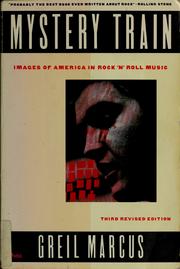
The foundational work of American rock criticism, connecting rock and roll to the deeper currents of American culture and myth. Reading it second lets you apply Ward's facts to Marcus's bigger ideas about what this music means.
The Formative Eras: Blues, Birth, and the British Invasion
BeginnerUnderstand the specific roots — Delta blues, early rock and roll, and the 1960s British explosion — that shaped everything that followed.
▸ Study plan for this stage
Pace: 10–12 weeks total: ~3–4 weeks per book at roughly 25–35 pages/day. "Last Train to Memphis" (576 pp): weeks 1–4; "The Beatles Anthology" (368 pp, heavily visual): weeks 5–7 at a relaxed 20–25 pages/day; "Catch a Fire" (500 pp): weeks 8–11, ~30 pages/day. Reserve week 12 for review, reflection, and ex
- The Delta Blues as the DNA of rock: how artists like Robert Johnson and the Mississippi blues tradition — explored through Guralnick's portrait of Elvis — fed directly into early rock and roll's rhythmic feel, call-and-response structures, and emotional rawness
- Elvis Presley as cultural catalyst: Guralnick's 'Last Train to Memphis' shows how Elvis synthesized Black blues and gospel with white country music at Sun Studio, creating a new sound that broke racial and cultural barriers in mid-1950s America
- The role of the recording industry and radio in launching rock and roll: how Sam Phillips, Sun Records, and regional radio stations acted as gatekeepers and amplifiers of the new genre
- The British Invasion as a feedback loop: 'The Beatles Anthology' reveals how British musicians — deeply reverent students of American blues and early rock and roll — repackaged and returned that music to global audiences with new energy and sophistication
- Collaborative songwriting and band identity: the Lennon-McCartney partnership documented in 'The Beatles Anthology' introduced a new model of rock authorship that shifted power from producers to artists
- The Beatles' evolution from covers to originals: tracing how their Hamburg and Cavern Club years forged a live-performance discipline that underpinned their later studio innovation
- Reggae and the African diaspora as a parallel root: Timothy White's 'Catch a Fire' introduces Bob Marley and Jamaican music as another non-American tributary feeding into the broader rock and popular music ecosystem, rooted in Rastafari, Ska, and Rocksteady
- Cross-cultural transmission and appropriation: all three books collectively illustrate how rock music has always been a conversation across cultures, geographies, and racial identities
- According to Guralnick in 'Last Train to Memphis,' what specific musical and cultural ingredients did Elvis Presley blend at Sun Studio, and why was that fusion historically significant?
- How does 'The Beatles Anthology' describe the band's early exposure to American blues and rock and roll, and which specific artists did they cite as primary influences?
- In what ways did the Hamburg years, as recounted in 'The Beatles Anthology,' shape the Beatles' sound and stage presence before they became famous?
- How does Timothy White's 'Catch a Fire' connect Bob Marley's Jamaican roots — including the influence of Ska and Rocksteady — to the broader story of rock and popular music's global spread?
- What common thread of social and economic marginalization runs through the origin stories of Elvis (Guralnick), the Beatles (Anthology), and Bob Marley (White), and how did that shape their music?
- How do all three books together illustrate the concept of cultural exchange — music crossing racial, national, and class boundaries — as a defining engine of rock history?
- Listening log: For each chapter or section of 'Last Train to Memphis,' identify one song Elvis recorded or was influenced by and listen to it alongside the original blues or gospel version. Write 3–5 sentences comparing the two — note rhythm, vocal style, and emotional tone.
- Influence map: After finishing 'The Beatles Anthology,' draw a hand-drawn or digital web connecting the Beatles to every artist, genre, or scene they mention as an influence. Draw a second layer showing artists the Beatles later influenced. Reflect on how the web illustrates the 'feedback loop' of the British Invasion.
- Side-by-side reading journal: While reading 'Catch a Fire,' keep a two-column journal — left column for moments where Marley's story parallels Elvis's or the Beatles' (poverty, cultural fusion, industry friction), right column for where they diverge. Use this to write a one-page reflection on what 'formative era' means across different cultures.
- Timeline construction: Build a single master timeline spanning 1945–1970 that plots key events from all three books — Elvis's first Sun session, the Beatles' Ed Sullivan debut, Marley's first recordings, etc. — alongside major world events (Civil Rights Movement, Jamaican independence). Identify at least three moments where history and music visibly intersect.
- Persona interview: Choose one figure from each book (e.g., Sam Phillips from Guralnick, George Harrison from the Anthology, Lee 'Scratch' Perry from White) and write a one-page mock interview where they answer: 'What did you think rock and roll could become?' Use only details grounded in the books.
- Comparative essay (500–700 words): Using evidence from all three books, answer the question: 'Is rock music fundamentally American, or is it the product of a global conversation?' Cite specific scenes, quotes, or anecdotes from Guralnick, the Beatles Anthology, and White to support your argument.
Next up: By grounding the reader in the blues-to-rock-to-global-spread arc across these three books, this stage builds the historical and cultural literacy needed to understand the genre fragmentation, countercultural rebellion, and artistic experimentation that define the next era of rock's evolution.
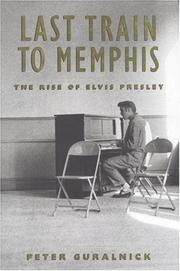
The definitive biography of Elvis Presley's rise, and by extension the birth of rock and roll itself. Guralnick's meticulous research shows exactly how blues, country, and gospel fused into something new.
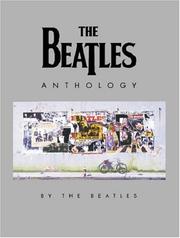
The band's own oral history, told in their words, covering the British Invasion from the inside. After reading about American origins, this book shows how the music crossed the Atlantic and transformed globally.

Broadens the picture by showing how rock's energy merged with Jamaican rhythm and blues — a reminder that the story was always international and cross-cultural, not just Anglo-American.
Inside the Machine: Memoirs from the Front Lines
IntermediateExperience the creative process, the road, the studios, and the chaos of rock life through first-person accounts by the artists who lived it.
▸ Study plan for this stage
Pace: 8–10 weeks total: ~2.5–3 weeks per book at roughly 20–25 pages/day. Suggested breakdown — "Just Kids" (weeks 1–3), "Life" (weeks 4–6), "Hunger Makes Me a Modern Girl" (weeks 7–9), with week 10 reserved for reflection, cross-book comparison, and completing exercises.
- Artistic identity formation: how Smith, Richards, and Brownstein each construct a sense of self through music, relationships, and creative struggle
- The role of place and scene: New York's Chelsea Hotel era (Just Kids), the global Rolling Stones machine (Life), and the Pacific Northwest indie ecosystem (Hunger Makes Me a Modern Girl) as incubators of rock culture
- Collaboration and creative partnership: Smith & Robert Mapplethorpe, Richards & Mick Jagger/the Stones, Brownstein & Corin Tucker/Sleater-Kinney as case studies in artistic symbiosis and tension
- The studio as creative laboratory: Richards' detailed accounts of recording sessions illuminate how spontaneity, chemistry, and technical experimentation shape rock records
- Life on the road: the physical, emotional, and relational costs and rewards of touring, contrasted across three very different eras and band structures
- Gender and power in rock: Brownstein's and Smith's first-person female perspectives expose the gendered dynamics of an industry largely documented by men
- Mythology vs. reality: how each author negotiates the gap between rock's romantic mythology and the unglamorous, often painful day-to-day reality
- Voice and narrative style as artistic expression: the memoir form itself as an extension of each artist's creative identity — Smith's poetic lyricism, Richards' raconteur swagger, Brownstein's introspective precision
- How does Patti Smith use her relationship with Robert Mapplethorpe in 'Just Kids' to illustrate the mutual dependence between artistic ambition and personal love — and what does their story reveal about the cost of devotion to art?
- Keith Richards describes the Rolling Stones' creative process across decades in 'Life' — what recurring conditions, tensions, or habits does he identify as essential to the band's sound, and how does his account complicate the myth of effortless rock genius?
- In 'Hunger Makes Me a Modern Girl,' how does Carrie Brownstein frame the formation and evolution of Sleater-Kinney as both a musical and a feminist act, and what tensions arise between the band's ideology and the realities of the music industry?
- All three books deal with periods of personal crisis or breakdown — how do Smith, Richards, and Brownstein each describe hitting a wall, and what role does music play in their recovery or reinvention?
- Compare the three authors' relationships to fame: how does each writer describe the moment when underground credibility collided with mainstream visibility, and how did they respond?
- What does each memoir reveal about the unspoken labor of rock music — the rehearsals, the fights, the logistics, the grief — that is typically erased from the public-facing rock narrative?
- Parallel timeline: Build a side-by-side chronological timeline of key events across all three books (recording sessions, tours, personal crises, creative breakthroughs). Note where the decades overlap and how the broader cultural moment shaped each artist differently.
- Close-reading journal: Choose one passage per book that you feel best captures each author's unique voice. Write a 200-word analysis of how the prose style itself reflects the artist's musical identity — Smith's poetry, Richards' storytelling cadence, Brownstein's essayistic introspection.
- Soundtrack mapping: As you read each book, build a listening playlist of the albums and songs referenced or implied. After finishing all three, write a short paragraph explaining how the music recontextualizes what you read.
- Scene reconstruction: Pick one recording session (from 'Life') and one live performance moment (from 'Just Kids' or 'Hunger Makes Me a Modern Girl') described in the books. Write a one-page reconstruction of that scene from the perspective of a fly on the wall, drawing only on details the author provides.
- Gender lens essay: Write a 400–500 word comparative essay examining how Smith and Brownstein each navigated being a woman in rock — where their experiences converge, where they diverge, and what Richards' account in 'Life' (largely silent on this dimension) reveals by omission.
- Interview simulation: Choose one of the three authors and write 5 questions you would ask them based on something left unresolved or ambiguous in their memoir. Then write the answers you imagine they would give, grounded in evidence from the text.
Next up: Having absorbed rock history through the intimate, subjective lens of the artists themselves, the reader is now primed to step back and examine the broader structural, cultural, and critical forces that shaped the music from the outside — setting up a more analytical stage focused on rock journalism, criticism, and cultural theory.

Smith's memoir of her New York bohemian years with Robert Mapplethorpe is also a portrait of the underground scene that gave birth to punk and art-rock. Its literary quality sets a high bar for the memoirs that follow.

The Rolling Stones guitarist's autobiography is one of the most candid and musically detailed rock memoirs ever written — covering songwriting, touring, and the full arc of classic rock from the inside.

Brownstein's account of Sleater-Kinney brings the story forward into indie and riot grrrl rock, and offers a rare female perspective on what it takes to build a band and a voice.
Deeper Cuts: Punk, Culture, and Legacy
ExpertCritically analyze rock's cultural and political dimensions — punk's revolt, the music industry's machinery, and the ongoing question of what rock means and where it goes.
▸ Study plan for this stage
Pace: 10–13 weeks total: ~3–4 weeks per book at 25–35 pages/day. Week 1–4: "Please Kill Me" (oral history format — read in large chunks to preserve narrative momentum); Week 5–8: "Our Band Could Be Your Life" (chapter-per-band pace, ~1 chapter every 2 days); Week 9–12: "Psychotic Reactions and Carburetor
- Punk as cultural revolt: how McNeil's oral history in 'Please Kill Me' frames punk not merely as a musical genre but as a lived, chaotic rejection of mainstream rock's commercialism and social norms
- The oral history as form: understanding how the polyphonic, unmediated voices in 'Please Kill Me' construct a collective memory and why the absence of an authorial narrator is itself an ideological choice
- DIY ethics and the independent music ecosystem: Azerrad's 'Our Band Could Be Your Life' documents how bands like Fugazi, Minutemen, and Sonic Youth built sustainable careers outside the major-label machinery, redefining what 'success' means in rock
- The underground as counterculture infrastructure: how independent labels (SST, Dischord, Sub Pop), zines, and college radio created a parallel industry with its own economics, geography, and values
- Rock criticism as literature and as argument: Lester Bangs in 'Psychotic Reactions and Carburetor Dung' demonstrates that the review and the essay can be art forms, and that criticism is always also autobiography and cultural diagnosis
- Authenticity, myth, and self-destruction: across all three books, the romantic ideal of the 'real' rock artist is both celebrated and interrogated — McNeil's subjects burn out, Azerrad's bands resist the myth, Bangs deconstructs it in real time
- The music industry as antagonist: the tension between artistic integrity and commercial co-optation runs through all three texts, from punk's explicit anti-industry stance to the underground's structural workarounds to Bangs's contempt for corporate rock
- Rock's legacy and open question: synthesizing all three books, what does rock music mean as a cultural force — is it a perpetual revolt that gets absorbed, a set of ethics that can survive commodification, or something else entirely?
- How does the oral history structure of 'Please Kill Me' shape the reader's understanding of punk history differently than a conventional narrative history would — and what is lost or gained by letting participants tell their own contradictory stories?
- Azerrad profiles thirteen bands in 'Our Band Could Be Your Life' rather than writing a unified argument. What cumulative thesis emerges from those portraits about the relationship between artistic independence and cultural influence?
- Lester Bangs writes in 'Psychotic Reactions and Carburetor Dung' with a voice that is simultaneously fan, critic, and performer. How does his subjective, first-person style function as a critical methodology, and what does it argue implicitly about the purpose of rock criticism?
- All three books grapple with the moment when underground or rebellious music gets absorbed by the mainstream. How does each book diagnose that process, and do they agree on whether absorption is inevitable or resistible?
- Comparing the punk generation in 'Please Kill Me' with the 1980s independents in 'Our Band Could Be Your Life,' what changed in the ethics, economics, and aesthetics of anti-establishment rock between the mid-1970s and the late 1980s?
- After reading all three books, how would you define 'authenticity' in rock music — and is it a coherent or useful concept, given the contradictions each book surfaces?
- Voice mapping in 'Please Kill Me': As you read, keep a running cast-of-characters log. For at least 8 speakers, note their role in the scene, their apparent agenda, and one moment where their account contradicts another speaker's. Write a 300-word reflection on what those contradictions reveal about how punk mythology is constructed.
- Band deep-dive from 'Our Band Could Be Your Life': Choose one of Azerrad's thirteen bands. Research their actual discography and listen to at least one full album while re-reading that band's chapter. Write a 500-word comparative note on how the music itself either confirms or complicates Azerrad's portrait.
- Bangs imitation exercise: After reading at least four essays in 'Psychotic Reactions and Carburetor Dung,' write a 400-word review of any rock album (from any era) in Bangs's style — first-person, digressive, emotionally committed, willing to contradict itself. Then write a 150-word meta-reflection on what the exercise taught you about his method.
- DIY economics thought experiment: Using the principles Azerrad describes (independent label, self-booked tours, zine press), sketch out a realistic 1985 release plan for a fictional band. What are the constraints? What freedoms does the model create? Compare this to what a major-label deal of the same era would have looked like.
- Cross-book thematic matrix: Create a three-column table (one column per book) with the following rows: definition of 'selling out,' role of the audience, attitude toward fame, relationship to violence/self-destruction, and vision of rock's future. Fill every cell with a specific quote or scene from the text. Use the completed matrix as the basis for a 600-word synthesis essay.
- Curated listening timeline: Build a playlist of at least 20 songs that maps chronologically onto the three books — punk-era recordings referenced in 'Please Kill Me,' albums by Azerrad's bands, and records Bangs reviews or name-drops. Listen in order and keep a listening journal with one sentence per track connecting the sound to a specific argument in the readings.
Next up: By having critically examined punk's revolt, the underground's infrastructure, and rock criticism's own self-awareness, the reader is now equipped to approach rock's global spread, its fragmentation into subgenres, and its digital-era transformations with both analytical rigor and a hard-won skepticism about authenticity and industry — the essential tools for any advanced stage focused on rock's c
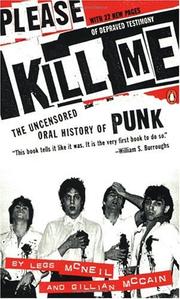
An explosive oral history told entirely in the voices of participants — the Velvet Underground, the Ramones, Iggy Pop, and beyond. It captures punk's raw energy and context in a way no single-author narrative could.
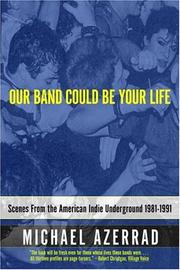
Profiles thirteen American indie and underground bands of the 1980s, showing how rock survived and mutated after punk — essential for understanding the DIY ethos that shaped Nirvana and everything after.

The collected writing of rock's greatest and most unhinged critic. Reading Bangs last is a reward: his essays synthesize everything you've learned and model how to think, argue, and feel passionately about this music.
Discussion
Keep reading
Paths that share books, cover the same subject, or open a related topic.