Best Books on Reggae, in Reading Order
This curriculum takes you from reggae's Jamaican street-level roots through its global explosion, building knowledge in layers: first the cultural and historical soil, then the music's key figures and sounds, then the deeper technical and sociological currents. Each stage assumes the vocabulary and context built in the one before it, so reading in order pays dividends.
Foundations: Jamaica, Ska & Rocksteady
BeginnerUnderstand the social, cultural, and musical conditions in Jamaica that gave birth to ska and rocksteady — the direct ancestors of reggae — and build the vocabulary needed for everything that follows.
▸ Study plan for this stage
Pace: 6–8 weeks total. Week 1–4: Read the relevant foundational chapters of "The Rough Guide to Reggae" (focus on the introductory history sections covering mento, ska, and rocksteady — roughly 60–80 pages), at a pace of ~15–20 pages/day, 4–5 days per week. Week 5–8: Read "Catch a Fire" by Timothy White (
- The African and Caribbean roots of Jamaican music: mento, calypso, and the influence of American R&B picked up via radio from New Orleans and Miami
- The birth of ska in the late 1950s–early 1960s: its defining rhythmic features (the offbeat 'skank' guitar/piano chop, walking bass, horn sections) and key artists covered in The Rough Guide to Reggae
- The role of the Jamaican sound system culture as the grassroots distribution and innovation engine for popular music, as detailed in The Rough Guide to Reggae
- Jamaica's political and social landscape: independence from Britain in 1962, the urban migration to Kingston, the emergence of the 'rude boy' subculture, and how these pressures shaped musical themes
- The transition from ska to rocksteady (~1966–1968): the slowing of tempo, the rise of the bass as a lead instrument, and the shift toward more socially conscious and romantic lyrical content
- Trenchtown as a cultural crucible: how the Kingston ghetto experience — poverty, Rastafari, community — shaped the artists who would create reggae, as vividly portrayed in Catch a Fire
- The figure of Bob Marley as a biographical lens: his mixed-race heritage, rural St. Ann's Parish origins, and formative Trenchtown years as a microcosm of the broader Jamaican experience
- Early Wailers recordings in the ska and rocksteady styles as a bridge between these foundational genres and the reggae that follows
- According to The Rough Guide to Reggae, what specific musical and technological factors — including the sound system scene and American radio influence — combined to produce ska in Jamaica around 1960–1962?
- How does Timothy White's account in Catch a Fire portray Trenchtown, and what does that environment reveal about the social conditions that made politically charged Jamaican music inevitable?
- What are the key musical differences between ska and rocksteady, and what social or cultural shifts in Jamaica around 1966 help explain why the music slowed down and changed in character?
- How did the 'rude boy' phenomenon, as described across both books, influence the lyrical content and cultural identity of ska and early rocksteady?
- What role did Rastafari begin to play in the lives of artists like Bob Marley during the rocksteady era, and how does Catch a Fire trace that spiritual development in relation to his music?
- Using both books together, how would you describe the continuity between mento/ska/rocksteady and the reggae that would emerge — what was preserved, what was transformed?
- **Active Listening Log:** For each genre covered (mento, ska, rocksteady), find 3–5 representative tracks mentioned in The Rough Guide to Reggae. Listen and write a short paragraph (5–7 sentences) describing what you hear — tempo, bass role, guitar chop, horn arrangements, lyrical themes. Note how each genre sounds different from the last.
- **Timeline Construction:** Build a hand-drawn or digital timeline from ~1955 to 1968 that maps key events from both books side by side: major Jamaican political events, Bob Marley's biography (per Catch a Fire), and musical milestones (per The Rough Guide to Reggae). This forces you to see how biography, history, and music move together.
- **Vocabulary Glossary:** As you read, maintain a running glossary of at least 20 genre-specific, cultural, and Jamaican-dialect terms encountered in both books (e.g., 'skank,' 'riddim,' 'sound system,' 'selector,' 'rude boy,' 'Babylon,' 'Ital'). Write a one-sentence definition in your own words for each.
- **Comparative Close Reading:** Choose one passage from The Rough Guide to Reggae describing the social context of ska or rocksteady, and one passage from Catch a Fire describing Marley's life in the same period. Write a one-page reflection on how the two accounts complement or tension each other — what does the biographical lens add that the genre history misses, and vice versa?
- **'Rude Boy' Essay Prompt:** In 300–400 words, argue whether the rude boy figure was primarily a social phenomenon, a musical marketing identity, or both — drawing specific evidence from both books.
- **Sound System Simulation:** Research (using The Rough Guide to Reggae as your guide) how a Jamaican sound system session worked. Then write a one-page 'event program' as if you were a selector in 1963 Kingston — list your set, explain why you'd choose each track, and describe the crowd you're playing for.
Next up: Mastering the rhythmic vocabulary, social tensions, and key figures of ska and rocksteady gives you the essential 'before' picture, so that when the next stage examines the full emergence of reggae in the late 1960s and 1970s, you can hear and understand exactly what changed — and why it mattered.
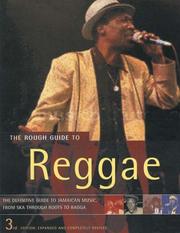
The single best encyclopedic entry point: it maps the full timeline from mento and ska through rocksteady and reggae with clear, accessible prose. Read this first to get your bearings across the whole landscape.

A deeply researched biography that roots Marley's story in Jamaican history, poverty, and Rastafari — giving essential social context before you dive into music-specific books.
Bob Marley, the Wailers & Rastafari
BeginnerDevelop a thorough understanding of Bob Marley and the Wailers as artists and cultural figures, and grasp how Rastafarian philosophy shaped reggae's message and global identity.
▸ Study plan for this stage
Pace: 6–7 weeks, ~25–30 pages/day. Week 1–3: "Bob Marley" by Toynbee (~200 pages); Week 4–7: "Rastafari" by Chevannes (~200 pages), with overlap for integration and reflection.
- Bob Marley's biographical arc: from Jamaican musician to global icon, and how his personal journey shaped his artistic output
- The Wailers' evolution as a band: their musical innovations, lineup changes, and role in popularizing reggae internationally
- Rastafarian theology and cosmology: Haile Selassie as divine figure, repatriation, and the spiritual foundations of reggae's message
- The relationship between Rastafari and reggae music: how spiritual belief systems became embedded in lyrical content and cultural identity
- Reggae as resistance and social commentary: the role of Rastafarian philosophy in addressing colonialism, oppression, and Black liberation
- The global reception and commodification of reggae: how Marley and the Wailers navigated commercial success while maintaining spiritual authenticity
- Rastafarian cultural practices: language (Patois, I-and-I), symbolism (locks, colors), and daily life as expressions of faith
- How did Bob Marley's early life in Jamaica and his conversion to Rastafarianism influence the themes and messages in the Wailers' music?
- What were the major phases of the Wailers' development, and how did their sound and message evolve across different lineups and albums?
- Explain the core tenets of Rastafarian theology as presented in Chevannes' work, and how these beliefs directly shaped reggae's lyrical and spiritual content
- How did Marley and the Wailers balance commercial success and international fame with their commitment to Rastafarian principles and social activism?
- What role did reggae music play in spreading Rastafarian philosophy globally, and how did this differ from Rastafari's original Jamaican context?
- How does Chevannes characterize the relationship between Rastafari as a spiritual movement and reggae as a cultural and commercial product?
- Create a timeline of Bob Marley's life (using Toynbee) alongside key Wailers albums, annotating how personal events and spiritual developments correlate with musical output and lyrical themes
- Listen to 3–4 key Wailers albums (e.g., 'Catch a Fire,' 'Exodus,' 'Legend') while reading relevant chapters, and write brief notes on how Rastafarian concepts from Chevannes appear in specific songs
- Write a 500-word essay comparing Marley's early secular reggae work with his later explicitly Rastafarian material, using evidence from both books
- Create a visual glossary of Rastafarian symbols, terms, and practices (locks, I-and-I, Zion, repatriation) with definitions from Chevannes and examples of how they appear in Wailers lyrics or Marley's public statements
- Conduct a close reading of 2–3 Wailers songs (e.g., 'Redemption Song,' 'One Love,' 'Iron Lion Zion'), identifying specific Rastafarian theological concepts from Chevannes and explaining their function in the song's message
- Research and write a 300-word reflection on how reggae's global spread (discussed in Toynbee) changed or challenged Rastafarian authenticity, using Chevannes' analysis of Rastafari as a movement
Next up: This stage establishes reggae's spiritual and historical foundations through its most iconic figure and the philosophy that animated it, preparing you to explore reggae's broader musical evolution, regional variations, and how other artists built upon or diverged from the Marley-Wailers template in subsequent stages.
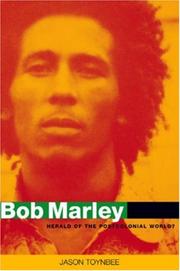
Moves beyond biography to analyze Marley as a postcolonial phenomenon, explaining why his music resonated worldwide — a natural next step after White's life story.
The authoritative academic study of Rastafari, written accessibly enough for general readers. Understanding this belief system unlocks the lyrics, imagery, and politics of virtually all roots reggae.
Dub, Sound Systems & Studio Culture
IntermediateUnderstand dub music as both a sonic revolution and a social institution, and grasp how sound-system culture became the engine that drove reggae's evolution and spread.
▸ Study plan for this stage
Pace: 6–7 weeks, ~40–50 pages/day. Start with "Bass Culture" (weeks 1–4, ~350 pages), then "People Funny Boy" (weeks 5–7, ~300 pages). Allocate 1–2 days per week for listening and reflection.
- Dub as a production technique and aesthetic: how engineers like King Tubby and Scientist used the mixing console as an instrument to deconstruct and reimagine reggae tracks
- The sound system as a mobile, competitive social institution: how selectors and operators shaped reggae culture through live performance, innovation, and community presence
- The relationship between studio experimentation and street culture: how dub emerged from the practical needs of sound-system operators and became a revolutionary sonic form
- Key figures and their innovations: understanding producers, engineers, and selectors (King Tubby, Scientist, Coxsone Dodd, Duke Reid) and their individual contributions to dub and sound-system culture
- The economics and politics of reggae production: how independent producers, pressing plants, and informal distribution networks enabled dub's rapid evolution
- Dub's sonic vocabulary: reverb, delay, echo, dropout, bass emphasis, and vocal manipulation as tools for creating new meanings from existing recordings
- Sound-system culture as a precursor to modern DJ culture: how selectors' techniques of mixing, scratching, and recontextualization influenced global electronic music
- How did King Tubby's approach to the mixing console transform reggae production, and what specific techniques did he pioneer that defined the dub sound?
- What role did sound systems play in the development and popularization of dub music in Jamaica, and how did competition between sound-system operators drive innovation?
- How did the economics of the reggae industry (pressing plants, dubplates, independent producers) enable dub's rapid experimentation and spread?
- What is the relationship between dub as a studio practice and dub as a live, social experience on the sound system?
- How did producers like Coxsone Dodd and Duke Reid use their studios and sound systems to shape reggae culture, and what distinguished their approaches?
- What sonic techniques and aesthetic principles define dub music, and how do they differ from the original vocal tracks they were derived from?
- Create a timeline of key dub innovations (1960s–1980s) using 'Bass Culture,' marking major figures, techniques, and releases; cross-reference with 'People Funny Boy' to add context on specific producers.
- Listen to 3–4 classic dub albums (e.g., King Tubby's 'Meets Rockers Uptown,' Scientist's work) while reading the relevant chapters, and annotate how the sonic techniques described in the books manifest in the actual recordings.
- Write a 500-word profile of one key figure from the books (King Tubby, Scientist, Coxsone Dodd, or Duke Reid), explaining their innovations and influence on dub and sound-system culture.
- Compare and contrast two different producers' approaches to dub production by selecting passages from both books; create a chart showing their distinct sonic priorities, studio techniques, and business models.
- Trace the journey of a single riddim (instrumental track) through dub versions: research how one original track was remixed and reused by different producers, documenting the variations and explaining the creative choices.
- Conduct a listening analysis: select one original reggae vocal track and its dub version, then identify and describe the specific production techniques (reverb, delay, dropout, bass manipulation) used in the dub, relating them to concepts from the books.
Next up: This stage establishes dub and sound-system culture as the creative and social foundation of reggae's global reach, preparing you to explore how these innovations spread internationally and influenced diaspora communities, electronic music, and contemporary production practices.
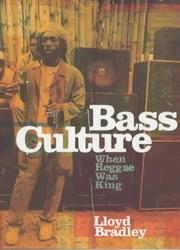
The definitive narrative history of reggae's golden era, with rich detail on producers, studios, and sound systems. Bradley's journalistic depth rewards the context you've built in earlier stages.

A comprehensive biography of reggae's most experimental producer, whose Black Ark studio innovations are central to dub history — a perfect companion to Veal's theoretical lens.
Reggae's Global Reach & Legacy
ExpertTrace how reggae traveled from Jamaica to the UK, Africa, and beyond, mutating into new forms (lovers rock, dancehall, roots revivals) and influencing punk, hip-hop, and world music.
▸ Study plan for this stage
Pace: 4–5 weeks, ~40–50 pages/day. Start with "Reggae Explosion" (weeks 1–2), then "Global Noise" (weeks 3–5), with overlap for synthesis and cross-referencing.
- Reggae's migration from Jamaica to the UK and how British-Caribbean communities transformed it into lovers rock and other hybrid genres
- The role of reggae in shaping punk and post-punk movements in the UK (musical and ideological cross-pollination)
- Reggae's influence on hip-hop's emergence and how African diaspora narratives connected reggae to rap globally
- Dancehall as reggae's evolution: technological innovation (digital production), lyrical shifts, and its spread across the Caribbean and beyond
- Roots reggae revivals and how artists reasserted African consciousness and spiritual themes in response to commercialization
- Hip-hop and rap outside the USA: how reggae's model of localized resistance and cultural pride shaped non-American hip-hop scenes
- The mechanics of musical mutation: how reggae's riddim, production techniques, and lyrical traditions adapted to new contexts (Africa, Asia, Latin America)
- Reggae and hip-hop as parallel diaspora musics: both rooted in Black Atlantic experience but evolving through distinct regional and technological pathways
- How did reggae transform when it reached the UK, and what were the key differences between Jamaican reggae and lovers rock?
- What specific musical and ideological connections existed between reggae and punk in 1970s Britain?
- According to Salewicz, what were the major factors that allowed reggae to 'explode' globally, and which regions or scenes were most receptive?
- How does Mitchell's analysis in 'Global Noise' explain the relationship between reggae's diaspora consciousness and the emergence of hip-hop as a global phenomenon?
- What role did technological change (digital production, sampling, riddim tracks) play in reggae's evolution into dancehall and its influence on hip-hop?
- How did roots reggae revivals attempt to counter commercialization, and what was their relationship to African identity and spirituality?
- Create a timeline mapping reggae's geographic spread (Jamaica → UK → Africa → USA hip-hop → global scenes) using evidence from both books; annotate each transition with the key artists, genres, and cultural factors that enabled it.
- Compare three reggae-influenced tracks from different regions/eras (e.g., a UK lovers rock track, a dancehall track, and a non-USA hip-hop track) and analyze how riddim, production, and lyrical themes evolved while maintaining reggae DNA.
- Write a 2–3 page analytical essay: 'Reggae and Hip-Hop as Diaspora Musics' using specific examples from Mitchell's 'Global Noise' to show how both genres served similar functions (resistance, identity, community) in different contexts.
- Interview or research a local reggae, dancehall, or reggae-influenced hip-hop artist/DJ in your region; document how they learned reggae's traditions and adapted them to their local scene.
- Create a visual map or infographic showing the cross-pollination between reggae and punk in 1970s Britain, using Salewicz's accounts of specific venues, labels, and collaborations.
- Compile a 'Reggae Riddim Genealogy': trace one iconic riddim (e.g., Sleng Teng) from its original reggae/dancehall context through its adoption in hip-hop and other global genres, documenting producers and remixes.
Next up: This stage establishes reggae and hip-hop as interconnected diaspora musics with global reach; the next stage should deepen analysis of how these genres engage with specific political movements, decolonization struggles, and contemporary social justice work across different regions.
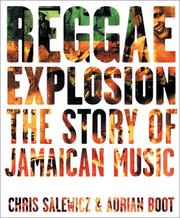
A visually rich, broad-scope survey that captures reggae's international diffusion and cultural impact, serving as an ideal capstone overview after the deeper dives.

Examines how Jamaican sound-system culture and reggae's diasporic spread seeded hip-hop and urban music worldwide — connecting the dots between reggae's roots and its lasting global footprint.
Discussion
Keep reading
Paths that share books, cover the same subject, or open a related topic.