Alternative Rock of the 1990s: The Best Books to Read, in Order
Grunge did not appear from nowhere in 1991, and this path refuses to pretend it did. It opens with the American indie underground of the 1980s that produced the bands and the ethics, spends a stage on Nirvana from three different distances, then hands the microphone to Seattle itself through oral history. The fourth stage covers the scenes running in parallel — hair metal, riot grrrl, the art-rock wing — because a decade told only through one city is a decade misunderstood. It closes on the aftermath: what the major-label gold rush did to the bands, and what came next.
Where the decade came from
BeginnerUnderstand the 1980s American indie network — the labels, vans and fanzines — that grunge emerged from and briefly destroyed
▸ Study plan for this stage
Pace: Three to four weeks. Our Band Could Be Your Life is 528 pages arranged as thirteen self-contained band chapters, which makes it unusually easy to read at one chapter a sitting — and worth doing that way, because the chapters are meant to accumulate rather than build. Dave Thompson's Alternative Rock
- The independent infrastructure Azerrad is actually describing: SST, Touch and Go, Twin/Tone, Dischord, plus fanzines, college radio and a van circuit that made touring possible without a label
- Do-it-yourself as an economic arrangement rather than a slogan — who pressed the records, who fronted the money, and who got paid
- The thirteen bands as thirteen different answers to the same problem, from Black Flag's grinding tour ethic to Fugazi's five-dollar shows and refusal of merchandise
- The purity arguments — selling out, major-label contact, ticket prices — which are the decade's central internal conflict and which grunge resolved by force
- Why the book ends in 1991: Azerrad's thesis is that Nevermind terminated the network he has spent 500 pages describing
- Thompson's survey as a map of connections — shared members, label lineage, regional scenes — that a narrative history necessarily flattens
- That Azerrad is writing about people he knows and often admires, which shows in whose account of a dispute gets the last word
- What did an independent label in 1985 actually do for a band that the band could not do for itself?
- Pick two of Azerrad's thirteen bands with opposite attitudes to major labels. What was each one's stated reason, and what did it cost them?
- Why does Azerrad stop at 1991, and is the claim that the underground was destroyed rather than absorbed one you accept?
- Which of the thirteen chapters relies most heavily on a single interviewee's memory, and how would the chapter read if told by someone else in the band?
- Using Thompson, name three bands connected to one of Azerrad's thirteen that the narrative chapter does not mention. What does that tell you about the shape of the scene?
- Read one Azerrad chapter and then look every band named in it up in Thompson, writing down the label and the regional scene for each. Do this once and the geography of the underground becomes legible for the rest of the path.
- Build a one-page timeline of label foundings and key releases from 1979 to 1991 out of the two books. You will use it in every later stage, and the gold-rush stage is unreadable without it.
- Take the chapter on a band you have never heard and listen to one record while reading it. Azerrad's descriptions are specific enough to check against the recording, which is the fastest way to see whether you trust his ear.
- Note every point where Azerrad relies on one person's recollection of a disputed event. Keep the list — the oral histories two stages from now are built on exactly the same problem, handled openly.
Next up: With the network and its ethics established, Nirvana stops being an origin point and becomes what Azerrad says it was — the band that inherited all of this and then ended it, which is the argument the next four books are having.

Thirteen bands from Black Flag to Fugazi, 1981 to 1991, and the essential prehistory. Read it first: everything in the rest of this path is a consequence of the infrastructure Azerrad describes, and the book ends exactly where the story starts.
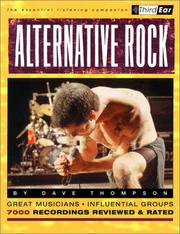
A reference survey rather than a narrative — hundreds of bands, labels and records with the connections mapped. Useful here as a gazetteer to keep open while reading the narrative books, not as a cover-to-cover read.
Nirvana, at three distances
BeginnerSee the band from inside, from a biographer's distance, and from Cobain's own hand, and notice how much the three disagree
▸ Study plan for this stage
Pace: Four to five weeks for roughly 1,340 pages, and the order matters more here than anywhere else on the path. Come as You Are is 351 pages, written in 1993 with the band's cooperation and while Cobain was alive — it is authorised journalism of the moment, and the only book here whose account is not sh
- The difference an ending makes: Come as You Are describes a career in progress, and every other Nirvana book is a retrospect organised around 1994
- Authorised access as a double edge — Azerrad got the band's cooperation and the band got a say, and the book is franker about some things and quieter about others because of it
- Cross's biographical method: journals, medical records and the cooperation of Cobain's widow, producing a fuller account whose sourcing is also its main point of dispute
- Journals as primary material rather than an account: unedited, undated, contradictory, and not written to be read by us
- Goldberg's vantage — the Geffen deal, the money, the touring economics — and the fact that a manager's account of a band's exploitation is necessarily also a defence of his own decisions
- How the four books disagree on specific verifiable matters: dates, who was present, what was said, and what the suicide note means
- Nirvana as a test case for the whole path's problem, which is that the closer a source is to events the more it has at stake in them
- What does Come as You Are say about the band's relationship to major labels that a book written after 1994 could not have said the same way?
- Name two specific claims in Heavier Than Heaven that have been contested, and identify who contested them and on what basis.
- After reading Journals, does anything in either biography look like an over-reading of the notebooks? Give an example.
- What does Goldberg's account explain that the two biographies leave vague, and what does his position give him a reason to leave out?
- Taking all four together, what do you now believe is genuinely well established about the band's decision to sign to Geffen, and what is still one person's word?
- Read Come as You Are first and completely, before opening anything written after 1994. This is not a suggestion about order — it is the only way to experience an account of Nirvana that does not know what happens, and it cannot be recovered later.
- Take one event covered by both Azerrad and Cross — the Geffen signing, the 1992 Reading set, or the first overdose — and write the two versions in parallel columns, noting the source each rests on. The gap between them is the stage's whole lesson.
- Read fifty pages of Journals and then find the passage in Heavier Than Heaven that quotes or paraphrases the same page. Ask whether the biography's framing is supported by what is actually on the paper.
- After Serving the Servant, revise your own account of who benefited financially from Nevermind. Goldberg supplies numbers the other three books gesture at.
- Write down, before moving on, one thing about Cobain that all four books agree on. It is a short list, and knowing what is on it is useful before reading the oral histories.
Next up: Four books about one band all rest on individual testimony, which is precisely the problem the next stage's oral histories stop trying to solve and start displaying instead.
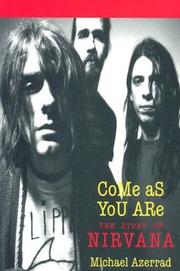
Written in 1993 with the band's full cooperation and while Cobain was alive, which makes it the only Nirvana book not shaped by the ending. Read it first for exactly that reason.
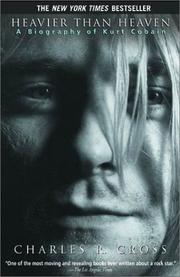
The full biography, written after Cobain's death with access to the journals and to Courtney Love. Read it second: it is more complete and more contested than Azerrad, and some of its conclusions have been disputed by people who were there.
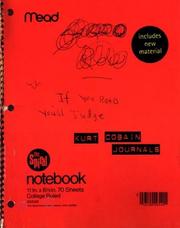
Facsimile pages of Cobain's notebooks, published without editorial framing. Read it after both biographies, because it is raw material rather than an account — and be aware it was published over objections about whether he would have wanted it.

Nirvana's manager on the business side of the story: the Geffen deal, the machinery, and how a band that distrusted the industry was processed by it. The corrective to the myth the other three books build.
Seattle, from the inside
BeginnerHear the scene in its participants' own contradictory voices, rather than through a single narrator's thesis
▸ Study plan for this stage
Pace: Five to six weeks for around 1,400 pages, though oral history reads faster than its length suggests. Everybody Loves Our Town is 592 pages of interview excerpts arranged chronologically, with participants contradicting each other on the page and no narrator adjudicating — read it first and read it w
- Oral history as a form: the editor chooses and sequences, but does not resolve, so the reader is handed the disagreement rather than a verdict
- The pre-1988 Seattle that the standard story omits — the U-Men, Green River, Malfunkshun, Mother Love Bone — which Prato covers more fully than Yarm
- Sub Pop as a marketing operation as much as a label, and the deliberate manufacture of a regional sound for a British music press
- What the money did: the same events described by someone who got rich and by someone who did not, often on facing pages
- Schemel's account of being a gay woman in that scene, and of the specific way session drummers were replaced without being told
- Heroin as an infrastructural fact of the scene rather than a series of individual tragedies, which is the thing all three books converge on
- The limits of the form — an oral history can only include people who agreed to talk, and the absences are as shaping as the inclusions
- Find a single event that Yarm's interviewees describe three different ways. What would you need to settle it, and does either oral history have it?
- What does Grunge Is Dead show about Seattle before 1988 that Everybody Loves Our Town compresses, and why might Yarm have compressed it?
- Who is conspicuously absent or minimally represented in each oral history, and how does that shape the picture?
- Hit So Hard is one person's account with no counter-voices at all. Does that make it less reliable than the oral histories, or differently reliable?
- By the end of this stage, what do you think the phrase Seattle scene actually referred to in 1988, and does it survive contact with the interviews?
- Pick one musician who appears in both Yarm and Prato and read all their quoted passages in each, in order. The same person telling the same story to two interviewers years apart is the best available demonstration of what oral history is worth.
- Keep a list of every claim in Everybody Loves Our Town that is directly contradicted by another interviewee within the same chapter. Yarm sets these up deliberately and the list is essentially a reading of the book.
- Read Hit So Hard immediately after finishing the two oral histories, and mark every episode in it that the oral histories also cover from outside. Schemel's version and theirs is the sharpest inside-versus-outside comparison on the path.
- Go back to your Nirvana notes from the previous stage and check three disputed points against the Seattle interviewees. Some are corroborated by people with no stake; some are not.
Next up: Having heard Seattle argue with itself for 1,400 pages, the obvious next question is what else was happening at the same time — because a decade told through one city is a decade with most of it missing.

The definitive oral history of grunge — hundreds of interviews, arranged so the participants openly contradict each other. The best single book on the scene, and the format is the argument: nobody agrees on what happened.
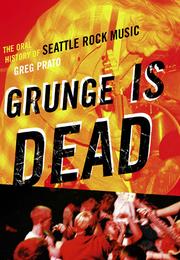
A second oral history with substantially different interviewees, stronger on the pre-1988 Seattle bands — the U-Men, Green River, Malfunkshun. Read it after Yarm for the parts of the scene his book compresses.

Hole's drummer on addiction, being a gay woman in that scene, and the years after the money stopped. The single best first-person account here, and it covers the human cost the oral histories can only gesture at.
The parallel scenes
IntermediatePlace grunge among the other things happening at the same time — the metal it displaced, the feminist punk beside it, and the art-rock above it
▸ Study plan for this stage
Pace: Four weeks for roughly 1,070 pages. Fargo Rock City is 278 pages and is a memoir-criticism hybrid — Klosterman is arguing a position he holds personally, and says so. Girls to the Front is 367 pages of researched history by a journalist working from zines, interviews and archives; it is the most con
- Klosterman's argument that hair metal was the popular music of most of America and grunge the taste of the people who write about music — a critique of who gets to narrate a decade
- Riot grrrl as a parallel and partly overlapping movement: Olympia and Washington DC, Bikini Kill and Bratmobile, zines as the organising medium
- The girls-to-the-front instruction as a practical response to a specific physical problem at shows, and what it reveals about who the underground was actually built for
- Riot grrrl's media blackout and its consequences, which is a rare case of a movement deliberately refusing coverage and losing control of its story anyway
- Sonic Youth as the band that went to a major first and brokered Nirvana's deal, which makes them the structural hinge between the first stage and the last
- Art-rock lineage — no wave, Glenn Branca, downtown New York — as a completely different set of ancestors from the hardcore lineage Azerrad traces
- Three books, three methods: a personal argument, a researched history and an unauthorised biography, each with different things it can prove
- What is Klosterman's actual claim about hair metal, as distinct from his affection for it, and does the argument survive being separated from the memoir?
- How did riot grrrl's decision to stop talking to the press affect what we now know about it, and what did Marcus have to use instead?
- What did Sonic Youth's move to Geffen make possible, and would Nevermind have happened without it?
- Girls to the Front and the two Seattle oral histories cover overlapping years and places. Why do they barely overlap in content?
- Which of these three books most changes the story you had after the first three stages, and what specifically does it change?
- Read Fargo Rock City directly after Everybody Loves Our Town. The whiplash is the point: the same years, the same country, described by people who would not have recognised each other's decade.
- Take Marcus's chronology of riot grrrl and lay it over your label-and-release timeline from the first stage. The overlap is almost total and the two stories are told as if they happened separately.
- Track one zine through Girls to the Front — what it published, who read it, how it circulated — and compare that distribution model with the label-and-van model in Azerrad.
- Using Goodbye 20th Century, write down the sequence of events by which Sonic Youth's major-label deal led to Nirvana's. Then check it against Come as You Are, which describes the same sequence from the other side.
Next up: Sonic Youth's deal is the door, and the last stage is about what came through it — what the signing spree did to these bands and their labels, and where the underground reassembled afterwards.

A defence of the hair metal that grunge is usually credited with killing, written by someone who loved it in rural North Dakota. Read it to complicate the standard story, which is written almost entirely by people who were glad metal died.

The history of riot grrrl — Bikini Kill, Bratmobile, the zines — running in the same towns at the same time and largely erased from the grunge narrative. Essential rather than supplementary.

The Sonic Youth biography, and the story of the band that signed to a major first and opened the door everyone else walked through. Note that the subtitled form of this title does not resolve; this is the same book.
The gold rush and the aftermath
IntermediateUnderstand what the major-label signing spree did to these bands and their labels, and where the guitar underground went afterwards
▸ Study plan for this stage
Pace: Three to four weeks. Corporate Rock Sucks is Jim Ruland's history of SST Records — a researched label history built on interviews with former staff and musicians, written without the cooperation of the label's founder, which shapes whose account of the unpaid royalties you are reading. Meet Me in th
- SST's actual economics, and the gap between an independent label's ethical reputation and its accounting — the specific charge being unpaid and long-delayed royalties
- Ruland's book as the deliberate counterweight to Azerrad's: the same label, the same bands, and a much less romantic ledger
- The 1992 to 1994 signing spree as a business event — what the majors were buying, what they paid, and what happened to the bands whose records did not sell
- Why the underground infrastructure did not survive the money, and whether it was destroyed or simply made redundant
- Meet Me in the Bathroom as the answer to what came next: New York, the internet, and a rock revival with a completely different relationship to publicity
- The recurring pattern across the whole path — a scene forms out of shared poverty, gets discovered, and stops being able to police itself
- That both books here are recent and retrospective, written long enough after events for the participants to have settled versions they are comfortable telling
- What does Ruland establish about how SST treated its bands financially, and which of Azerrad's thirteen chapters reads differently as a result?
- Was the independent network of the 1980s destroyed by major-label money, made obsolete by it, or something else? Argue it using both books plus Azerrad.
- What did the major labels believe they were buying in 1992, and how accurate was that belief?
- Meet Me in the Bathroom covers a scene with the internet in it. What does that change about how the scene formed, and about what the oral history can access?
- Having read the whole path, whose account of the 1990s do you now trust least, and what specifically made you distrust it?
- Read Ruland's chapters on a band Azerrad also covered, side by side. The two books on the same subject, twenty years apart, is the clearest case on the path of how much a history depends on who was willing to talk by the time it was written.
- Extend your timeline from the first stage forward to 2011 using these two books. The whole path fits on one page, and the shape of it is the argument.
- Compare the structure of Meet Me in the Bathroom with Everybody Loves Our Town — same form, different decade. Note what the later book can do because its subjects were being documented continuously online.
- Write a one-page answer to the question the path opened with: did grunge kill the underground that produced it? You now have nine books' worth of evidence and they do not agree.
Next up: This closes the path. The natural next move is sideways rather than forward — the label and scene histories for the cities this path did not cover, read now with a working sense of how much any one participant's account is worth.

The history of SST Records, and the clearest account anywhere of what the independent-label economics actually were — including how badly they treated the bands. The business counterweight to Azerrad's romance.

The oral history of New York rock from 2001 onward — the Strokes, Interpol, LCD Soundsystem — and the direct answer to what came after. Read it last: it is the sequel to this whole path, and it reads as one.