Best Books on Public Policy, in Reading Order
This curriculum builds from the mechanics of how policy is actually made, through the analytical tools used to evaluate it, to the deeper political and behavioral reasons why even well-designed policies fail. Starting at an intermediate level, each stage assumes the vocabulary and intuitions of the previous one, culminating in a sophisticated, practitioner-grade understanding of public policy in the real world.
How Policy Is Actually Made
IntermediateUnderstand the real-world process of policymaking — agenda-setting, political constraints, bureaucratic behavior, and why the textbook model rarely holds.
▸ Study plan for this stage
Pace: 8–10 weeks, ~40–50 pages/day. Kingdon (350 pages, ~2 weeks), Mulgan (300 pages, ~2.5 weeks), Wilson (400 pages, ~3 weeks), with 1–2 weeks for review and integration exercises.
- The three-stream model (problem, policy, political streams) and how they converge at policy windows to enable agenda-setting
- Bounded rationality and satisficing: why policymakers cannot optimize and must work within cognitive and institutional constraints
- Bureaucratic structure, incentives, and culture shape policy implementation more than formal rules; different agency types (production, procedural, craft, coping) behave fundamentally differently
- Policy entrepreneurs and their role in coupling streams and exploiting windows of opportunity
- Strategic framing and narrative: how problems are defined, alternatives are constructed, and political feasibility is assessed
- The gap between policy design and bureaucratic reality: what gets written down rarely matches what actually happens on the ground
- Path dependency and institutional inertia: why existing policies persist even when evidence suggests alternatives are better
- What are Kingdon's three streams, and how must they align for an issue to reach the policy agenda?
- Why do policy entrepreneurs matter, and what specific tactics do they use to couple streams and open policy windows?
- How does Wilson's concept of bureaucratic structure (production, procedural, craft, coping agencies) explain why the same policy can fail in one agency but succeed in another?
- What is the relationship between bounded rationality and satisficing, and how does this explain why policymakers rarely choose the 'optimal' solution?
- According to Mulgan, how do strategic framing and narrative construction shape which policy alternatives are considered feasible?
- Why does implementation often diverge from policy intent, and what role do bureaucratic culture and incentives play in this divergence?
- Map a recent policy issue (e.g., climate regulation, education reform) using Kingdon's three-stream framework: identify the problem stream (data, crises), policy stream (available alternatives), and political stream (elections, ideology, interest groups). Note when and how these streams converged.
- Identify a policy entrepreneur in a real case study (use news articles or case studies from the books). Document their specific actions: how did they frame the problem? Which stream did they focus on? What window did they exploit?
- Select a government agency and classify it using Wilson's typology (production, procedural, craft, or coping). Explain how its structure and incentives shape its policy behavior, using specific examples from its recent actions or decisions.
- Compare two similar policies implemented by different agencies or jurisdictions. Analyze why one succeeded and one failed using concepts from Wilson: did bureaucratic culture, incentive structures, or agency type explain the difference?
- Write a 2–3 page memo as a policy entrepreneur proposing a solution to a real problem. Explicitly address: How will you frame the problem to open a policy window? Which stream will you focus on first? What resistance do you anticipate from bureaucratic structures?
- Conduct a mini-case study: find a policy that failed or was significantly modified during implementation. Use Mulgan's framework to analyze how strategic framing and narrative changed during the process. How did bureaucratic actors reframe the policy to fit their incentives?
Next up: This stage reveals the messy reality of how policies actually get made and implemented; the next stage will equip you with tools to evaluate whether those policies work and how to measure their impact.
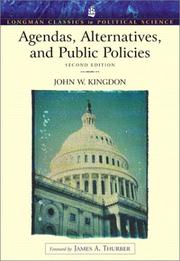
The canonical account of how issues get onto the policy agenda and how policy windows open. Establishes the foundational vocabulary — problem streams, political streams, policy entrepreneurs — that every subsequent book assumes.

Bridges theory and practice by showing how governments actually translate ideas into action, covering strategy, delivery, and the gap between intention and outcome. Read after Kingdon to ground agenda-setting in operational reality.

The definitive study of why government agencies behave the way they do. Essential for understanding the implementation layer that sits between policy design and real-world results.
The Analytical Toolkit: Cost-Benefit & Economic Reasoning
IntermediateMaster the core analytical methods — cost-benefit analysis, risk assessment, and economic reasoning — that analysts use to evaluate and compare policy options.
▸ Study plan for this stage
Pace: 10–13 weeks total. Book 1 — "The Cost-Benefit Revolution" (Sunstein): ~3–4 weeks at roughly 20–25 pages/day (the book is argument-driven and rewards slow, critical reading). Book 2 — "Economics of the Public Sector" (Stiglitz): ~7–9 weeks at ~30–35 pages/day (the text is dense with models, graphs, a
- Cost-Benefit Analysis (CBA) as a decision-making framework: how analysts monetize benefits and costs, discount future values, and compare net present values across policy options (Sunstein, Chs. 1–4)
- The role of the regulatory state and how CBA disciplines executive-branch rule-making, including OIRA's function in the U.S. regulatory process (Sunstein, Chs. 2–3)
- Value of a Statistical Life (VSL): what it measures, how it is derived from wage-risk studies and willingness-to-pay data, and why it is central to health and safety regulation (Sunstein, Ch. 5)
- Behavioral insights and their challenge to classical CBA: how cognitive biases, loss aversion, and present bias complicate the assumption of rational preference satisfaction (Sunstein, Chs. 7–8)
- Market failure taxonomy — public goods, externalities (positive and negative), information asymmetries, and natural monopolies — as the economic justification for government intervention (Stiglitz, Parts I–II)
- Externalities and corrective policy instruments: Pigouvian taxes, subsidies, cap-and-trade systems, and the conditions under which each is efficient (Stiglitz, Ch. on Externalities)
- Public goods and the free-rider problem: non-excludability, non-rivalry, and the challenge of determining optimal public provision through mechanisms like the Lindahl equilibrium (Stiglitz, Ch. on Public Goods)
- Welfare economics and distributional equity: Pareto efficiency, Kaldor-Hicks compensation principle, social welfare functions, and the tension between efficiency and equity in policy evaluation (Stiglitz, Part I)
- After reading Sunstein, can you explain why he argues that CBA should be the dominant framework for regulatory decisions, and what the strongest objections to that view are — including those he himself raises?
- What is the Value of a Statistical Life, how is it empirically estimated, and what ethical and practical controversies surround its use in setting environmental or safety standards?
- Using Stiglitz's framework, identify a real-world policy problem (e.g., carbon emissions, vaccine provision) and classify the market failure(s) at work. Which corrective instrument does economic theory recommend, and why?
- How does the Kaldor-Hicks efficiency criterion differ from Pareto efficiency, and why does Stiglitz argue that neither criterion alone is sufficient for evaluating public policy?
- Sunstein discusses how behavioral economics complicates traditional CBA. Give two concrete examples from the book where behavioral findings either strengthen or undermine a standard cost-benefit conclusion.
- How do discount rates affect the outcome of a cost-benefit analysis for long-horizon policies (e.g., climate change or infrastructure), and what does Stiglitz say about choosing the appropriate social discount rate?
- Mini-CBA memo: Choose a local or national policy proposal (e.g., a congestion charge, a smoking ban, a minimum-wage increase). Using Sunstein's framework, list all identifiable costs and benefits, assign rough monetary values using publicly available data (government reports, academic studies), apply a discount rate, and write a 1–2 page memo recommending for or against the policy.
- VSL sensitivity analysis: Take a health or safety regulation (e.g., an EPA air-quality rule). Using two different VSL figures (e.g., $7M vs. $11M), recalculate the benefit side of the CBA and observe how the policy conclusion changes. Reflect in writing on what this implies for regulatory decision-making.
- Market-failure diagnosis worksheet: For five policy areas (e.g., public transit, childhood vaccination, broadband internet, flood insurance, higher education), use Stiglitz's taxonomy to identify the type(s) of market failure present, the efficiency loss, and the most appropriate corrective instrument. Present findings in a structured table.
- Externality pricing exercise: Using Stiglitz's Pigouvian tax logic, calculate the theoretically optimal tax on a negative externality of your choice (e.g., a per-ton carbon tax). Source an estimate of the marginal social cost, compare it to the current policy instrument in your country, and write a short analysis of the gap.
- Debate preparation — efficiency vs. equity: Using both books, prepare a 5-minute argument for each side of the following proposition: 'Policy decisions should be guided primarily by cost-benefit analysis rather than distributional concerns.' Identify at least two points from Sunstein and two from Stiglitz for each side.
- Annotated reading log: As you work through both books, maintain a running log of every empirical example or real policy case cited by the authors. For each entry, note: (a) the market failure or CBA issue illustrated, (b) the policy instrument discussed, and (c) whether you find the author's analysis convincing and why. Aim for at least 15 entries by the end of the stage.
Next up: Mastering CBA and economic reasoning equips the reader with the evaluative lens needed to move into the next stage, where these analytical tools are applied to specific policy domains (health, environment, education, etc.), demanding both technical fluency and the ability to navigate real-world political and institutional constraints.

A rigorous yet accessible defense and explanation of cost-benefit analysis as the central tool of modern regulatory policy. Provides the conceptual framework before diving into technical details.
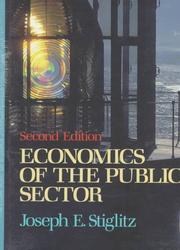
The standard graduate-level text on public economics — market failures, externalities, public goods, and redistribution. Builds the economic foundations needed to critically assess any cost-benefit argument.
Evidence, Evaluation & What Works
IntermediateLearn how to rigorously evaluate whether policies work, understand the hierarchy of evidence, and recognize the limits of data-driven policymaking.
▸ Study plan for this stage
Pace: 8–10 weeks, ~40–50 pages/day (with 2–3 days per week for exercises and reflection)
- Randomized controlled trials (RCTs) as the gold standard for causal inference and their practical design, implementation, and limitations
- The hierarchy of evidence: from observational data to natural experiments to RCTs, and when each is appropriate
- Causal inference techniques in econometrics: regression discontinuity, difference-in-differences, instrumental variables, and matching methods
- Threats to internal validity: selection bias, confounding, attrition, and spillover effects in real-world policy evaluations
- External validity and generalizability: when results from one context transfer to another, and the limits of evidence-based policymaking
- How to read and critically appraise empirical studies: identifying assumptions, evaluating design choices, and spotting methodological weaknesses
- The gap between what rigorous evidence shows and what policymakers actually do: behavioral constraints, political feasibility, and implementation challenges
- Using evidence to design better policies in development contexts: cost-effectiveness, scalability, and the role of local knowledge alongside data
- What are the key design elements of a well-executed RCT, and what are the main threats to its validity (internal and external)?
- How do instrumental variables, regression discontinuity, and difference-in-differences differ in their assumptions and when would you use each?
- Why is selection bias a problem in observational studies, and what methods can help mitigate it?
- What does it mean for a policy result to have high internal validity but low external validity, and why does this matter for policymaking?
- How do behavioral and political constraints limit the application of evidence-based policy recommendations in practice?
- What are the strengths and weaknesses of using RCTs versus other evaluation methods for policy design in low-income countries?
- Design a hypothetical RCT for a policy question of your choice: specify the treatment, control group, randomization strategy, sample size, and potential threats to validity you'd need to address
- Critique a published policy evaluation study (from the books or elsewhere): identify the causal inference method used, evaluate the assumptions, and assess both internal and external validity
- Work through a regression discontinuity or instrumental variables example from Mostly Harmless Econometrics by hand or in statistical software, interpreting the results and discussing assumptions
- Compare how the same policy question could be evaluated using RCTs, natural experiments, and observational methods—discuss trade-offs in feasibility, cost, and credibility
- Analyze a case study from Poor Economics: extract the evidence presented, evaluate its quality using the hierarchy of evidence, and discuss what it does and doesn't tell us about policy effectiveness
- Write a 2–3 page memo for a hypothetical policymaker: present findings from a rigorous evaluation, acknowledge limitations and uncertainties, and recommend next steps while being honest about generalizability
Next up: This stage equips you with the tools to distinguish rigorous from weak evidence and understand when and why data-driven approaches succeed or fail—preparing you to tackle the next stage's focus on implementation, political economy, and how to actually get good policies adopted and sustained in real-world systems.
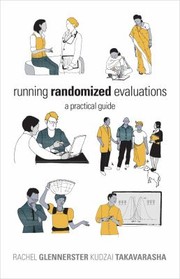
The practical guide to randomized controlled trials in policy settings. Establishes the gold standard of causal inference and the discipline of asking 'compared to what?' before any other evaluation method.

Teaches the credibility revolution in empirical economics — regression, instrumental variables, differences-in-differences — giving the reader tools to critically read any policy evaluation study.
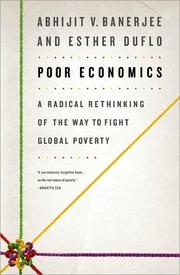
Shows what rigorous randomized evaluation actually reveals about policy in practice, using global poverty as the domain. Demonstrates how evidence overturns conventional wisdom and reshapes program design.
Why Good Ideas Fail in Practice
ExpertDevelop a sophisticated understanding of the political, behavioral, and institutional forces that cause well-designed policies to underperform or collapse entirely.
▸ Study plan for this stage
Pace: 8–10 weeks, ~40–50 pages/day (with 2–3 reflection days per week). Week 1–3: Kahneman (450 pages); Week 4–6: Schuck (400 pages); Week 7–10: Lewis (400 pages) plus synthesis work.
- Cognitive biases and heuristics (System 1 vs. System 2 thinking) as root causes of policy failure—how mental shortcuts lead decision-makers astray
- The gap between policy design and implementation: structural, organizational, and political barriers that prevent good ideas from surviving contact with reality
- Bounded rationality and satisficing: why policymakers and bureaucrats cannot optimize and settle for 'good enough' solutions that often backfire
- Risk blindness and institutional failure: how government agencies systematically underestimate catastrophic risks and fail to prepare for low-probability, high-impact events
- The role of incentive misalignment: how individual and organizational incentives diverge from policy goals, creating perverse outcomes
- Complexity, unintended consequences, and feedback loops: how policy interventions in complex systems produce unexpected second and third-order effects
- Political economy of failure: why bad policies persist and good ones get undermined by political pressure, turf wars, and short-term thinking
- The human factor in institutional design: how personality, culture, and leadership shape whether policies succeed or collapse
- How do System 1 and System 2 thinking explain why policymakers often make predictably irrational decisions, and what does Kahneman say about debiasing at scale?
- According to Schuck, what are the primary structural and political reasons government policies fail, and how do they differ from design flaws?
- What is 'bounded rationality' and how does it explain why policymakers cannot simply optimize for the best outcome?
- In 'The Fifth Risk,' what does Lewis identify as the core problem with how government agencies assess and prepare for catastrophic risks?
- How do incentive misalignments between individual actors, agencies, and policy goals create unintended consequences? Provide examples from at least two of the three books.
- What role does institutional culture and leadership play in determining whether a policy succeeds or fails, according to Lewis's account of the Department of Energy?
- Cognitive bias audit: Identify 2–3 recent policy failures in your own country/region and map them to specific cognitive biases from Kahneman (anchoring, availability heuristic, overconfidence, etc.). Write a 2-page analysis.
- Implementation gap case study: Choose one policy from Schuck's examples and trace the path from design to failure, identifying where structural, political, and organizational barriers intervened.
- Incentive mapping exercise: Select a government program and diagram the incentives of all stakeholders (politicians, bureaucrats, beneficiaries, taxpayers). Where do they align or conflict? How do misalignments explain outcomes?
- Risk assessment simulation: Read Lewis's account of a specific risk the Department of Energy manages (nuclear weapons, grid stability, etc.). Design a 1-page risk communication and preparedness plan that addresses the blindspots Lewis identifies.
- Comparative failure analysis: Take one policy failure discussed in Schuck and one institutional failure in Lewis's DOE narrative. Compare them using Kahneman's cognitive framework—which mental errors were at play?
- Institutional culture interview: Interview a government employee, nonprofit manager, or policy implementer about a policy they've seen succeed or fail. Analyze their account through the lens of the three books—what cognitive, structural, and cultural factors do they identify?
Next up: This stage equips you to recognize *why* policies fail at the cognitive, institutional, and political level; the next stage will focus on evidence-based solutions and design principles that mitigate these failure modes—moving from diagnosis to remedy.

The foundational text on behavioral economics and cognitive bias — essential for understanding why citizens and officials alike make predictably irrational decisions that undermine policy goals.

A sweeping, evidence-rich account of the structural, political, and cultural reasons U.S. policy so frequently disappoints. Synthesizes the entire curriculum by connecting implementation failure to incentives, information problems, and political dynamics.
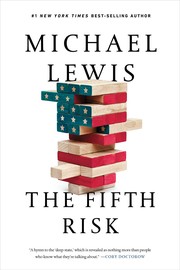
A vivid, reported account of what happens when political transitions ignore the deep operational knowledge of government agencies. Closes the curriculum with a gripping real-world illustration of institutional fragility and the hidden costs of policy neglect.
Discussion
Keep reading
Paths that share books, cover the same subject, or open a related topic.