Monetary policy is unusually hard to learn from a textbook and unusually easy to learn from a disaster. The mechanisms — open market operations, the lender of last resort, the transmission from a policy rate to actual prices — are abstract in isolation and completely concrete in 1931, 2008 or 2022. Every good book on this list is organised around an episode, and reading them in rough chronological order builds the concepts in the sequence in which central bankers themselves were forced to invent them.
The second reason for order is that the modern arguments are refights of old ones. Whether a central bank should have saved a failing institution, whether monetary policy can do anything about unemployment, whether government deficits are constrained at all — each of these has a nineteenth or twentieth-century original. Read the history and the current debate stops looking like novelty.
The narrative that teaches the concepts
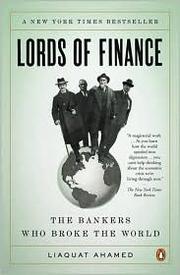
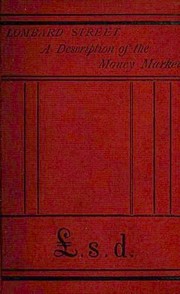
Lords of finance by Liaquat Ahamed is the best possible first book: four central bankers, the interwar gold standard, and a slow-motion catastrophe that explains what a monetary regime is by showing one break. It won a Pulitzer and needs no prior economics. Follow it with Lombard Street, Walter Bagehot's 1873 statement of what a central bank owes the banking system in a panic — lend freely, at a penalty rate, against good collateral. It is short, it is still quoted verbatim in policy speeches, and reading the original is faster than reading about it.
21st Century Monetary Policy by Ben Bernanke is the modern institutional history: how the Federal Reserve's tools and doctrine changed from the 1950s to quantitative easing. It is the clearest single explanation of what the modern Fed actually does.
The 2008 crisis, from inside and outside
The alchemists by Neil Irwin follows Bernanke, Mervyn King and Jean-Claude Trichet through the crisis and is the most readable account of central banks improvising in real time. Bernanke's own memoir sits in our catalogue under a Spanish-edition record, Valor de Actuar : Memoria de una Crisis y Sus Secuelas / the Courage to Act — it is the book published in English as The Courage to Act, and it is a participant's account with all the strengths and blind spots that implies. Crashed by Adam Tooze is the wide-angle version, arguing the crisis was global and financial rather than American and fiscal, and tracing its politics through the following decade. Lords of Easy Money by Christopher Leonard is the critical case against the post-crisis regime, arguing that prolonged easy money inflated asset prices and rewarded the wrong people.
The doctrine, and the fights that are still open
A monetary history of the United States, 1867-1960 by Milton Friedman and Anna Schwartz is the most consequential book in the field. Its central claim — that the Federal Reserve turned a recession into the Great Depression by allowing the money supply to collapse — reshaped policy, and it has been challenged since on both the evidence and the causal direction. It is long; the Depression chapter is the part everyone actually reads.
The End of Alchemy by Mervyn King is a former Bank of England governor arguing that the system is structurally unsound rather than badly managed, and proposing a redesign. The Deficit Myth by Stephanie Kelton presents Modern Monetary Theory, which holds that a currency-issuing government faces an inflation constraint rather than a financing one. Most academic macroeconomists reject the framework, and the disagreement is substantive rather than terminological; read it as the strongest statement of a heterodox position and read the mainstream case elsewhere on this list. Globalizing Capital by Barry Eichengreen closes the path with the history of the international monetary system, which is where the domestic story runs into its limits.
Follow the full path in order, or browse public policy for adjacent reading.
Follow the full ordered path here: Best Books on Central Banking and Monetary Policy, in Reading Order.
Ready to learn something deeply?
Build a reading path — free