The Sociology of Education: The Best Books on Schools and Inequality, in Order
The sociology of education exists because of one persistent finding: schooling is supposed to be the mechanism that breaks the link between the family you are born into and the life you end up with, and across a century of research it turns out to be one of the mechanisms that maintains it. That is not a claim that schools do nothing, and it is not a claim that teachers are at fault — the argument is structural, about funding, admissions, tracking, credential markets and the different resources families bring to the same classroom. This path reads the theory first, because the reproduction thesis of the 1970s is what everything since either extends or attacks; then the ethnographies that show the mechanism operating in actual schools and actual families, which is where the theory earns its keep; then the American funding and segregation literature; and finally the reform arguments, which are the most contested material here and are presented as positions rather than conclusions. The evidence is heavily American and British, and that limit is worth carrying — the funding arrangements that drive the American story are unusual internationally.
The Reproduction Thesis
IntermediateGet the founding theoretical claim in its three main versions: that schooling reproduces the class structure economically by matching school hierarchies to workplace ones, culturally by rewarding the dispositions of families that already have them, and — in the strangest and most powerful version — with the active participation of the students it disadvantages. By the end you should be able to state what cultural capital and symbolic violence mean and why Willis's lads are a problem for a purely
▸ Study plan for this stage
Pace: Eight to ten weeks for 809 pages, and the page count badly understates the difficulty of two of the three. Bowles and Gintis's Schooling in Capitalist America is 340 pages and states the correspondence principle in its starkest form - that schools reproduce the class structure by mirroring workplace
- The correspondence principle: school hierarchies matching workplace hierarchies through obedience, external reward and fragmented tasks, independent of curriculum content
- The determinism criticism of that account, and why it is the reason everything after it exists
- Cultural capital: familiarity with a dominant culture that some children arrive already possessing, which schools then read as ability
- Symbolic violence: the imposition of one group's culture as the neutral standard, accepted as legitimate by those it disadvantages
- Willis's lads: reproduction achieved through resistance rather than compliance, which no top-down account predicts
- Why the lads are a problem for the theory - they see through the promise of schooling accurately and are damaged by acting on that insight
- Agency and structure as the axis the whole field turns on, stated here in its sharpest form
- State the correspondence principle. What does it claim schools teach, and how does that differ from what is on the timetable?
- What is the determinism objection to Bowles and Gintis, and does Willis's ethnography answer it or sharpen it?
- Define cultural capital and symbolic violence in your own words, without using either term in the other's definition.
- Willis's lads are not wrong about what schooling offers them. Why does that make their case more damaging to the meritocratic story than simple failure would be?
- How does cultural reproduction differ from economic reproduction as a mechanism? Which one better explains a child who does well at school and badly afterwards?
- If reproduction happens through resistance as well as compliance, what would an intervention have to change?
- Write out the correspondence principle as a list of paired features - one from school, one from work - then test each pair against a school you actually attended. Some pairs will hold and some will not, and the ones that do not are where the criticism of the theory lives.
- Take one of Willis's transcripts and read it twice: once for what the lads say about school, once for what they say about work. The insight and the trap are in different passages, and seeing that they are separate is the point of the book.
- Define cultural capital from Bourdieu and Passeron and then find three concrete instances of it in a school setting you know - a reference a teacher expects children to get, a form of speech that is rewarded, an out-of-school activity that is assumed. Making it concrete is the only way this concept becomes usable.
- Argue Bowles and Gintis against Willis in a page: does resistance refute the correspondence principle or complete it? Both readings are defensible and the field has never fully settled it.
Next up: The theory now needs to earn its keep, and the next stage watches the mechanism operate at close range in real families and real schools.

Bowles and Gintis's correspondence principle: that schools reproduce the class structure by mirroring workplace relations — obedience, external reward, fragmented tasks — rather than by teaching content. The starkest version of the thesis, heavily criticised for determinism, and the right place to start because the criticisms are all responses to it.

Bourdieu and Passeron's cultural version: schools reward a familiarity with high culture that some children arrive already possessing, then read that inheritance as ability. Denser and more important than the previous book; note it is catalogued here under the shortened display title Reproduction.
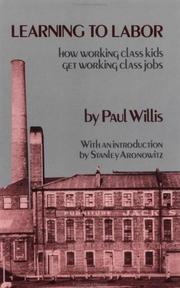
The most famous ethnography in the field and the one that complicates everything above: working-class boys in an English school who see through the promise of schooling, reject it as a con, and by doing so deliver themselves into working-class jobs. Reproduction achieved through resistance rather than compliance.
Ethnographies of How It Actually Happens
IntermediateWatch the mechanism operate at close range, in families and inside individual schools. By the end you should be able to describe concerted cultivation and the accomplishment of natural growth as Lareau names them, explain why tracking produces different curricula rather than different paces, and account for the finding that within a single well-resourced integrated school the racial achievement gap persists — the puzzle that makes structural explanations insufficient on their own. This is the mo
▸ Study plan for this stage
Pace: Three to four months for 1,190 pages, and this is the most immediately convincing stage on the path. MacLeod's Ain't No Makin' It is 319 pages, following two groups of boys in the same housing project - one that has given up on mobility and one that believes in it - and returning to them repeatedly
- Concerted cultivation: scheduled activities, negotiation with adults, and intervention on the child's behalf as a parenting pattern with school-facing payoffs
- The accomplishment of natural growth: more autonomy, less scheduling, and deference to institutions, and the fact that Lareau does not present it as deficient
- How schools reward one pattern and penalise the other, which is where the family-level difference becomes an educational advantage
- Tracking as different curricula and different expectations rather than the same material at different speeds
- Course placement, discipline and teacher attention as the concrete channels through which a gap opens inside one well-resourced school
- MacLeod's two groups: aspiration and its absence producing similar destinations, and what that does to the belief that attitude is the lever
- Longitudinal follow-up as a method - what returning to the same people over decades establishes that a single fieldwork period cannot
- Why the puzzle in Lewis and Diamond makes purely resource-based explanations insufficient on their own
- Describe concerted cultivation and the accomplishment of natural growth in concrete behavioural terms. Which specific behaviours does a school reward, and why?
- Lareau is careful not to call one pattern better. What is her actual claim, and what would be lost by simplifying it into a deficit account?
- What did Oakes find about the content of different tracks? Why is 'same material, different pace' the wrong description?
- MacLeod's Hallway Hangers and Brothers start with opposite beliefs about mobility. What happens, and what does the outcome imply about aspiration as a policy target?
- In Lewis and Diamond's school the money and the intentions are both present. Name the three mechanisms they identify and say which one you find best evidenced.
- What does MacLeod's decades-long follow-up establish that his original fieldwork could not?
- Take Lareau's two parenting patterns and write down, for each, five specific interactions with an institution - a school, a doctor, a coach - and how each would go. The patterns only become predictive once they are behavioural rather than attitudinal.
- Find out how tracking or setting works in a school you know: how placement is decided, when, by whom, and how often anyone moves. Then compare with Oakes. The mechanism is usually more consequential and less reviewed than people assume.
- Follow one of MacLeod's individuals across all the follow-up chapters and write the trajectory as a timeline with decision points. Then ask, at each point, what a school could have done. Some points have an answer and most do not, which is the book's argument.
- Take Lewis and Diamond's three mechanisms and ask which of them would survive a large funding increase. That question is the direct bridge to the disagreement in the next stage.
- Read one Lareau family portrait alongside one Willis transcript from the previous stage. One is about a child being prepared for institutions and the other about boys rejecting one, and the contrast is the clearest illustration of what cultural capital does and does not explain.
Next up: The ethnographies show the mechanism inside schools; the next stage takes up the specifically American funding structure that determines what resources those schools have at all, and the argument about how much resources explain.
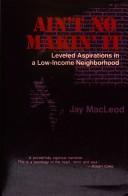
The American counterpart to Willis, following two groups of boys in the same housing project — one that has given up on mobility and one that believes in it — and then returning to them repeatedly over decades. The longitudinal follow-up is what makes it devastating rather than merely illustrative.
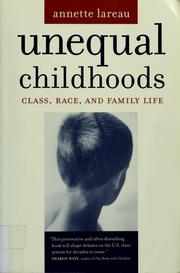
The most influential ethnography in the field: middle-class parents schedule, negotiate and intervene on their children's behalf, working-class and poor parents grant more autonomy and defer to institutions, and schools reward the first pattern. The clearest evidence that the advantage is transmitted at home and cashed at school.
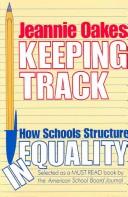
The classic study of tracking, showing that different tracks in the same school deliver genuinely different curricula and expectations rather than the same material at different speeds. Read after Lareau: it shows the school-side sorting that the family-side differences feed into.

Lewis and Diamond inside a well-funded, integrated, self-consciously progressive suburban high school where the racial achievement gap persists anyway — through course placement, discipline and differential access to teachers' attention. The strongest available answer to the argument that resources alone are the story.
Money and Segregation: The American Case
IntermediateUnderstand the specifically American structure that the rest of the literature argues over: schools funded substantially from local property taxes, which ties school quality to housing wealth, and a school population that resegregated after the courts stepped back. By the end you should be able to explain why Kozol's funding comparisons are as extreme as they are, and — this is Rothstein's argument and it cuts against Kozol — why fixing school funding alone would not close the gap, because much
▸ Study plan for this stage
Pace: Eight to ten weeks for 888 pages, and the stage is built around a disagreement. Kozol's Savage Inequalities is 262 pages of side-by-side accounts of neighbouring districts spending vastly different amounts per child; three weeks. It is polemical and deliberately so - Kozol is a writer and advocate r
- School funding drawn substantially from local property taxes, which ties school quality to housing wealth by construction rather than by accident
- Why that arrangement produces disparities as extreme as Kozol's comparisons - the mechanism is compounding, not marginal
- Resegregation following the retreat from court-ordered desegregation, and the distinction between legal and residential segregation
- Rothstein's counter-argument: much of the gap originates outside the school day, in housing, health, income and early childhood
- The policy consequence of Rothstein's claim - that school-only reform is set up to fail and then blamed for failing
- Advocacy and analysis as different genres with different obligations, both represented in this stage
- The international caveat: property-tax school funding is unusual, so American findings about money and schooling do not transfer straightforwardly
- Explain the funding mechanism precisely. How does local property wealth become per-pupil spending, and what equalisation, if any, sits on top of it?
- Kozol's comparisons are extreme. Is that because he selected extreme cases, because the mechanism produces extremes, or both?
- What is resegregation, and how does it happen without any change in law?
- State Rothstein's argument and the evidence he offers. Which part of it most directly contradicts Kozol?
- If Rothstein is right, what should schools be held accountable for, and what should they not?
- Take Lewis and Diamond's well-funded school from the previous stage. Whose case does it support, Kozol's or Rothstein's?
- Find the per-pupil spending figures for two districts near each other where you live, and their property tax bases. Doing the comparison yourself, with real numbers, is what makes Kozol's method legible as a method rather than as rhetoric.
- Write Kozol's argument and Rothstein's as two numbered chains and mark the exact point where they diverge. They agree on more than the framing suggests, and locating the disagreement precisely is the work of the stage.
- Take Rothstein's list of out-of-school causes and, for each, find one policy that addresses it. Then ask which of those policies is administered by a school district. The answer is the practical form of his argument.
- Read a chapter of The Shame of the Nation against the desegregation case law it describes, and write down what changed legally and what changed residentially. Kozol is documenting the second while writing about the first.
- State what evidence would settle the Kozol-Rothstein disagreement, and then look for whether such a study exists. This is the most valuable half-hour in the stage.
Next up: Both sides of that argument have policy implications, and the final stage reaches the live reform fights - where telling an argument from a finding is the entire skill.
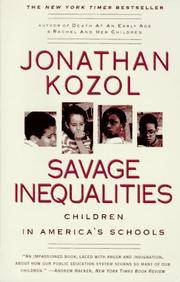
The book that made school funding a public argument: side-by-side accounts of neighbouring districts spending vastly different amounts per child. Polemical and deliberately so — Kozol is a writer and advocate, not a quantitative researcher — and unmatched at making the disparity concrete.

Kozol's return to the subject a decade later, documenting the resegregation of American schools after the retreat from court-ordered desegregation. Read after Savage Inequalities as the second half of the same argument.
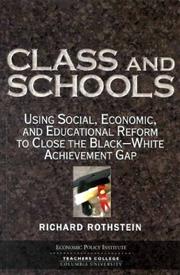
The necessary corrective, and the most analytically careful book in this stage: Rothstein argues that school reform cannot close a gap whose causes are substantially in housing, health care, income and early childhood, and that expecting it to sets schools up to be blamed. Read it last; it reframes the two books above.
Reform, Credentials, and the Arguments About Both
IntermediateReach the live policy fights able to tell an argument from a finding. The claims that American schools are in general decline, that standardised testing and choice improve outcomes, and that college access is the reliable route out are all contested, and the books here take opposing sides — Ravitch's is a public reversal of her own earlier position, which is worth noticing as intellectual conduct as much as as evidence. By the end you should be able to explain credential inflation and why expand
▸ Study plan for this stage
Pace: Three to four months for 1,451 pages. Berliner and Biddle's The Manufactured Crisis is 414 pages and opens the stage because it sets the evidential standard the rest should be held to: their argument that the narrative of catastrophic American school decline was constructed from misread aggregate da
- Composition effects in aggregate test scores: an average can fall while every subgroup improves, which is the technical core of the manufactured-crisis argument
- Credential inflation: as more people hold a qualification, its labour-market value falls while its necessity rises
- Why expanding access to a credential can leave its holders worse off - the cost is borne up front and the return is competitive rather than absolute
- Institutional pathways within a single university, and the fact that a well-resourced pathway can be well resourced for the wrong students
- The for-profit sector as a market response to credential demand among people with the least capacity to absorb a loss
- Reading a public reversal: what Ravitch's change of position is and is not evidence of
- The difference between an argument and a finding, applied to testing, choice and college access - all three contested
- Insider knowledge as a source: what Cottom's enrolment experience establishes and what it cannot
- Explain a composition effect with a worked example. How can an average score fall while no group's performance declines?
- What is credential inflation, and how does it make expanding access self-defeating in a way that expanding a public good would not be?
- Ravitch changed her mind publicly. Does that make her argument more credible, less, or neither? Argue it.
- What is the party pathway, and why is it institutionally supported? Which students does it damage and through what mechanism?
- What does Cottom's insider material establish about how for-profit enrolment works that an outside study could not?
- Take one claim from this stage - that testing improves outcomes, that choice does, that college access is the reliable route out - and say what evidence would settle it and whether these books supply it.
- Work one of Berliner and Biddle's data arguments with their own figures, then construct a small composition-effect example of your own. This is a fifteen-minute arithmetic exercise and it permanently inoculates you against a whole class of education statistic.
- Take three of Ravitch's claims and follow them to the research she cites. Read the abstracts. A partisan who changed sides is still a partisan, and this is exactly the check her book invites.
- Trace one woman through Armstrong and Hamilton's dormitory floor and write down every institutional decision that shaped her outcome - housing assignment, advising, major, social pathway. The pathways are made of decisions, and listing them is more useful than naming the pathway.
- Compare the cost and reported outcomes of a for-profit programme with a community-college equivalent in the same field, using public data. Cottom's argument is about a price differential for a similar credential, and checking one real pair makes it concrete.
- Return to the reproduction thesis from stage one and ask which of these four books it explains and which it does not. Credential inflation in particular was not something the original theory anticipated, and saying why is the closing exercise of the path.
- Write a page distinguishing, across the whole path, the three claims you would defend as findings and the three you would present as arguments. That page is what this path is for.
Next up: This closes the path. The evidence here is heavily American and British, so the natural next step is the comparative literature on systems with national funding and different tracking arrangements, where the same theory meets a different structure.

Berliner and Biddle's argument that the narrative of catastrophic American school decline was constructed from misread aggregate data — notably the composition effects hiding in falling average test scores. Start here: it sets the evidential standard the rest of the stage should be held to.

Ravitch renouncing the testing-and-choice agenda she had helped build, having concluded that the evidence did not support it. Read it as an argument by a partisan who changed sides, which is both its strength and the reason to check its claims against the research it cites.

Armstrong and Hamilton follow one dormitory floor of women through a public university and find distinct mobility pathways, one of which — the party pathway — is well resourced by the institution and reliably damages the less affluent women who enter it. Education reproducing inequality at the tertiary level, which most of this literature neglects.

The for-profit college sector as the terminal case of credential inflation: institutions selling expensive qualifications of little labour-market value to exactly the people with the least margin for a bad bet. Cottom worked in enrolment before becoming a sociologist, and the insider material is what makes the book. The right place to end.
Discussion
Keep reading
Paths that share books, cover the same subject, or open a related topic.