Immigration is the rare policy area where almost everyone has a position and almost nobody has read the statute. The result is a debate conducted in categories — legal, illegal, refugee, economic migrant — that were themselves created by specific pieces of legislation at specific moments, most of them within living memory. Reading in the wrong order means absorbing those categories as natural facts before you learn where they came from.
A second reason order matters: the moral argument and the legal argument answer different questions and are frequently confused. Whether a state may exclude people is a question in political philosophy. What the Immigration and Nationality Act actually permits is a question of law. Read the accounts first, the history next, the law after that, and the philosophy last, and each layer explains the previous one.
Nothing on this list is legal advice, and none of it substitutes for a licensed attorney or an accredited representative. Immigration law changes fast, varies enormously by country and by individual circumstance, and a book cannot assess a case.
Begin with the accounts
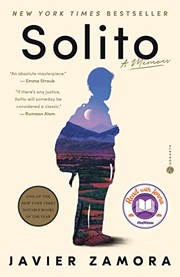
Dear America is Jose Antonio Vargas writing about living undocumented in the United States as a journalist with a public byline, and it does what statistics cannot — makes the daily administrative texture of illegality concrete. Solito is Javier Zamora's memoir of crossing from El Salvador at nine years old, told entirely in the perception of the child who made the journey. The Devil's Highway by Luis Alberto Urrea reconstructs the deaths of fourteen men in the Arizona desert in 2001 and remains the best single account of what border enforcement geography does in practice. Everyone Who Is Gone Is Here by Jonathan Blitzer connects the policy decisions to the migration flows they produced over four decades.
The history that made the categories
Impossible Subjects by Mae M. Ngai is the pivotal scholarly work here: it shows how the illegal alien was produced as a legal category by twentieth-century American law, particularly the quota system. Read it before anything that treats illegality as a fixed condition. Americans-in-waiting — Hiroshi Motomura's book, published as Americans in Waiting — recovers a much older American tradition of treating immigrants as citizens-in-progress rather than perpetual outsiders. Undocumented by Aviva Chomsky is a shorter argumentative history, openly written from an advocacy position, and worth reading as such.
How the legal machinery actually works
Immigration Outside the Law, Motomura's second book on this path, is the clearest general-reader account of the legal status of people present without authorisation and of what enforcement discretion means in practice. Migrating to Prison by César Cuauhtémoc García Hernández documents the growth of immigration detention and its convergence with the criminal system. The Line Becomes a River is Francisco Cantú's memoir of serving in the Border Patrol; it drew substantial criticism from immigrant-rights activists on publication over whether an agent should be the narrator of these stories, and that criticism is part of the book's context.
The moral question, argued properly
Finish with the philosophy, where the disagreement is cleanest. The Ethics of Immigration by Joseph H. Carens argues that liberal democratic premises, followed honestly, point toward far more open borders than any state practises. Strangers in our midst — David Miller's book — argues the opposite from broadly similar premises: that states have a legitimate right to control admission and to weight the interests of existing members. Neither is a fringe position, and the argument between them is live. Read both and decide for yourself; do not skip the one you expect to disagree with.
Work through the full path in order for the sequence as designed, or browse public policy for neighbouring reading.
Follow the full ordered path here: How to Learn Immigration Law and Policy from Books, in Order.
Ready to learn something deeply?
Build a reading path — free