Best Books on Archaeology, in Reading Order
This curriculum takes a complete beginner from the basic "why and how" of archaeology through landmark excavations, scientific dating methods, and finally the deeper theoretical debates about what the material record can actually tell us. Each stage builds the vocabulary and conceptual framework needed for the next, moving from accessible narrative introductions to rigorous methodological and interpretive works.
Foundations: What Archaeology Is and How It Works
BeginnerUnderstand what archaeologists do, how a dig is planned and executed, and how basic concepts like stratigraphy, context, and artifact classification work in practice.
▸ Study plan for this stage
Pace: 4–5 weeks, ~25–30 pages/day. Start with Bahn's concise introduction (2–3 weeks), then move to Renfrew's comprehensive treatment (2–3 weeks). Allow overlap for review and reflection.
- Archaeology as a scientific discipline: how it differs from looting, treasure-hunting, and related fields; its role in understanding human culture and history
- Stratigraphy and the law of superposition: how layers of soil and artifacts reveal chronological sequences and site formation processes
- Context and provenance: why the location and spatial relationship of artifacts matter more than the artifacts themselves
- Excavation methodology: how archaeologists plan digs, document findings, and recover data systematically rather than destructively
- Artifact classification and typology: how objects are categorized, dated, and interpreted to reconstruct past behavior and societies
- Dating techniques: both relative (stratigraphic) and absolute methods (radiocarbon, dendrochronology) and their applications
- Site formation and taphonomy: how natural and cultural processes transform archaeological deposits over time
- Interpretation and inference: how archaeologists move from material evidence to narratives about past peoples and cultures
- What is archaeology and how does it differ from related fields like antiquarianism, looting, and geology?
- Explain the law of superposition and why stratigraphy is fundamental to archaeological interpretation.
- Why is context more important than the artifact itself, and what information is lost when an object is removed from its archaeological context?
- Describe the main steps in planning and executing an archaeological excavation, from survey to post-excavation analysis.
- What are the differences between relative and absolute dating methods, and when would an archaeologist use each?
- How do archaeologists classify and typologize artifacts, and what can artifact types tell us about past societies?
- Create a stratigraphic profile diagram for a hypothetical site with at least 5 layers, labeling each with artifacts, soil types, and relative ages based on superposition.
- Visit a local museum with archaeological collections and document 3–5 artifacts, noting their provenance, context clues (if displayed), and what questions you'd ask about their original location and use.
- Conduct a small-scale surface survey of a park, garden, or accessible outdoor area; map and photograph any visible artifacts or disturbances, then write a brief report on what you found and what it might indicate.
- Read a peer-reviewed archaeological excavation report (available through university libraries or open-access journals) and identify the key methodological decisions, dating techniques, and interpretive arguments the authors made.
- Create a typology for a common object (e.g., pottery sherds, stone tools, or coins) by collecting or photographing examples and grouping them by form, decoration, and material; explain your classification logic.
- Design a hypothetical excavation plan for a site described in one of the readings: outline your research questions, survey strategy, excavation grid, documentation methods, and expected challenges.
Next up: This foundation in archaeological method and theory equips you to evaluate how specific techniques and theoretical frameworks are applied to real archaeological problems—preparing you to explore specialized subdisciplines, regional case studies, and advanced interpretive approaches in subsequent stages.

A concise, authoritative overview of the entire discipline — methods, goals, and history — that gives the beginner a mental map of the field before diving deeper.
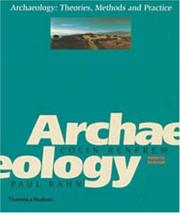
The field's standard introductory textbook; covers excavation technique, recording systems, and the full toolkit of the discipline in a clear, illustrated format that builds essential vocabulary.
The Dig in Story: Landmark Excavations Brought to Life
BeginnerSee how real excavations unfold through compelling narrative accounts of history-changing digs, building intuition for how evidence is found, interpreted, and sometimes misread.
▸ Study plan for this stage
Pace: 4–5 weeks, ~40–50 pages/day. Start with Carter's account (2–3 weeks), then move to Ceram's broader survey (2–3 weeks). Allow time for reflection between books.
- Excavation as detective work: how stratigraphic layers, artifact placement, and context reveal chronology and meaning
- The role of luck, persistence, and funding in major discoveries—Tutankhamen's tomb as a case study in both serendipity and systematic search
- Misinterpretation and bias in archaeology: how initial readings of evidence can be wrong, and how later scholars correct them
- The material culture approach: how everyday objects (pottery, tools, inscriptions) tell stories about past societies
- Technological and methodological evolution: how excavation techniques improved over time, from early treasure-hunting to scientific archaeology
- The narrative power of excavation: how archaeologists construct compelling stories from fragmentary evidence
- Cultural context and repatriation: the ethical and historical questions raised by moving artifacts from their original sites
- What was Carter's systematic approach to finding and excavating Tutankhamen's tomb, and what role did luck play alongside careful planning?
- How did the physical arrangement of objects in Tutankhamen's tomb help Carter and others interpret the burial practices and beliefs of ancient Egypt?
- What are examples from Ceram's book of early archaeological misreadings or misinterpretations, and how were they later corrected?
- How did excavation methods and archaeological thinking evolve from the early 'treasure-hunting' phase to more scientific approaches, as shown in the landmark digs Ceram describes?
- What does the Tutankhamen discovery reveal about the relationship between evidence, interpretation, and storytelling in archaeology?
- How do the excavations described in both books illustrate the importance of context and stratigraphy in understanding the past?
- Create a detailed timeline of Carter's search for Tutankhamen's tomb (from initial funding through final opening of the burial chamber), noting key decisions and turning points.
- Sketch or describe the layout of Tutankhamen's tomb as Carter found it, labeling major artifact groups and explaining what their positions suggest about burial ritual.
- Choose one major excavation from Ceram's book (e.g., Troy, Pompeii, or the Rosetta Stone discovery) and write a 1–2 page narrative account of how the evidence was initially misread and later reinterpreted.
- Compare two excavations from Ceram's accounts: identify differences in methodology, funding, and how artifacts were handled, and discuss how these differences affected what was learned.
- Conduct a 'mock excavation' of a small space (a drawer, box, or corner of a room): document the position and condition of objects, sketch the layout, and write a brief interpretation of what the arrangement tells you about the person or activity that created it.
- Read Carter's account of opening the burial chamber and Ceram's discussion of early Egyptology; write a reflection on how Tutankhamen's discovery challenged or confirmed existing ideas about ancient Egypt.
Next up: This stage builds intuition for how evidence becomes knowledge through narrative and context; the next stage will deepen your understanding of the scientific methods and analytical frameworks archaeologists use to extract meaning from material remains.

Carter's firsthand narrative of the most celebrated excavation in history teaches the reader how evidence is uncovered layer by layer and how archaeologists reason from objects to conclusions.
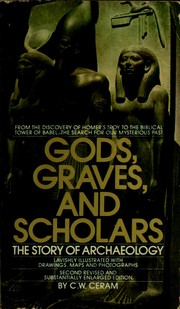
A classic popular history of archaeology's greatest discoveries — Troy, the Maya, Pompeii — that shows how landmark excavations changed our understanding of the past and why method matters.
Dating and Science: How We Know How Old Things Are
IntermediateUnderstand the principal scientific dating methods — radiocarbon, dendrochronology, stratigraphy, luminescence, and more — and how they are combined to build reliable chronologies.
▸ Study plan for this stage
Pace: 4–5 weeks, ~25–30 pages/day, with 2–3 days per week dedicated to review and exercises
- Radiocarbon dating (14C) principles: half-life, calibration curves, and limitations in archaeological contexts
- Dendrochronology (tree-ring dating) as a high-precision chronological tool and its role in calibrating radiocarbon dates
- Stratigraphic sequencing and the law of superposition as foundational methods for relative dating
- Luminescence dating (thermoluminescence and optically stimulated luminescence) for dating pottery, sediments, and burned materials
- Potassium-argon and other radiometric methods for dating volcanic materials and early hominins
- Chronological frameworks: how multiple dating methods are integrated to build reliable, overlapping timescales for prehistoric Europe
- Taphonomy and site formation processes: understanding how depositional context affects dating reliability
- Critical evaluation of dating evidence: recognizing contamination, calibration issues, and the margins of error in archaeological chronologies
- What is the half-life of carbon-14, and why is radiocarbon dating unreliable beyond approximately 50,000 years ago?
- How does dendrochronology work, and what specific advantages does it offer over radiocarbon dating for establishing precise chronologies?
- Explain the principle of superposition and how stratigraphic sequences establish relative dating in archaeological sites
- What are the main types of luminescence dating, and what materials can each method reliably date?
- How are multiple dating methods combined in Cunliffe's treatment of prehistoric European chronologies, and why is this integration necessary?
- What are the principal sources of error or contamination in radiocarbon and luminescence dating, and how do archaeologists account for them?
- Create a visual timeline of a prehistoric European culture (e.g., Neolithic, Bronze Age) using dates from Cunliffe, noting which dating methods provided each date and their margins of error
- Work through a radiocarbon calibration exercise: given a raw 14C age and the current calibration curve, determine the calibrated calendar age and discuss why calibration is necessary
- Sketch a stratigraphic profile of a hypothetical site with multiple layers, assign relative ages using superposition, then annotate with absolute dates from different methods to show how they complement each other
- Analyze a case study from Cunliffe (e.g., dating of a major settlement or monument) and identify which dating methods were used, their individual limitations, and how they were integrated
- Construct a dendrochronological sequence: given a set of tree-ring patterns, match overlapping rings to build a master chronology and explain how this validates or refines radiocarbon dates
- Compare two competing chronologies for a prehistoric European region from Cunliffe and evaluate the dating evidence supporting each, discussing which methods carry the most weight
Next up: Mastery of dating methods and chronological frameworks equips you to critically assess the temporal placement of archaeological cultures and transitions, preparing you to examine how prehistoric European societies evolved, interacted, and transformed across millennia.
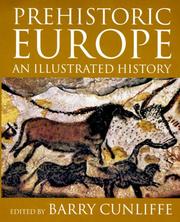
Uses the full range of dating evidence across a continent-wide canvas, showing the reader in practice how chronologies are built and revised from the material record.
Reading the Record: What Objects and Sites Really Tell Us
IntermediateMove beyond 'what was found' to 'what does it mean' — learning how archaeologists reconstruct diet, trade, social structure, belief, and identity from physical remains.
▸ Study plan for this stage
Pace: 4–5 weeks, ~25–30 pages/day. Week 1–2: "The Past in Perspective" (primary focus on interpretive frameworks); Week 3–5: "Bones, Rocks and Stars" (emphasis on scientific dating and material analysis methods).
- Archaeological interpretation as detective work: moving from observation to inference about past human behavior, diet, trade networks, and social hierarchies
- How material culture (artifacts, faunal remains, botanical evidence) serves as a proxy for understanding intangible aspects of past societies (belief systems, identity, status)
- Taphonomy and site formation processes: understanding how objects enter the archaeological record and what biases or distortions this introduces
- Absolute and relative dating methods (radiometric, stratigraphic, dendrochronological) as the foundation for chronological interpretation
- Contextual analysis: the critical importance of an artifact's location, associations, and spatial relationships in determining meaning
- Zooarchaeology and paleoethnobotany as windows into subsistence, environmental adaptation, and trade patterns
- How archaeologists use multiple lines of evidence to build robust interpretations and avoid over-interpretation from single finds
- What is the difference between an observation and an interpretation in archaeology, and why does Feder emphasize this distinction?
- How can a single bone or seed tell us about ancient diet, trade, or environmental conditions? What are the limitations of drawing conclusions from isolated finds?
- Explain how dating methods (both absolute and relative) constrain and enable archaeological interpretation. Why is chronology foundational to meaning-making?
- What is taphonomy, and how does understanding site formation processes change the way archaeologists interpret what they find?
- How do archaeologists use spatial context and artifact associations to infer social structure, status differences, or belief systems from material remains?
- What does Turney demonstrate about the relationship between physical/chemical analysis of objects and reconstructing past human behavior?
- Artifact interpretation exercise: Select 3–4 artifacts from a museum collection (online or in-person) and write a 1-page interpretation for each, distinguishing between direct observation and inference. Identify what additional context (location, associated finds, dating) would strengthen or change your interpretation.
- Taphonomy case study: Read a short archaeological report on site formation (e.g., a cave site, waterlogged site, or burial context) and diagram how post-depositional processes may have altered the assemblage. Discuss what biases this introduces.
- Dating method matching: Create a table matching different archaeological contexts (e.g., Paleolithic stone tools, medieval pottery, Bronze Age copper ore) to appropriate dating methods from Turney's chapters. Justify your choices based on material and time scale.
- Subsistence reconstruction: Analyze a faunal or botanical assemblage data from an archaeological site (provided or found in a journal article). Calculate percentages of different species/plants and write a short interpretation of diet, seasonal occupation, or trade.
- Spatial analysis exercise: Using a site plan or excavation grid from a published report, map artifact distributions and propose what spatial patterns suggest about activity areas, social organization, or ritual use.
- Comparative interpretation: Take two different interpretations of the same archaeological site or assemblage from published literature. Identify points of agreement and disagreement, and evaluate which lines of evidence each author emphasizes. What would resolve the disagreement?
Next up: This stage equips you with the interpretive toolkit and methodological rigor to move from understanding *how* archaeologists extract meaning from objects to applying those methods to specific research questions and regional sequences in subsequent stages.
Bridges method and interpretation, showing how archaeologists move from raw data to meaningful conclusions about past human behavior and society.
Focuses specifically on the science of dating and evidence interpretation, deepening the reader's grasp of how multiple lines of evidence are weighed against each other.
Advanced Interpretation: Theory, Meaning, and the Limits of the Record
ExpertEngage with the theoretical debates that define modern archaeology — processualism vs. post-processualism, agency, identity, and the ethics of who owns the past — and understand what the material record can and cannot tell us.
▸ Study plan for this stage
Pace: 8–10 weeks, ~40–50 pages/day. "Reading the Past" (weeks 1–4, ~200 pages); "The Archaeological Process" (weeks 5–10, ~300 pages). Allocate 1–2 days per major chapter for reflection and note-taking.
- Interpretation as central to archaeology: the material record is not self-evident but requires theoretical frameworks to extract meaning
- Post-processual critique of objectivity: rejection of the notion that archaeology can be value-neutral; recognition of how observer, context, and power shape interpretation
- Contextuality and reflexivity: understanding artifacts and sites through their full spatial, temporal, and social contexts, and acknowledging the archaeologist's role in constructing narratives
- Agency and intentionality: how past actors made choices and created meaning through material culture, moving beyond deterministic models
- The limits of the record: what the material evidence can reveal versus what remains unknowable; the gap between past reality and archaeological inference
- Ownership, authority, and ethics: who has the right to interpret the past, whose voices are centered or silenced, and the political stakes of archaeological narratives
- Processual vs. post-processual debate: understanding the historical shift from scientific, law-seeking archaeology to interpretive, contextual approaches
- Meaning-making in material culture: how objects, spaces, and practices encode and communicate social identity, belief, and power
- What is Hodder's critique of processual archaeology, and why does he argue that interpretation—not just data collection—is the core of archaeological work?
- How does the concept of 'contextuality' in Hodder's framework differ from how earlier archaeologists approached context, and why is it essential for understanding meaning?
- What does Hodder mean by 'reflexivity' in archaeology, and how should archaeologists account for their own biases and assumptions when interpreting the past?
- Explain the relationship between agency and material culture in Hodder's work: how do objects reveal the intentions and choices of past actors?
- What are the key limitations of the archaeological record according to Hodder, and what can this tell us about the gap between what we can know and what actually happened?
- How do questions of ownership, authority, and ethics shape archaeological interpretation, and whose interests are served by particular narratives about the past?
- Close reading exercise: Select one chapter from 'Reading the Past' and identify Hodder's main argument, his critique of processual approaches, and the evidence he uses. Write a 2–3 page summary that explains both his position and its implications.
- Comparative analysis: Choose a specific archaeological case study discussed in either book (e.g., Çatalhöyük, Neolithic settlements, or domestic space). Compare how a processual archaeologist might interpret it versus Hodder's post-processual approach. What different conclusions emerge?
- Reflexivity journal: As you read, keep a running log of moments where you notice Hodder discussing the archaeologist's role in interpretation. Reflect on how your own background, assumptions, and theoretical commitments might shape how you would interpret a hypothetical artifact or site.
- Context mapping exercise: Take a specific archaeological context described in the books (e.g., a house, a refuse deposit, a burial). Create a detailed diagram or written analysis showing all the spatial, temporal, social, and material relationships Hodder emphasizes, and explain what meaning emerges from understanding these connections.
- Debate preparation: Formulate 3–4 key arguments a processualist archaeologist might make against Hodder's post-processual position, then develop counterarguments based on his work. Practice articulating both sides to deepen your understanding of the theoretical stakes.
- Ethics case study: Identify a real or hypothetical scenario where archaeological interpretation raises questions of ownership or authority (e.g., repatriation, indigenous heritage, colonial narratives). Write a 2–3 page analysis of how Hodder's framework would approach the ethical dimensions of the dispute.
Next up: This stage equips you with the theoretical vocabulary and critical perspective to evaluate how archaeologists construct knowledge and whose interests are served by particular interpretations, preparing you to engage with specialized applications of these debates—whether in regional archaeology, historical archaeology, or contemporary archaeological practice.
The foundational text of interpretive (post-processual) archaeology; challenges the reader to think critically about how meaning is assigned to objects and contexts.
A detailed, reflexive account of how the Çatalhöyük excavation was conducted, showing advanced interpretive theory applied to a real, ongoing dig.
Discussion
Keep reading
Paths that share books, cover the same subject, or open a related topic.