Learn cognitive science: the best books to read in order
This curriculum takes a complete beginner from intuitive, story-driven introductions to cognitive science all the way through its core technical pillars — perception, memory, language, and reasoning — before arriving at advanced theoretical debates about the nature of mind itself. Each stage builds the vocabulary and conceptual scaffolding needed to make the next stage accessible, so no prior background in psychology, neuroscience, or philosophy is assumed.
First Steps: The Big Picture
BeginnerGain an intuitive, engaging overview of how the mind works — covering perception, memory, decision-making, and language — without needing any technical background.
▸ Study plan for this stage
Pace: 8–10 weeks, ~25–30 pages/day. Ramachandran (2 weeks), Kahneman (3–4 weeks), Sacks (2–3 weeks), with 1 week for review and integration.
- The brain's modular architecture: how specialized regions (visual cortex, motor cortex, Broca's area) handle different functions, as shown through Ramachandran's case studies
- Synesthesia and cross-wiring: how the brain's connections can be atypical, revealing flexibility and plasticity in perception
- System 1 vs. System 2 thinking: fast, intuitive decision-making versus slow, deliberate reasoning, and their biases
- Cognitive biases and heuristics: mental shortcuts that usually work but can lead to systematic errors in judgment
- The dissociation of mind and brain: how neurological damage reveals that perception, memory, and identity are constructed processes, not unified wholes
- Neurological syndromes as windows into normal cognition: using unusual cases (prosopagnosia, anosognosia, Capgras delusion) to understand how the healthy mind works
- The embodied nature of cognition: how perception is active, constructed, and deeply tied to the body and context
- Memory as reconstruction, not retrieval: how we piece together the past based on schemas and current knowledge
- What does Ramachandran's phantom limb research reveal about how the brain constructs the body image, and why does the mirror box work?
- Explain the difference between System 1 and System 2 thinking using examples from Kahneman. When is each useful, and when does each lead us astray?
- What is synesthesia, and what does it tell us about the brain's wiring and plasticity?
- How do Sacks's case studies (e.g., the man who mistook his wife for a hat, or the case of Jimmie G.) demonstrate that perception and memory are active, constructed processes rather than passive recordings?
- What is anosognosia, and why is it significant for understanding how the brain constructs a sense of self?
- How do cognitive biases like anchoring, availability, and representativeness affect real-world decision-making? Give concrete examples from Kahneman.
- Mirror box experiment: If you have access to a mirror or can improvise one, recreate Ramachandran's phantom limb illusion to viscerally understand how the brain constructs embodied experience.
- Bias journal: Over 1–2 weeks, keep a log of your own decision-making. Identify at least 5 instances where you notice System 1 thinking, anchoring bias, availability bias, or representativeness heuristic in action. Reflect on how awareness changes your choices.
- Case study analysis: Choose one case from Sacks (e.g., Dr. P., Jimmie G., or the case of the colorblind painter) and write a 2–3 page reflection on what it reveals about how the mind works. What would be lost if this person's brain worked 'normally'?
- Synesthesia exploration: Research synesthesia beyond the book. Try to imagine what it would be like to taste words or see numbers in color. Interview someone with synesthesia if possible, or watch a documentary. How does it challenge your assumptions about perception?
- Decision-making experiment: Design a simple test of one of Kahneman's findings (e.g., framing effects, the anchoring effect). Run it on 5–10 friends and analyze the results. How consistent are the biases?
- Neuroscience case study presentation: Prepare a 10-minute explanation of one neurological syndrome (from Sacks or Ramachandran) for someone unfamiliar with neuroscience. Can you make it intuitive and engaging without jargon?
Next up: This stage establishes that the mind is not a unified, rational entity but a collection of specialized, sometimes conflicting systems shaped by the brain's structure and history—setting the stage for deeper exploration of how these systems interact, develop, and can be studied scientifically.
Ramachandran uses vivid neurological case studies to reveal how the brain constructs reality, making abstract cognitive concepts immediately concrete and fascinating for a newcomer.

This landmark book introduces the dual-process theory of cognition (System 1 vs. System 2), giving beginners a powerful mental model for reasoning, bias, and judgment that threads through all later study.
Sacks's compassionate case studies show what breaks down when cognition goes wrong, building intuition about perception, identity, and memory before the reader encounters formal theory.
Foundations: Core Cognitive Science
BeginnerUnderstand the field's key domains — attention, memory, perception, language, and problem-solving — as studied by cognitive scientists, and learn the basic vocabulary of the discipline.
▸ Study plan for this stage
Pace: 8–10 weeks, ~40–50 pages/day. Eysenck's Cognitive Psychology (weeks 1–6, ~350 pages), then The Language Instinct (weeks 7–10, ~400 pages). Allocate 1–2 days per major chapter for review and exercises.
- Attention and selective attention: how we filter and focus on relevant information from the environment
- Memory systems: sensory memory, short-term/working memory, and long-term memory (semantic, episodic, procedural)
- Perception: how the brain organizes and interprets sensory input into meaningful representations
- Language structure and acquisition: universal grammar, syntax, semantics, and the biological basis of language
- Problem-solving and reasoning: heuristics, algorithms, mental models, and cognitive biases
- The cognitive approach: using experimental methods and information-processing models to study the mind
- Modularity and domain-specificity: how cognitive systems are organized into specialized subsystems
- The interaction between language and thought: Pinker's argument against linguistic determinism
- What are the main memory systems Eysenck describes, and how do they differ in capacity, duration, and function?
- How does selective attention work, and what are the key theories (e.g., filter theory, attenuation theory) that explain it?
- What is universal grammar according to Pinker, and what evidence supports the idea that language is an innate biological capacity?
- How do perception and attention interact to shape our conscious experience of the world?
- What are heuristics and biases in problem-solving, and why do they sometimes lead us astray?
- What does Pinker argue about the relationship between language and thought, and how does this challenge earlier linguistic theories?
- Conduct a selective attention experiment on yourself: read a passage while a distraction (music, conversation) plays in the background; note what you remember and what you missed. Relate this to Eysenck's theories of attention.
- Create a concept map linking the three memory systems (sensory, short-term, long-term) with real-world examples from your own experience (e.g., remembering a phone number, recognizing a face).
- Analyze a language sample (e.g., a child's speech, a sentence from a foreign language learner) for evidence of grammatical rules and errors; explain what this reveals about language acquisition according to Pinker.
- Solve a logic puzzle or riddle and identify which heuristics or biases you used; compare your approach to the problem-solving strategies Eysenck describes.
- Keep a 'perception journal' for 3–5 days: record instances where your perception was ambiguous, changed, or surprised you. Explain these using Eysenck's perceptual principles.
- Design a simple experiment to test one cognitive phenomenon discussed in the books (e.g., working memory capacity, language comprehension). Write up your hypothesis, method, and predicted results.
Next up: This stage establishes the foundational vocabulary, core domains, and experimental mindset of cognitive science, preparing you to explore specialized topics—such as cognitive development, individual differences, neuroscience, and applied cognition—with a solid understanding of how attention, memory, perception, and language work.

The most widely used undergraduate textbook in cognitive psychology; reading it after the narrative openers grounds all those intuitions in systematic, evidence-based frameworks.

Pinker's accessible argument that language is a biological adaptation introduces linguistics and psycholinguistics in a way that is both rigorous and compulsively readable, deepening the language module of the foundations stage.
Going Deeper: Memory, Perception & Embodiment
IntermediateDevelop a richer, more nuanced understanding of specific cognitive systems — especially memory and perception — and encounter the idea that cognition is shaped by the body and environment.
▸ Study plan for this stage
Pace: 8–10 weeks, ~40–50 pages/day (accounting for dense neuroscience material and reflection time)
- Memory is not a recording but a dynamic, reconstructive process involving synaptic plasticity and molecular mechanisms (Kandel's work on Aplysia and long-term potentiation)
- Perception is an active, constructive process where the brain infers reality from sensory signals rather than passively receiving it (Pinker and Eagleman)
- The mind has modular architecture with specialized systems for vision, language, reasoning, and emotion that evolved to solve specific adaptive problems
- Embodied cognition: mental processes are deeply shaped by bodily states, sensorimotor experience, and environmental context, not purely abstract
- The unconscious mind performs vast computational work; much of cognition operates outside awareness and conscious control (Eagleman's central theme)
- Neural plasticity and learning involve physical changes in brain structure and connectivity, demonstrable at the cellular level
- Perception and memory interact: what we remember shapes what we perceive, and vice versa, creating a feedback loop
- How does long-term potentiation explain the cellular basis of memory formation, and why is synaptic plasticity central to learning?
- What does it mean that perception is constructive rather than receptive, and how does the brain use prediction and inference to build our experience of reality?
- How do modular cognitive systems (vision, language, emotion) reflect evolutionary solutions to adaptive problems, and why is modularity important to understanding the mind?
- What is embodied cognition, and how do bodily states and environmental context shape thought and behavior?
- Why does Eagleman argue that much of our cognition is unconscious, and what are the implications for how we understand decision-making and consciousness?
- How do memory and perception interact, and why can't we treat them as separate systems?
- Memory reconstruction experiment: Write down a vivid childhood memory in detail, then research what you can verify about that time period. Identify what you may have reconstructed or distorted, reflecting on Kandel's point that memory is not a faithful recording.
- Perception illusion exploration: Work through visual illusions (e.g., ambiguous figures, impossible objects, motion illusions) from Pinker's discussion of vision. For each, explain how the brain is making an inference or prediction about reality.
- Embodied cognition journal: For one week, track moments when your physical state (posture, temperature, hunger, movement) affects your thinking or mood. Document specific examples and connect them to the concept of embodied cognition.
- Unconscious processing task: Perform a complex decision (e.g., choosing between options) while consciously reasoning, then again by 'sleeping on it' or using intuition. Reflect on Eagleman's argument about unconscious computation and compare the outcomes.
- Modular systems mapping: Create a diagram showing how different cognitive modules (vision, language, emotion, social reasoning) might have evolved to solve specific problems. Use examples from Pinker to ground your map.
- Synaptic plasticity simulation: Use an online neural network simulator or simple code to model how repeated stimulation strengthens connections, mirroring Kandel's Aplysia experiments. Observe how the 'learning' emerges from repeated activation.
Next up: This stage grounds you in the mechanistic and systems-level foundations of cognition—how memory, perception, and embodiment work—preparing you to explore how these systems integrate into higher-order cognition, consciousness, and individual differences in the next stage.

Nobel laureate Kandel traces memory research from psychology down to the molecular level, bridging cognitive science and neuroscience in an authoritative yet personal narrative.
Building on the foundations stage, Pinker synthesizes computational, evolutionary, and psychological perspectives into a unified account of vision, emotion, reasoning, and social cognition.
Eagleman focuses on unconscious processing and perception, complementing Pinker's top-down computational view with a bottom-up neuroscience perspective on what the brain does without awareness.
Advanced: Reasoning, Concepts & the Architecture of Mind
ExpertEngage with the theoretical debates at the heart of cognitive science: how concepts are structured, how reasoning really works, and what kind of thing the mind fundamentally is.
▸ Study plan for this stage
Pace: 12–14 weeks, ~40–50 pages/day. Allocate 4–5 weeks to each book, with 1–2 weeks for integration and synthesis at the end. Expect slower reading for Hofstadter's dense, recursive prose and Varela's technical passages.
- Conceptual metaphor theory: how abstract thought is grounded in embodied experience and sensorimotor schemas (Lakoff)
- Radial categories and prototype theory: concepts are not defined by necessary and sufficient conditions but organized around prototypes with family resemblances (Lakoff)
- Strange loops and self-reference: how systems can encode information about themselves, creating consciousness and meaning through recursive feedback (Hofstadter)
- Hofstadter's analogy-making as the core of cognition: reasoning works through mapping structural similarities across domains, not rule-following
- Enaction and sensorimotor coupling: mind emerges from the dynamic interaction between organism and environment, not from abstract symbol manipulation (Varela)
- The rejection of representationalism: cognition is not about internal representations mirroring an external world, but about bringing forth a world through action (Varela)
- Neurophenomenology: bridging first-person subjective experience with third-person neuroscience through careful phenomenological investigation (Varela)
- The architecture of mind as fundamentally embodied, embedded, and enacted—not disembodied symbol processing
- How does Lakoff's conceptual metaphor theory challenge the classical view that concepts have necessary and sufficient conditions? Give examples of how metaphors structure abstract reasoning.
- What is a strange loop in Hofstadter's framework, and how does he argue that self-reference and recursion give rise to consciousness and meaning?
- Explain the difference between Hofstadter's analogy-making model of reasoning and traditional rule-based or logical approaches. Why does he privilege analogy?
- What does Varela mean by 'enaction,' and how does it differ from both representationalism and naive realism?
- How do the three books collectively argue against the idea that the mind is a disembodied symbol processor? What alternative architecture do they propose?
- What is neurophenomenology, and why does Varela argue it is necessary for understanding consciousness?
- Lakoff mapping exercise: Choose an abstract domain (e.g., time, argument, love) and identify the conceptual metaphors that structure how you think and talk about it. Document at least 5 linguistic expressions and trace them back to embodied source domains.
- Prototype analysis: Select a category (e.g., 'bird,' 'furniture,' 'game') and list members from prototypical to peripheral. Explain why some members feel more central than others, and show how this contradicts classical definitions.
- Strange loop identification: Find or create a simple self-referential system (e.g., a recursive program, an Escher drawing, a paradoxical sentence). Analyze how the loop creates meaning or apparent consciousness through feedback.
- Analogy-making practice: Take a problem from one domain and systematically map its structure onto another domain (as Hofstadter describes). Document the mapping and explain what new insights emerge.
- Embodied reasoning journal: For one week, notice moments when your abstract thinking is grounded in bodily metaphors or sensorimotor schemas. Record examples and reflect on how your body shapes your cognition.
- Neurophenomenology reflection: Perform a simple meditation or focused attention task, then write a detailed first-person phenomenological description of your experience. Afterward, research the neuroscience of that process and attempt to integrate both perspectives.
Next up: This stage establishes that mind is fundamentally embodied, metaphorical, and enacted—a foundation that prepares you to explore how these principles scale up to language, culture, learning, and social cognition in subsequent stages.
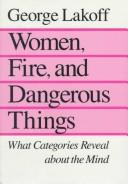
Lakoff's landmark work on category theory and conceptual structure challenges classical logic-based models of mind, introducing prototype theory and embodied cognition at a rigorous level.

This Pulitzer Prize-winning masterpiece explores self-reference, formal systems, and consciousness, pushing the reader to think deeply about what it means for a physical system to have a mind.

Varela, Thompson, and Rosch mount a rigorous challenge to classical cognitivism, arguing that mind is enacted through body and environment — the essential counterpoint to close out a deep curriculum.
Discussion
Keep reading
Paths that share books, cover the same subject, or open a related topic.