Best Books on Opening a Coffee Shop, in Order
This curriculum takes a first-time entrepreneur from zero coffee-industry knowledge to a confident, detail-oriented café owner. The four stages build deliberately: first you absorb the culture and mindset of specialty coffee, then you master business planning and site selection, then you tackle the physical build-out and equipment, and finally you stress-test your economics and operations so the business actually survives past year one.
Foundations: Coffee Culture & the Café Mindset
BeginnerUnderstand what specialty coffee is, how the industry thinks, and what separates great cafés from mediocre ones — before spending a dollar.
▸ Study plan for this stage
Pace: 4–5 weeks, ~25–30 pages/day. Start with "The World Atlas of Coffee" (Week 1–2, ~300 pages), then "God in a Cup" (Week 3–5, ~400 pages). Build in 2–3 days per week for exercises and reflection.
- Coffee geography and terroir: how origin, altitude, climate, and soil create distinct flavor profiles across regions (from Hoffmann's regional deep-dives)
- The specialty coffee movement and its values: traceability, quality grading, direct relationships with farmers, and rejection of commodity-grade coffee
- The sensory science of coffee: how to taste, describe, and evaluate coffee using the flavor wheel and cupping methodology (Hoffmann's framework)
- Coffee's historical and cultural significance: how coffee shaped trade, colonialism, labor practices, and social rituals across centuries (Weissman's narrative)
- The economics and ethics of coffee production: understanding farmer livelihoods, exploitation, fair trade, and the price consumers pay vs. what producers earn
- What separates specialty cafés from chains: intentionality around sourcing, roasting, preparation, customer education, and community building
- The café as a third place: how great cafés function as social and intellectual hubs, not just transaction points
- What are the key differences between commodity coffee and specialty coffee, and why do those differences matter to café owners?
- How do origin, altitude, and processing method affect the flavor profile of coffee, and why would a café owner care about these details?
- What is the 'specialty coffee movement,' and what values or practices define it?
- How has coffee's history—from colonial trade to modern supply chains—shaped current labor and ethical issues in the industry?
- What does it mean to 'cup' coffee, and how would you use cupping to evaluate beans for your café?
- How do great cafés differentiate themselves from chains, and what role does customer education play in that differentiation?
- Cupping exercise: Source 3–4 single-origin coffees from different regions (e.g., Ethiopian, Colombian, Indonesian). Follow Hoffmann's cupping protocol to taste and compare them; document flavor notes and how origin influences taste.
- Flavor wheel mapping: After tasting each coffee, use the SCA flavor wheel to identify and describe tasting notes; practice moving from vague descriptions ('it tastes good') to specific ones ('bright citrus with chocolate undertones').
- Origin research project: Pick two coffee-producing countries from Hoffmann's atlas. Research their geography, climate, processing traditions, and current specialty coffee producers; create a one-page profile for each.
- Supply chain tracing: Find a specialty coffee brand that publishes its sourcing information. Trace one coffee from farm to cup—identify the farmer/cooperative, the importer, the roaster, and the café; note what transparency is available and what's missing.
- Café visit and analysis: Visit 2–3 local cafés (one specialty-focused, one chain, one in-between). Evaluate each on: sourcing transparency, staff knowledge, equipment quality, customer experience, and community feel. Write a 1–2 page comparative analysis.
- Historical timeline: Create a visual timeline of coffee's journey from Ethiopia to the modern specialty movement, using Weissman's narrative. Highlight key moments that shaped labor practices, trade routes, and cultural attitudes toward coffee.
Next up: This stage establishes the *why* and *what* of specialty coffee—the cultural, historical, and sensory foundation—preparing you to move into the operational and business realities of actually opening and running a café.

The definitive beginner primer on coffee origins, processing, and flavor — gives you the vocabulary and product knowledge every café owner must have before talking to roasters or customers.

A narrative look at how top specialty-coffee buyers think and compete; builds intuition for quality sourcing and the culture you'll be entering as an owner.
The Business Plan & Location Strategy
BeginnerWrite a credible business plan, choose and negotiate a site, and understand the legal and financial structure of a café startup.
▸ Study plan for this stage
Pace: 4–5 weeks, ~25–30 pages/day, with 2–3 days per week dedicated to writing and workshopping your own business plan
- The core sections of a credible business plan (executive summary, company description, market analysis, financial projections, operations plan) and why each matters to lenders and investors
- How to conduct competitive analysis and market research specific to the café industry, including identifying your target customer and local market dynamics
- Financial fundamentals: startup costs, cash flow projections, break-even analysis, and how to create realistic revenue forecasts for a café
- The importance of a clear value proposition and differentiation strategy in a crowded coffee market
- How to structure your business legally (sole proprietorship, LLC, corporation) and the tax implications of each choice
- Site selection criteria for a café: foot traffic, demographics, rent-to-revenue ratios, visibility, and lease negotiation essentials
- Risk assessment and contingency planning—identifying threats to your café and how to mitigate them in your plan
- What are the seven essential sections of a business plan, and what specific information does each section communicate to potential lenders or investors?
- How do you calculate realistic startup costs and cash flow projections for a café, and what are the most common financial pitfalls new café owners face?
- What criteria should you use to evaluate potential café locations, and how do you assess whether a site's rent is sustainable given projected revenue?
- How do you identify and analyze your direct competitors, and what competitive advantages should your business plan articulate?
- What are the legal and tax differences between operating as a sole proprietorship, LLC, and corporation, and which structure makes sense for your café concept?
- What is a break-even analysis, and how do you use it to set realistic sales targets and pricing in your business plan?
- Complete Abrams' business plan worksheets for your own café concept, section by section, drafting an executive summary, company description, and mission statement
- Conduct a competitive analysis of at least 5 existing cafés in your target neighborhood: visit them, note their pricing, atmosphere, customer base, and menu offerings, then summarize what differentiates your concept
- Research and document 3–5 potential café locations in your chosen area, gathering data on foot traffic, demographics, rent costs, lease terms, and accessibility
- Build a detailed startup cost spreadsheet covering equipment, build-out, permits, initial inventory, and working capital, then compare your estimates against industry benchmarks
- Create a 12-month cash flow projection for your café using realistic assumptions about daily customer count, average transaction value, and operating expenses
- Draft a 1–2 page site selection memo explaining why a specific location is ideal for your café concept, including foot traffic data, demographic fit, and rent sustainability analysis
Next up: Mastering the business plan and location strategy equips you with the strategic and financial foundation needed to move into the operational and hands-on stage—where you'll learn how to design your café's layout, select equipment, manage inventory, and build the systems that bring your plan to life.
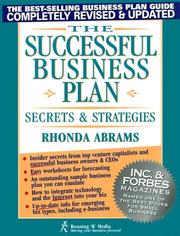
The canonical general-purpose business-plan workbook; read after the café-specific book to sharpen your plan's structure, investor narrative, and financial modeling skills.
Equipment, Build-Out & the Physical Café
IntermediateSpecify, source, and install the right equipment; manage a build-out on budget; and design a space that drives both workflow efficiency and customer experience.
▸ Study plan for this stage
Pace: 4–5 weeks, ~20–25 pages/day, with 2–3 days per week dedicated to hands-on equipment exploration and café visits
- Espresso machine anatomy, calibration, and maintenance requirements for consistent shot quality
- Grinder selection and burr types (flat vs. conical) and their impact on particle distribution and extraction
- Water chemistry and filtration systems as foundational to espresso quality and equipment longevity
- Milk steaming technique, steam wand design, and thermometer use for temperature control
- Workflow layout and equipment placement to minimize barista movement and maximize customer visibility
- Sourcing decisions: new vs. used equipment, commercial-grade specifications, and supplier relationships
- Preventive maintenance schedules and troubleshooting protocols to keep equipment operational
- Customer-facing equipment design and how transparency/aesthetics influence perceived quality and experience
- What are the key differences between pump-driven and lever espresso machines, and how do these differences affect your build-out budget and barista training needs?
- How does water hardness and mineral content impact espresso machine performance, and what filtration system would you specify for your café?
- What grinder specifications (burr type, motor power, dosing mechanism) are non-negotiable for your target drink menu, and why?
- Walk through a complete milk steaming workflow: what equipment features (steam wand type, pressure gauge, thermometer) are essential, and how would you train staff on consistency?
- Given a fixed build-out budget, how would you prioritize equipment purchases and justify used vs. new for different stations?
- How would you arrange your espresso bar to optimize both barista efficiency and customer experience, and what equipment visibility matters most?
- Visit 3–5 operating coffee shops and map their equipment layout, noting barista movement patterns, bottlenecks, and customer sightlines; photograph and annotate the floor plan
- Create a detailed equipment specification sheet for your café concept, including machine type, grinder model, water system, and estimated costs from 3+ suppliers
- Conduct a water quality test on your café's water source (or a representative sample) and research filtration options; document hardness, pH, and TDS levels
- Shadow a barista for 2–3 hours and time each workflow step (grinding, dosing, tamping, pulling shots, steaming milk); identify where equipment design creates friction or efficiency
- Build a 1:10 or 1:20 scale model or detailed floor plan of your café's espresso bar, showing equipment placement, plumbing/electrical runs, and barista working zones
- Interview 2–3 café owners or equipment suppliers about their sourcing decisions, maintenance costs, and what they'd change about their equipment choices if starting over
Next up: This stage equips you with the technical knowledge and hands-on familiarity to make informed equipment and layout decisions; the next stage will build on this foundation by addressing staffing, training systems, and operational procedures that turn a well-designed physical space into a smoothly running business.

The industry-standard technical reference for espresso machines, grinders, brew ratios, and workflow — essential for specifying equipment and training staff to a professional standard.
Economics, Staffing & Long-Term Survival
IntermediateModel your unit economics, set profitable pricing, hire and retain great staff, and build the operational systems that keep a café healthy past year one.
▸ Study plan for this stage
Pace: 8–10 weeks, ~40–50 pages/day. Suggested pace: "Setting the Table" (2 weeks), "The E-Myth Revisited" (3 weeks), "Profit First" (2–3 weeks), plus 1 week for integration and exercises.
- Hospitality as a business philosophy: how Danny Meyer's 'enlightened hospitality' creates customer loyalty and sustainable revenue (Setting the Table)
- The systems and processes that scale a business beyond the owner's personal effort, preventing the 'E-myth' trap of trading time for money (The E-Myth Revisited)
- Unit economics and the profit hierarchy: understanding which money is truly profit vs. overhead, and the importance of paying yourself first (Profit First)
- Staff as a strategic asset: hiring for cultural fit, training systems, and retention strategies that reduce turnover costs and improve service quality
- Pricing strategy rooted in value and psychology, not just cost-plus markup, to maximize profitability without commoditizing your café
- Building repeatable operational systems and documentation that allow your café to run without you being present every day
- The relationship between customer experience, employee satisfaction, and long-term financial health in a service business
- What is 'enlightened hospitality' according to Danny Meyer, and how does it translate into a sustainable business model for a coffee shop?
- What is the 'E-myth' and how does it apply to café owners? How do you avoid becoming a technician trapped in your own business?
- Explain the Profit First system: what are the core account categories, and why is paying yourself first a non-negotiable principle?
- How should you price your coffee shop offerings to maximize profit while maintaining perceived value? What psychological and cost factors should inform your pricing?
- What systems and processes must you document and systematize to allow your café to operate without your constant presence?
- How do you hire, train, and retain staff in a way that reduces turnover, improves service quality, and aligns with your café's culture?
- Map your café's current or projected unit economics: calculate the cost of goods sold (COGS), labor, rent, and utilities per transaction. Identify your true profit margin and break-even point.
- Design a Profit First account structure for your café: determine realistic percentages for Owner's Pay, Profit, Tax, and Operating Expenses based on your revenue projections.
- Create a pricing menu for your café using value-based pricing principles from Profit First and Meyer's hospitality philosophy. Test your pricing against competitors and customer willingness to pay.
- Document 3–5 critical operational procedures for your café (e.g., opening checklist, espresso machine maintenance, customer complaint resolution) in a systems manual format.
- Develop a hiring profile and interview guide that screens for cultural fit and service mindset, drawing on Meyer's hospitality principles and Gerber's systems thinking.
- Conduct a 'staff retention audit': identify what causes turnover in similar cafés, then design a compensation, training, and recognition system to address those pain points.
Next up: This stage equips you with the financial discipline, operational systems, and people management skills to run a profitable, scalable café—preparing you to tackle growth challenges, multi-location expansion, or strategic pivots in the next stage.
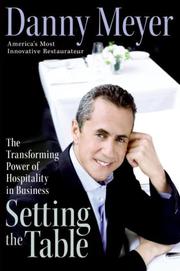
The definitive book on hospitality culture and staff management from one of America's most successful restaurateurs — teaches the people-first philosophy that drives repeat business and staff retention.
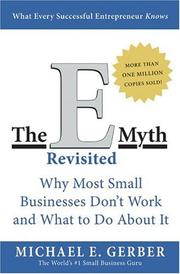
Explains why most small food-and-beverage businesses fail (the owner works *in* the business, not *on* it) and how to build systems and processes that let the café run without you doing everything.
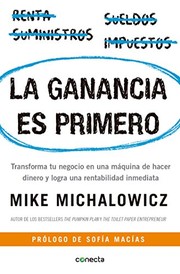
A practical cash-flow management system specifically suited to thin-margin businesses like cafés; read last so you can immediately apply it to the real numbers your open café is generating.
Discussion
Keep reading
Paths that share books, cover the same subject, or open a related topic.