Pull great espresso in your own kitchen
This curriculum takes a beginner from zero coffee knowledge to genuine home-barista competence across four tightly sequenced stages. Each stage builds on the last: first you learn the language and sensory framework of coffee, then you master the core variables of grinding and extraction, then you go deep on espresso and milk technique, and finally you refine your palate and troubleshoot like an expert.
Foundations — Coffee Literacy
BeginnerUnderstand where coffee comes from, how it is processed and roasted, and develop the basic sensory vocabulary needed to taste and describe what is in your cup.
▸ Study plan for this stage
Pace: 6–7 weeks total: Weeks 1–4 for "The World Atlas of Coffee" (~25–30 pages/day, including map and photo study); Weeks 5–6 for "God in a Cup" (~40 pages/day, a faster narrative read); Week 7 for review, re-tasting, and reflection exercises.
- Coffee's origin and terroir: how altitude, soil, climate, and varietals (Arabica vs. Robusta, Bourbon, Typica, Gesha, etc.) shape flavor, as mapped in detail across Hoffmann's country-by-country atlas
- Processing methods: how washed (wet), natural (dry), and honey processing each affect the final cup's flavor profile, body, and clarity — a framework Hoffmann builds early and returns to throughout
- The roast spectrum: light vs. medium vs. dark roasting, what chemical changes occur (Maillard reaction, caramelization, first and second crack), and how roast level interacts with origin character
- Sensory vocabulary and the coffee flavor wheel: learning to identify and articulate acidity, body, sweetness, bitterness, finish, and specific flavor descriptors (fruit, floral, chocolate, nut, etc.)
- The supply chain from seed to cup: the roles of farmers, exporters, importers, roasters, and baristas — and why each handoff matters for quality
- Specialty coffee as a movement and a market: Weissman's 'God in a Cup' shows how top buyers (Counter Culture, Intelligentsia, Stumptown) source, score, and compete for micro-lots, making the economics and culture of quality tangible
- Cupping as a standardized evaluation tool: the professional ritual Weissman observes in action, and how it connects abstract flavor language to repeatable, comparative tasting
- The human and ethical dimension: how relationships between roasters and producers, fair pricing, and direct trade affect both quality and the livelihoods of coffee-growing communities
- After reading Hoffmann's regional chapters, can you name at least three major producing countries and describe one flavor characteristic typically associated with each (e.g., Ethiopian floral brightness, Colombian balance, Sumatran earthiness)?
- What are the key differences between washed, natural, and honey processing, and how would you expect each to taste in the cup?
- How does roast level affect the expression of origin flavors — and why might a light roast from Ethiopia taste very different from a dark roast of the same bean?
- Based on Weissman's account, what does a professional cupping session look like, and why do specialty buyers use it rather than just brewing a normal pot of coffee?
- How do the buyers in 'God in a Cup' decide which coffees to purchase, and what does this reveal about how 'quality' is defined and contested in the specialty world?
- What sensory terms can you now use to describe a cup of coffee beyond 'strong' or 'weak' — and can you connect those terms back to a likely origin, process, or roast level?
- **Origin tasting flight:** Buy three single-origin coffees representing different regions covered in Hoffmann's atlas (e.g., one African, one Latin American, one Asian-Pacific). Brew each the same way (pour-over or French press), taste side by side, and write tasting notes using the vocabulary from the flavor wheel Hoffmann introduces.
- **Processing method comparison:** Source a washed and a natural-processed coffee from the same country if possible (Ethiopia is ideal). Brew them identically and document the differences in aroma, body, sweetness, and fruit character — then check your observations against Hoffmann's processing chapter.
- **Roast level experiment:** Buy the same coffee (or same blend) in a light and a dark roast from the same roaster. Taste them back-to-back and describe what the roast has added or subtracted. Relate your findings to Hoffmann's explanation of the roast spectrum.
- **DIY cupping session:** Following the basic cupping protocol described in Weissman's book (coarse grind, bloom with hot water, break the crust, slurp from a spoon), evaluate two or three coffees simultaneously. Score them on aroma, flavor, acidity, body, and aftertaste using a simple 1–5 scale you create yourself.
- **Supply-chain mapping:** After finishing both books, draw a simple diagram tracing one coffee — from a country profiled in Hoffmann's atlas — through every stage: farm → processing station → exporter → importer → roaster → your cup. Annotate each step with one quality-affecting decision, drawing on details from both books.
- **Vocabulary journal:** Keep a running tasting journal throughout the stage. After every coffee you drink, write at least three descriptors. At the end of week 7, review your earliest entries and rewrite them using the richer vocabulary you have built — notice how your language has evolved.
Next up: Having built a solid map of where coffee comes from, how it is transformed before it reaches the brewer, and how to articulate what you taste, you are now ready to move into the brewing stage — where you will learn to control grind, water, ratio, and technique to reliably reproduce great results in your own kitchen.
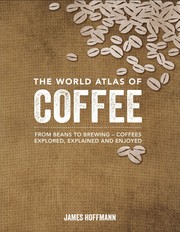
The single best starting point for any coffee learner — it covers origin, processing, roasting and brewing in plain language with stunning visuals, giving you the full map before you zoom in on any one area.
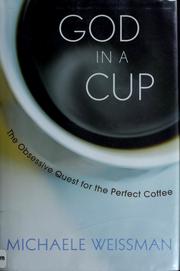
A narrative account of specialty coffee buyers that makes the supply chain and the concept of 'quality' feel real and human, cementing the 'why it matters' motivation before you start drilling into technique.
Grinding & Extraction — The Core Variables
BeginnerUnderstand grind size, water temperature, dose, yield and time as the levers of extraction, and apply them confidently to filter and immersion brewing methods at home.
▸ Study plan for this stage
Pace: 6–8 weeks total. Week 1–4: Read the relevant extraction and brewing-science chapters of "The Coffee Roaster's Companion" (focus on Part II: Extraction & Brewing Science, ~20–25 pages/day, 4 days/week). Week 5–8: Read "The Blue Bottle Craft of Coffee" cover to cover (~15–20 pages/day, 4 days/week), p
- Grind size and its direct relationship to surface area, extraction rate, and flavor outcome (under- vs. over-extraction) — as laid out in Rao's extraction science chapters
- The extraction yield percentage and total dissolved solids (TDS) as measurable targets, and how the brew ratio (dose-to-water) controls strength vs. extraction — core to Rao's brewing framework
- Water temperature as a variable: how higher temps accelerate extraction of both desirable and undesirable compounds, and Rao's recommended ranges for filter brewing
- Contact time and its interaction with grind size — why a coarser grind demands longer contact time and vice versa, illustrated across methods in both books
- The distinction between filter (percolation) and immersion brewing methods — how water flow vs. static steeping changes which variables matter most, covered practically in The Blue Bottle Craft of Coffee
- Dose and yield as a ratio: Freeman's practical approach to dialing in a recipe by fixing two variables and adjusting the third
- Channeling, agitation, and bloom — how uneven water distribution undermines extraction, and the simple techniques both authors recommend to prevent it
- Sensory feedback as a calibration tool: using taste (sour = under-extracted, bitter = over-extracted) to diagnose and correct brew variables, emphasized throughout The Blue Bottle Craft of Coffee
- According to Rao's extraction framework, what happens to flavor when grind size is too fine vs. too coarse, and which specific compounds are responsible for each outcome?
- How do dose, yield, and brew ratio interact? If you keep dose fixed and increase yield (more water out), what happens to strength and extraction, and why?
- The Blue Bottle Craft of Coffee describes both pour-over and immersion methods — what is the single most important variable to control in each, and why do they differ?
- What water temperature does Rao recommend for filter brewing, and what is the sensory consequence of brewing significantly above or below that range?
- If your cup tastes sour and thin, which variables — grind size, water temperature, contact time, or dose — would you adjust first, and in which direction? Justify using concepts from both books.
- How does the 'bloom' (pre-infusion) step described in The Blue Bottle Craft of Coffee affect extraction, and what does it tell you about the freshness of your coffee?
- Grind-size ladder drill (using The Coffee Roaster's Companion as your reference): Brew the same recipe (fixed dose, water temp, and time) three times with fine, medium, and coarse grind settings. Taste side by side and write two sentences per cup mapping flavor to Rao's under/over-extraction descriptions.
- Brew-ratio matrix (inspired by Rao's dose/yield framework): Choose one brew method and hold grind size and temperature constant. Brew at 1:14, 1:16, and 1:18 ratios. Record TDS if you have a refractometer, or describe strength and flavor, then identify your preferred ratio.
- Temperature experiment: Brew a single pour-over recipe at 88 °C, 93 °C, and 96 °C (keeping all other variables identical). Taste and document how temperature shifts the flavor profile, cross-referencing Rao's temperature guidance.
- Method comparison brew day (The Blue Bottle Craft of Coffee): On the same day, brew the same coffee and recipe as a pour-over (percolation) and as a French press or Aeropress (immersion). Follow Freeman's recipes exactly, then write a half-page comparison of how the method changed the cup.
- Diagnosis journal: For one full week, brew daily and keep a log with: dose, grind setting, water temp, brew time, yield, and a one-line tasting note. At the end of the week, use the sour/bitter diagnostic from The Blue Bottle Craft of Coffee to identify your most common extraction error and make one targeted adjustment.
- Bloom observation exercise: Brew two identical pour-overs — one with a 30-second bloom (as Freeman recommends) and one without. Photograph the bloom bubble activity, note the difference in flow rate during the main pour, and compare the final cups.
Next up: Mastering these five core variables in filter and immersion brewing builds the precise, repeatable mental model of extraction that is essential for tackling espresso, where the same levers operate under pressure at far tighter tolerances — the natural next stage of the curriculum.

Although focused on roasting, Rao's rigorous treatment of coffee chemistry and extraction science (especially in the early chapters) builds the technical vocabulary — solubles, TDS, extraction yield — that underpins every brewing decision you will ever make.
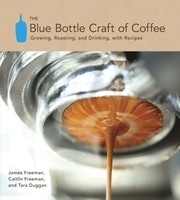
A practical, beautifully structured guide to home brewing that walks through grinders, water and multiple brew methods step by step, translating the science from the previous book into everyday kitchen practice.
Espresso Mastery — Machine, Puck & Pull
IntermediateDial in an espresso machine at home: understand pressure, pre-infusion, puck preparation, dose-to-yield ratios, and how to consistently pull a balanced shot.
▸ Study plan for this stage
Pace: 8–10 weeks total: Weeks 1–4 on "Espresso Coffee" by Andrea Illy (~20–25 pages/day, focusing on the science-heavy chapters on pressure, extraction chemistry, and sensory analysis); Weeks 5–9 on "The Professional Barista's Handbook" by Scott Rao (~15–20 pages/day, working methodically through the espr
- Espresso extraction chemistry — how pressure (ideally ~9 bar), water temperature, and contact time interact to dissolve solubles in the correct sequence, as detailed in Illy's scientific framework
- The espresso machine's hydraulic and thermal systems — understanding pump pressure curves, boiler vs. heat-exchanger vs. dual-boiler designs, and how machine stability affects shot consistency (Illy)
- Puck preparation fundamentals — grinding particle size distribution, dose weight, distribution techniques (Stockfleth's move, WDT), and tamping pressure/levelness as systematized by Rao
- Dose-to-yield ratios and brew ratios — Rao's framework of measuring input (dry dose) vs. output (liquid yield) by weight, and how ratios map to ristretto, normale, and lungo expressions
- Pre-infusion — how a low-pressure pre-soak saturates the puck evenly before full pressure ramps up, reducing channeling and improving extraction uniformity (covered in both Illy and Rao)
- Channeling and its causes — how uneven density, poor distribution, or cracked pucks create preferential flow paths, and the diagnostic signs in the cup and in the flow stream
- Sensory calibration and dialing in — Rao's iterative tasting protocol: adjust one variable at a time (grind, dose, yield, temperature) and cup the result against a flavor target
- Extraction yield and TDS — the conceptual link between total dissolved solids, extraction percentage, and the Specialty Coffee Association's brewing control chart as a diagnostic tool
- According to Illy's scientific analysis, what happens chemically during the first, middle, and final phases of a ~25-second espresso extraction, and why does over-extraction produce bitterness while under-extraction produces sourness?
- Rao defines espresso by a dose-to-yield ratio rather than by volume — what is the practical difference between a 1:1.5 and a 1:2.5 brew ratio, and how would you adjust grind size or yield to move between them?
- What are the three most common causes of channeling identified across both books, and what corrective steps in puck preparation address each one?
- How does pre-infusion affect extraction uniformity, and under what machine or puck conditions does it provide the greatest benefit according to the material in these two books?
- Rao's dialing-in workflow prescribes changing only one variable at a time — walk through the sequence of adjustments you would make if a shot tastes sour, weak, and runs fast at 18 seconds.
- How do the thermal stability requirements described by Illy (boiler temperature, group-head temperature) translate into the practical machine-management habits Rao recommends (flushing, warm-up time, shot spacing)?
- **Baseline shot journal (Week 1–2):** Before reading Rao, pull 5 shots using your current intuition and record dose, yield (by weight), time, and tasting notes. Use Illy's flavor-compound framework to name what you taste — this creates a before/after benchmark.
- **Pressure & temperature mapping (Week 3–4):** If your machine has a pressure gauge or you can add one, chart the pressure curve of 10 consecutive shots. Cross-reference with Illy's chapters on hydraulics to identify whether your pump is delivering consistent 9-bar pressure and note any drift.
- **Puck autopsy drill (Week 5–6, with Rao):** After each shot, immediately remove the portafilter, photograph the spent puck, and probe it with a toothpick to find wet channels or dry spots. Log findings alongside Rao's channeling checklist and adjust distribution or tamping technique accordingly.
- **Brew-ratio ladder (Week 6–7):** Using a fixed dose (e.g., 18 g), pull shots at four different yields — 27 g (1:1.5), 36 g (1:2), 45 g (1:2.5), and 54 g (1:3) — keeping grind constant. Taste and score each using Rao's sensory descriptors to physically experience how ratio shifts flavor balance.
- **Single-variable dial-in challenge (Week 7–8):** Deliberately introduce a problem (coarsen the grind until shots run fast and taste sour), then use Rao's one-variable-at-a-time protocol to diagnose and correct it within 5 shots, documenting every adjustment and tasting note.
- **Cross-book synthesis essay (Week 10):** Write a one-page 'machine manual' for your specific espresso setup that integrates Illy's scientific principles (why each parameter matters chemically) with Rao's operational procedures (how to execute each step). Share it with a fellow home brewer for feedback.
Next up: Mastering the controlled, high-pressure world of espresso — with its precise ratios, grind science, and extraction chemistry — builds the analytical sensory vocabulary and variable-isolation mindset that directly prepares the reader to explore the wider, more forgiving landscape of filter and immersion brewing methods in the next stage.

The most authoritative scientific treatment of espresso — covering bean chemistry, roasting, grinding and extraction physics — giving you the 'why' behind every espresso variable before you start chasing shots.

Rao's landmark barista manual translates espresso science into precise, repeatable workflow: distribution, tamping, shot timing and dialling in — the closest thing to a professional training manual available to home brewers.
Milk, Palate & Refinement
ExpertSteam and texture milk to café standard, develop a trained palate for diagnosing under- and over-extraction, and build the sensory toolkit to keep improving independently.
▸ Study plan for this stage
Pace: 6–8 weeks total: Weeks 1–3 cover "Craft Coffee" by Jessica Easto (~25–30 pages/day, focusing on her sensory evaluation framework, extraction variables, and milk chapters); Weeks 4–7 cover "The Curious Barista's Guide to Coffee" by Tristan Stephenson (~20–25 pages/day, diving deep into the science of
- Extraction yield and its relationship to solubles concentration — understanding the 'brew control chart' logic that Easto unpacks, and how TDS (total dissolved solids) maps to perceived taste
- Sensory vocabulary for diagnosing espresso: Easto's systematic approach to identifying sourness (under-extraction) vs. bitterness (over-extraction) and the textural cues that sit between them
- The physics and chemistry of milk steaming: Stephenson's explanation of how heat denatures whey proteins and how fat content determines foam stability and mouthfeel
- Microfoam vs. macrofoam: understanding the structural difference, why microfoam integrates into espresso while macrofoam sits on top, and how wand angle and depth control the outcome
- Grind size as the primary dial: both authors converge on grind adjustment as the fastest lever for correcting extraction — internalising the cause-and-effect chain from burr gap to cup flavour
- Water quality and temperature: Stephenson's deep dive into mineral content (bicarbonate, magnesium, calcium) and how they interact with coffee acids to shape or mask flavour
- Palate calibration through reference tasting: using known-origin single-origin coffees as 'flavour anchors' to build a repeatable internal reference library, as Easto recommends
- Independent refinement mindset: building a personal tasting log and iterative dial-in protocol so improvement continues beyond any single book or course
- After pulling two espresso shots — one sour, one bitter — what specific grind, dose, or time adjustments does Easto's extraction framework suggest for each, and why does fixing one variable at a time matter?
- Stephenson describes the role of bicarbonate hardness in water on espresso flavour. How does high bicarbonate suppress acidity, and what practical water treatment or bottled-water choice would you make for your home setup?
- What happens at the molecular level when milk is steamed past 70 °C, and how does this change the sweetness and foam stability you experience in the cup, according to Stephenson?
- Easto introduces a structured sensory evaluation sequence (aroma → first sip → body → finish). Walk through that sequence on a shot you've just pulled — what are you listening for at each stage?
- Both authors discuss the interplay between roast level and extraction behaviour. How should you adjust your dial-in approach when switching from a light filter-roast to a dark espresso-roast blend?
- What is your personal 'minimum viable tasting log' — which variables will you record on every session, and how will you use that data to make the next session better?
- Extraction triangle drill (Easto): Pull three consecutive shots — deliberately under-extracted (coarse grind/short time), on-target, and over-extracted (fine grind/long time). Taste all three side-by-side and write tasting notes using Easto's sensory vocabulary before checking your parameters. Repeat weekly until you can identify the fault blind.
- Milk steaming ladder (Stephenson): Steam four separate pitchers of whole milk, stopping at 45 °C, 55 °C, 65 °C, and 75 °C respectively. Taste each and note sweetness, texture, and foam stability. Map your findings to Stephenson's protein-denaturation explanation.
- Water swap experiment (Stephenson): Brew the same espresso recipe on three consecutive days using tap water, a low-mineral bottled water, and a magnesium-rich bottled water (e.g., Volvic vs. Evian). Record flavour differences and correlate them to the mineral profiles Stephenson outlines.
- Personal flavour anchor library (Easto): Source one washed Ethiopian (floral/citrus), one natural Brazilian (nutty/chocolate), and one Kenyan (berry/bright acid). Brew each as a simple filter or espresso and write a 5-line tasting note. Return to these same coffees at the end of the stage to measure how your vocabulary and perception have sharpened.
- Latte art consistency block (Stephenson): Commit to 10 consecutive milk-texturing attempts per session, three sessions per week, aiming for the same microfoam texture each time before attempting any pour pattern. Log what changed between pitchers (wand depth, steam pressure, starting temperature) to isolate variables.
- Blind dial-in challenge: Have a friend or partner set your grinder to an unknown position. Pull shots, taste, and use only your palate — no timer or scale at first — to decide which direction to adjust. Then confirm with measurements. This trains the sensory-first habit both Easto and Stephenson advocate over parameter-first reliance.
Next up: Mastering milk texture and building a calibrated palate here creates the sensory confidence and repeatable technique needed to explore more advanced territory — such as alternative brewing methods, single-origin sourcing, and roast profiling — where subtle flavour differences only reveal themselves to a trained, systematic taster.

An exceptionally well-organised manual that consolidates everything — grind, extraction, espresso and milk — into a single coherent reference, ideal at this stage for filling gaps and cementing the full picture.

Stephenson's guide adds sensory science, flavour-wheel literacy and milk-steaming technique in an accessible format, rounding out the curriculum with the tasting and finishing skills that separate good home coffee from genuinely great coffee.
Discussion
Keep reading
Paths that share books, cover the same subject, or open a related topic.