Roast your own coffee: the specialty path
This curriculum takes a beginner from zero coffee knowledge to confidently roasting, sourcing, and tasting specialty coffee at home. Each stage builds on the last — starting with sensory and cultural foundations, moving through the science of roasting and extraction, and finishing with hands-on home roasting mastery and advanced flavor development.
Foundations: Coffee Culture & the Specialty World
BeginnerUnderstand what specialty coffee is, how it differs from commodity coffee, and develop a shared vocabulary for taste, origin, and quality.
▸ Study plan for this stage
Pace: 5–6 weeks total: Weeks 1–4 cover "The World Atlas of Coffee" (~20–25 pages/day, including time to study maps and tasting notes); Weeks 5–6 cover "God in a Cup" (~30–35 pages/day, a faster narrative read). Allow one buffer day per week for reflection and exercise practice.
- Specialty vs. commodity coffee: Hoffmann's distinction between scored, traceable specialty-grade beans and the undifferentiated mass-market commodity supply chain
- Coffee's two main species in trade — Arabica and Robusta — and why species, variety, and cultivar matter to cup quality, as introduced in The World Atlas of Coffee
- Terroir and origin: how altitude, soil, climate, and processing method shape flavor, explored region-by-region in The World Atlas of Coffee
- The three primary processing methods (washed/wet, natural/dry, honey) and how each influences sweetness, body, and clarity of flavor
- The coffee-tasting vocabulary (acidity, body, sweetness, finish, flavor descriptors) and the Specialty Coffee Association (SCA) 100-point scoring system outlined by Hoffmann
- The specialty supply chain — from farmer to exporter to importer to roaster to barista — and the economic and ethical tensions within it, brought to life through the buyer characters in God in a Cup
- The role of the Q Grader and competitive cupping (Cup of Excellence) as quality-gatekeeping institutions, as depicted in God in a Cup
- The 'third wave' coffee movement: its values of transparency, traceability, direct trade, and craft, threaded through both books
- How does the SCA define 'specialty coffee,' and what score threshold separates it from commodity-grade coffee according to Hoffmann?
- Choose one origin country covered in The World Atlas of Coffee (e.g., Ethiopia, Colombia, or Guatemala) — what geographic and processing factors does Hoffmann say contribute to its characteristic flavor profile?
- What are the key differences between a washed and a natural processed coffee in terms of the flavors you would expect in the cup?
- Based on God in a Cup, what tensions exist between roasters/buyers and farmers when sourcing high-quality lots, and how do buyers like Duane Sorenson or Peter Giuliano navigate them?
- What is a cupping, why is it the industry's standard evaluation format, and what does it reveal that brewing a single cup cannot?
- How do both books together define the 'third wave' of coffee, and what distinguishes it from first- and second-wave coffee culture?
- Origin tasting flight: Purchase and brew (using the same method) three single-origin coffees from different continents covered in The World Atlas of Coffee (e.g., an Ethiopian, a Colombian, and an Indonesian). Take written tasting notes using Hoffmann's flavor vocabulary (acidity, body, sweetness, finish) and compare your notes to his regional flavor descriptors.
- Processing method comparison: Source one washed and one natural processed coffee from the same country if possible (Ethiopia is ideal). Brew them side-by-side and document the differences in sweetness, clarity, and fruit character — then map your findings back to Hoffmann's explanation of processing methods.
- Build a personal coffee glossary: As you read both books, maintain a running document of every unfamiliar term (e.g., 'terroir,' 'lot,' 'cupping protocol,' 'direct trade,' 'Q Grader'). Write each definition in your own words, then use it in a sentence referencing a specific passage from the book where you encountered it.
- Map the supply chain: Draw a flowchart of the specialty coffee supply chain from seed to cup, labeling each actor (farmer, mill, exporter, importer, roaster, barista, consumer). Annotate each link with one insight from God in a Cup about where value, risk, or ethical tension lives in that relationship.
- Conduct a home cupping: Follow the simplified SCA cupping protocol (same dose, same grind, same water temperature for multiple coffees evaluated simultaneously). Score each coffee on fragrance, aroma, flavor, acidity, body, and overall. Reflect on how the structured format changes your perception versus casual drinking.
- Buyer profile comparison: After finishing God in a Cup, write a one-page profile of two of the buyers Weissman follows. Compare their sourcing philosophies, their relationships with farmers, and how their approaches reflect (or challenge) the third-wave values described by Hoffmann.
Next up: Mastering the vocabulary of origin, quality, and the specialty supply chain gives the reader the sensory and conceptual language needed to understand what roasters are trying to preserve or transform — making the next stage on coffee roasting science and craft immediately meaningful rather than abstract.
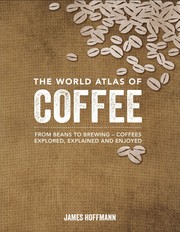
The ideal starting point — beautifully illustrated and authoritative, it covers origin countries, processing methods, and what makes coffee 'specialty,' giving the learner a global map of the subject before diving into technique.
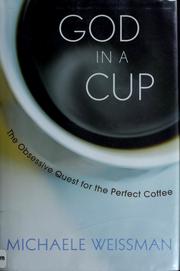
A narrative account of specialty coffee buyers sourcing beans around the world; reading it second makes the atlas come alive with real human stories and shows why sourcing and terroir matter so deeply.
Taste & Brewing: Training Your Palate
BeginnerLearn to brew coffee correctly with multiple methods, understand extraction, and begin tasting and describing coffee with precision.
▸ Study plan for this stage
Pace: 6–8 weeks total. Week 1–4: Read "The Coffee Roaster's Companion" by Scott Rao (~20–25 pages/day, focusing on the brewing science, extraction, and sensory evaluation chapters). Week 5–8: Read "How to Make Coffee" by Lani Kingston (~15–20 pages/day, a more approachable pace to absorb practical brewing
- Extraction yield and total dissolved solids (TDS): understanding the 'golden ratio' and how under- vs. over-extraction affect flavor, as detailed in Rao's brewing chapters
- The brew control chart: how to use Rao's brewing compass to dial in strength and extraction simultaneously
- Grind size and its relationship to extraction rate — coarser grinds extract slower, finer grinds extract faster, and how to adjust on the fly
- Water quality and temperature: Rao's emphasis on mineral content (especially magnesium and bicarbonate) and how temperature shifts extraction of specific flavor compounds
- Brewing variables as a system: dose, grind, water, time, and agitation are interdependent — Kingston reinforces this with accessible, method-by-method walkthroughs
- Major brew methods and their defining characteristics: pour-over (e.g., V60, Chemex), immersion (French press, AeroPress), and espresso — covered practically in Kingston and scientifically in Rao
- Sensory vocabulary: learning to identify and articulate acidity, sweetness, bitterness, body, and finish using the tasting frameworks both authors introduce
- The role of freshness: degassing, CO₂ off-gassing (bloom), and how roast date affects brew behavior and flavor — a thread connecting both books
- According to Rao's brew control framework, what happens to flavor when you are 'on strength' but 'under-extracted,' and how would you correct it without changing your dose?
- Kingston walks through several brew methods — what are the key differences in body and clarity between a French press and a pour-over, and what physical mechanism causes them?
- How does water temperature influence which flavor compounds are extracted first, and why does Rao caution against water that is too soft or too hard?
- If your cup tastes sour and thin, which brewing variables (referencing Rao's extraction framework) are most likely responsible, and what is the order in which you should adjust them?
- Using the sensory language introduced across both books, how would you describe a coffee that has high acidity, medium body, and notes of stone fruit — and what brewing choices might have highlighted those characteristics?
- What is the purpose of the 'bloom' (pre-infusion) step that Kingston describes, and how does Rao's explanation of CO₂ degassing give the scientific rationale for it?
- Daily cupping journal: After each brew session, write 3–5 tasting notes using vocabulary from both Rao and Kingston (acidity type, body, sweetness, finish). Review weekly to track improvement in precision.
- Brew variable isolation drill: Using one coffee and one method (e.g., V60), change only ONE variable per session — grind size, water temp, dose — and taste the results side by side to directly observe Rao's extraction principles in action.
- Brew method rotation: Over two weeks, brew the same single-origin coffee using at least three different methods covered in Kingston (e.g., French press, AeroPress, pour-over). Compare body, clarity, and flavor to internalize how method shapes the cup.
- TDS and extraction calculation exercise: Use a refractometer (or a brewing calculator app) to measure TDS of your brews and plot them on a printed copy of Rao's brew control chart. Identify where your brews land and adjust toward the 'ideal' zone.
- Water experiment: Brew the same coffee with three water types — tap, filtered, and bottled mineral water — and taste them blind. Use Rao's water chemistry section to hypothesize and then explain the differences you detect.
- Blind tasting with a partner: Prepare two cups of the same coffee — one intentionally under-extracted (coarser grind/shorter time) and one over-extracted (finer grind/longer time) — and practice identifying which is which using only sensory descriptors from Kingston and Rao, without looking at the brew parameters.
Next up: By mastering extraction science and building a precise sensory vocabulary through Rao and Kingston, the reader is now equipped to understand *why* roast decisions — degree of roast, development time, and heat application — directly translate into the flavors they have learned to detect and describe in the cup, making the transition into roasting theory a natural and motivated next step.

Though aimed at roasters, Part I of this industry-standard reference covers green coffee, sensory science, and cupping — essential vocabulary every serious coffee learner needs before going further.

A concise, practical guide to brewing methods and grind science; reading it here bridges the gap between understanding coffee on paper and making a great cup at home.
The Science of Roasting
IntermediateUnderstand the chemistry and physics of what happens inside the bean during roasting — Maillard reactions, development time, heat transfer, and how roast degree shapes flavor.
▸ Study plan for this stage
Pace: 6–8 weeks total. Week 1–4: Scott Rao's "Coffee Roasting" — read ~15–20 pages/day, pausing to re-read technical sections on heat transfer and reaction chemistry. Week 5–8: Mark Pendergrast's "Uncommon Grounds" — read ~25–30 pages/day, focusing on chapters covering the industrial and specialty-era evo
- Maillard Reaction & Caramelization: How amino acids and reducing sugars interact under heat to produce hundreds of flavor and aroma compounds, and how roast degree controls their development (Rao)
- Development Time Ratio (DTR): The proportion of total roast time spent after first crack, and its outsized influence on sweetness, acidity, and body (Rao)
- Heat Transfer Modes: Conduction, convection, and radiation — how each mode dominates at different roast phases and how drum vs. fluid-bed roasters exploit them differently (Rao)
- Bean Temperature vs. Rate of Rise (RoR): Reading and interpreting the RoR curve as a real-time diagnostic tool for roast trajectory and consistency (Rao)
- First Crack & Second Crack: The physical and chemical significance of each crack — CO₂ release, cell wall rupture, and the flavor windows they define (Rao)
- Roast Degree & Flavor Mapping: How light, medium, and dark roasts shift acidity, sweetness, bitterness, and body, and the trade-offs involved (Rao)
- Historical Industrialization of Roasting: How the shift from home/artisan roasting to industrial-scale production in the 19th–20th centuries shaped roast profiles and consumer taste expectations (Pendergrast)
- Specialty Coffee's Scientific Turn: How the third-wave movement, documented in Pendergrast's later chapters, reintroduced precision and transparency into roasting as a craft (Pendergrast)
- According to Rao, what is Development Time Ratio and why does even a 30-second change after first crack meaningfully alter the cup profile?
- How do conduction, convection, and radiation each contribute to heat transfer during a roast, and which phase of the roast does each dominate in a drum roaster?
- What chemical reactions are responsible for the brown color and complex aromas that develop during roasting, and at what approximate bean temperatures do they become most active?
- How does Pendergrast's account of industrial roasting in the 20th century help explain why commodity coffee drifted toward darker, more uniform roast profiles?
- Using Rao's framework, how would you diagnose a 'baked' or 'underdeveloped' roast from a Rate of Rise curve, and what adjustments would you make?
- How does the specialty coffee movement described by Pendergrast represent a philosophical and scientific departure from the industrial roasting paradigm?
- Roast Log Practice: Roast 3 batches of the same green coffee at different DTRs (e.g., 18%, 23%, 28%) using Rao's DTR framework. Cup them side by side and document flavor differences in writing.
- RoR Curve Sketching: After reading Rao's heat-transfer chapters, hand-draw an idealized RoR curve from charge to drop, labeling the drying phase, Maillard window, first crack, and development phase. Compare it to a real log from Cropster or Artisan software.
- Roast Degree Sensory Mapping: Obtain light, medium, and dark roasts of the same single-origin coffee. Brew each identically (same recipe, same brewer) and score acidity, sweetness, body, and bitterness on a 1–10 scale to physically validate Rao's flavor-mapping claims.
- Historical Timeline Exercise: Using Pendergrast's narrative, build a one-page timeline of roasting technology milestones (e.g., cast-iron drum, gas roasters, fluid-bed, modern profiling software) and annotate how each shift changed the dominant roast style of its era.
- Reaction Temperature Chart: Create a reference card listing the key chemical reactions (Maillard, Strecker degradation, caramelization, pyrolysis) with their approximate onset temperatures in Fahrenheit and Celsius, drawn from Rao's technical sections.
- Cross-Book Reflection Journal: After finishing both books, write a 1–2 page reflection answering: 'How does Rao's science explain the quality problems Pendergrast describes in mass-market coffee, and how does specialty roasting attempt to solve them?'
Next up: Mastering the chemistry and physics of roasting in this stage gives you the scientific vocabulary and sensory benchmarks needed to tackle green coffee sourcing and terroir — understanding *why* origin characteristics (varietal, processing, altitude) survive or are transformed by the roast decisions you now know how to make.

Rao's focused roasting manual is the most rigorous practical text on roast curves, drum dynamics, and development ratios — the definitive intermediate step for anyone serious about roasting their own beans.

A comprehensive history of the global coffee trade; reading it here deepens understanding of why modern specialty roasting emerged as a reaction to decades of commodity-driven, over-roasted coffee.
Grinding, Extraction & Advanced Brewing
IntermediateMaster the relationship between grind particle size, water chemistry, and extraction yield — and understand how roast decisions upstream affect every brew downstream.
▸ Study plan for this stage
Pace: 6–8 weeks total: Weeks 1–4 on "The Physics of Filter Coffee" (~20–25 pages/day, including re-reading dense technical sections on particle distribution and extraction modeling); Weeks 5–8 on "Water for Coffee" (~15–20 pages/day, with slower passes through the chemistry chapters on mineral ion behavio
- Grind particle size distribution (PSD) and how bimodal distributions of fines and boulders affect flow rate, channeling, and extraction uniformity — as analyzed in Gagné's quantitative framework
- Extraction yield vs. strength (TDS): understanding the brew ratio triangle and why the same yield can produce very different cups depending on dose and water volume
- The role of turbulence, agitation, and permeability in filter coffee beds — Gagné's treatment of how puck/bed resistance governs water flow and contact time
- Diffusion vs. convection as the two dominant mass-transfer mechanisms during extraction, and how grind size mediates the balance between them
- Water hardness, alkalinity, and the distinction between General Hardness (GH) and Carbonate Hardness (KH/alkalinity) as laid out in Colonna-Dashwood's mineral framework
- How magnesium and calcium ions interact differently with coffee solubles — and why Colonna-Dashwood argues magnesium preferentially enhances aromatic extraction
- Buffer capacity and pH stability during brewing: why alkalinity acts as an acid buffer and how it can flatten or distort perceived acidity in the cup
- The upstream roast connection: how roast development level (light vs. dark) changes cell-wall integrity, CO₂ off-gassing, and solubility — making the same grind and water recipe behave differently across roast profiles
- According to Gagné, why does a grinder that produces a tighter, more uniform particle size distribution tend to yield a cleaner, more predictable extraction — and what physical mechanism explains channeling when fines are excessive?
- What is the difference between extraction yield (%) and beverage strength (TDS/%), and how can a brewer use Gagné's brew ratio framework to deliberately dial in one without sacrificing the other?
- Colonna-Dashwood distinguishes between hardness and alkalinity as separate water variables. What specific problem does high alkalinity cause in brewing a light-roasted, high-acidity coffee, and how would you correct it?
- Why do magnesium ions behave differently from calcium ions as extraction agents, according to 'Water for Coffee', and what does this imply for a brewer designing a custom water recipe?
- How does the roast level of a coffee (a decision made before grinding) alter the physical and chemical conditions that Gagné's extraction model assumes — and what adjustments to grind or water might compensate?
- If you were brewing the same coffee on two consecutive days with identical grind settings but different source waters (one high-KH, one low-KH), what differences in cup flavor would you predict, and why?
- **Grind distribution audit:** Brew the same coffee at three grind settings (coarse, medium, fine) on a filter brewer, measuring TDS with a refractometer and calculating extraction yield using Gagné's formula. Plot strength vs. yield and identify where you land on the brew ratio chart.
- **Channeling observation:** Brew a pour-over with a deliberately uneven pour to induce channeling; then brew with careful, centered pours. Compare TDS readings and cup flavor. Use Gagné's bed-permeability logic to explain the difference in your tasting notes.
- **Water chemistry mapping:** Using a basic water testing kit (or your municipal water report), measure or look up the GH and KH of your tap water. Cross-reference against Colonna-Dashwood's recommended brewing ranges and identify which mineral variable is out of spec.
- **Custom water experiment:** Following Colonna-Dashwood's recipes, build two simple water profiles from distilled/RO water — one magnesium-forward, one calcium-forward — using food-grade mineral salts. Brew the same light roast with each and document flavor differences in writing.
- **Roast-level variable control:** Source the same coffee in two roast levels (light and medium-dark) from the same roaster. Hold grind size, dose, water, and brew time constant. Record the extraction yield for each; then adjust grind to hit the same yield target on both and compare the cups.
- **Integrated brew log:** Over two weeks, keep a structured brew journal that records grind setting, water source/profile, dose, yield, TDS, brew time, and tasting notes for every brew. At the end, look for correlations between water KH and perceived acidity, and between grind uniformity and clarity — connecting observations directly back to concepts in both books.
Next up: Mastering extraction physics and water chemistry here gives the reader the sensory and scientific vocabulary to evaluate roast decisions with precision — making the next stage, which examines green coffee sourcing, roast profiling, and quality assessment, feel like the logical upstream cause to the brewing effects just studied.

A rigorous, data-driven deep dive into grind distribution, channeling, and extraction uniformity; it rewards the learner who now has roasting context and is ready to close the loop between roast and brew.

Water chemistry is the hidden variable in extraction; this short, focused book explains mineral content and buffering capacity in plain language and pairs perfectly with Gagné's extraction science.
Home Roasting Mastery & Flavor Development
ExpertRoast your own green beans at home with intention — dialing in roast profiles, sourcing green coffee, cupping your results, and iterating toward a target flavor.
▸ Study plan for this stage
Pace: 8–10 weeks total: Weeks 1–5 on "Home Coffee Roasting" by Kenneth Davids (~20–25 pages/day, including re-reading key technical sections on roast chemistry and profile stages); Weeks 6–10 on "Craft Coffee" by Jessica Easto (~15–20 pages/day, with slower, deliberate reading around brew variables and se
- Green coffee sourcing & grading: understanding origin, processing method (washed, natural, honey), and how to evaluate and purchase green beans as covered in Davids' sourcing chapters
- Roast physiology & the Maillard reaction: the chemical stages a bean passes through — drying, browning, first crack, development time, second crack — and how Davids maps these to flavor outcomes
- Roast profile design: manipulating time-temperature relationships, rate-of-rise (RoR), and development time ratio (DTR) to intentionally target light, medium, or dark roast flavor profiles
- Home roasting equipment trade-offs: Davids' comparative analysis of air roasters, drum roasters, stovetop/pan methods, and how equipment choice constrains or enables profile control
- Sensory vocabulary & cupping protocol: using the structured tasting framework in Easto's 'Craft Coffee' to evaluate acidity, body, sweetness, and finish in your own roasted batches
- Brew variable interaction with roast level: Easto's treatment of how grind size, water temperature, dose, and brew method must be re-calibrated when roast degree changes
- Iterative roasting & record-keeping: building a roast log (time, temperature, crack events, visual/aroma notes) and using cupping results to drive the next roast decision
- Flavor-driven sourcing feedback loop: connecting Easto's flavor wheel and tasting notes back to Davids' origin and processing chapters to choose green beans that match a target cup profile
- After reading Davids, can you describe what physically and chemically happens to a green bean between first crack and second crack, and explain how extending or shortening development time shifts the flavor in the cup?
- What equipment-specific limitations does Davids identify for common home roasters (e.g., fluid-bed vs. drum), and how would you compensate for those limitations when trying to replicate a consistent profile?
- Using Easto's sensory framework, how would you distinguish between a roast defect (e.g., underdevelopment/grassiness or scorching) and an origin characteristic when cupping your home-roasted coffee?
- How do Easto's recommended brew adjustments (grind, temperature, ratio) change when you move from a medium roast to a light roast of the same green bean, and why?
- Given a target flavor description (e.g., 'bright citrus acidity, medium body, floral finish'), which origin, processing method, and roast level would you select based on the combined guidance of Davids and Easto, and how would you verify success through cupping?
- How would you design a three-roast iteration sequence — using your roast log and cupping notes from Easto's tasting protocol — to progressively dial in a specific green coffee toward your target profile?
- **Roast-a-Week Log (ongoing):** Starting with Davids' equipment and stage chapters, roast one batch per week and record: start weight, end weight, preheat temp, time to first crack, development time, drop temp, and sensory observations at 5-minute intervals. After finishing Easto, add a formal cupping score to each log entry.
- **Side-by-Side Roast Comparison:** Using the same green bean (buy at least 500g of one single origin), roast three identical batches to light, medium, and dark levels as Davids defines them. Cup all three blind using Easto's cupping protocol and document how acidity, body, and sweetness shift across the roast spectrum.
- **Green Bean Sourcing Research Sprint:** Using Davids' origin and processing chapters as a guide, identify and order green beans from at least two contrasting origins (e.g., a washed Ethiopian and a natural Brazilian). Write a one-page sourcing rationale predicting how each processing method will express itself in the roasted cup.
- **Cupping Calibration Session:** Brew three commercially roasted coffees of known roast level (light, medium, dark) alongside your own home-roasted equivalent. Use Easto's flavor wheel and tasting vocabulary to score both sets, then write a gap analysis identifying where your roast diverges from the commercial benchmark.
- **Profile Iteration Drill:** Choose one green coffee and roast it four times over two weeks, changing only one variable per roast (e.g., extend development time by 30 seconds, then raise charge temperature by 10°F). Cup each result using Easto's method and graph how the single variable change moved your scores on acidity and body.
- **Brew-Roast Pairing Matrix:** After completing Easto, create a simple table mapping each of your home-roasted batches (by roast level) to the brew method and parameters Easto recommends. Brew each pairing, taste, and annotate whether the roast level and brew method combination achieved the flavor you intended — this closes the full roast-to-cup feedback loop.
Next up: Mastering intentional home roasting and sensory evaluation here builds the precise flavor vocabulary and process-thinking needed to engage with professional-level topics such as green coffee trading, commercial roast curve analysis, and café-quality consistency in subsequent stages.
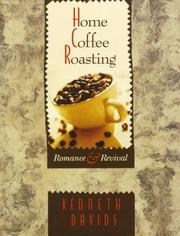
The canonical home-roasting handbook, covering equipment options from popcorn poppers to drum roasters, green bean sourcing, and profile guidance — the practical capstone for putting everything learned into action.

Closes the curriculum by integrating sourcing, roasting, grinding, and brewing into one cohesive framework, helping the learner evaluate their own roasted coffee with the same rigor as a professional cupper.
Discussion
Keep reading
Paths that share books, cover the same subject, or open a related topic.