Conversion rate optimization gets taught backwards more often than almost any marketing discipline. People start with split-testing tools, run twenty tests on button colors, get a pile of noisy results, and conclude the whole field is snake oil. The order matters because most of the conversion you are leaving on the table is not hiding behind a subtle variant — it is sitting in plain sight in a confusing page that nobody has read aloud to a stranger.
The sensible arc is usability first, persuasion and copy second, experimentation and statistics third. Each layer only pays off once the one below it is solid. Testing a page that people cannot navigate just measures how confused they were on Tuesday versus Wednesday.
Start with why people bounce
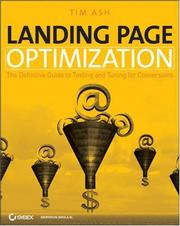
Don't Make Me Think by Steve Krug is the right first book because it is short, blunt, and about the thing that actually kills conversion: cognitive friction. Krug's argument that every question a visitor has to answer costs you something reframes the whole job. Follow it with Landing Page Optimization, Tim Ash's structured treatment of page anatomy — what belongs above the fold, how form length interacts with intent, how to audit a page systematically rather than by taste.
Then read Observing the user experience. Mike Kuniavsky's book is where you learn to gather qualitative evidence properly: recruiting the right people, running sessions without leading them, and interpreting what you saw. Five recorded sessions will usually explain a stalled funnel faster than five experiments will.
Learn persuasion and copy before you test
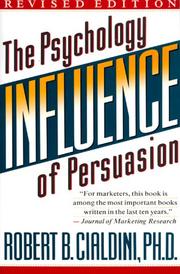
Layout gets people through the page; language gets them to act. Influence by Robert Cialdini is the standard reference on reciprocity, social proof, scarcity and commitment, and it will change how you read your own checkout flow. Pair it with Breakthrough advertising, Eugene Schwartz's difficult but genuinely original book on matching the message to the prospect's stage of awareness — the single idea most likely to move a page more than a redesign would.
Dotcom Secrets by Russell Brunson sits here as the funnel-thinking book, and it is worth reading with a critical eye: the mechanics of value ladders and offer sequencing are useful, the tone is aggressively promotional. Take the structure, leave the hype.
Earn the right to run experiments
Now the testing books. You Should Test That by Chris Goward introduces a workable process — hypothesis, prioritization, and a framework for deciding what is worth testing at all. Trustworthy Online Controlled Experiments, from Ron Kohavi and colleagues at Microsoft and Google, is the serious one: sample size, novelty effects, peeking, Simpson's paradox, and the organizational habits that keep results honest. If you only read one book about experiment design, read that one.
Finish with two practical volumes. Hacking growth by Sean Ellis widens the frame from single pages to the whole acquisition-and-retention loop, which is where most compounding actually happens. Making Websites Win by Karl Blanks is a case-study-heavy field manual that is useful precisely because you have already learned the underlying principles and can judge which of its tactics apply to you.
If your interest is CRO for a small local business rather than software, the same sequence works — the pages are simpler, and the qualitative research matters even more. Browse more reading paths if you want to pair this with a broader marketing curriculum.
Read these in order and you will stop guessing at variants and start diagnosing funnels.
Follow the full ordered path here: Best Books on Conversion Rate Optimization, in Reading Order.