Start an online store
This curriculum takes a first-time entrepreneur from zero to a running e-commerce business in four tightly sequenced stages. Each stage builds on the last: you first develop the entrepreneurial mindset and product instincts, then master store setup and conversion, then learn to drive and monetize traffic, and finally build the operational backbone that lets the business scale without burning you out.
Foundations: Thinking Like an E-commerce Entrepreneur
BeginnerDevelop the mindset, vocabulary, and product-selection instincts needed before touching any technology or ad platform.
▸ Study plan for this stage
Pace: 4–5 weeks total (~20–25 pages/day): Spend weeks 1–2 on "The $100 Startup" (read alongside the workbook-style exercises Guillebeau embeds in each chapter), then weeks 3–4 on "Will It Fly?" (treat every validation exercise as mandatory, not optional). Reserve week 5 for review, journal reflection, and
- Convergence of passion, skill, and usefulness — Guillebeau's core triangle for a viable business idea: your idea only works when what you love and what you're good at also solves a real problem people will pay for.
- Microbusiness thinking — 'The $100 Startup' demonstrates that a lean, low-overhead online store can launch with minimal capital; overhead is a choice, not a requirement.
- The 'freedom' business model — understanding that e-commerce can be structured around lifestyle goals first, revenue second, and how that shapes every product and pricing decision.
- Value vs. features — customers buy outcomes and transformations, not product specs; Guillebeau's 'value is not the same as price' framework is foundational for writing product listings and ads later.
- Idea validation before investment — Flynn's central thesis: never build or stock a product until the market has signaled it wants it, saving time, money, and emotional energy.
- The Airport Test and personal mission alignment — Flynn's self-assessment tools to ensure the business fits the founder's life, not the other way around; critical for long-term e-commerce commitment.
- Market research through listening — Flynn's method of finding real customer language in forums, reviews, and communities; this language becomes future product descriptions and ad copy.
- Assumption mapping and testing — identifying the riskiest assumptions behind a product idea and designing cheap, fast experiments to confirm or kill them before any technology is involved.
- According to Guillebeau, what three elements must converge for a business idea to be both personally fulfilling and commercially viable, and can you map your own e-commerce idea onto that triangle?
- Guillebeau profiles dozens of microbusiness founders — what common pricing and launch patterns do they share, and how would you apply those patterns to a physical or digital product you want to sell online?
- What is Flynn's 'Will It Fly?' validation sequence, and what is the specific order of steps he recommends before committing resources to a business idea?
- How does Flynn's Airport Test work, and what does it reveal about whether a founder is genuinely suited to pursue a particular market long-term?
- Where does Flynn say you should go to find real, unfiltered customer language about a problem — and why does that language matter more than the words you would naturally use to describe your product?
- After completing both books, what is the single riskiest assumption behind your current e-commerce product idea, and what is the cheapest experiment you could run this week to test it?
- Convergence Map: Draw Guillebeau's three-circle Venn diagram (passion / skill / market need) and populate each circle with at least five specific items from your own life. Where the circles overlap, write down 2–3 potential product or niche ideas. This is your raw idea list for the rest of the curriculum.
- One-Page Micro-Business Plan: Using the 'one-page business plan' template Guillebeau provides, fill out a plan for your top idea — including a plain-English value proposition, a rough price point, and who the exact customer is. Keep it to one page; complexity is the enemy at this stage.
- Flynn's 'History of You' Journal Entry: Complete the structured self-interview Flynn outlines early in 'Will It Fly?' — write at least 500 words mapping your past experiences, skills, and obsessions to the problem your e-commerce idea solves. Read it back and note any mismatches.
- Customer Language Mining: Pick one product idea and spend 90 minutes reading Amazon reviews (3-star reviews are gold), Reddit threads, and Facebook group posts related to that niche. Copy-paste 20+ real phrases customers use to describe their problem. Highlight the words that surprise you — these will become your future product titles and ad headlines.
- Assumption Killer List: Write down every assumption your business idea depends on (e.g., 'people will pay $40 for this,' 'customers shop in this niche online,' 'I can source this product for under $10'). Rank them by risk. Design one cheap test — a landing page, a social media poll, a direct conversation with five potential customers — for your top three riskiest assumptions and execute at least o
- Niche Validation Report: Combine your Convergence Map, Customer Language Mining notes, and Assumption Killer results into a single one-to-two page written summary. State clearly: (1) what the product is, (2) who the customer is in one specific sentence, (3) what problem it solves in the customer's own words, and (4) what evidence you now have that people want it. This document travels with you int
Next up: Completing this stage gives you a validated product idea, a customer-language vocabulary, and a lean business model sketch — the exact inputs needed to make informed decisions when Stage 2 introduces the technology platforms, store setup, and marketing tools that will bring that idea to life.
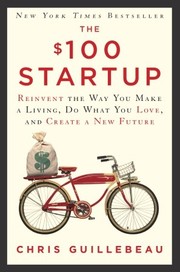
A gentle, story-driven introduction to launching a small product-based business with minimal capital — perfect for building confidence and framing what 'launching' actually means before diving into e-commerce specifics.

Teaches a practical validation framework for testing whether a product idea has real demand before you invest time or money, directly addressing the 'choosing products' goal at the very start of the journey.
Store Setup: Building a Shop That Converts
BeginnerSet up a professional online store, write compelling product pages, and understand the core principles of turning visitors into buyers.
▸ Study plan for this stage
Pace: 4–5 weeks total: Week 1–2 — Read "Launch" by Jeff Walker (~20–25 pages/day, including chapter notes); Week 3–4 — Read "Everybody Writes" by Ann Handley (~25–30 pages/day, pausing to rewrite real copy as you go); Week 5 — Review, apply, and complete all exercises.
- The Product Launch Formula (PLF): a sequenced, story-driven process for building anticipation and converting visitors before a store even opens
- The Sideways Sales Letter: spreading persuasion across multiple pieces of content (videos, emails, posts) rather than a single page — directly applicable to product page storytelling
- Pre-launch seeding and mental triggers: authority, social proof, community, scarcity, and reciprocity as conversion levers built into Walker's launch sequence
- The 'open cart' moment: structuring a launch window to create urgency and drive purchase decisions — foundational for any promotional campaign in a new store
- Writing as a habit and a business asset (Handley): treating every word on your store — product titles, descriptions, About page, emails — as deliberate, audience-first communication
- The 'Ugly Baby' principle (Handley): overcoming perfectionism to publish and iterate, essential for beginner store owners paralyzed by imposter syndrome
- COPE framework (Handley): Create Once, Publish Everywhere — repurposing a single product story across your store page, social media, and email sequences
- Voice, tone, and empathy mapping: writing product descriptions that speak directly to the customer's problem, desire, and identity rather than listing features
- According to Jeff Walker, what are the four core mental triggers that move a prospect from curious visitor to paying buyer, and how would you embed each one into a product page or launch email?
- What is the Sideways Sales Letter and how does it change the way you think about writing copy for an online store versus a single landing page?
- Ann Handley argues that 'good writing serves the reader, not the writer' — what does this mean in practice when writing a product description for a beginner e-commerce store?
- How would you apply Walker's pre-launch sequence (seed, pre-pre-launch, pre-launch, launch) to the opening week of a brand-new online shop with zero existing audience?
- Using Handley's guidance on voice and tone, how would you audit and rewrite a generic, feature-heavy product description to make it conversion-focused and human?
- How do the COPE framework from Handley and the multi-touchpoint launch sequence from Walker complement each other when building content for a new store?
- Launch Map Exercise: Using Walker's PLF as a template, map out a mini 7-day 'micro-launch' for one product in your store — write the subject lines and 2–3 sentence summaries for each email in the sequence (seed, pre-launch, open cart, close cart).
- Mental Triggers Audit: List 5 real products you admire online. For each, identify which of Walker's mental triggers (authority, social proof, scarcity, reciprocity, community) are present on the page — then note which are missing from your own store and add them.
- Product Description Rewrite Sprint: Pick 3 product descriptions you've drafted (or find 3 weak ones online). Apply Handley's 'writing for the reader' principles — lead with the customer's problem or desire, cut all filler words, and end with a clear, confident call to action. Compare before and after.
- Voice & Tone Card: Following Handley's guidance, write a one-page 'voice card' for your store: 4 adjectives that describe your brand voice, 2 things your brand always says, and 2 things it never says. Use this card to edit every page of your store.
- Sideways Sales Letter Build: Draft a 3-part content sequence for one product — a short origin/story post, a social-proof/FAQ post, and a 'here's how to buy' post — applying Walker's sequencing logic and Handley's writing quality standards to each piece.
- Store Copy Sweep: Do a full read-through of your store (homepage headline, About page, product pages, checkout button text) and apply Handley's 'delete the first paragraph' rule and 'use active voice' checklist to every section. Document every change made.
Next up: Mastering store setup and conversion copy creates the professional foundation needed to confidently move into driving traffic — because you'll know your store can actually convert the visitors you're about to send to it.

Introduces the concept of building anticipation and a customer list before and during a product launch — essential framing for how a store opening should be treated as an event, not just a technical go-live.
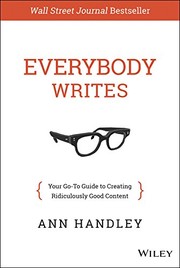
Covers writing for the web in plain language: product descriptions, About pages, and emails — the copy that directly determines whether a store visitor buys or bounces.
Traffic & Revenue: Ads and Email That Pay for Themselves
IntermediateBuild a self-funding paid-traffic strategy and an email marketing system that nurtures leads and drives repeat purchases.
▸ Study plan for this stage
Pace: 8–10 weeks total: ~2.5–3 weeks per book at roughly 20–25 pages/day. Week 1–3: "Ultimate Guide to Google Ads" (focus on campaign structure and bidding); Week 4–6: "Dotcom Secrets" (focus on funnels and traffic temperature); Week 7–9: "Email Marketing Rules" (focus on list hygiene, cadence, and lifecy
- Google Ads campaign architecture: keywords, match types, Quality Score, and Ad Rank — as laid out in 'Ultimate Guide to Google Ads' — and how each lever directly affects cost-per-click and profitability
- The 'Most Wanted Response' (MWR) principle from 'Ultimate Guide to Google Ads': every ad and landing page must have one clear, measurable action that moves a prospect forward
- Traffic temperature (cold/warm/hot) from 'Dotcom Secrets': matching the right message, offer, and funnel stage to the awareness level of the visitor arriving from paid ads
- The Value Ladder from 'Dotcom Secrets': structuring products and offers in ascending order of price and value so that each purchase naturally leads a customer toward the next
- The Secret Formula and funnel types from 'Dotcom Secrets': who is your dream customer, where do they congregate, what bait attracts them, and which funnel (lead, sales, webinar, etc.) converts them best
- Permission-based email marketing and the subscriber lifecycle from 'Email Marketing Rules': understanding acquisition, engagement, and win-back phases as distinct strategic moments
- Email cadence, frequency, and list hygiene from 'Email Marketing Rules': how send volume, segmentation, and suppression of inactive subscribers protect deliverability and revenue per email
- The integration of all three systems into a self-funding loop: paid ads drive traffic into a Dotcom Secrets funnel, the funnel captures email addresses, and Email Marketing Rules governs how those subscribers are nurtured into repeat buyers
- After reading 'Ultimate Guide to Google Ads', can you explain how Quality Score is calculated and describe three specific actions you would take to improve it for a real product campaign?
- From 'Dotcom Secrets', what is the Value Ladder and how would you design one for an e-commerce store — including the tripwire, core offer, profit maximizer, and return path?
- How does Russell Brunson's concept of traffic temperature change the copy, creative, and offer you would show a cold Facebook or Google audience versus a warm retargeting audience?
- According to 'Email Marketing Rules', what distinguishes an engaged subscriber from an inactive one, and what is the recommended strategy for each group in terms of frequency and content?
- How would you structure a welcome series for new email subscribers acquired through a paid-traffic funnel, applying the principles from both 'Dotcom Secrets' (funnel logic) and 'Email Marketing Rules' (cadence and permission)?
- If your Google Ads cost-per-acquisition exceeds your average order value, which levers from 'Ultimate Guide to Google Ads' and which funnel elements from 'Dotcom Secrets' would you adjust first, and why?
- Google Ads Audit & Build: Using 'Ultimate Guide to Google Ads' as a reference, set up (or audit an existing) Search campaign for a real or practice product. Map out at least three ad groups with tightly themed keyword lists, write two Expanded/Responsive Search Ads per group, and calculate the maximum CPC you can afford given a known conversion rate and margin.
- Value Ladder Mapping: Draw your store's Value Ladder on paper following Brunson's framework — identify your lead magnet/bait, tripwire, core offer, profit maximizer, and return path. Write one sentence of copy for each rung that speaks to the customer's desire at that stage.
- Funnel Build (Minimum Viable): Using the funnel blueprints in 'Dotcom Secrets', build or wireframe a two-page lead-capture funnel (opt-in page + thank-you/one-time-offer page) for one product. Connect it to your Google Ads campaign from Exercise 1 so the landing page matches the ad's MWR.
- Traffic Temperature Creative Test: Write three versions of ad copy for the same product — one for cold traffic (no brand awareness), one for warm traffic (visited the site), and one for hot traffic (abandoned cart) — applying Brunson's temperature framework. Note the differences in hook, proof, and call-to-action.
- Email Welcome Series Draft: Using 'Email Marketing Rules' as your guide, write a 5-email welcome sequence for subscribers who opted in through your funnel. Define the goal, send timing, and subject line for each email; ensure email 1 delivers the promised lead magnet, emails 2–4 build value and address objections, and email 5 makes a direct offer.
- Deliverability & Segmentation Audit: Apply the list-hygiene principles from 'Email Marketing Rules' to a real or sample subscriber list. Segment it into active (opened in 90 days), lapsing (91–180 days), and inactive (180+ days) groups. Write a re-engagement subject line and a suppression rule for each segment, and calculate the projected impact on open rate if inactive subscribers are suppressed.
Next up: Mastering paid traffic, funnel architecture, and email nurture creates a reliable revenue engine — the next stage builds on this foundation by focusing on conversion rate optimization and analytics, so every dollar of traffic already flowing through your system works even harder.

The canonical beginner-to-intermediate guide to paid search and Shopping ads — the highest-intent traffic channel for e-commerce — with a strong focus on ROI and not wasting budget.
Introduces funnels, value ladders, and the logic of turning ad spend into profitable customer journeys; provides the strategic framework that makes both ads and email work together as a system.

The most thorough and practical guide to e-commerce email strategy — covering welcome sequences, abandoned-cart flows, and list hygiene — read here so the funnel thinking from Brunson can be immediately applied.
Operations & Scale: Fulfillment, Systems, and Growth
ExpertDesign the back-end operations — inventory, fulfillment, customer service, and systems — that allow the business to grow without the founder doing everything manually.
▸ Study plan for this stage
Pace: 8–10 weeks total: Week 1–3 — "The E-Myth Revisited" (~20–25 pages/day, reading reflectively with notes on your own business habits); Week 4–6 — "Profit First" (~25 pages/day, with a spreadsheet open to model your own numbers in real time); Week 7–10 — "Traction" (~20 pages/day, pausing after each co
- The E-Myth's three personas — Technician, Manager, and Entrepreneur — and why most e-commerce founders are trapped in the Technician role, doing instead of designing
- Gerber's core distinction between working IN the business vs. working ON the business, and how systemization is the path from operator to owner
- The Franchise Prototype mindset: building every process as if you were going to replicate it 5,000 times — SOPs, checklists, and role documentation for fulfillment, customer service, and inventory
- Michalowicz's Profit First cash-flow system: allocating revenue into dedicated accounts (Income, Profit, Owner's Pay, Tax, Operating Expenses) before expenses are paid, ensuring profitability is structural rather than accidental
- The Profit First rhythm of twice-monthly allocation dates and quarterly profit distributions, applied to the lumpy, seasonal cash flows typical of e-commerce
- Wickman's Entrepreneurial Operating System (EOS) and its Six Key Components: Vision, People, Data, Issues, Process, and Traction — the operating framework that replaces founder heroics with organizational clarity
- The EOS tools most critical to e-commerce operations: the V/TO (Vision/Traction Organizer) for company direction, Rocks for 90-day priorities, the Level 10 Meeting™ for weekly team rhythm, and the Scorecard for tracking fulfillment and service KPIs
- The concept of 'getting the right people in the right seats' (Wickman's GWC filter — Gets it, Wants it, Capacity to do it) applied to hiring for warehouse, ops, and customer service roles
- After reading The E-Myth Revisited, can you identify which of the three personas (Technician, Manager, Entrepreneur) currently dominates your daily work — and name three specific tasks you do manually that should be systematized or delegated?
- Can you draw Gerber's 'Franchise Prototype' concept and explain how it would apply to your order fulfillment workflow — what would the documented, repeatable process look like?
- Using Profit First, can you calculate your current Real Revenue, set target allocation percentages for each account, and explain why paying profit first changes decision-making behavior compared to traditional 'sales minus expenses' accounting?
- Can you describe the Profit First twice-monthly rhythm and explain how you would adapt it to handle the cash-flow spikes of a product launch or a peak season like Q4?
- After reading Traction, can you fill out a basic V/TO for your e-commerce business — including your 10-Year Target, 3-Year Picture, 1-Year Plan, and at least three Rocks for the next 90 days?
- Can you design a Scorecard (from Traction) of 5–10 weekly measurables specific to e-commerce operations — such as order accuracy rate, average fulfillment time, customer service response time, and return rate — and explain who owns each number?
- Technician Audit (from The E-Myth Revisited): For one full week, log every task you personally perform. Categorize each as Technician (doing), Manager (coordinating), or Entrepreneur (designing). Calculate the percentage split — your goal is to identify what to systematize first.
- SOP Sprint (from The E-Myth Revisited): Choose your single most repetitive fulfillment or customer service task and write a Franchise Prototype SOP for it: step-by-step instructions, decision trees, quality checks, and time standards. Test it by having someone unfamiliar with the task follow it cold.
- Profit First Account Setup (from Profit First): Open (or simulate in a spreadsheet) the five core Profit First bank accounts. Run your last three months of actual revenue through the allocation percentages Michalowicz recommends for your revenue band. Calculate what your Profit account balance would be today if you had started 90 days ago.
- Profit & Loss Reframe (from Profit First): Take your most recent monthly P&L and rewrite it in Profit First format — top-line Real Revenue, then allocations, then what remains for OpEx. Identify the top three expenses you would cut or renegotiate if OpEx had a hard cap.
- V/TO Draft (from Traction): Complete a full Vision/Traction Organizer for your e-commerce business. Share it with at least one team member or advisor and pressure-test whether your 3-Year Picture is specific enough to be actionable (it should include revenue, number of SKUs, team size, and fulfillment model).
- Operations Scorecard Build (from Traction): Design a 10-row weekly Scorecard for your ops team. Assign a measurable number, a weekly goal, and an owner to each row. Run a mock Level 10 Meeting using this Scorecard to practice identifying which numbers are 'off track' and dropping them into the Issues list for resolution.
Next up: By internalizing Gerber's systemization mindset, Michalowicz's profit-first financial discipline, and Wickman's operating framework, the reader has built the organizational skeleton of a scalable e-commerce business — making them ready to tackle the next stage's focus on advanced growth levers such as paid acquisition, conversion optimization, and multi-channel expansion, where operational chaos w
Explains why small business owners get trapped working IN their business instead of ON it, and how to build repeatable systems — the essential mindset shift before tackling fulfillment and operations.
Provides a simple cash-flow management system tailored to small product businesses, ensuring that as revenue grows the business stays profitable and can fund its own inventory and ad spend.

Introduces the Entrepreneurial Operating System for running a small business with clear goals, metrics, and accountability — the capstone read that ties together all prior stages into a manageable, scalable operation.
Discussion
Keep reading
Paths that share books, cover the same subject, or open a related topic.