The commonest misconception about internal audit is that it is external audit performed by employees. It is not. External audit exists to give an opinion on financial statements; internal audit exists to give an organization assurance about its own risks and controls, and to say so to people who may not want to hear it. The work is risk-based, it ranges far past the general ledger into operations and IT and culture, and its usefulness depends heavily on where it reports.
That distinction determines the reading order. Method and standards first, because the risk-based approach is what everything else hangs from. Then the two specialist domains that dominate modern findings — fraud and technology. Then risk and governance, because the best-written report changes nothing if the reporting line and the audit committee relationship are wrong.
The method
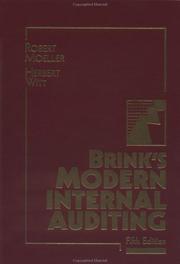
Start with Brink's modern internal auditing. It is the field's long-standing comprehensive reference: the IIA's professional standards and framework, risk assessment, planning an engagement, evidence and sampling, control frameworks, working papers, and reporting. Read the framework and planning material properly; use the rest as reference.
Then Internal Auditing by Reding and colleagues, the IIA-aligned textbook used in university programs and by many CIA candidates. It covers the same ground in a more instructional shape, with cases and structured chapters, and it is the better choice if you are studying toward certification rather than looking things up. There is real overlap between these two — if your time is short, read Reding for learning and keep Brink's on the shelf for depth.
Fraud
Fraud examination by Albrecht and colleagues is the core text on how fraud is committed, detected, and investigated: the fraud triangle, schemes by type, data analysis for detection, interviewing, and the evidentiary discipline that keeps an investigation defensible. Internal auditors are not usually investigators, but recognizing the indicators is squarely in scope.
Corporate Fraud Handbook by Joseph Wells, founder of the ACFE, is the taxonomy — asset misappropriation, corruption, financial statement fraud — organized by scheme with real cases and the controls that would have caught each one. It is the more directly usable of the two when you are designing tests, and the case detail is what makes the schemes memorable.
Technology
Auditor's Guide to IT Auditing by Cascarino brings the technology side into reach for auditors without a systems background: general and application controls, access management, change control, systems development, continuity, and how to plan an IT audit. Technology now underlies nearly every process an auditor examines, so this is not a specialization to defer indefinitely. Expect the specific platforms and tooling to have moved on; the control concepts have not.
Risk and governance
Enterprise Risk Management by James Lam widens the frame from controls to the organization's overall risk posture — appetite, governance, aggregation, and the role of a risk function alongside audit. Reading it clarifies where internal audit's assurance role ends and where management's risk ownership begins, a boundary that gets blurred in practice.
Close with The audit committee handbook by Braiotta and colleagues, which covers the body internal audit ultimately serves: its composition, duties, oversight of both internal and external audit, and its relationship with management. Understanding what an audit committee needs and how it operates changes how you write a finding and how you handle a disagreement with management. That is why it belongs at the end rather than as an afterthought.
Practical notes
Standards, regulation, and control frameworks in this field change on a schedule — the IIA's Global Internal Audit Standards, COSO, and relevant securities regulation have all been revised in recent years — so check editions and read current authoritative pronouncements alongside any textbook. And while these books support preparation for credentials such as the CIA or CFE, certification requires the examination and the experience requirement; reading is preparation, not a substitute. Adjacent business paths sit at related subjects.
Read in this order and you will audit risks rather than tick boxes. Follow the full path to keep the sequence.
Follow the full ordered path here: How to Learn Internal Auditing From Books, in Order.