Best Books on Enterprise Sales, in Reading Order
This curriculum is built for someone who already understands basic sales mechanics and wants to master the full arc of enterprise selling — from navigating complex organizations and multi-stakeholder deals to rigorous discovery, procurement battles, and closing long cycles. The four stages move from strategic frameworks and mindset, through deal execution and qualification, into the political and financial realities of large accounts, and finally to the elite-level skills needed to consistently close and expand enterprise business.
Strategic Foundations of Enterprise Sales
IntermediateUnderstand the core frameworks that separate enterprise selling from transactional sales — including how large organizations buy, how to map stakeholders, and how to align your process to the customer's buying journey.
▸ Study plan for this stage
Pace: 8–10 weeks, ~40–50 pages/day. Allocate roughly 2–3 weeks per book with overlap for integration exercises.
- The Challenger Sale model: how to teach, tailor, and take control in enterprise deals by challenging customer assumptions
- SPIN Questioning framework (Situation, Problem, Implication, Need-Payoff) as the core methodology for uncovering and developing customer needs
- The buying process in large organizations: multiple stakeholders, competing priorities, and the role of economic, user, and technical buyers
- Stakeholder mapping and alignment: identifying decision-makers, influencers, and blockers across the customer organization
- Situational Fluency: adapting your approach based on the customer's buying stage and organizational context
- The difference between transactional selling and enterprise selling: complexity, sales cycle length, and relationship depth
- Red flags and early warning signs in enterprise deals: recognizing when a deal is stalled or at risk
- Building a repeatable, process-driven sales methodology that scales across your team
- What are the three core behaviors of Challenger sellers, and how do they differ from traditional relationship-based selling?
- Explain the SPIN questioning sequence and why each question type (Situation, Problem, Implication, Need-Payoff) is critical to uncovering implicit needs.
- How do economic buyers, user buyers, and technical buyers differ in their priorities and concerns, and why must you engage all three?
- What is a stakeholder map, and what specific information should you capture for each stakeholder in an enterprise deal?
- How do you recognize when a customer is in the early, middle, or late stage of their buying journey, and how should your approach differ?
- What are the key differences between a transactional sale and an enterprise sale in terms of sales cycle, stakeholder complexity, and value creation?
- Read The Challenger Sale and identify 3–5 customer conversations from your own pipeline that match the Challenger model; annotate where you taught, tailored, or took control—and where you missed opportunities.
- Conduct a SPIN-based discovery call with a prospect (or role-play with a peer), recording yourself and scoring each question against the SPIN framework; review the recording and count implicit vs. explicit needs uncovered.
- Create a detailed stakeholder map for one active deal: list all known stakeholders, their titles, priorities, concerns, and influence level; identify gaps and plan outreach for missing stakeholders.
- Analyze a lost deal from your past using the frameworks in all three books: map the stakeholders, identify which SPIN questions you did or didn't ask, and assess whether you challenged assumptions or simply responded to stated needs.
- Build a 'buying journey timeline' for a target customer profile: outline the stages they go through (awareness, consideration, decision, implementation) and define what your sales approach should be at each stage.
- Practice the Challenger Sale 'teach' component: prepare a 10–15 minute insight or perspective on a customer pain point that challenges their current thinking; deliver it to a peer and gather feedback on whether it felt authentic and valuable.
Next up: This stage equips you with the frameworks and questioning discipline to navigate complex, multi-stakeholder deals; the next stage will focus on execution—how to orchestrate these frameworks across your entire sales process, manage deal momentum, and close large deals consistently.
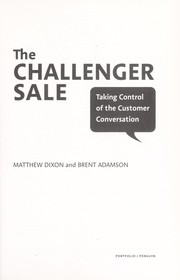
Establishes the foundational mindset shift required for enterprise selling: teaching, tailoring, and taking control rather than simply responding to buyer needs. Read first to reframe how you think about value in complex deals.
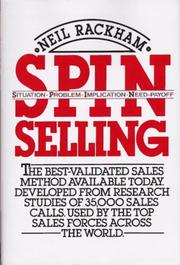
The research-backed backbone of discovery in large, complex sales. Introduces the Situation-Problem-Implication-Need-Payoff framework that underpins almost every enterprise qualification methodology — essential vocabulary for the stages ahead.
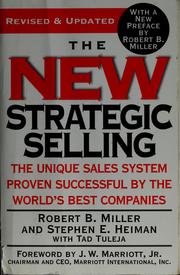
Introduces the Blue Sheet and the concept of mapping all buyer roles (Economic Buyer, User Buyer, Technical Buyer, Coach) inside an account. This is the definitive framework for understanding buying committees and should be read before tackling deal execution.
Discovery, Qualification, and Deal Architecture
IntermediateMaster rigorous qualification frameworks and deep discovery techniques that expose true business pain, identify the real decision process, and let you disqualify bad-fit deals early to protect pipeline integrity.
▸ Study plan for this stage
Pace: 4–5 weeks, ~40–50 pages/day (mix of reading and reflection exercises)
- MEDDICC framework: Metrics, Economic Buyer, Decision Criteria, Decision Process, Identify Pain, Champion, Compelling Event—and how each element uncovers deal architecture
- Rigorous qualification: using MEDDICC to disqualify early and protect pipeline integrity by identifying misaligned deals before investing time
- Discovery as a dialogue: moving beyond surface-level questions to expose true business pain, root causes, and the real impact of problems on the prospect's organization
- Economic Buyer vs. stakeholders: distinguishing who controls the budget and decision authority from influencers and users, and why this matters for deal progression
- Decision Process mapping: uncovering the actual buying sequence, timelines, approval gates, and hidden stakeholders that determine deal velocity and success
- Champion development: identifying, qualifying, and building internal advocates who understand your solution and can navigate the political and procedural landscape
- Compelling Event creation: recognizing or creating urgency that drives deals forward and prevents stalling in the sales cycle
- Sales leadership application: translating MEDDICC discipline into coaching frameworks, pipeline management, and team accountability for qualification rigor
- How does the MEDDICC framework help you identify and disqualify bad-fit deals early, and what are the consequences of skipping any one element?
- What is the difference between an Economic Buyer and other stakeholders, and why is identifying the Economic Buyer critical to deal architecture?
- How do you conduct a discovery conversation that uncovers true business pain rather than surface-level symptoms, and what techniques does MEDDICC provide for this?
- What constitutes a valid Decision Process, and how do you map it to understand deal velocity, approval gates, and hidden stakeholders?
- How do you identify and qualify a Champion, and what role does a Champion play in navigating the buying organization?
- What is a Compelling Event, how do you recognize one, and how can you create or amplify one to move a deal forward?
- How should sales leaders use MEDDICC principles to coach their teams, manage pipeline integrity, and hold reps accountable for qualification discipline?
- Role-play discovery calls: Conduct mock sales conversations with a peer or mentor where you practice asking MEDDICC-aligned questions (Metrics, Economic Buyer, Decision Criteria, etc.) and record yourself to identify gaps in your questioning depth
- Disqualification case study: Review 3–5 deals you've lost or stalled, and map them against the MEDDICC framework to identify which elements were missing or misunderstood; document what you would do differently
- Economic Buyer hunt: In your current pipeline, identify the Economic Buyer for each deal; if you cannot confidently name them, conduct a discovery call specifically to uncover this and document the conversation
- Decision Process mapping: For 2–3 active opportunities, create a detailed timeline of the buying process including all approval gates, stakeholders, and decision criteria; compare your map to what the prospect confirms
- Champion qualification: Identify a potential Champion in one of your deals; assess them against the MEDDICC criteria for a strong Champion and document their influence, access, and motivation to advocate for your solution
- Compelling Event analysis: Review your pipeline and categorize each deal by Compelling Event type (external, internal, or self-created); for deals lacking a clear event, develop a hypothesis for how to create or surface one
- Sales leadership coaching session: If you manage a team, conduct a pipeline review using MEDDICC as your framework; coach one rep through a deal using MEDDICC questions to expose qualification gaps and improve rigor
Next up: This stage equips you with the diagnostic tools and discipline to build a healthy, well-qualified pipeline; the next stage will focus on advancing qualified deals through negotiation, value articulation, and closing techniques that leverage the deep deal architecture you've now mastered.

The definitive modern guide to the MEDDIC/MEDDICC qualification framework — the standard used by elite enterprise sales organizations. Read after Miller Heiman so you can layer qualification rigor on top of stakeholder mapping.

Written by one of the architects of MEDDIC at PTC, this book goes deep on what great discovery and qualification actually look like in practice, with real enterprise deal coaching scenarios. Reinforces and extends MEDDICC with leadership-level deal inspection.
Navigating Procurement, Politics, and Long Cycles
ExpertDevelop the political intelligence and financial acumen to survive procurement, manage multi-threaded relationships across a buying committee over months-long cycles, and protect deal economics under pressure.
▸ Study plan for this stage
Pace: 6–7 weeks, ~25–30 pages/day, with 2–3 days per week dedicated to exercises and reflection
- The C-suite decision-making framework: understanding how executives prioritize, evaluate risk, and align on strategic initiatives across organizational layers
- Political mapping and stakeholder intelligence: identifying hidden influencers, gatekeepers, and decision-blockers within procurement processes
- Building multi-threaded relationships: cultivating advocates at multiple levels to insulate deals from single-point-of-failure dependencies
- Procurement cycle dynamics: recognizing the phases of long-cycle deals and adapting your engagement strategy to each stage
- Dealstorming methodology: leveraging cross-functional teams and collaborative problem-solving to overcome objections and unlock deal progression
- Financial acumen for enterprise deals: understanding budget cycles, ROI justification, and how to protect deal economics when facing procurement pressure and negotiation tactics
- Managing procurement politics: navigating competing agendas, cost-cutting mandates, and organizational change without sacrificing margin or deal integrity
- What are the key differences between how C-suite executives evaluate purchasing decisions versus operational buyers, and how should your approach differ for each audience?
- How do you identify the true decision-maker in a complex procurement process, and what role do hidden influencers and gatekeepers play in derailing deals?
- Describe a political map for a multi-threaded deal: what stakeholders would you target, what are their competing incentives, and how would you build advocates at each level?
- What is the dealstorming process, and how can you use cross-functional collaboration to solve objections that a single sales conversation cannot address?
- How do you protect deal economics and margin when a procurement team is under pressure to cut costs, and what negotiation tactics should you anticipate?
- What are the phases of a long-cycle enterprise deal, and how should your engagement strategy and relationship-building activities shift across each phase?
- Political mapping exercise: Take a real or hypothetical enterprise deal currently in your pipeline. Map all known stakeholders (executive sponsor, procurement lead, end-users, finance, IT, legal), identify their competing priorities and incentives, and determine which relationships are missing or weak. Create a 90-day plan to build advocates at each level.
- C-suite messaging workshop: Record yourself delivering a 5-minute pitch to a hypothetical CFO, CTO, and COO for the same solution. Review each recording and identify how your language, pace, and focus areas shifted (or should have shifted) based on each executive's priorities. Refine and re-record.
- Dealstorming simulation: Assemble a cross-functional team (sales, product, customer success, finance) to role-play a procurement objection from a real deal. Use the dealstorming framework to brainstorm solutions collaboratively, document the outcome, and compare it to how you would have handled the objection alone.
- Procurement cycle timeline: For a recent closed deal, reconstruct the full timeline from first contact to signature. Identify the key decision-making phases, the stakeholders who became active at each phase, and the moments when deal economics were most at risk. Use this as a template for forecasting and managing future long-cycle deals.
- Financial acumen case study: Analyze a deal you lost or nearly lost due to cost pressure. Reverse-engineer the buyer's budget constraints, ROI justification requirements, and procurement mandates. Develop an alternative pricing, packaging, or value-stacking approach that would have protected margin while addressing their financial pressure.
- Relationship vulnerability audit: Review your top 5 deals in progress. For each, identify the single person whose departure or change in priority would derail the deal. Create a specific action plan to build at least one additional advocate or relationship at each account within 30 days.
Next up: This stage equips you with the political intelligence, relationship architecture, and financial resilience to navigate complex, multi-stakeholder deals—preparing you to move into the next stage, which will focus on closing and expanding these relationships into long-term strategic partnerships and land-and-expand strategies.

Specifically addresses how to gain and sustain access to executive buyers — the economic decision-makers who control budget and procurement sign-off. Fills the gap between mid-level champion work and true executive alignment.

Tackles the reality that the hardest enterprise deals require cross-functional collaboration on the seller's side. Provides a structured process for mobilizing internal resources to break through stalled deals and procurement obstacles.
Closing, Negotiation, and Expanding Enterprise Accounts
ExpertClose long-cycle deals without discounting away margin, negotiate effectively against procurement and legal, and build the account expansion strategies that turn a closed deal into a long-term enterprise relationship.
▸ Study plan for this stage
Pace: 8–10 weeks, ~25–30 pages/day (alternating between both books in parallel; ~2 weeks per book with overlap for integration)
- Tactical empathy and active listening as tools to uncover the other party's true constraints and motivations before proposing solutions
- The power of "No" and how to create safety for the other side to say it early, avoiding false agreements that derail deals
- Labeling emotions and mirroring to de-escalate tension and build rapport in high-stakes negotiations
- The Challenger Customer framework: identifying and mobilizing internal champions who can navigate their own organization's complexity and drive consensus
- Consensus-building as the real bottleneck in enterprise deals—moving beyond the economic buyer to map and influence the full buying committee
- How to avoid margin-eroding discounts by anchoring on value and reframing price objections as procurement theater rather than real deal-breakers
- The difference between negotiating with the customer and negotiating within the customer's organization on their behalf
- Building expansion strategy into the initial close by establishing trust, understanding the customer's internal politics, and positioning yourself as a trusted advisor
- How does tactical empathy differ from traditional rapport-building, and why is it specifically effective in enterprise negotiations where multiple stakeholders have conflicting interests?
- Describe the role of 'No' in Voss's framework. Why is getting a 'No' early often better than a 'Yes,' and how does this apply to procurement negotiations that seem designed to wear you down?
- What is the Challenger Customer, and how does this persona differ from the economic buyer or champion you might traditionally focus on in enterprise sales?
- How should you map and influence the buying committee using Adamson's framework, and what are the risks of closing a deal without building consensus across all stakeholder groups?
- Walk through a scenario where a procurement team demands a 20% discount. Using Voss's techniques and Adamson's insights on internal politics, how would you respond without eroding margin?
- How do you transition from closing a deal to expanding the account? What foundation must you build during negotiation to make expansion possible?
- Record yourself in a mock negotiation (with a colleague or mentor playing a tough procurement contact). Listen back and identify where you missed opportunities to label emotions, mirror, or ask calibrated questions. Rerun the scenario applying Voss's techniques.
- Map a real or hypothetical enterprise deal: identify the economic buyer, the champion, the procurement gatekeeper, and the end-user stakeholder. For each, write down their likely constraints, fears, and success metrics. Then design a consensus-building strategy using Adamson's framework.
- Practice saying 'No' in response to discount requests. Write 3–4 responses that redirect to value without sounding defensive. Test them with a peer and refine based on feedback.
- Conduct a 'tactical empathy interview' with a customer contact (or role-play partner). Your goal: ask calibrated questions to uncover their real constraint (e.g., 'It seems like the budget is set—is the real issue getting internal approval?'). Document what you learn.
- Analyze a past lost deal or a deal that closed with heavy discounting. Using Adamson's Challenger Customer lens, identify which stakeholder group you failed to mobilize or convince. Write a post-mortem on how you would approach that account differently.
- Design an account expansion plan for a newly closed enterprise deal. Identify which relationships you built during closing that can be leveraged, which new stakeholders you need to engage, and how you'll position yourself as a trusted advisor (not just a vendor) in year two.
Next up: This stage equips you to close deals defensibly and build the internal credibility needed to expand accounts, setting the foundation for the next stage, which likely focuses on long-term account management, executive relationships, and scaling revenue within existing customers.
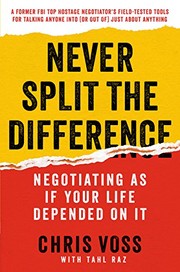
The highest-leverage negotiation book for enterprise sellers facing procurement pressure. Tactical empathy, anchoring, and calibrated questions translate directly to late-stage deal negotiations and contract discussions.

The essential sequel to The Challenger Sale, focused specifically on the buying committee problem: how to identify and mobilize a 'Mobilizer' inside the account to drive consensus and close. Read last as it synthesizes everything into a complete enterprise deal-closing strategy.
Discussion
Keep reading
Paths that share books, cover the same subject, or open a related topic.