Death and Dying: The Best Books on Mortality and How We Handle It, in Order
These are books about mortality as a subject — what the end of a life physically involves, how medicine handles it, what the funeral industry does with a body, and what the research on bereavement has actually found. The path moves from clinical description to first-person accounts, then to the trade that processes the dead, then outward to how other places and other centuries have done it, and finally to the evidence on grief. They are works of reportage, memoir, history and medicine, and none of them is a substitute for a doctor, a palliative care team, or a bereavement counsellor; if you are reading this while something is happening, that support is a separate thing and worth seeking directly.
What Dying Actually Involves
BeginnerGet an accurate physical and clinical picture of how people die, and of what modern medicine does and does not do well at the end of a life.
▸ Study plan for this stage
Pace: 4 weeks. With the End in Mind runs about 340 pages of short, self-contained patient stories, so it goes a chapter or two an evening rather than in long sittings — two weeks. How We Die is around 280 pages and sets out in clinical detail what heart failure, stroke, cancer, accident and Alzheimer's ea
- Mannix's central claim is that ordinary dying, when nothing interrupts it, follows a recognisable and describable pattern — increasing sleep, a change in breathing, unconsciousness that arrives before death rather than with it — and that almost nobody has been told what it looks like.
- Nuland is writing against exactly that reassurance. His subject is mechanism: what actually stops, in what order, in each of the main ways people die. He argues that the dignified death is rare and largely a story told by the survivors.
- The two are not contradicting each other on fact so much as on emphasis — Mannix works in palliative care where the process is managed, Nuland was a surgeon who mostly saw it unmanaged.
- Gawande's argument is institutional: medicine is organised to trade certain present suffering for uncertain additional time, because that is the only offer the system knows how to make.
- The distinction between hospice and palliative care, and the finding Gawande leans on that patients referred to hospice earlier sometimes lived longer, not shorter.
- Gawande's four questions — understanding of the situation, fears, goals, and which trade-offs are and are not acceptable — are the practical core of the book and the part most easily lifted out of it.
- The nursing-home history in Being Mortal: the institutional trade of autonomy for safety, and the assisted-living idea that was meant to undo it before it was absorbed by the same industry.
- All three authors are clinicians describing their own field — a palliative care physician, a surgeon, a surgeon — so each is a participant with a professional stake, not a neutral observer of medicine.
- What does Mannix say the last forty-eight hours typically look like, and which parts of it do families most often misread as suffering?
- Where do Nuland and Mannix actually disagree, and where are they describing the same physiology in a different register?
- What does Gawande mean by the gap between 'what is the matter with you' and 'what matters to you', and what does he say happens when only the first question gets asked?
- Why does Nuland argue that the search for a dignified death is misdirected? What does he offer in its place?
- Which of these three would you hand to someone whose parent entered hospice last week, and what is your reason for withholding the other two?
- Take two of Mannix's patient stories and write out, in a paragraph each, the physical sequence she describes. Then find the corresponding organ failure in Nuland and set the two passages side by side; the difference is entirely in what each thinks the reader needs to be told.
- Work through Nuland's chapters on heart failure and on cancer and list, for each, what he says the actual terminal event was. The gap between the disease named on a certificate and the mechanism that ends the life is his whole argument.
- Do Gawande's own exercise: write his four questions out and answer them for yourself, in writing, as if the situation were current. He reports that clinicians find them hard to ask; find out whether they are also hard to answer.
- After finishing Being Mortal, return to the Mannix chapters in which treatment continued to the end, and name which of Gawande's institutional pressures is visible in each.
Next up: You now have the clinical shape of dying; the next stage is what to actually do in the room, from a nurse who sits in it and two writers who were inside it themselves.
A palliative care physician's account, structured as a series of patient stories, of what the ordinary process of dying looks like when it is not interrupted. Read it first: it is the most concrete description available of the thing the rest of the path circles.
A surgeon's clinical account of the mechanisms — heart failure, stroke, cancer, Alzheimer's — written to correct the idea that death is usually dignified. Blunt and physiological, and the necessary counterweight to Mannix's gentler framing.

The argument that medicine is organised around extending life and has no good account of what to do when it cannot, covering nursing homes, hospice and the conversations doctors avoid. Read third, once you know what dying looks like, because this is about the decisions taken around it.
Practical, and First-Person
BeginnerMove from the clinical to the personal: what to do and say in a room where someone is dying, and what two writers made of their own experience of it.
▸ Study plan for this stage
Pace: 3 weeks. Advice for Future Corpses is about 240 pages and functions as a reference as much as a read — one week, then keep it. When Breath Becomes Air is 228 pages and goes in two sittings; it is the memoir of a neurosurgeon writing while dying of metastatic lung cancer at thirty-six, and it breaks
- Tisdale is a hospice nurse and a Buddhist teacher, and writes procedurally: what a body does hour by hour, what to say and what not to, what paperwork exists, who to telephone at three in the morning.
- The practical inventory she supplies — advance directives, what a death certificate needs, what happens between the death and the funeral home arriving, what to do with a body at home — is the concrete material the clinical books in stage one leave out.
- Kalanithi is writing simultaneously as physician and as patient, and the book's interest is largely in watching one voice lose authority to the other.
- When Breath Becomes Air is unfinished by design of circumstance: he died before completing it, and the epilogue by Lucy Kalanithi supplies the ending he could not, which changes what kind of book you are holding.
- Didion's method is her reporting technique aimed at herself — dates, documents, medical records, repetition — and the flatness of the prose is the point rather than a failure of feeling.
- 'Magical thinking' in her usage is literal and not metaphorical: she keeps his shoes because he will need them, and she catches herself at it and records the catch.
- The three books together mark a handover — dying (Kalanithi), sitting with the dying (Tisdale), being the one left (Didion) — which is the move the final stage takes up as research.
- What does Tisdale say you should actually do in the first hour after someone dies at home, and how much of it did you already know?
- Where in When Breath Becomes Air does Kalanithi stop writing as a surgeon and start writing as a patient, and what knowledge does he lose access to at that point?
- What is the specific moment at which Didion recognises her own thinking as magical, and what test does she apply to herself?
- Which of Tisdale's examples of things not to say to a dying person had you assumed were kind?
- Why does the epilogue to Kalanithi's book have to be written by someone else, and what does that do to how you read the chapters before it?
- Use Tisdale's chapters to draft your own advance directive and a one-page list of everyone who would have to be called. She supplies the categories; fill them in with real names and numbers.
- Mark the page in When Breath Becomes Air where the clinical voice gives way, and see whether you can narrow it to a paragraph. Then read the twenty pages either side again with that transition in mind.
- Track the objects in The Year of Magical Thinking — the shoes, the medical records, the file of his unfinished work, the autopsy report — and note every appearance. The book's argument about grief is carried almost entirely by them.
- Set Tisdale's description of the physical process of dying against Mannix's from stage one and note where the nurse and the physician differ on what a reader needs to know.
Next up: You have followed a body to the moment of death; the next stage follows it into the building where it is processed, and into the industry that does the processing.

Written by a nurse and Buddhist teacher, and the most practical book here — what happens to a body, what to say, what paperwork exists, how to sit with someone. Read it after the clinical stage because it assumes you already know the medical shape of things.
A neurosurgeon's memoir, written while dying of lung cancer and unfinished at his death, with an afterword by his wife. It is the first-person version of the Gawande argument, from someone who was on both sides of it.
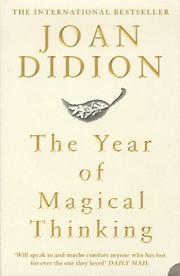
Didion's account of the year after her husband died suddenly at dinner, written with her reporting instincts turned on herself. Placed here as the shift from dying to being left, which the last stage takes up as research.
The Death Trade
IntermediateUnderstand what commercially happens to a body in the modern West, and how the funeral industry came to work the way it does.
▸ Study plan for this stage
Pace: 5 weeks. The American Way of Death is around 300 pages of 1963 investigative reporting and is the densest going here, thick with price lists and quotations from the trade press — ten to twelve days, and prefer the later edition, The American Way of Death Revisited, which updates the figures. Smoke G
- Mitford's method is pricing. She reads the funeral industry's own trade journals and sales manuals and quotes them against what the same firms tell bereaved families, which is why the book was effective where moral argument had not been.
- The euphemism inventory — casket rather than coffin, slumber room, loved one, professional car — treated as a commercial instrument rather than as squeamishness.
- The FTC Funeral Rule, requiring itemised price lists and disclosure, came after and partly because of this reporting; the regulation is downstream of the book.
- Doughty and Lynch are both inside the trade Mitford is prosecuting — a crematory operator and a funeral director — so both are participants with an interest, and both concede parts of her case while resisting others.
- Lynch's counter-argument is that funerals are for the living, and that ritual performs work a cost critique has no way to price.
- Routine embalming is an American and Canadian peculiarity, near-universal there and rare across most of Europe; Mitford treats that as evidence of who the practice serves.
- Roach's subject begins where the funeral books end: what happens to a body that is donated rather than buried, and her deliberately comic register is a stylistic choice readers divide sharply over.
- Across the sixty years these four books span, cremation goes from marginal to majority practice in the United States, which changes the economics every one of them describes.
- What specifically did Mitford show the industry was doing, and which of those practices are now prohibited rather than merely exposed?
- Where does Doughty concede Mitford's case, and where does Lynch refuse it? Which of the two is the better witness, and on what?
- Why is embalming routine in the United States and rare in most of Europe, and whose interest does the American norm serve?
- What are the actual uses of a donated cadaver that Roach documents, and which of them had you not known existed?
- If Lynch is right that ritual has a function, does that answer Mitford's argument or step around it?
- Ask a local funeral home for its general price list — in the US the Funeral Rule requires them to hand it over — and check it line by line against Mitford's categories. Comparing a real price list against the sales script is her own method, applied sixty years on.
- List the euphemisms Mitford catalogues, then read fifty pages of Lynch and mark which of them he uses without irony and which he avoids.
- Take one chapter of Stiff and write out what happens to a donated body in that setting from arrival to disposal, then set it against Doughty's account of what happens in a crematory. The two describe the only two industrial destinations a body has.
- Write the page Lynch would write in reply to Mitford's chapter on casket markup, using only arguments he actually makes in The Undertaking.
Next up: Everything in this stage is one country in one century; the next stage sets that arrangement beside others to show it is a choice rather than a default.

The 1963 exposé of American funeral pricing, upselling and euphemism that changed the industry and prompted federal regulation. Read it first here — everything later written about funerals is in conversation with it. A later edition, The American Way of Death Revisited, updates the reporting.
A mortician's memoir of working in a crematory, and the most readable modern account of the physical processing of the dead. Follows Mitford directly: same industry, seen from inside the building rather than from the regulator's side.
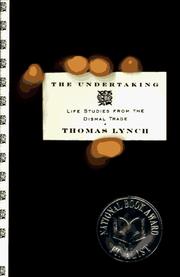
Essays by a small-town funeral director who is also a poet, on burying the people he grew up with. The counterweight to Mitford — a defence, of sorts, of what funerals are for.
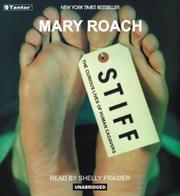
Reportage on what donated cadavers are used for: anatomy teaching, crash testing, forensic decay research. Read it last in this stage; it is the widest survey of the non-funeral uses of a body and is deliberately, sometimes uncomfortably, light in tone.
Other Places, Other Centuries
IntermediateSee that the arrangements described so far are local and recent, by comparing them with practices elsewhere and with the long history of Western attitudes.
▸ Study plan for this stage
Pace: 6 weeks, and deliberately lopsided. From Here to Eternity is 248 pages of illustrated travel reportage — Indonesia, Mexico, Japan, Bolivia, Spain, North Carolina, Colorado — and takes a week. The Hour of Our Death is roughly 650 pages of dense academic history covering a thousand years of Western at
- Doughty's comparative point is that the American norm — the body removed within hours by professionals — is unusual, and that the practices she visits keep the body present and the family handling it.
- The specific customs she documents: the ma'nene ceremony among the Toraja of Sulawesi, Día de Muertos in Michoacán, Japanese kotsuage bone-picking after cremation, the ñatitas skulls of La Paz, open-air cremation in Colorado and natural burial in North Carolina.
- Ariès's periodisation of Western attitudes: the tame death, one's own death, thy death, and forbidden death — each a description of who the death belongs to and who is permitted to be present.
- The tame death: dying as public, foreseen and presided over by the dying person, with the room full and the deathbed a social occasion rather than a medical one.
- 'Forbidden death' — the twentieth-century shift to death as shameful, hidden and medicalised — is the endpoint that the first three stages of this path described from the inside without naming.
- Ariès builds his case from wills, tomb sculpture, iconography, liturgy and literature rather than from statistics, and historians have criticised the scheme for tidiness and for reading art as if it were evidence of feeling.
- Doughty is an advocate, not a neutral reporter: she runs a death-positive organisation and is arguing for specific reforms to American practice, which is visible in what she chooses to film and whom she quotes.
- What does the Toraja ma'nene ceremony do that American practice forbids, and which specific legal obstacles does Doughty find to importing any part of it?
- Name Ariès's attitudes to death in order, and the kind of evidence he uses for each one.
- What does Ariès mean by 'forbidden death', and where in the previous stage did you watch it operating?
- Where is Doughty an advocate rather than a reporter, and does it damage the reporting where it shows?
- What is the main historians' objection to Ariès's scheme, and does the material in his own book support the objection?
- Map each of Doughty's chapters onto one of Ariès's attitudes, and identify which practices refuse the mapping entirely — those are the ones that are not earlier versions of ours.
- Read only Ariès's treatment of the medieval will as a religious document, then his chapter on the modern funeral, and write the single sentence that connects them. That connection is the spine of a 650-page book.
- Take one practice Doughty describes and work out exactly what law in your own jurisdiction would prevent it. She names some of the obstacles; find the rest in your state or national code.
Next up: Every book so far has been about the dying and the dead; the last stage is about the people left, and about which claims made in their name the evidence actually supports.

Doughty travels to Indonesia, Mexico, Japan, Bolivia and rural Colorado to document death customs that keep the body present rather than removing it. Read after her first book, which supplies the American baseline it is measured against.

The major work of history here — a thousand years of Western attitudes to dying, from the public deathbed to the medicalised, hidden death of the twentieth century. Long and scholarly; read it once the modern arrangements are familiar enough to be recognised as an endpoint.
What the Research on Grief Says
IntermediateLearn where the popular model of grief came from, and what the empirical work since has and has not supported.
▸ Study plan for this stage
Pace: 3 weeks. On Death and Dying is about 280 pages built out of interviews conducted with dying patients at a Chicago hospital; give it a week and read the interview transcripts rather than skipping ahead to the stages. The Other Side of Sadness is around 230 pages summarising longitudinal bereavement r
- Kübler-Ross's five stages were derived from interviews with people who were dying, not with people who had been bereaved — the popular grief model applies her framework to a population she did not study.
- She did not claim a fixed sequence either; the rigid ordering everyone quotes is largely an artefact of the book's reception rather than of its text.
- Bonanno's longitudinal data finds resilience to be the most common trajectory after a loss, with chronic grief a genuine but minority pattern — which is the direct empirical contradiction of a model in which everyone must pass through the same states.
- The prospective-study problem: retrospective research asks the bereaved to recall a pre-loss baseline, so only studies already tracking people before the death can measure what actually changed.
- Oscillation and coping flexibility — the finding that laughter, relief and ordinary functioning early in bereavement predict better outcomes, where the stage model reads the same behaviour as denial.
- 'Grief work' — the assumption that grief must be worked through or it will resurface later — is the specific claim Bonanno argues the evidence does not support, and it is the assumption most bereavement services were built on.
- Prolonged grief disorder is now a formal diagnosis, and where the boundary sits between an ordinary and a disordered course remains contested.
- Kübler-Ross is a primary historical source and a participant in creating the model being examined; Bonanno is a researcher summarising a field in which his own studies are part of the evidence.
- Whom did Kübler-Ross actually interview, and what does that do to the uses her five stages are now put to?
- What proportion of bereaved people follow the resilient trajectory in Bonanno's data, and how is that trajectory defined and measured?
- Why does Bonanno insist on prospective studies, and what can a retrospective study of grief never establish?
- What does the 'grief work' assumption get wrong, on Bonanno's account, and what evidence does he bring against it?
- Having read both: what is On Death and Dying still good for?
- Write out the five stages from memory before opening the book, then find each one in Kübler-Ross's text and note what she actually says about sequence, about universality, and about whom the model describes. Keep the two lists side by side.
- Take one of Bonanno's trajectory figures and describe in prose what each line represents and what would have had to be measured, and when, to place a real person on it.
- Go back to The Year of Magical Thinking from stage two and read Didion's year against both models. Note which of her behaviours the stage model has a name for, and which only Bonanno's account predicts.
- Find a grief resource currently in use — a hospice leaflet, an employer's bereavement page, a counselling service's website — and mark every claim in it that Bonanno's evidence contradicts.
Next up: You now have the clinical picture, the first-person accounts, the trade, the comparative history and the evidence on grief, which is the whole of what this literature can give you — and none of it is a doctor, a palliative care team or a bereavement counsellor, which are separate things and worth going to directly.
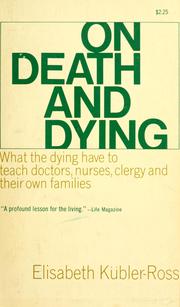
The 1969 book that introduced the five stages, based on interviews with dying patients rather than with the bereaved — a distinction its popular use lost almost immediately. Read it as the historical source, not as a current model.

A bereavement researcher's summary of the longitudinal evidence, which finds resilience far more common than the stage model predicts and no support for stages as a sequence. Read directly after Kübler-Ross; it is the empirical correction to it.
Discussion
Keep reading
Paths that share books, cover the same subject, or open a related topic.