The new space race: rockets, Mars & beyond
This curriculum takes a beginner from the wonder and history of spaceflight all the way through rocket engineering, the commercial space revolution, and the cutting-edge science and politics of humanity's push to Mars and beyond. Each stage builds on the last — first instilling awe and context, then mechanics and industry, then the deep technical and strategic picture of where space exploration is truly headed.
Foundations — Wonder, History & Context
BeginnerUnderstand why humans explore space, how the original space race unfolded, and the emotional and cultural stakes of spaceflight — building the vocabulary and motivation needed for everything that follows.
▸ Study plan for this stage
Pace: 10–12 weeks total, reading ~25–35 pages per day on weekdays with lighter reading on weekends. Suggested pacing: "The Right Stuff" in weeks 1–3 (~350 pages), "Carrying the Fire" in weeks 4–7 (~475 pages), and "Endurance" in weeks 8–12 (~400 pages). Build in 2–3 buffer days between books for reflectio
- The 'right stuff' ethos — the unspoken code of courage, stoicism, and machismo that defined early astronaut and test-pilot culture, as portrayed by Wolfe, and how it shaped NASA's selection and public image
- The original Space Race as geopolitical theater — how Cold War rivalry between the U.S. and USSR drove funding, risk tolerance, and national identity, providing the political engine behind Mercury, Gemini, and Apollo
- The human cost and psychological burden of spaceflight — fear, isolation, mortality, and the gap between the heroic public narrative and the private experience, explored across all three books
- Technical literacy for beginners — orbital mechanics basics, mission phases (launch, rendezvous, EVA, re-entry), and spacecraft systems introduced accessibly through Collins's firsthand engineering perspective in 'Carrying the Fire'
- Long-duration spaceflight and the body — how Scott Kelly's year aboard the ISS in 'Endurance' reframes space not as a sprint but as a sustained physiological and psychological endurance challenge
- Institutional culture at NASA — how bureaucracy, groupthink, heroism, and individual brilliance interact, seen through the contrasting lenses of Wolfe's satirical outsider view and Collins's and Kelly's insider accounts
- The evolution of purpose: from national prestige to scientific research — tracing the shift in the 'why' of space exploration from the 1960s Space Race through the ISS era
- Space exploration as a mirror for humanity — how all three authors use spaceflight to reflect on Earth-bound questions of identity, ambition, mortality, and what it means to be human
- According to Tom Wolfe in 'The Right Stuff,' what unwritten qualities defined the ideal test pilot or astronaut, and how did NASA's public relations machine both reflect and distort that ideal?
- Michael Collins in 'Carrying the Fire' is often described as the most technically candid of the Apollo astronauts — what specific aspects of the Gemini and Apollo missions does he illuminate that official accounts tend to gloss over, and how does his perspective complicate the 'heroic astronaut' myth?
- How does Scott Kelly's account in 'Endurance' differ fundamentally in tone and challenge from the Mercury/Gemini/Apollo era described by Wolfe and Collins — what does a year in space reveal about human limits that a week or two on the Moon does not?
- Across all three books, how do the authors portray the relationship between individual astronauts and the institution of NASA — is it one of trust, tension, or something more complicated?
- What emotional and cultural stakes did the original Space Race carry for ordinary Americans, as captured in 'The Right Stuff,' and how do those stakes compare to the quieter, science-driven mission Kelly describes in 'Endurance'?
- Having read all three books, how would you articulate the core human motivations for space exploration — and have they changed between the 1960s and the 2010s?
- Astronaut Profile Chart: After finishing each book, fill in a one-page profile for each author/subject (Chuck Yeager, John Glenn, Michael Collins, Scott Kelly) covering: their definition of courage, their relationship with risk, their view of NASA as an institution, and one moment from the book that surprised you. Compare all profiles side by side when done.
- Cold War Timeline Overlay: Build a simple two-column timeline — U.S. milestones on one side, Soviet milestones on the other — as you read 'The Right Stuff.' Use free resources (NASA history website, Wikipedia) only to fill in the Soviet column, since Wolfe focuses on the American side. This makes the geopolitical tension Wolfe implies feel concrete.
- Vocabulary & Jargon Glossary: Keep a running glossary as you read 'Carrying the Fire,' noting every technical term Collins introduces (e.g., 'rendezvous,' 'translunar injection,' 'EVA,' 'abort modes'). Write each definition in your own plain-language words. Aim for 30–40 entries — this glossary will serve you throughout the entire curriculum.
- Perspective Swap Journal: At the end of each major mission described across the three books, write a half-page journal entry from the perspective of someone left behind — a spouse, a flight controller, or a fellow astronaut watching from Earth. This exercise surfaces the emotional stakes the authors sometimes understate.
- The 'Why Do We Go?' Essay: After completing all three books, write a 400–600 word personal essay answering: 'Why should humans explore space?' Draw explicitly on at least one moment or argument from each of the three books. This essay will serve as a baseline you can revisit and revise as you advance through the curriculum.
- Comparative Reading Discussion (solo or with a partner): Identify one passage from each book that you think best captures that author's answer to the question 'What does space demand of a human being?' Write or discuss why you chose each passage and what the three passages, read together, reveal that none of them reveals alone.
Next up: By grounding you in the emotional history, human stakes, and foundational vocabulary of spaceflight through Wolfe, Collins, and Kelly, this stage equips you with the 'why' and 'what it feels like' context needed to engage critically with the technical, commercial, and political complexities of the new space race covered in subsequent stages.

A gripping, accessible narrative of the Mercury astronauts that makes the human drama of early spaceflight visceral and real — the perfect entry point that needs zero technical background.
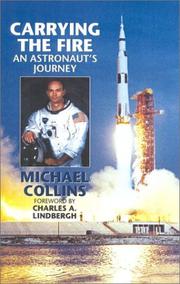
Widely considered the best astronaut memoir ever written, it gives an insider's view of Gemini and Apollo with just enough technical detail to start building intuition about how missions actually work.

A modern astronaut's account of a year on the ISS bridges the old space era to today's, introducing the reader to current spaceflight realities — life support, the human body in space, and international cooperation.
How Rockets Work — Engineering Intuition
BeginnerGrasp the core physics and engineering of rockets — propulsion, orbital mechanics, and launch vehicles — without needing an engineering degree.
▸ Study plan for this stage
Pace: 8–10 weeks total. Weeks 1–4: "How to Make a Spaceship" (~25–30 pages/day, reading narrative chapters alongside a notepad to flag every engineering concept mentioned in story form). Weeks 5–10: "Rocket Propulsion Elements" (~15–20 pages/day — this is a dense technical text; slow down at chapters on t
- Newton's Third Law as the foundational principle of rocket propulsion — every action has an equal and opposite reaction, which Guthrie illustrates through the X-Prize competitors' trial-and-error and Sutton formalizes mathematically
- The rocket equation (Tsiolkovsky) — understanding how exhaust velocity and mass ratio determine delta-v, and why shedding mass (staging) is so critical, as Sutton derives from first principles
- Thrust, specific impulse (Isp), and why Isp is the universal 'miles-per-gallon' metric for rocket engines — Sutton dedicates extensive treatment to this and Guthrie's characters obsess over it in practice
- Propellant chemistry and types — liquid vs. solid vs. hybrid propellants, their trade-offs in energy density, controllability, and safety, covered technically in Sutton and experienced narratively through the SpaceShipOne hybrid motor story in Guthrie
- Nozzle design and the de Laval nozzle — how converging-diverging geometry accelerates exhaust to supersonic speeds, a core Sutton topic that explains why rocket engines look the way they do
- Orbital mechanics basics — the difference between suborbital and orbital flight, what it means to achieve orbit (horizontal velocity, not just altitude), and why reaching orbit is so much harder than reaching space
- Launch vehicle architecture — staging, payload fairings, and the engineering logic behind multi-stage rockets, illustrated by the competing vehicle designs in Guthrie and analyzed structurally in Sutton
- The role of private innovation and engineering culture — Guthrie's narrative shows how small teams with unconventional thinking (Rutan, Allen, Melvill) solved problems that stumped larger organizations, providing human context for the engineering in Sutton
- After reading Guthrie, can you explain in plain language why SpaceShipOne's hybrid rocket motor was considered both an advantage and a risk compared to purely liquid or solid systems — and how does Sutton's treatment of hybrid propellants confirm or complicate that story?
- Using the concepts from Sutton's early chapters, what does specific impulse (Isp) actually measure, and why would a rocket engineer choose a lower-Isp propellant combination for one mission and a higher-Isp combination for another?
- What is the Tsiolkovsky rocket equation, what are its variables, and what does it tell you about why staging (dropping empty tanks and engines) is almost always necessary to reach orbit?
- What is the difference between a suborbital trajectory (like SpaceShipOne's flights) and a true orbital trajectory, and approximately how much more delta-v is required to achieve orbit from Earth's surface?
- How does a de Laval (converging-diverging) nozzle work, and why can't a rocket engine simply use a straight pipe as an exhaust nozzle?
- Based on both books, what are the three biggest engineering constraints that determine whether a launch vehicle design is feasible — and how did the X-Prize competitors in Guthrie navigate those constraints with limited budgets?
- Rocket Equation Calculator: Using the Tsiolkovsky rocket equation (Δv = Isp × g₀ × ln(m₀/mf)), plug in real numbers from SpaceShipOne (look up its published Isp and mass figures) and calculate its theoretical delta-v. Then do the same for a two-stage orbital rocket. Compare the results and write a one-paragraph explanation of what the numbers reveal.
- Propellant Trade-off Matrix: Create a simple table with columns for Liquid, Solid, and Hybrid propellants. Fill in rows for: Isp range, storability, throttleability, cost, and safety risk. Use Sutton as your primary source and Guthrie's narrative as a real-world check. Annotate which propellant type each X-Prize team used and why.
- Nozzle Sketch & Annotation: Draw a de Laval nozzle from memory (converging section, throat, diverging section). Label the regions of subsonic and supersonic flow, the point of maximum pressure drop, and the exit plane. Write two sentences under the diagram explaining what would happen to thrust if the nozzle were cut off at the throat.
- Mission Profile Diagram: Draw a side-by-side diagram of a suborbital flight profile (SpaceShipOne style) vs. an orbital insertion profile. Label apogee, perigee, the Kármán line, and the velocity vectors at key points. Annotate why horizontal velocity — not vertical altitude — is the key to orbit.
- Concept Glossary: As you read Sutton, maintain a running glossary of at least 20 technical terms (e.g., chamber pressure, oxidizer-to-fuel ratio, specific impulse, thrust coefficient). For each term, write the definition in your own words and add a one-sentence example drawn from a real vehicle or event mentioned in Guthrie.
- Design a Minimal Rocket on Paper: Sketch a single-stage rocket capable of reaching 100 km (the Kármán line) suborbital. Decide on a propellant type (justify using Sutton's trade-offs), estimate a rough mass ratio, and identify the two biggest engineering challenges your design would face. No math required beyond the rocket equation — the goal is engineering intuition, not precision.
Next up: Mastering how rockets physically work — from propellant chemistry to orbital mechanics — gives the reader the engineering vocabulary and intuition needed to critically evaluate the business models, geopolitical strategies, and competitive dynamics of the modern space industry in the next stage.

Tells the story of the private rocket pioneers (Burt Rutan, Peter Diamandis, and others) who cracked open commercial spaceflight, naturally teaching propulsion and design concepts through narrative rather than textbook.

The canonical engineering reference on rocket propulsion — introduced here in a targeted way (key chapters on thrust, specific impulse, and nozzles) to give the reader a solid technical foundation before diving into the commercial era.
The New Space Race — Commercial Industry & Key Players
IntermediateUnderstand how SpaceX, Blue Origin, and the broader commercial space industry disrupted government-led spaceflight, and what the business, political, and engineering dynamics of the new space race look like.
▸ Study plan for this stage
Pace: 10–12 weeks total: ~3–4 weeks per book at roughly 25–35 pages/day. "Liftoff" (~320 pp) in weeks 1–3; "Reentry" (~350 pp) in weeks 4–7; "The Space Barons" (~320 pp) in weeks 8–11; week 12 reserved for review, synthesis, and exercises.
- The scrappy, failure-driven origins of SpaceX and how iterative rocket development (Falcon 1's four launch attempts) challenged traditional aerospace procurement culture — as chronicled in 'Liftoff'
- Elon Musk's management philosophy: extreme urgency, vertical integration, and first-principles engineering as competitive advantages over legacy contractors like Boeing and Lockheed (Liftoff)
- The development and significance of the Falcon 9 and Dragon capsule in winning NASA Commercial Crew and Cargo contracts, and how SpaceX's near-bankruptcy moments shaped its risk tolerance — explored in depth in 'Reentry'
- Reusability as the central economic and engineering breakthrough: how landing and reflying orbital-class boosters redefined the cost structure of access to space (Reentry)
- The parallel ambitions and contrasting styles of Elon Musk (SpaceX) and Jeff Bezos (Blue Origin) — their competing visions for humanity's future in space and their very different corporate cultures (The Space Barons)
- The role of NASA's COTS/CCDev programs as a policy bridge between government-led and commercial spaceflight, and the political battles with legacy 'old space' contractors and their congressional allies (The Space Barons & Reentry)
- How Richard Branson's Virgin Galactic and Paul Allen's Scaled Composites fit into the broader commercial ecosystem, and what the Ansari X Prize catalyzed (The Space Barons)
- The tension between billionaire-driven 'why' (civilizational survival, tourism, colonization) and the near-term engineering and business realities that constrain those visions (all three books)
- According to 'Liftoff,' what were the specific technical and organizational decisions that allowed SpaceX to survive the first three failed Falcon 1 launches, and what does this reveal about how small teams can out-maneuver large aerospace bureaucracies?
- How does 'Reentry' explain the economic logic of rocket reusability — what had to be true about refurbishment costs and launch cadence for reusability to actually lower prices, and did SpaceX fully achieve that by the book's end?
- Comparing 'Liftoff' and 'Reentry' as a pair: how did SpaceX's internal culture, decision-making speed, and relationship with NASA evolve from the Falcon 1 era to the Falcon 9/Dragon/Commercial Crew era?
- Based on 'The Space Barons,' what fundamentally distinguishes Musk's and Bezos's visions for why humans should go to space, and how do those philosophical differences manifest in their companies' technical priorities and timelines?
- How does 'The Space Barons' characterize the political economy of the new space race — who are the 'old space' incumbents, what legislative and lobbying tools did they use, and how did commercial players eventually overcome or work around them?
- Across all three books, what recurring failure modes (technical, financial, political, cultural) threatened commercial space companies, and what patterns of resilience allowed them to survive?
- **Failure timeline:** As you read 'Liftoff,' build a chronological log of every major SpaceX failure or near-failure and the specific fix applied. At the end, write a one-page memo arguing whether SpaceX's survival was primarily due to engineering skill, financial luck, or leadership — using only evidence from the book.
- **Reusability cost model:** After finishing 'Reentry,' sketch a back-of-the-envelope unit-economics model for a reusable vs. expendable Falcon 9. Use figures and context from the book (launch price, cadence, refurbishment hints) to estimate at what reuse rate the economics flip positive. Annotate where the book's narrative supports or complicates your model.
- **Comparative founder profile:** After completing 'The Space Barons,' create a two-column comparison chart of Musk vs. Bezos across at least six dimensions: stated mission, funding model, engineering philosophy, relationship with NASA, public communication style, and timeline to key milestones. Write a 200-word verdict on whose approach was more effective by the book's end — and why.
- **Policy brief:** Drawing on 'The Space Barons' and 'Reentry,' write a 300-word policy brief from the perspective of a NASA administrator in 2010 deciding whether to expand the COTS/CCDev commercial model. Steelman both the pro-commercial and pro-traditional-contractor arguments before stating your recommendation.
- **Oral synthesis:** Record a 5–7 minute audio or video summary (phone recording is fine) explaining the arc across all three books — from Falcon 1's first launch attempt to the Commercial Crew era — as if briefing someone who has read none of them. Focus on how each book's narrative hands off to the next.
- **News bridge exercise:** Find three current news articles (post-2023) about SpaceX, Blue Origin, or commercial launch competition. For each, write 2–3 sentences connecting the current development back to a specific moment, decision, or dynamic described in one of the three books, demonstrating how the books' themes are still playing out.
Next up: By grounding the reader in the business models, key personalities, and political battles of the commercial space industry, this stage builds the industrial and strategic literacy needed to engage with deeper questions about where the new space race is headed — including lunar return programs, Mars ambitions, space policy, and international competition — which form the natural focus of the next sta

A deeply reported account of SpaceX's early years and the development of the Falcon 1 — essential for understanding how Elon Musk's company rewrote the rules of rocket development and cost structure.

Berger's follow-up covers SpaceX's maturation and the broader competitive landscape, building directly on Liftoff to show how the company scaled and what rivals like Blue Origin and ULA are doing in response.

Zooms out from SpaceX to profile the full cast of billionaire space entrepreneurs — Musk, Bezos, Branson, Allen — giving the reader a complete map of the commercial space ecosystem and the rivalries driving it.
Mars & Deep Space — Science, Ambition & Hard Realities
IntermediateEvaluate the scientific, physiological, and logistical challenges of sending humans to Mars and other deep-space destinations, and form an informed opinion on whether — and how — it can be done.
▸ Study plan for this stage
Pace: 6–8 weeks total: Weeks 1–4 for "The Case for Mars" (~25–30 pages/day, including time to sketch diagrams and take margin notes on technical sections); Weeks 5–7 for "Packing for Mars" (~30–35 pages/day, lighter reading but rich in detail worth annotating); Week 8 reserved for synthesis, review, and c
- Mars Direct architecture — Zubrin's phased, minimalist mission plan using in-situ resource utilization (ISRU) to manufacture fuel on Mars rather than hauling it from Earth
- In-Situ Resource Utilization (ISRU) — the Sabatier reaction and how Martian CO₂ and subsurface hydrogen can produce methane and water, making the mission self-sustaining
- The 'conjunction-class' vs. 'opposition-class' mission trade-offs — launch windows, transit times, and how orbital mechanics dictate the pace of any Mars campaign
- Radiation exposure in deep space — the difference between solar particle events and galactic cosmic rays, and why neither Earth's magnetosphere nor the ISS prepares us for a 6–9 month transit
- Human physiology under spaceflight stress (Roach) — bone density loss, muscle atrophy, fluid shifts, spatial disorientation, and the compounding psychological toll of isolation and confinement
- The 'gross factor' of long-duration spaceflight (Roach) — waste management, hygiene, food palatability, and how these unglamorous logistics have derailed or nearly derailed real missions
- Cost and political will as mission-critical variables — Zubrin's argument that Mars is affordable if architecture is chosen wisely, versus the historical pattern of budget cycles killing momentum
- Risk tolerance and the ethics of human deep-space exploration — acceptable casualty rates, crew autonomy at communication-delay distances (up to 24 minutes one-way), and the 'flags and footprints vs. settlement' debate
- According to Zubrin, what is the single biggest cost driver in conventional Mars mission designs, and how does Mars Direct eliminate it?
- What is the Sabatier reaction, and why is it the linchpin of Zubrin's in-situ propellant production strategy?
- Drawing on Roach's reporting, which two or three physiological challenges does she present as the most underestimated by the public — and what evidence does she cite?
- How does the communication time-delay between Earth and Mars (up to ~24 minutes one-way) fundamentally change crew decision-making and mission control's role, and how do both authors address crew autonomy?
- Zubrin is explicitly optimistic; Roach is wryly skeptical. Where do their underlying assumptions about human adaptability most sharply diverge, and who do you find more persuasive — and why?
- If you had to identify the single greatest unresolved obstacle to a crewed Mars landing by 2040 — scientific, physiological, or logistical — what would it be, and what would need to happen to solve it?
- Mission architecture sketch: After finishing 'The Case for Mars,' draw a timeline diagram of the Mars Direct two-launch sequence — Earth Return Vehicle first, then the crew — labeling ISRU production windows, transit phases, and surface stay duration. Annotate each phase with its biggest risk.
- ISRU math check: Using Zubrin's figures, calculate how much methane and liquid oxygen would need to be produced on the Martian surface for a return trip. Look up the Sabatier reaction stoichiometry and verify whether his numbers are internally consistent. Note any assumptions he makes.
- Roach response journal: After each major chapter of 'Packing for Mars,' write a 150-word entry on one unglamorous problem she describes — waste, food, hygiene, psychology — and propose one concrete engineering or procedural solution. Collect these into a 'Human Factors Problem Log.'
- Debate prep — optimist vs. realist: Write two 300-word position statements: one channeling Zubrin's can-do engineering optimism, one channeling Roach's evidence-based skepticism about human bodies and behavior. Then write a 200-word synthesis stating your own informed view.
- Risk matrix: Build a simple 3×3 risk matrix (likelihood vs. severity) for at least eight challenges drawn from both books — e.g., radiation exposure, ISRU failure, crew psychological breakdown, launch window miss. Rank them and identify which risks Zubrin underweights relative to Roach's reporting.
- Communication delay simulation: Pick any complex group decision you make in daily life (a project, a trip). Re-run the decision as if every message to your 'mission control' took 20 minutes each way. Journal how this changes your planning horizon and what it reveals about crew autonomy requirements on a Mars mission.
Next up: By stress-testing the dream of Mars through both an engineer's blueprint and a science journalist's unflinching look at human limits, the reader is now equipped to zoom out and critically assess the broader commercial and geopolitical forces — private launch companies, national space agencies, and international competition — that will ultimately determine whether any Mars architecture ever leaves

The foundational manifesto for human Mars exploration, laying out a credible engineering roadmap (Mars Direct) — a must-read for understanding the technical and philosophical arguments that have shaped NASA and SpaceX planning alike.
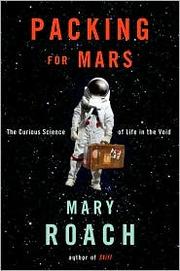
A witty, rigorously researched look at the human body's response to spaceflight — nutrition, hygiene, psychology, sex — providing the essential counterbalance to Zubrin's optimism with hard physiological reality.
The Big Picture — Where Space Exploration Is Headed
ExpertSynthesize everything into a strategic, scientific, and philosophical view of humanity's long-term future in space — including policy, planetary science, and the existential stakes of becoming a multi-planetary species.
▸ Study plan for this stage
Pace: 6–8 weeks total: Weeks 1–3 on "The Sirens of Mars" (~25–30 pages/day, including reflection time); Weeks 4–7 on "The High Frontier" (~20–25 pages/day, with heavier annotation for technical sections); Week 8 reserved for synthesis, cross-book comparison, and completing exercises.
- The personal and scientific intertwining of Mars exploration — Johnson's memoir-driven narrative shows how planetary science is shaped by human obsession, patience, and incremental discovery, not just technology.
- Mars as a mirror for Earth — Johnson frames Mars science (its lost oceans, magnetic field collapse, and climate death) as a lens through which to examine Earth's own fragility and the stakes of planetary stewardship.
- The philosophical weight of the search for life — 'The Sirens of Mars' forces a reckoning with what finding (or not finding) life on Mars would mean for humanity's sense of cosmic uniqueness and existential purpose.
- O'Neill's core thesis: Earth is NOT the long-term home of humanity — 'The High Frontier' argues that space colonization via orbital habitats (not planetary surfaces) is the most rational and achievable path to human expansion.
- The O'Neill cylinder and space habitat engineering — Understanding the physics and design logic of large-scale rotating habitats (gravity simulation, solar energy, agriculture, population capacity) as a concrete alternative to planetary colonization.
- Space industrialization as a prerequisite for civilization survival — O'Neill's economic and resource arguments: asteroid mining, solar power satellites, and off-Earth manufacturing as the material foundation for a multi-planetary (or multi-habitat) civilization.
- Tension between planetary colonization and habitat colonization — Synthesizing Johnson's Mars-centric view with O'Neill's habitat-first philosophy reveals a fundamental strategic fork in humanity's space future.
- The existential and policy stakes of becoming a multi-habitat species — Both books, read together, frame space expansion not as adventure but as a civilizational insurance policy, raising urgent questions about governance, equity, and who decides humanity's future.
- After reading Johnson, how does the scientific history of Mars exploration — from telescopic observation to rovers — inform our current understanding of Mars's habitability, and what does that history reveal about the pace and nature of scientific progress?
- Johnson weaves personal memoir into planetary science throughout 'The Sirens of Mars.' How does this narrative choice affect the reader's understanding of what drives exploration — and what does it suggest about the human motivations behind the new space race?
- O'Neill argues in 'The High Frontier' that orbital habitats are superior to planetary surfaces as destinations for human civilization. What are his strongest scientific and economic arguments, and where are the most significant gaps or assumptions in his reasoning?
- How do the visions of humanity's space future presented by Johnson (Mars as destination and scientific obsession) and O'Neill (habitats as engineered homes) complement or contradict each other at the strategic, philosophical, and policy levels?
- O'Neill's 'High Frontier' was written in the 1970s. Which of his predictions or proposals have aged well in light of current space industry developments, and which have been overtaken by new realities — technological, political, or economic?
- Both books implicitly or explicitly engage with the existential argument for space expansion — that humanity must not remain confined to one world. How do Johnson and O'Neill each make this case, and whose argument do you find more compelling and why?
- Planetary science timeline: After finishing 'The Sirens of Mars,' construct a detailed annotated timeline of Mars exploration milestones Johnson references. For each milestone, note what scientific question it answered, what new question it opened, and what it reveals about the iterative nature of planetary science.
- Habitat design brief: After reading O'Neill's habitat chapters in 'The High Frontier,' sketch (by hand or digitally) a labeled diagram of an O'Neill cylinder or Island Three habitat. Annotate it with the physics principles O'Neill invokes — rotational gravity, solar energy capture, agricultural zones — and note which elements remain engineering challenges today.
- Comparative manifesto: Write a 600–900 word essay titled 'Where Should Humanity Go?' that directly pits Johnson's implicit Mars-first vision against O'Neill's habitat-first thesis. Take a clear position, use evidence from both books, and address the strongest counterargument to your chosen side.
- Policy memo exercise: Draft a one-page policy memo addressed to a fictional 'UN Committee on Long-Term Space Settlement.' Drawing on both books, recommend a 50-year strategic framework for human expansion beyond Earth. Address: destination choice, resource strategy, governance principles, and the existential rationale.
- Existential stakes Socratic dialogue: Find a reading partner (or write both sides yourself) and conduct a structured 20-minute debate: one person argues Johnson's position (Mars exploration as humanity's next great scientific and existential frontier), the other argues O'Neill's (orbital habitats as the rational, scalable alternative). Debrief in writing afterward.
- Update O'Neill's economics: O'Neill's resource and cost projections in 'The High Frontier' are decades old. Research current estimates for one of his key proposals (e.g., solar power satellites, asteroid mining, or launch costs) and write a one-page 'update memo' assessing whether his economic case has strengthened or weakened in light of today's data.
Next up: By synthesizing the scientific intimacy of Johnson's Mars narrative with the grand engineering ambition of O'Neill's habitat vision, the reader now holds both the emotional and strategic dimensions of humanity's space future — a foundation that naturally demands deeper engagement with the policy, geopolitics, and commercial forces actively shaping that future today.

A planetary scientist's lyrical and scientifically rigorous account of Mars exploration weaves personal memoir with cutting-edge research, elevating the reader's understanding of what we actually know about Mars and why it matters.
The visionary classic on space colonization — O'Neill's ideas about space habitats and off-Earth industry directly influenced today's entrepreneurs and policymakers, making it essential context for evaluating long-term plans.
Discussion
Keep reading
Paths that share books, cover the same subject, or open a related topic.