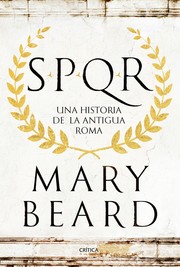
Start with SPQR. It is 644 pages covering roughly a thousand years, and it is the book that gives you the frame every other title here sits inside.
The alternative is to begin with Pompeii, which is shorter, more vivid and easier to picture. It is a good book and the wrong opening, because its whole method is the close reading of one town, and close reading only pays off once you know what it is a close reading of. Take the sweep first and the details land.
Pace SPQR honestly: 25 to 30 pages a day, three to four weeks. Do not try to hold every name. The book is not organised as a chronicle and rewards reading for argument rather than for sequence. If you have never read Roman history before, expect the first hundred pages — which are about founding myths rather than events — to feel like a strange place to begin. That is deliberate, and the payoff comes later.
Rome up close
Pompeii and Emperor of Rome, about five weeks. Read Pompeii with a plan of the town open, since it is organised geographically and the argument depends on where things sit in relation to each other. Emperor of Rome is the more recent book and the more revisionist: it is about the job of being emperor rather than a gallery of individual rulers, which is a genuinely different way of telling that story.
One buying trap here. Pompeii was published in the United States under a different title, The Fires of Vesuvius, so check the author and the contents before ordering what looks like a second book.
Beard arguing
Women & power is 115 pages of two lectures and can be read in a single evening — do that first. Confronting the classics is a collection of review essays and should be rationed to two or three a sitting rather than read straight through; it is also the clearest available demonstration of how a classicist reads other classicists. Twelve Caesars is heavily illustrated and wants a fortnight, with the pictures actually looked at rather than skipped, since the argument is about how Roman rulers have been depicted ever since.
The scholar underneath
This is the scholarship the popular books are built on: same author, same method, no simplification, and still no Latin required, though she quotes it with translation. Expect to slow to fifteen or twenty pages a day.
The Roman Triumph first, over about three weeks — it takes the single most familiar image of Roman power and argues that almost everything commonly believed about it is a reconstruction. Laughter in Ancient Rome second. Its problem is that a joke is the least portable thing across two thousand years: you can translate the words and lose the entire point, and Beard is unusually honest that some of it is simply unrecoverable. The Parthenon (Wonders of the World) last, as a shorter and more argumentative finish, and the one book here that leaves Rome.
Two catalogue notes for that stage. Our record for Laughter in Ancient Rome has the Sather Classical Lectures series name run into the title field with stray line breaks — the book is simply Laughter in Ancient Rome. And The Parthenon (Wonders of the World) carries its publisher's series name in brackets for the same reason.
Where to stop
Most readers want the first three books and nothing else, and that is a defensible place to stop: SPQR, Pompeii and Emperor of Rome are a complete education in how Rome is currently argued about. Stage four is for readers who want to see the workings. If you would rather stay with the ancient world in fiction, Mary Renault is the obvious next path.
Follow the full ordered path here: Mary Beard Reading Order: Where to Start.
Ready to learn something deeply?
Build a reading path — free