The Best Books to Become a Funeral Director
This curriculum moves from cultural and emotional literacy around death, through the technical sciences of embalming and mortuary practice, into grief counseling skills, and finally into the business and professional realities of running a funeral home. Each stage builds the vocabulary and mindset needed for the next, so that by the end the reader is prepared to sit for licensing exams and enter the profession with both technical competence and human compassion.
Foundations: Death, Culture & the Funeral Profession
BeginnerUnderstand what funeral directing actually involves, how death is handled across cultures, and why the profession exists — building the emotional and contextual foundation before any technical study.
A mortuary-school graduate's candid memoir of working in a crematory; it demystifies the daily realities of death care and is the single most accessible on-ramp to the profession for a complete beginner.

The landmark investigative work on the funeral industry; reading it early gives the learner critical perspective on the business, regulation, and ethics they will navigate throughout their career.
A scientifically grounded yet approachable survey of what happens to human bodies after death; it builds anatomical curiosity and comfort with the subject before formal textbook study begins.
Core Science: Anatomy, Embalming & Mortuary Chemistry
BeginnerAcquire the foundational anatomy and embalming theory required by every state licensing board — the technical backbone of mortuary science.
▸ Study plan for this stage
Pace: 12–14 weeks, ~40–50 pages/day (mix of dense theory and visual anatomy study). Strub (4–5 weeks), Mayer (4–5 weeks), Rohen atlas (3–4 weeks, with concurrent review).
- Arterial embalming theory: pressure, rate of flow, and chemical distribution through the vascular system (Strub/Mayer foundation)
- Cavity embalming and trocar technique: proper needle placement, organ identification, and chemical selection for different body regions
- Embalming chemicals: formaldehyde chemistry, co-injections, humectants, and how they interact with tissue at the cellular level
- Anatomical pathways: major and minor arteries, veins, and body cavities—essential for safe injection and chemical distribution (Rohen atlas reference)
- Pre-embalming analysis: disease conditions, postmortem changes, and how they affect chemical selection and injection strategy
- Restorative art chemistry: tissue firming, discoloration correction, and preservation—the bridge between embalming and presentation
- Legal and safety protocols: proper handling of chemicals, ventilation, and documentation standards required by state boards
- Decomposition and preservation: understanding putrefaction, autolysis, and how embalming chemistry arrests these processes
- Explain the relationship between arterial pressure, rate of flow, and chemical distribution in the human body during embalming. Why does Strub emphasize proper pressure control?
- Describe the anatomical landmarks and technique for trocar cavity embalming. Which organs are in each body cavity, and how does this knowledge inform injection site selection?
- What is the chemical composition of standard embalming fluid, and how do formaldehyde and co-injections (humectants, buffers, dyes) work together to preserve tissue?
- Using the Rohen atlas, trace the path of arterial injection from the carotid artery through major branches. Why are collateral circulation routes important for complete distribution?
- How would you modify your embalming approach for a body showing signs of jaundice, livor mortis, or edema? What does Mayer teach about pre-embalming analysis?
- Explain the difference between arterial and cavity embalming. When would you use each, and what chemical concentrations does Mayer recommend for different scenarios?
- Create a detailed anatomical map: Using the Rohen atlas, draw or label the major arteries (carotid, subclavian, axillary, femoral) and their branches on a blank body diagram. Cross-reference with Strub's injection point recommendations.
- Embalming fluid chemistry worksheet: Prepare a chart comparing standard, cavity, and specialized embalming solutions. List formaldehyde concentration, co-injection ratios, and the purpose of each additive (humectants, buffers, dyes) as described in both Strub and Mayer.
- Case study analysis (3–4 scenarios): For each—a body with jaundice, one with severe edema, one with livor mortis—write a pre-embalming analysis and injection strategy using Mayer's diagnostic framework. Justify chemical selection and pressure/rate decisions.
- Trocar technique practice: Using a diagram or model, identify the correct insertion points for thoracic, abdominal, and pelvic cavity injections. Explain organ locations and why needle placement matters for chemical distribution.
- Pressure and rate calculations: Work through Strub's examples of how to calculate injection pressure and flow rate based on body weight, tissue condition, and chemical concentration. Solve 5–6 practice problems.
- Comparative anatomy study: Select three different body regions (head/neck, thorax, abdomen) and use the Rohen atlas to map vascular anatomy. Write a 1–2 page summary of how each region's circulation affects embalming strategy per Strub and Mayer.
Next up: This stage builds the scientific foundation—anatomy, chemistry, and technique—that you will apply to real-world mortuary operations, restorative art, and the regulatory/business side of funeral directing in the next stage.
The canonical, industry-standard embalming textbook used in accredited mortuary science programs for decades; it must be read first in this stage because all subsequent technical study assumes its vocabulary.

The most widely adopted modern embalming textbook in U.S. mortuary schools; it updates and deepens Strub with current chemistry, case analysis, and restorative art techniques.
A photographic human anatomy atlas used across health-science programs; mortuary students need precise anatomical knowledge for arterial injection and cavity work, and this atlas makes structures visually concrete.
Restorative Art & Funeral Service Practice
IntermediateMaster the cosmetic and restorative skills that make the body presentable for viewing, and understand the full operational workflow of a funeral home from first call to final disposition.
▸ Study plan for this stage
Pace: 4–5 weeks, ~25–30 pages/day, with 2–3 dedicated practice days per week for role-playing and operational scenarios
- Customer service as the foundation of funeral home operations and family trust-building
- Communication protocols and empathetic listening techniques for grieving families
- Operational workflow from initial contact through arrangement conferences, service coordination, and final disposition
- Professional demeanor, appearance, and boundary-setting in emotionally charged situations
- Problem-solving and conflict resolution in sensitive funeral service contexts
- Documentation, record-keeping, and compliance requirements throughout the funeral process
- Coordination between restorative art, embalming, and family preferences in body presentation
- Post-service follow-up and grief support resources for families
- How does effective customer service directly impact a family's grief experience and the reputation of a funeral home?
- What are the key steps in the first call process, and how should a funeral director establish rapport with a grieving family?
- How do you balance family preferences with professional recommendations during the arrangement conference?
- What documentation and compliance checkpoints must be completed from intake through final disposition?
- How should a funeral director handle common complaints or difficult family dynamics with professionalism and compassion?
- What role does restorative art play in the overall funeral service workflow, and how do you communicate its value to families?
- Role-play a first call scenario: receive a family's initial contact, gather essential information, and schedule an arrangement conference while demonstrating empathetic listening
- Conduct a mock arrangement conference: present service options, discuss restorative art and viewing preferences, and document family decisions accurately
- Create a complete funeral home workflow checklist from intake to final disposition, identifying all documentation and compliance touchpoints
- Practice difficult conversation scenarios: handle a family complaint, address budget concerns, and manage conflicting family member preferences
- Develop a post-service follow-up plan for a hypothetical family, including grief resources and memorial options
- Observe or shadow a real arrangement conference (if possible) and document the communication techniques and operational steps used
Next up: This stage establishes the customer service and operational excellence framework that underpins all funeral home functions, preparing you to dive into the technical restorative art and embalming skills that transform this understanding into hands-on practice.
Bridges the gap between technical preparation and family-facing service, teaching the interpersonal and operational skills needed at the arrangement conference and throughout the funeral service.
Grief, Counseling & Human Care
IntermediateDevelop genuine grief-support competency so you can guide bereaved families with empathy and evidence-based understanding — a skill set licensing exams test and families desperately need.
▸ Study plan for this stage
Pace: 8–10 weeks, ~25–30 pages/day (with reflection breaks). Week 1–2: Wolfelt's journal (~150 pages); Week 3–4: Kübler-Ross (~200 pages); Week 5–7: Grief Recovery Handbook (~300 pages); Week 8–10: Integration, case study work, and peer practice.
- The six needs of mourning (Wolfelt): acknowledging reality, embracing pain, remembering, developing new identity, searching for meaning, and continuing bonds—not 'closure'
- Kübler-Ross's five stages (denial, anger, bargaining, depression, acceptance) as a non-linear framework, not a rigid progression families must follow
- Active listening and companioning: the funeral director's role is to walk alongside grief, not fix it or rush it
- Grief is love with nowhere to go—reframing the bereaved family's emotional intensity as evidence of attachment, not pathology
- The Grief Recovery Handbook's action steps: identifying incomplete emotional relationships, writing unsent letters, and creating rituals to externalize and process loss
- Secondary losses and disenfranchised grief: recognizing hidden griefs (identity loss, financial change, social role shifts) families don't always name
- Trauma-informed care: understanding how sudden or violent death, suicide, or homicide compounds grief and requires specialized presence
- Self-care and boundary-setting for funeral directors: preventing compassion fatigue and vicarious trauma through intentional practices
- What are Wolfelt's six needs of mourning, and how do they differ from the goal of 'closure'?
- Describe Kübler-Ross's five stages and explain why they should not be viewed as a linear, mandatory progression.
- What does it mean to 'companion' a grieving family, and how is this different from trying to 'fix' their grief?
- Identify three secondary losses a family might experience after a death, and explain why naming them matters in funeral directing.
- What are the key action steps in the Grief Recovery Handbook, and how can you guide a family through writing an unsent letter?
- How would you recognize signs of disenfranchised grief (e.g., after a stigmatized death), and what compassionate language would you use?
- Complete Wolfelt's journal prompts yourself (at least 10 entries) to internalize the six needs and recognize your own grief patterns before you counsel others.
- Create a one-page 'Kübler-Ross stage map' for three fictional family scenarios (sudden death, elderly parent, child loss) showing how stages might overlap and vary—then compare with a peer.
- Role-play a family meeting: one person plays a bereaved spouse in anger stage, another plays the funeral director using companioning language (reflection, validation, presence) without rushing or minimizing.
- Write an unsent letter yourself (to a loss, person, or life change) following Grief Recovery Handbook methods, then share the emotional insights with a mentor or peer group.
- Interview a funeral director or grief counselor (30–45 min) about their most challenging case involving disenfranchised or complicated grief; document secondary losses they observed.
- Develop a personal self-care plan with 3–5 specific practices (journaling, supervision, peer support, exercise, spiritual practice) to prevent compassion fatigue—review and refine it weekly.
Next up: Mastering grief theory and companioning skills equips you to recognize when families need specialized interventions—preparing you for the next stage on crisis management, mental health screening, and referral protocols for complicated grief, trauma, and suicide bereavement.
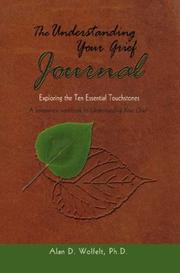
Wolfelt's foundational grief model is the most widely taught framework in funeral service education; reading his own text gives the practitioner the language and philosophy to companion the bereaved effectively.
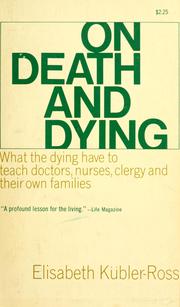
The seminal work introducing the five stages of grief; every funeral director will encounter families referencing this framework, and reading the source text provides both clinical grounding and historical context.
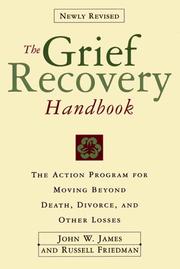
An action-oriented complement to Kübler-Ross, offering practical tools the funeral director can recommend to families and apply in aftercare programs — rounding out the counseling toolkit.
Business, Law & Professional Leadership
ExpertUnderstand the legal, financial, and managerial dimensions of owning or managing a funeral home — from FTC compliance and preneed contracts to marketing and long-term sustainability.
▸ Study plan for this stage
Pace: 4–5 weeks, ~25–30 pages/day (approximately 200–250 pages total). Allocate 2–3 days per major section for reflection and note-taking.
- The E-Myth: Why most small businesses fail because the owner is a technician, not an entrepreneur, and how to shift from doing the work to building a scalable system
- The Entrepreneurial Perspective: Thinking about your funeral home as a business to be built and sold, not just a job to be worked
- Systems and Documentation: Creating repeatable, documented processes (SOPs) for every function—from intake and embalming to client communication and accounting
- The Three Roles: Understanding and balancing the Technician (does the work), Manager (controls the work), and Entrepreneur (envisions the future) within yourself and your team
- Delegation and Leverage: Moving from being indispensable to building a team that can operate without you present
- Client Experience and Differentiation: Using systems to deliver consistent, memorable service that sets your funeral home apart in a competitive market
- Financial Sustainability: How operational systems directly impact profitability, cash flow, and long-term viability of the business
- What is the E-Myth, and why do most funeral home owners fall into the trap of being technicians rather than entrepreneurs?
- How would you describe the difference between the Technician, Manager, and Entrepreneur roles, and which one do you naturally gravitate toward?
- What is a Standard Operating Procedure (SOP), and why is documenting SOPs critical for scaling a funeral home business?
- How can systems and delegation help a funeral director work less while the business grows?
- What does it mean to build a business that could run without you, and why is this important for long-term sustainability and exit planning?
- How can the principles in The E-Myth Revisited be applied to specific funeral home operations (e.g., pre-need sales, family consultation, arrangement process)?
- Map your current role: For one week, track how much time you spend as a Technician (doing funeral directing work), Manager (overseeing staff/operations), and Entrepreneur (planning growth). Reflect on whether the balance aligns with your business goals.
- Document one core process: Choose one critical funeral home process (e.g., the initial family consultation, pre-need contract intake, or embalming workflow) and write out a detailed SOP with step-by-step instructions, decision trees, and quality checkpoints.
- Audit your systems: Walk through your funeral home and identify 3–5 processes that currently depend entirely on you or one key person. For each, outline what would need to be documented and trained to make it transferable.
- Create a client experience journey map: Document the entire experience a family goes through from the moment they call your funeral home through the service and follow-up. Identify where systems are strong and where inconsistency could occur.
- Interview your team: Ask 2–3 staff members how they currently handle a specific task (e.g., answering phones, scheduling viewings, or handling paperwork). Note the variations and use this as a case study for why SOPs matter.
- Draft a 90-day systems improvement plan: Identify the top 3 processes that, if systematized, would free up the most of your time or improve client satisfaction. Outline what you'll document, train, and measure over the next quarter.
Next up: This stage establishes the foundational mindset and operational framework for running a funeral home as a sustainable, scalable business; the next stage will build on this by diving into the specific legal, regulatory, and financial tools (FTC compliance, preneed contracts, marketing strategy, and financial management) needed to execute these systems and protect the business.
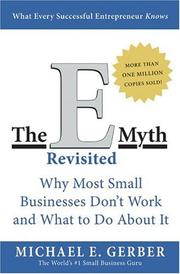
The definitive small-business operations book; most funeral homes are small family businesses, and Gerber's systems-thinking framework directly addresses the trap of being a skilled technician who struggles as an owner — the final, essential mindset shift before entering independent practice.
Discussion
Keep reading
Paths that share books, cover the same subject, or open a related topic.