Forensic Pathology: The Best Books on the Autopsy and the Medical Examiner, in Order
Forensic pathology is a medical specialty concerned with establishing cause and manner of death, and most of what the public knows about it comes from crime fiction. This path is arranged to correct that: it starts with plain accounts of what an autopsy is and what happens to a body, moves through the memoirs of working medical examiners, then to the professional reference texts where the actual method lives, and finally to the two things the specialty relies on when there is no intact body and to the sociology of the office that employs it. It is descriptive throughout — nothing here is instructional, and none of it is a guide to solving crimes.
What an Autopsy Actually Is
BeginnerGet a clear, non-fictional picture of post-mortem examination, the vocabulary of cause versus manner of death, and where forensic pathology sits among the forensic sciences.
▸ Study plan for this stage
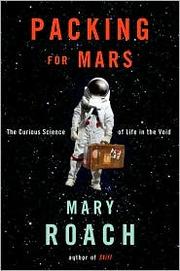
Pace: 4–5 weeks, about ten days a book. Stiff and Working Stiff are trade non-fiction and read quickly; Forensic Science is a Very Short Introduction of about 150 pages and is dense for its length but takes only a few evenings. Note the difference in register: Roach is a humourist writing about donated ca
- Cause of death, mechanism of death and manner of death — three different questions, with only the last being a ruling rather than a finding
- The five manners: natural, accident, suicide, homicide, undetermined, and how much of the office's work turns on the last
- The order of an autopsy: external examination, evidence collection, the Y-incision, evisceration, organ dissection, histology and toxicology
- The distinction between a hospital autopsy performed with consent and a medicolegal autopsy performed under statute
- The medical examiner and the coroner as two different systems, with different qualifications and different powers
- Where forensic pathology sits among the forensic sciences, and Fraser's candour about how much claimed certainty in the neighbouring disciplines does not survive scrutiny
- That memoirs present selected cases, reconstructed afterwards from records and memory
- State the difference between cause, mechanism and manner of death using one death you can describe in a sentence.
- Why is manner of death a ruling rather than a finding, and who has the authority to make it?
- What is done to a body during an autopsy, in order, and what is each step for?
- Which forensic disciplines does Fraser identify as having the weakest scientific foundations, and what is his evidence?
- Which parts of Melinek's fellowship year were routine, and how does the ratio of routine to notable compare with a television depiction?
- Write out the sequence of a standard medicolegal autopsy from Melinek's account, step by step, and mark for each step what evidence it can generate. Keep the sheet; the reference texts in stage three will fill in what each step actually examines.
- Take three deaths described in Working Stiff and write the cause, mechanism and manner for each in the correct form. Then find the one where Melinek herself says the manner was arguable.
- Using Fraser's Very Short Introduction, list the forensic disciplines by the strength of their scientific base as he assesses it, and note where pathology falls in that ranking.
- Read Roach's chapter on decomposition, then write down every question it raises that you cannot yet answer. Stage four exists to answer them.
Next up: You have the vocabulary and the procedure; the memoirs in the next stage let you watch experienced pathologists reason from a body to a conclusion, and to see them get it wrong.
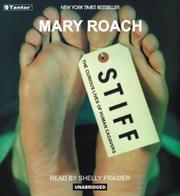
Roach's survey of what happens to donated and examined bodies is the least intimidating entry point in print, and it establishes the basic fact that a dissected body is a routine object of medical work. Start here so the later clinical material reads as procedure rather than as shock.

A short, sober map of the forensic sciences by a former head of a forensic service — it places pathology beside toxicology, trace evidence and DNA, and is candid about how much of the field's claimed certainty does not survive scrutiny. Catalogued here under the bare title Forensic Science; it is the Oxford Very Short Introduction.

Two years of a New York medical examiner's fellowship, written with her husband, covering ordinary deaths as much as notable ones. Read it third: it is the first book here written from inside the specialty, and it converts the general picture into a job description.
The Medical Examiners
IntermediateSee how experienced pathologists reason from a body to a conclusion, and where that reasoning has been wrong.
▸ Study plan for this stage
Pace: 5 weeks, roughly ten days each. All three are memoirs and read easily, but read them as testimony rather than as evidence: each author selected the cases, wrote them up long afterwards, and had a professional reputation in play. Unnatural Causes covers disasters with mass casualties, homicides and t
- Reasoning from findings to conclusion: how a pathologist moves from an injury pattern to a mechanism to an opinion
- The limits of expert opinion in court — what can be stated to a reasonable degree of medical certainty and what cannot
- Cross-examination as a test of the reasoning rather than of the finding, which is Shepherd's most useful theme
- Contested cases and revisited opinions, and the professional cost to a pathologist of changing one
- Scene context as an input to the post-mortem: what the pathologist should be told, and the risk of being told too much
- The medical examiner's office as a public institution, and what happens when its head becomes a public figure
- Gallop's angle: the pathologist's finding as one input among many at a scene, arriving alongside trace, biology and scene reconstruction
- In one of Shepherd's contested cases, what exactly was disputed — the finding, the interpretation, or the certainty attached to it?
- What does Shepherd say about the effect of knowing the police theory before the post-mortem? What safeguard does he propose?
- Noguchi's celebrity cases made his office famous. What did that do to the work, on his own account, and on his critics'?
- In When the Dogs Don't Bark, name a cold case that turned on evidence the original post-mortem did not consider. What kind of evidence was it?
- Across these three, what proportion of the reasoning would be reproducible by another pathologist given the same body?
- Pick two cases from Unnatural Causes and write out the chain from finding to opinion for each: injury observed, mechanism inferred, alternative explanations, and the strength of the conclusion. Mark the weakest link in each chain.
- Take a case where Shepherd's opinion was later challenged and write both the opinion and the challenge in their strongest forms, then say what additional evidence would settle it. Do not decide who was right.
- Read Coroner alongside one contemporaneous news account of the same case and note where the two differ. That difference is what a memoir does to a record.
- Using Gallop's account of a single scene, list every specialist who contributed and what each contributed. Then mark the point at which the pathologist's finding entered, and what it changed.
Next up: Every conclusion in these memoirs rests on injury classifications, timing estimates and toxicology the authors never spell out; the reference texts are where that method actually lives.
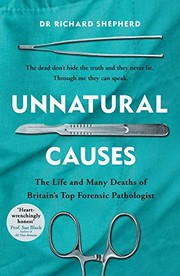
Britain's best-known forensic pathologist across a career of some 23,000 post-mortems, including disasters and contested cases. His account of testifying, being challenged and later being investigated is the most honest thing on this path about the limits of expert opinion. His follow-up, Unnatural Death, does not resolve in our catalogue.
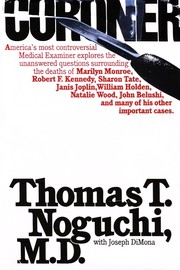
The Los Angeles County chief medical examiner of the 1960s and 70s, and a deliberately awkward inclusion: Noguchi's celebrity casework made him famous and also got him removed from office twice. Read it as a case study in what happens when a medical examiner's office becomes a public stage.

Gallop is a forensic scientist rather than a pathologist, and that is why she is here: her memoir shows the pathologist's findings arriving as one input among many at a scene, and several cold cases turning on evidence the original post-mortem never considered.
The Clinical Method
IntermediateRead the professional reference literature — the injury classifications, timing estimates and toxicology on which the memoirs' conclusions actually rest.
▸ Study plan for this stage
Pace: 8–12 weeks, and this stage changes what reading means. Be clear about what these three books are: DiMaio's Handbook of Forensic Pathology and Knight's Forensic Pathology are professional medical texts written for pathologists and pathology trainees — they assume gross anatomy, histology, medical ter
- Time since death: rigor, livor and algor mortis, the vitreous potassium method, and the width of the error bars on every one of them
- Blunt force injury classification — abrasion, contusion, laceration — and the specific distinction between a laceration and an incision that non-pathologists get wrong
- Sharp force injury: stab versus incised wound, track direction, and what a wound can and cannot say about the weapon
- Gunshot wounds: entrance and exit characteristics, range determination from soot and stippling, and the field DiMaio is the standard authority on
- Asphyxia and its subtypes, and why it is the area with the least specific autopsy findings and the most contested opinions
- Sudden natural death, which is the majority of a real caseload and almost none of the memoir material
- Post-mortem artefact and the changes that mimic injury — the commonest source of error in the whole discipline
- How forensic toxicology entered death investigation through the New York office of the 1910s and 1920s, which is what Blum's popular history supplies
- Given rigor, livor and body temperature at a scene, what range can you state for time since death, and what is the honest width of that range?
- How do you distinguish a laceration from an incised wound, and why does the distinction matter to an investigation?
- What features determine range of fire, and at what distance do they stop being informative?
- Which asphyxial deaths leave reliable autopsy findings and which leave essentially none?
- Name four post-mortem artefacts that can be mistaken for antemortem injury, and how each is excluded.
- Where do the memoirs in stage two state conclusions more confidently than these texts would support?
- Take one case narrated in Unnatural Causes or Working Stiff, look up every injury it mentions in DiMaio's Handbook, and rewrite the case in the Handbook's classification language. The translation is the exercise, and the vocabulary loss and gain is the lesson.
- Work the time-since-death chapter with a specific worked scenario — temperature, ambient conditions, body mass — and compute the interval by each available method. Then compare the ranges the three methods give you.
- Build your own quick-reference sheet on gunshot range determination from DiMaio: soot, stippling, muzzle imprint, and the distances associated with each. Check it against Knight's treatment of the same subject and note every disagreement.
- Use Knight's Forensic Pathology the way it is meant to be used: pick five specific questions raised by the memoirs and look up each. Record how long each lookup took — that is the skill this stage is training.
- Read The Poisoner's Handbook's account of one poison and then find the corresponding toxicology material in the reference texts. Write half a page on what the popular history left out, and whether leaving it out changed the story.
Next up: The method assumes an intact body; the next stage covers what happens when there is only bone, decomposition or a mass grave to work from.
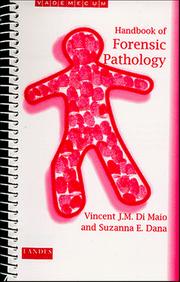
The concise professional handbook by the author of the standard gunshot-wounds text, covering the examination systematically: time of death, blunt and sharp injury, asphyxia, natural death. This is a reference book, not a narrative, and it is the point at which the path stops being readable in an evening. Note that asking our catalogue for DiMaio's Forensic Pathology returns this same record, so only one of the two appears here.
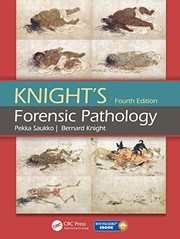
The major English-language textbook of the specialty, Bernard Knight's work continued by Saukko. Use it after DiMaio's handbook as the fuller treatment to look things up in — nobody reads it straight through, and the study plan for this stage treats it accordingly.
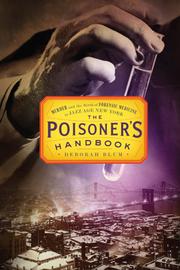
The history of how toxicology became part of medical death investigation, through the founding of the New York medical examiner's office in the 1910s and 20s. Placed with the reference books because it explains where half the laboratory work in them came from, and it is far more readable than either.
When There Is No Intact Body
IntermediateUnderstand what forensic anthropology and taphonomy contribute when a pathologist has only skeletal or decomposed remains.
▸ Study plan for this stage
Pace: 6–7 weeks, roughly ten days a book. All four are written for a general reader and none assumes the medical background of stage three, though they will read very differently now that you have it. Death's Acre describes human decomposition research on donated bodies at an outdoor facility; Dead Men Do
- Taphonomy: what happens to a body in a given environment over time, and why systematic outdoor research was needed to quantify it
- The decomposition sequence and its dependence on temperature, insects, moisture, burial depth and scavenging
- Accumulated degree days as a way of making time-since-death estimates comparable across environments
- The biological profile from skeletal remains — age, sex, stature, ancestry — and the confidence interval attached to each element
- Antemortem, perimortem and postmortem trauma on bone, and why the middle category is the hardest and the most consequential
- Identification: dental records, DNA, medical hardware, and the difference between exclusion and positive identification
- The different purpose of a mass-grave exhumation — legal testimony about a population and a pattern, rather than a certificate for an individual
- Maples's precision about the limits of what a skeleton supports, which is the corrective these narrative books most need
- What can a body farm establish that a laboratory cannot, and what is the practical output for an investigator at a scene?
- Which elements of the biological profile are most reliable from a skeleton, and which are most often overstated?
- How do you distinguish perimortem fracture from postmortem damage, and why is the distinction so often argued in court?
- What is different about the questions a forensic anthropologist is asked at a war-crimes exhumation compared with a domestic homicide?
- Where does Maples say a skeleton simply cannot answer the question being put to it? Find two specific examples.
- Build a decomposition timeline from Death's Acre for one specified environment, with the stages and the approximate intervals, then adjust it for a body in water and for a shallow burial. The comparison is the whole content of taphonomy.
- Take one identification described by Maples and one by Black and write out, for each, the evidence used and the confidence claimed. Mark where the claim is a positive identification and where it is an exclusion.
- Read Koff's account of a single Rwandan or Bosnian exhumation and write out the chain of custody and documentation it required. Compare it with the documentation of a single autopsy from stage two: the difference is the difference between a certificate and a prosecution exhibit.
- Using the reference texts from stage three, look up how they handle skeletal trauma, then read Maples on the same subject. Write half a page on which of the two you would put in front of a jury and why.
Next up: You have now seen the science from the pathologist's, the anthropologist's and the tribunal's point of view; the last stage steps outside all three and looks at the office that produces the ruling.
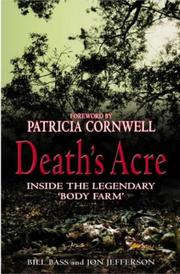
Bass founded the University of Tennessee's outdoor decomposition facility — the original body farm — and this is his account of why systematic decomposition research was needed at all. Read it first in this stage because time-since-death estimation is the problem the whole sub-field exists to solve.
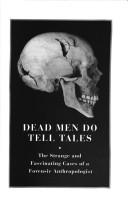
A forensic anthropologist on reading identity, injury and cause from bone, including historical identifications. Maples is precise about how much a skeleton can and cannot support, which is the correction most needed after a stage of memoirs.

Black's memoir is partly about the science of identification and partly about what a career spent with the dead does to the person doing it — including her work in Kosovo. Her companion volume Written in Bone goes bone by bone and is the more technical of the two.
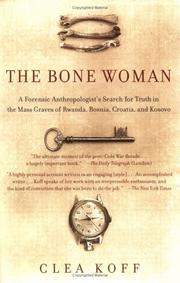
Forensic anthropology done for war-crimes tribunals in Rwanda and the former Yugoslavia, where the purpose of the examination is legal testimony about a mass grave rather than an individual death certificate. It closes this stage by showing the same technique serving a completely different institution.
The Office, Not the Corpse
IntermediateStep back and look at death investigation as an institution — how a cause of death is negotiated, recorded and used.
▸ Study plan for this stage
Pace: 3–4 weeks. Postmortem is an academic ethnography by a sociologist, not a memoir and not a textbook — it assumes no medical background but does assume patience with social-science argument, and it is worth about three weeks read closely, with the methods and the concluding chapters given the most att
- Manner-of-death rulings as institutional outputs produced under constraint, not simply as scientific findings
- The pressures Timmermans observes: families contesting a suicide ruling, police wanting a particular answer, insurers, and the statistical uses the ruling will be put to
- The undetermined ruling as an institutional resource — what declaring it costs and what it protects
- Death certificates as the raw material of public health statistics, so that a local ruling becomes a national number
- Professional jurisdiction: how a medical examiner's office defends its authority against police, coroners and clinicians
- The outside view as a corrective to insider testimony, and what an ethnographer can see that a memoirist structurally cannot
- That an ethnography of one office is not a claim about every office, and Timmermans is careful about that
- What does Timmermans show being negotiated in a manner-of-death ruling, and by whom?
- How does a family's objection to a suicide ruling actually reach the pathologist, and what happens to it?
- What are the institutional consequences of an undetermined ruling, for the office and for the family?
- How does this ethnography change your reading of the memoirs in stage two — which of their certainties now look like institutional positions?
- If manner of death is partly negotiated, what does that imply for national statistics on suicide or overdose?
- Take three cases from Working Stiff or Unnatural Causes and reread them as Timmermans would: identify every party with an interest in the ruling and what each wanted. The memoirs mention these parties in passing; foregrounding them is the exercise.
- Follow one death certificate from Postmortem through to the statistic it becomes, writing each step: examination, ruling, certificate, coding, aggregation. Then look up the current national figure for that manner of death and consider what it is built from.
- Write a one-page defence of the pathologists against Timmermans, using material from stage three: which parts of a ruling are not negotiable, and why. The strongest version of this defence is the point of the exercise.
- Close the path by writing your own summary of what a forensic pathologist can establish, what they can only estimate, and what is decided rather than found — one paragraph each, citing a specific book for every claim.
Next up: This closes the path: procedure, practitioner reasoning, the clinical reference literature, the sciences used when there is no intact body, and the institution that turns all of it into a ruling.
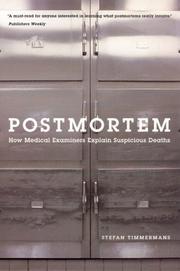
A sociologist's ethnography of a medical examiner's office, and the one genuinely outside view on this path. Timmermans shows manner-of-death rulings being settled under pressure from families, police and statistics, which reframes every memoir you have just read as an account from inside a bureaucracy.
Discussion
Keep reading
Paths that share books, cover the same subject, or open a related topic.