Start with Dubliners. The obvious alternative is to go straight at Ulysses, because that is the book people mean when they say Joyce, and it is the single most common way readers bounce off him permanently. Dubliners is fifteen short stories in ordinary English, most of them under twenty pages, and it is not a warm-up exercise — The Dead is arguably the finest story in the language. It asks nothing of you in advance and it quietly teaches you Joyce's central trick, which is that the meaning of a scene sits in what a character will not say.
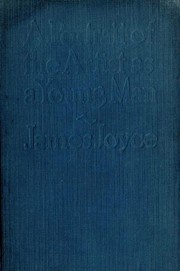
The second book is A Portrait of the Artist as a Young Man, and it should be second for a reason beyond chronology. Its prose ages with its protagonist: baby-talk on page one, schoolboy plainness, adolescent purple, and finally the cold aesthetic theorising of a young man who has decided to become an artist. Watching that transformation is the actual training for Ulysses, where the style changes chapter by chapter for reasons the reader has to infer. Anyone who has read A Portrait of the Artist as a Young Man understands that style is Joyce's subject, not his decoration.
Two small catalogue notes before the sequence proper. Our record for Dubliners carries a duplicated author surname, an artefact of the source data rather than a different book. And Homer's poem, which you will want, is filed under the Greek form of his name.
Reading Ulysses
Ulysses is difficult, and pretending otherwise does nobody a favour. It is also funnier and warmer than its reputation, and the difficulty is unevenly distributed: the first six episodes are readable straight through, episodes seven through twelve get formally strange, and a few later chapters — the parody-history one, the hallucination-play one — are where most abandonments happen.
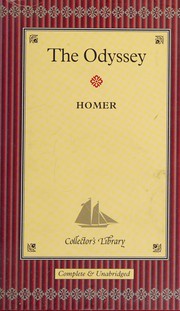
Read The Odyssey first, or at least a good summary of it. You do not need to know Homer to enjoy Joyce, but the correspondences are the scaffolding, and knowing that today's chapter is the Cyclops turns a baffling pub scene into a joke you are in on.
Then pick one companion and use it as you go. Harry Blamires' The new bloomsday book is a page-by-page plain-English retelling: read the chapter, then read Blamires on the chapter, never the other way round. Don Gifford's Ulysses annotated is the reference work — every Dublin street, song and Latin tag identified. It is not a book you read; it is a book you consult when something is clearly a reference and you cannot place it. Using both at once is how people turn a novel into homework.
Richard Ellmann's biography, catalogued simply as James Joyce, is the other genuinely useful support. It is widely considered one of the great literary biographies of the century, and it does something the annotations cannot: it shows you how much of Ulysses is transcribed Dublin gossip.
Finnegans Wake, honestly
Finnegans Wake is a different proposition, and you should decide in advance what you want from it. It is written in a private compound language, it has no plot in any usable sense, and a large majority of people who own a copy have not read it through. Joseph Campbell's A skeleton key to Finnegans wake is the traditional way in, though it imposes more narrative order than the text supports.
Here is the permission most guides withhold: sampling the Wake rather than finishing it is a legitimate outcome, not a failure. Read the opening pages aloud, read the Anna Livia Plurabelle section, listen to a recording, and stop when you have had the experience you came for. Plenty of serious readers, and some Joyce scholars, treat it exactly this way.
Where to stop
For most people the honest stopping point is after Ulysses, and there is no shame in it — three books, one of them a masterpiece, is a complete relationship with a writer. If Joyce's late direction interests you more than his early one, the natural next step is Samuel Beckett, who worked as his assistant and then spent a career subtracting everything Joyce added.
Follow the full reading path →