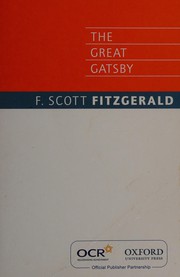
Start with The Great Gatsby. The obvious alternative is to be tidy about it and open with This Side of Paradise, the 1920 debut that made him famous at twenty-three, and that is a mistake. The debut is a gifted undergraduate's scrapbook — verse, playlet fragments, letters, a plot that changes its mind twice — and it will convince you that Fitzgerald was a young man with enormous talent and no control. The Great Gatsby shows you what he did once he had the control, and it takes an afternoon.
The second reason is structural rather than aesthetic. Nearly everything Fitzgerald wrote before 1925 reads differently once you know what he was building toward, and nearly everything after it reads as an argument with it. Gatsby is the hinge of the career, so putting it first turns the rest of the shelf into a coherent story instead of a chronology.
The four novels
After Gatsby, go backwards. This Side of Paradise is worth reading second precisely because you now know what the author became; its shapelessness stops being a flaw and becomes evidence. The Beautiful and Damned, from 1922, is the transitional book — a real novel about a marriage corroding under money and drink, badly overlong, and unmistakably the rehearsal for Tender.
Then Tender is the Night, which most readers who love Fitzgerald end up preferring to Gatsby. It is his most adult book and his most damaged one, and it comes with a genuine order controversy of its own. The version he published in 1934 opens in the middle, from Rosemary's point of view, and reveals the Divers' history in flashback. Fitzgerald later came to think that was a mistake, and after his death Malcolm Cowley assembled a straightened-out chronological edition from his notes. Read the 1934 text. The delayed reveal is the whole moral engine of the book — you are meant to be seduced by the Divers before you learn what they cost — and Cowley's version trades that for a clarity nobody needed.
Finally The last tycoon, the Hollywood novel he died in the middle of. Roughly half of it exists, and even unfinished it contains the best prose he ever wrote sentence for sentence. Editions differ substantially: Edmund Wilson assembled the familiar 1941 text from drafts and notes, while later scholarly editions restore Fitzgerald's own working title and a different arrangement. Any of them will do; just know you are reading an editor's reconstruction, not a book.
The stories are not a side dish
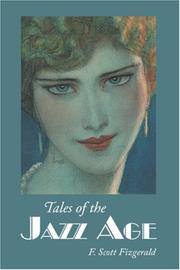
Fitzgerald wrote roughly 180 stories, most of them for money, and a dozen of them are as good as the novels. Tales of the Jazz Age is the contemporary collection to read for the period flavour, but the efficient route is The Short Stories of F. Scott Fitzgerald, the large Bruccoli-edited selection. Start there with Babylon Revisited, The Rich Boy and Winter Dreams — the last of which is Gatsby in miniature, written three years earlier.
The wreckage, and where to stop
The one non-fiction book that belongs on this path is catalogued here under its full original title, beginning The crack-up — the posthumous omnibus Edmund Wilson assembled of the confessional essays, notebooks and letters. It is where Fitzgerald wrote that the test of a first-rate intelligence is holding two opposed ideas at once, and where he took his own collapse apart in public. Read it last among the primary works. Read early and it will colour everything; read after the novels and it explains them.
Most readers should stop there. If you want the life, Matthew Bruccoli's Some sort of epic grandeur is the standard scholarly biography — thorough, unromantic, and the correct corrective to the myth Fitzgerald and Hemingway jointly built. If the modernist context is what draws you, the natural next path is James Joyce, whose Dublin was doing to the novel in the same decade what Fitzgerald was doing to American prose.
One honest caveat about the whole shelf: it is small. Four novels, one fragment, a few dozen durable stories. Fitzgerald is an author you can finish, which is unusual and rather freeing.
Follow the full reading path →