Joyce Carol Oates Reading Order: Where to Start
Joyce Carol Oates has published more than sixty novels, dozens of story collections, plays, essays, and several books under pen names — no reading order can be complete, and anyone who claims otherwise is bluffing. What this path offers instead is a defensible selection: two short entry points, the late-1960s quartet novels that won her the National Book Award, three of the big ambitious later novels, and the stories and nonfiction that show the range. Everything here is chosen because it is either the best door in or the work most often argued to be essential.
Two short ways in
IntermediateMeet Oates in her most concentrated mode before committing to a six-hundred-page novel, and learn what her violence is actually for
▸ Study plan for this stage
Pace: 2–3 weeks. Black Water is 154 pages and should be read in a single sitting — the compression is the effect, and breaking it across evenings dissolves it. We Were the Mulvaneys is 454 pages and patient by comparison: ~30 a night for two weeks.
- Black Water's method — one sustained present tense inside a drowning consciousness, with time looping back on itself as the water rises
- A roman à clef told without names: the senator is never identified, and the anonymity is what lets the book be about power rather than about one scandal
- Violence in Oates as an instrument for opening a character rather than as spectacle. The question is always what the moment exposes about who holds power
- We Were the Mulvaneys works at the opposite scale — a family across years, narrated by a younger brother, with the destructive event early and everything afterwards consequence
- Shame as social mechanism: the assault damages the family less than the town's response to it does
- The two registers Oates works in — sustained compression and patient accumulation — and the fact that she does both at full strength
- Prolificacy as a critical problem: with sixty-odd novels a reader has to select, and selecting means having criteria. Start forming yours here
- What does Black Water's sustained present tense do that past-tense narration could not?
- Why does Oates leave the senator unnamed, and what would the book lose if she named him?
- Who narrates We Were the Mulvaneys, and what does that choice keep off the page?
- What actually destroys the Mulvaney family — the assault, the father's response, or the town's?
- On the evidence of these two books, what is Oates's violence for?
- Read Black Water in one uninterrupted sitting and mark where the loops repeat with variation. The repetition functions as a clock.
- Before starting the Mulvaneys, write down what you expect from a family novel, then note which expectations Oates honours and which she declines.
- Take a page from each book and compare sentence lengths. The same writer running two entirely different machines.
- Draft your own criteria for which Oates books you would read next, and keep them. You will revise them repeatedly across this path.
Next up: Both of these are late books; the quartet takes you back to the 1960s work that made her reputation and shows the same instincts at their most ferocious.
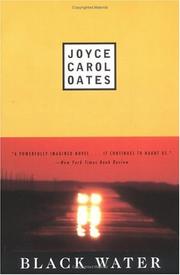
A short, relentless novella retelling Chappaquiddick from inside the drowning woman's head. The best possible first Oates: you can read it in an evening and it demonstrates her entire method under pressure.
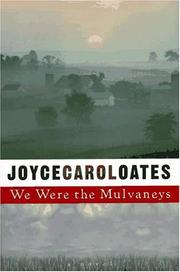
The family novel that became her widest-read book, following one rural New York household's disintegration after an assault. Second because it shows the domestic, patient side of Oates that Black Water's compression hides.
The Wonderland Quartet
IntermediateRead the late-1960s sequence that established her, and see the American social panorama she was building novel by novel
▸ Study plan for this stage
Pace: 7–8 weeks. A Garden of Earthly Delights runs 440 pages across three generations — three weeks at 25 a night. Expensive People is 256 pages and much faster, about a week. them is 508 pages and the most demanding of the three; give it three weeks. Note that the quartet's fourth novel sits outside this
- The quartet is not a serial story: no shared characters, but a deliberate climb through American social strata — rural poverty, then the suburbs, then the city
- A Garden of Earthly Delights' three-generation structure and its account of migrant labour, which almost nothing else in postwar American fiction covers
- Expensive People's narrator is an adolescent confessing to murder, and he is unreliable in a way that keeps undermining the confession itself
- Satire as a mode Oates rarely gets credit for — the suburbs of Expensive People are funny well before they are grim
- them's Detroit and its riot, plus the framing device of a former student, with Oates staging her own relationship to the material inside the book
- The National Book Award for them and what it meant for a novelist barely past thirty
- The 1960s books read at high pressure: long paragraphs, present-tense violence, class as a physical force. This is the ferocity people mean when they call her Gothic
- What connects the three novels, given that the characters do not?
- How does the move from country to suburb to city change the prose, not merely the setting?
- Should you believe the narrator of Expensive People? What in the text argues each way?
- What does the fictional framing device do to a novel about a real riot?
- Which of the three is the best novel, and which is the most useful for understanding Oates? They may not be the same book.
- Read the last fifty pages of them in one sitting. The riot sequence loses its force when taken in installments.
- Keep a class ledger: for each novel, note what the characters own, what they want, and what they fear losing. The quartet's design is in that table.
- Read the opening confession of Expensive People twice, listing on the second pass everything that could be false.
- Compare the violence in them with the violence in Black Water — twenty-five years apart, and the difference in purpose is worth naming precisely.
Next up: The quartet shows what she could do at thirty; the big later novels show what she did with the same instincts and four hundred more pages.
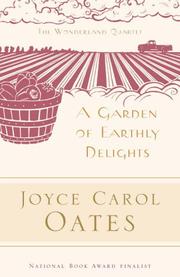
The first of the quartet, tracing a migrant worker's daughter across three generations of rural poverty and its escape routes. Read it first — the quartet is not a serial story, but it does move deliberately up the class ladder.
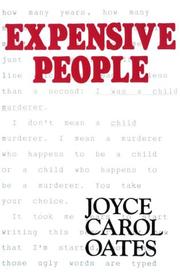
The suburban satire narrated by an unreliable adolescent murderer, and the funniest and most formally playful of the four. Second by publication order, and a useful corrective if the first book left you expecting only grimness.
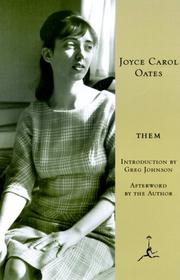
The Detroit novel that won the National Book Award in 1970 and still reads as her most ferocious. Placed third because it completes the movement from country to suburb to city that the earlier two set up.
The big later novels
IntermediateTake on the long, ambitious books of her maturity and judge for yourself which ones justify their length
▸ Study plan for this stage
Pace: 10–12 weeks — much the longest stage in this path. Blonde is 752 pages; at 30 a night that is a month, and the childhood section deserves to be taken slowly. The Falls is 496 pages and more conventionally propulsive: three weeks. The Gravedigger's Daughter is 592 pages and quieter: a month. Do not a
- Blonde is explicitly a novel and not a biography — Oates invents freely and says so. Reading it as a life of Marilyn Monroe is the one mistake that ruins it
- Norma Jeane and the public figure as two separate constructed people, with the book arguing that the second was manufactured by an industry
- Scale as a formal choice: seven hundred pages to enact a life being consumed, where a shorter book would only summarise it
- The Falls' two-part structure, in which a marriage novel opens out into an environmental scandal — private life meeting corporate poisoning
- Niagara as a governing image, exactly as the pear tree or the rising water function elsewhere. Oates thinks in single controlling images at every length
- The Gravedigger's Daughter drawn from her own grandmother's life: a refugee family, violence, and a woman reinventing herself under a new name
- Reinvention as the through-line of all three, and the reason this stage sits after the quartet rather than before it
- Where does Blonde openly invent, and what does the invention let it say that a biography could not?
- What does the length of Blonde accomplish — what exactly would be lost at three hundred pages?
- How does The Falls join a private marriage to a public scandal, and does the join hold?
- What does The Gravedigger's Daughter take from the earlier books, and what is new in it?
- Do all three justify their length? Answer separately for each; they are not the same answer.
- Read Blonde's childhood section and then the first chapter of A Garden of Earthly Delights. The same interest in a girl shaped by poverty, forty years apart.
- Keep a name log for Blonde — who calls her what, and when. The novel is organised around it.
- Find a review of Blonde from the year it appeared and read it after finishing, noting what the reviewer assumed the book was trying to be.
- Pick the one of these three you would cut from this path and defend the cut in a paragraph. Selection is the skill this author demands.
Next up: The novels are the bulk of the work but not the whole case for it — the stories and the two nonfiction books show what she does when there is no room to be prolific.

Her seven-hundred-page invented life of Marilyn Monroe, a Pulitzer finalist and the book most often named her masterpiece. Read it once you trust her, because it is a serious investment and openly a fiction rather than a biography.

A Niagara Falls marriage novel that widens into the Love Canal environmental scandal. Second here as the more conventionally satisfying of the big late books.
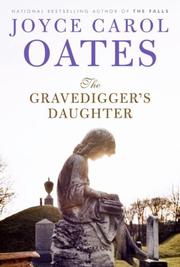
Drawn from her own grandmother's life, following a refugee family's daughter through reinvention after violence. Placed last because it reads as a summation of themes running through everything earlier in this path.
The stories and the nonfiction
IntermediateCover the short fiction that many readers consider her strongest form, plus the two nonfiction books that stand entirely apart from the novels
▸ Study plan for this stage
Pace: 4–5 weeks. Read the title story of Where Are You Going, Where Have You Been? first and on its own; the 352-page collection around it then goes at three or four stories a sitting over two weeks. On Boxing is 128 pages of essays and makes one long evening. A Widow's Story is 415 pages and emotionally
- The title story as the most anthologised American short story of the last sixty years: a teenage girl, a stranger at the door, and a threat that never has to be named
- What the story withholds — no violence on the page, no confirmation of what the stranger is — and why that restraint is the entire effect
- The case that stories are her strongest form: a form in which prolificacy is a virtue rather than a liability, and in which nothing is allowed to sag
- On Boxing's argument that the fight is not a metaphor for anything — it is its own thing, and writing about it must refuse the analogy on offer
- Boxing as a key to the fiction: consenting violence, spectatorship, and bodies used up in public. Everything the novels do with violence is stated plainly here
- A Widow's Story as the one book where the machinery stops — the author of sixty novels unable to work, and honest about it
- The dispute over what the memoir leaves out, raised by readers on publication. Note it, and decide for yourself what a grief memoir owes the record
- What is the stranger at the door, and what does the story gain by never answering?
- Why does the story work at that length, and what would a novel-length version lose?
- What is On Boxing's central claim, and where does the book refuse a metaphor it is being offered?
- How does On Boxing change your reading of the violence in the quartet?
- What can the memoir say that none of the fiction could, and what does it decline to say?
- Read the title story twice in one evening, marking on the second pass every sentence in which the stranger states something that cannot be true.
- Read On Boxing straight through, then reread one violent scene from them and state in a sentence what the essays taught you about the novel.
- Pick three stories from the collection and write one line on each about what its ending withholds. Withholding is the collection's technique.
- After the memoir, revise the selection criteria you drafted in the first stage and write the final version — which five Oates books you would give someone, and in what order.
Next up: You now have a defensible route through an impossible body of work and, more usefully, your own criteria for choosing the next of the sixty novels.

Built around the most anthologized American short story of the last sixty years, and the quickest demonstration of why her reputation survives the sheer volume of output. Read the title story first even if you read nothing else here.

A short book of essays on the fights, and widely held to be among the best things ever written about the sport. It reads as a key to the violence everywhere in her fiction.

The memoir of the months after her first husband's sudden death, and the one book where the famous productivity stops. Last, because it is the only place the writer of all these novels appears undefended.
Discussion
Keep reading
Paths that share books, cover the same subject, or open a related topic.