Samuel Beckett Reading Order: Where to Start
Almost everyone who bounces off Beckett started in the wrong place — usually the trilogy, which is where his prose abandons plot, character, and eventually the body itself. This path starts instead with the plays, where the same bleak comedy is immediately legible on the page, then works back through the early novels before taking on Molloy, Malone Dies, and The Unnamable in order. The late minimalist prose and a biography close it out, once you have enough context for either to mean anything.
Start with the plays
IntermediateMeet Beckett where he is funniest and most accessible, and learn to hear the rhythm of the dialogue — the single most useful skill for everything that follows
▸ Study plan for this stage
Pace: 1–2 weeks, and both of these are short. Waiting for Godot is two acts and reads in an evening — an act per sitting is plenty. Endgame and Act Without Words is 96 pages and should be done in one sitting. Read both aloud if you possibly can: at speaking speed they are comedies, and silently they are n
- The vaudeville double act — Vladimir and Estragon as a cross-talk pair, with the boots, the hats and the music-hall timing. The bleakness is delivered as comedy, and missing the comedy is the commonest way to misread Beckett
- The rhythm: short exchanges, repetitions with tiny variations, and pauses printed as stage directions. The Pause is content, not punctuation
- Godot's two-act structure repeats act one with things removed — the tree has leaves, Pozzo has lost his sight, Lucky has lost his speech. Subtraction is Beckett's basic move and it governs the entire path
- Endgame takes away even the open road and the tree: one room, four characters, no exit, and a window onto nothing
- Act Without Words strips out language altogether — a man, and objects that withdraw whenever he reaches for them
- Lucky's speech as academic reasoning collapsing under its own qualifications, the same permutation-logic that will take over Watt
- Nothing happens, twice, and the plays still hold. Working out why is the skill everything later in this path depends on
- What exactly changes in act two of Godot, and why is the effect stronger for the changes being so small?
- Where do you laugh in Godot, and what is the joke doing structurally at that point?
- What does Hamm's opening speech in Endgame tell you about the world outside the room, and how far should you trust him?
- Read a page aloud observing the pauses literally. What does the silence do that the dialogue cannot?
- Beckett preferred Endgame to Godot. On the evidence of the two, why might he favour the more claustrophobic one?
- Read the boot-and-hat business aloud with someone else at proper speaking speed. Silent reading destroys the timing, and the timing is the play.
- Mark every Pause and Silence on one page of Endgame, read it observing them, then read it ignoring them. The difference is the lesson.
- Before you look at any criticism, write down your own answer to what Godot is. Keep it — it is worth revisiting after the trilogy.
- List what Endgame has that Godot does not, and what it lacks. That subtraction column is the shape of the whole career.
Next up: You can now hear Beckett's rhythm and recognise his habit of taking things away — which is precisely what the early novels start doing to plot.

The right entry point for essentially every reader: two acts, four characters, and a vaudeville comedy about waiting that happens to be the most influential play of the twentieth century. Read it aloud if you can — the jokes only work at speaking speed.

Bleaker, tighter, and Beckett's own favorite of his plays. Second because it shows you what he does when he strips away even the open road and the tree, which is exactly the movement the novels will make.
The early novels
IntermediateSee Beckett while he is still writing recognizable comic fiction, and watch the plot and scenery start to fall away book by book
▸ Study plan for this stage
Pace: 2–3 weeks. Murphy is 201 pages and behaves like a comic novel — 30 pages a night gets it done in a week. Watt is 255 pages but much slower, because its permutation passages are built to be endured rather than savoured. Give it two weeks and allow yourself to skim a list once you have understood what
- Murphy is a genuinely funny conventional novel — a plot, a love triangle, London, a mental hospital. Beckett could write this, and everything afterwards is a choice not to
- The mind as three zones in Murphy's chapter 6, with the rocking chair as its instrument: the first full appearance of the Beckett figure who wants out of the body
- Watt's permutations — the Lynch family, the arrangements of furniture, the dog and the leftover food — logic run far past the point of any use
- Language turning suspect in Watt: words coming loose from things, sentences inverted, and an appendix of material Beckett tells you outright cannot be used
- The narrator problem begins here — Watt reaches us through Sam, second-hand and unreliable. The trilogy will make that the entire subject
- Both were written in English, before the switch to French; the exuberant vocabulary of Murphy is exactly what Beckett later gave up on purpose
- What is Murphy actually trying to achieve, and why does the rocking chair serve it?
- Where in Watt does the prose first stop behaving like narration, and what replaces it?
- Who is telling Watt, and where does the text admit the account is compromised?
- What does Beckett gain by removing the comic scaffolding of Murphy, and what does he lose?
- Set a paragraph of Murphy beside one of Watt: what has happened to the sentences?
- Read Murphy's chapter 6 twice — once for the joke, once for the argument. It is the clearest statement of the mind-and-body problem Beckett spent fifty years on.
- Read one of Watt's permutation passages out loud in full, then skim the next one. Decide which reading you think Beckett wanted. There is no wrong answer, but there is a wrong assumption — that you were meant to enjoy it.
- Keep a running list of what each book still has: a plot, a city, a job, a name. You will be crossing entries off it through the next stage.
- Note the moment in Watt where you first felt lost, and write down the cause: vocabulary, syntax, or a refusal to say what happened. It is nearly always the third.
Next up: You have watched plot, setting and reliable narration come loose one book at a time, which is exactly the preparation the trilogy needs — it removes the last of them and assumes you saw it coming.

His first published novel and by some distance the most conventionally enjoyable — a genuinely funny book about a man who wants only to be tied to his rocking chair. Read it before the trilogy so you know Beckett could write a normal novel and chose not to.
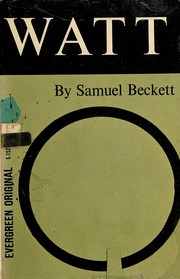
The hinge book, where the obsessive permutations and logical loops take over from story. Placed second because it is the last time you will recognize a house, a job, and a master before the trilogy dissolves all three.
The trilogy, in order
BeginnerRead the three novels as the single receding movement they are, and be able to say what each one removes that the last still had
▸ Study plan for this stage
Pace: 5–7 weeks. Read Molloy first on its own: 247 pages in two halves, and the halves are best separated by a day or two so the switch of narrator registers. Then continue into Malone Dies and The Unnamable in the combined volume — its 528 pages open with Molloy again, so go straight past it to Malone. P
- Molloy's two halves — Molloy's journey toward his mother, then Moran's pursuit of Molloy, with Moran ending in Molloy's condition. Neither half explains the other, and that refusal is the design rather than a gap
- The receding scale: Molloy still has a road and a bicycle, Malone has a bed, a pencil and a notebook, and the voice of The Unnamable cannot establish that it has a body at all. Each book removes what the last still held
- Malone's invented characters as a dying man's way of passing the time — and as the tell that Beckett's narrators make up stories precisely to avoid speaking about themselves
- Disorientation is the intended experience, not a failure of comprehension. When you cannot tell who is speaking, or whether an event occurred, the sentence is almost always working as written. This is the single thing to hold on to in this stage
- The famous close of The Unnamable, and the collapse of paragraphing before it: the form enacts the impossibility of stopping rather than describing it
- Beckett wrote these in French and translated them himself, so the plainness is an achievement rather than a native register
- The comedy survives all of it. The sucking stones, Malone's inventory of his possessions — these are jokes, and reading the trilogy as unrelieved gloom loses half the book
- What does Moran's half of Molloy have that Molloy's half does not, and what has he lost by the end of it?
- Name one thing each of the three novels takes away that the previous one still had.
- What is Malone doing with the stories he tells about other people, and why does he keep breaking off?
- Where did you lose the thread in The Unnamable — and honestly, was it because the prose was hard or because there was nothing left to hold?
- What is the joke in the sucking-stones passage, and what else is it about?
- Read the sucking-stones passage aloud. It is comic, exhausting and mathematically exact, and it is the best short demonstration of the method in the whole trilogy.
- Keep two columns as you read — what remains, and what has gone — with an entry per novel. It converts a vague feeling of dissolution into something you can point at.
- When a passage defeats you, mark it and keep going rather than rereading. Revisit the marks at the end of each novel: most will not resolve, and discovering that yourself is worth more than being told.
- Save the last thirty pages of The Unnamable for one uninterrupted sitting and read them as sound. It is the only way the ending works.
- Write one sentence after each novel naming who you think is speaking, then set the three sentences side by side.
Next up: Once you have followed the voice down to almost nothing, the short late pieces read as an act of rebuilding rather than a further reduction — and the life finally explains both.

Two narrators, two journeys, one collapsing body — still the most novel-like of the three, and the only sensible place to enter the sequence. Do not start Beckett here despite the reputation; start here only once the plays and Murphy are behind you.
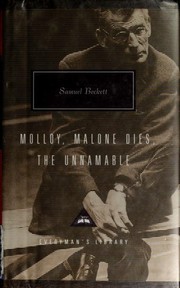
A dying man in a bed telling himself stories to pass the time until the end. Second because it takes Molloy's decay to its conclusion and keeps only a voice and a pencil.
The late work and the life
BeginnerFollow Beckett's compression to its endpoint in the short late prose and drama, and place the whole career against the biography
▸ Study plan for this stage
Pace: 6–8 weeks, nearly all of it biography. Krapp's Last Tape (106 pages) and Company (87 pages) are an evening each and both reward a second reading in the same week. James Knowlson's Damned to Fame is 872 pages — at 25 a day that is about five weeks, and it can run in parallel with rereading the short
- Krapp stages the trilogy's problem physically: a man listening to recordings of his younger self and unable to recognise him, with voice separated from person by a tape recorder
- The banana business and the ledger in Krapp — Beckett's comedy of the stubborn body persisting into the late work
- Company's second-person address: a voice speaking to someone lying in the dark, and the open question of whether the two are the same. The trilogy's unanswerable question, made tender instead of terrifying
- Compression as the late method — Company does in 87 pages what The Unnamable does in two hundred, and its memories are drawn from Beckett's own childhood
- From Knowlson: the Resistance work and the flight to the south of France, the postwar Paris years, the 1946 turn toward writing from impotence and ignorance, and the decision to write in French
- Knowlson wrote with Beckett's cooperation and access — the authorised life, which is both its strength and the reason to read it critically
- The life explains the plainness: a second language chosen on purpose, a refusal to interpret his own work, and a near-total absence of self-promotion
- What does Krapp's reaction to his own recorded voice convey that a straight monologue could not?
- Where does the memory material in Company come from, and how does knowing that change the piece?
- What does Beckett's 1946 turn — writing from ignorance rather than mastery — explain about the trilogy you have just read?
- Why did he write in French, and what does the answer suggest about the style of everything in this path?
- Having read the life, which book now looks the most personal, and on what evidence?
- Read Krapp's Last Tape aloud in one sitting, doing both voices — the tape and the man. The gap between them is the play.
- Read Company twice in a week, the second time after Knowlson's chapters on the Foxrock childhood. It is a different piece.
- If 872 pages feel daunting, start with Knowlson's account of the war years — the most gripping stretch of the book, and it pulls you into the rest.
- Go back and reread Waiting for Godot now. What was a funny bleak play in stage one reads entirely differently with the trilogy and the life behind it; this is the real test of the path.
Next up: With the plays, the novels, the late prose and the life all in view, you can reread the trilogy as the deliberate act it was rather than the wall it first appears to be.

One man, one tape recorder, and thirty years of his own voice — the most humanly moving thing he ever wrote and a perfect miniature of the whole method. Read it after the trilogy so the loneliness has weight.
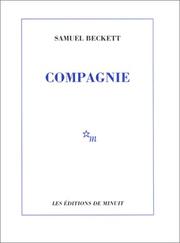
The best of the late prose: brief, strangely tender, and built from fragments of memory addressed to someone lying in the dark. It rewards everything you learned in the trilogy in about eighty pages.
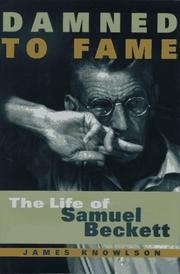
The authorized biography, written with Beckett's cooperation, and the standard account of the life. Save it for last so the wartime years and the Paris decades attach to work you have actually read.
Discussion
Keep reading
Paths that share books, cover the same subject, or open a related topic.