The Best Books on Industrial and Product Design
This curriculum builds from the strategic and philosophical foundations of industrial and product design toward hands-on mastery of process, materials, and human-centered thinking. Starting at an intermediate level, each stage deepens the reader's toolkit—from understanding how great design is conceived, to how it is engineered, prototyped, and ultimately loved by users. The path moves from mindset and method, through material and making, to the business and systemic thinking that separates good designers from great ones.
Design Thinking & Process Foundations
IntermediateEstablish a rigorous mental model of the design process—how to frame problems, iterate on ideas, and center the human experience at every stage.
▸ Study plan for this stage
Pace: 8–10 weeks, ~25–30 pages/day. Allocate roughly 3 weeks per book to allow time for reflection and exercises between titles.
- Human-centered design: Understanding user mental models, constraints, and emotional responses to products (Norman's core thesis)
- The design of everyday things: How affordances, signifiers, feedback, and constraints shape usability and user experience
- Creative confidence: Overcoming fear and self-doubt to generate and iterate on ideas; design is a learnable skill, not innate talent
- The design thinking process: Empathize, define, ideate, prototype, and test as a repeatable cycle for problem-solving
- Rapid prototyping and iteration: Using time-boxed sprints to validate assumptions quickly and reduce risk in design decisions
- Reframing problems: Moving from 'How do I build this?' to 'What problem am I solving for whom?' and why it matters
- Embracing failure as feedback: Treating prototypes and tests as learning tools, not finished products
- Cross-functional collaboration: How diverse teams and perspectives accelerate innovation and catch blind spots
- What is the difference between affordances and signifiers, and why does Norman argue both are essential to good design?
- How does understanding a user's mental model change the way you approach a design problem compared to designing based on technical capability alone?
- What are the five stages of the design thinking process, and how do they differ from traditional problem-solving approaches?
- How does 'creative confidence' relate to your ability to generate and iterate on design ideas, and what are concrete ways to build it?
- What is a design sprint, and how does time-boxing and rapid prototyping reduce risk and accelerate learning in product development?
- How would you reframe a poorly defined design brief (e.g., 'make our app faster') into a human-centered problem statement?
- Conduct a usability audit of three everyday objects (e.g., a door, a coffee maker, a light switch). Document where affordances are clear or missing, where feedback fails, and how Norman's principles explain the friction you encounter.
- Interview 3–5 people about a product they use regularly (not necessarily a digital product). Map their mental model of how it works versus how it actually works. Identify the gap and sketch a redesign that bridges it.
- Run a 90-minute ideation session on a real or hypothetical problem. Generate at least 50 ideas without judgment, then cluster and vote on the top 5. Reflect on what enabled or blocked your creative confidence during the process.
- Design and build a low-fidelity prototype (paper, cardboard, or digital wireframe) of a solution to a problem you've identified. Test it with 2–3 users and document their feedback using the design thinking framework.
- Conduct a 1-day design sprint (compressed version of Knapp's 5-day model) on a small, real challenge. Map the problem, sketch solutions, build a prototype, and test with at least one user. Document what you learned and how you'd iterate.
- Analyze a product you admire (physical or digital) and reverse-engineer its design decisions. Identify the mental models it assumes, the affordances it relies on, and how it uses feedback to guide users. Write a 1-page design brief explaining its human-centered approach.
Next up: This stage establishes the foundational mindset and vocabulary of human-centered design, preparing you to apply these principles to specific design domains (such as UX/UI, industrial design, or service design) and to tackle more complex, systems-level design challenges in subsequent stages.

The canonical text on human-centered design; builds the essential vocabulary of affordances, feedback, and mental models that every subsequent book assumes you know.
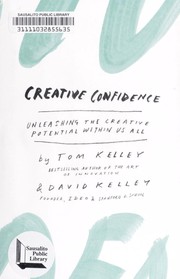
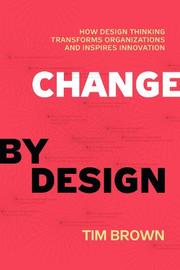
Bridges mindset and method, showing how IDEO's design thinking process works in practice—read second to translate Norman's principles into an actionable creative process.
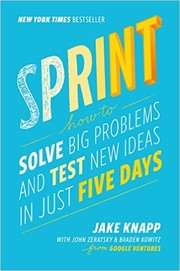
Introduces a concrete, time-boxed framework for rapid prototyping and validation, giving the reader a repeatable process to test ideas before committing to production.
Materials, Form & Making
IntermediateDevelop fluency in the physical language of industrial design—materials selection, manufacturing constraints, and the relationship between form and function.
▸ Study plan for this stage
Pace: 4–5 weeks, ~25–30 pages/day (approximately 150–180 pages total)
- Material properties (strength, stiffness, density, toughness, thermal/electrical conductivity) and how they drive design decisions
- The material selection process: translating design requirements into material specifications using performance indices
- Manufacturing constraints and how different processes (casting, forging, machining, molding, joining) limit or enable form
- The cost-performance relationship: how material and manufacturing choices affect both function and economics
- Sustainability and lifecycle thinking: material extraction, processing, use, and end-of-life considerations
- The form-material-process triangle: how these three elements are interdependent and must be resolved together
- Case studies of real products: understanding why specific materials and processes were chosen for specific applications
- Design trade-offs: recognizing that optimizing for one property (weight, strength, cost, aesthetics) often compromises another
- Why would you choose aluminum over steel for an aircraft fuselage, and what material properties make this decision rational?
- How do manufacturing constraints (e.g., draft angles in injection molding, grain direction in forging) directly influence the possible forms a designer can create?
- Walk through the material selection process: given a design requirement (e.g., 'a lightweight, load-bearing bracket'), how would you use performance indices to narrow material choices?
- What is the relationship between material cost, processing cost, and total product cost, and how should this influence your material selection?
- How do lifecycle considerations (extraction, manufacturing, use, disposal) change the apparent 'best' material choice for a consumer product?
- For a product you use daily, explain why its primary material was chosen over alternatives, considering both technical and economic factors.
- Material property comparison: Select three candidate materials for a specific application (e.g., smartphone housing, bicycle frame, kitchen knife blade). Create a comparison table of key properties (strength, density, cost, thermal conductivity, machinability) and justify which would be best for that application.
- Performance index calculation: Take a design requirement (e.g., 'minimize weight while maintaining stiffness in a cantilever beam') and use Ashby's approach to calculate performance indices for at least five materials, then rank them.
- Manufacturing constraint mapping: Choose a familiar product (e.g., a plastic water bottle, cast aluminum engine block, injection-molded phone case). Sketch or describe how its form is directly constrained by its primary manufacturing process, and identify what the form would look like if made by a different process.
- Cost-performance trade-off analysis: Compare two material choices for the same function (e.g., carbon fiber vs. aluminum for a bicycle frame). Build a simple cost model including material cost, processing cost, and lifecycle cost, then present your findings.
- Reverse engineering exercise: Disassemble or closely examine a manufactured product (or study high-quality product photos). Identify the materials used, the likely manufacturing processes, and write a short analysis of why those choices make sense given the product's function and market.
- Sustainability audit: Select a material used in a product you own. Research its extraction, processing, transportation, use phase, and end-of-life. Create a simple lifecycle impact summary and propose one alternative material that might reduce environmental impact.
Next up: This stage equips you with the vocabulary and decision-making framework to understand *why* products are made the way they are; the next stage will teach you how to *generate and develop* form concepts that work within these material and manufacturing realities.
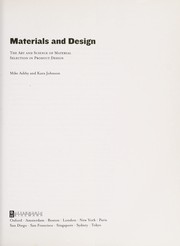
The definitive guide to selecting materials for designed objects; grounds abstract design decisions in the real-world properties of metals, polymers, ceramics, and composites.
Iconic Designers & Deep Craft
IntermediateLearn from the masters—absorb the philosophies, methods, and decision-making of the most influential industrial designers in history.
▸ Study plan for this stage
Pace: 6–8 weeks, ~25–30 pages/day (with documentary viewing time integrated)
- Dieter Rams' 'Good Design' principles and their application to product form, function, and user experience
- The philosophy of 'less but better'—how constraint and reduction drive innovation in industrial design
- The relationship between typography, systems thinking, and visual culture as demonstrated through Helvetica's evolution
- Design as a moral and ethical practice: responsibility to users, manufacturers, and society
- The iterative design process: how masters refine, test, and evolve their work over decades
- The intersection of craft, technology, and mass production in creating timeless objects
- How design systems (typefaces, product families, design languages) scale across contexts and generations
- What are Dieter Rams' ten principles of good design, and how do they address both aesthetic and functional concerns?
- How does Rams' concept of 'less but better' challenge conventional approaches to product differentiation and consumer desire?
- What role did Helvetica play in modernist design culture, and how did its ubiquity reflect broader shifts in graphic and industrial design?
- How do the design philosophies presented in Lovell's biography and Hustwit's work address the designer's responsibility to users and society?
- What methods did Rams and other modernist designers use to balance innovation with timelessness?
- How do design systems (whether product lines or typefaces) function as tools for coherence and communication across different contexts?
- Analyze a product you own using Rams' ten principles—identify which principles it embodies or violates, and sketch how you would redesign it to better align with his philosophy
- Create a visual timeline mapping Helvetica's adoption across different industries and contexts (signage, corporate identity, packaging) using images from the Hustwit film; annotate with cultural/historical moments
- Conduct a 'less but better' audit: select a product category (e.g., kitchen tools, office supplies) and redesign a product by removing non-essential features while improving core function
- Study Rams' Braun product designs (referenced extensively in Lovell's book) by comparing early and late iterations of the same product line; document the refinements and identify the design principles driving each change
- Write a 500-word design brief for a hypothetical product using Rams' methodology: define the problem, articulate constraints, and explain how each design decision serves both user and manufacturer
- Create a mood board and design system (3–5 core elements) inspired by the modernist principles in both books; apply it to a small project (e.g., a personal brand, a local business identity, or a product family)
Next up: This stage grounds you in the philosophical and methodological foundations of modern design—the 'why' and 'how' behind timeless work—preparing you to critically evaluate contemporary design practices and understand how historical principles either persist or evolve in today's digital and sustainable design contexts.

An in-depth study of Rams's ten principles and his work at Braun; essential for understanding how restraint, honesty, and longevity are built into physical products.

The companion book to the landmark documentary, featuring conversations with leading industrial designers about how everyday objects are conceived and manufactured—broadens perspective beyond any single design philosophy.
Prototyping, Iteration & Product Development
ExpertMaster the full product development cycle—from sketch and prototype through engineering handoff—and understand how to manage the tension between design vision and production reality.
▸ Study plan for this stage
Pace: 6–7 weeks, ~40–50 pages/day. "Making It" (approx. 300 pages) over 3 weeks; "The Art of Innovation" (approx. 300 pages) over 3–4 weeks, with 1 week for integration exercises and case study synthesis.
- Material selection and its constraints as a design driver—how material properties dictate form, function, and manufacturability
- The iterative prototype-to-production pipeline: from rough mockups through functional prototypes to manufacturing-ready designs
- Design for manufacturability (DFM): translating design intent into production-feasible specifications and tolerances
- The innovation process as a disciplined methodology: empathy, ideation, rapid prototyping, and user feedback loops
- Managing creative vision against production reality: cost, scale, tooling, and supply chain realities
- Cross-functional collaboration: how designers, engineers, manufacturers, and stakeholders negotiate trade-offs
- Rapid iteration cycles: using low-fidelity and high-fidelity prototypes strategically to test assumptions and reduce risk
- Design storytelling and communication: how to articulate design rationale to non-designers and justify decisions through prototypes
- How do material properties (strength, flexibility, thermal conductivity, cost, availability) influence your design decisions early in the development process, and what trade-offs must you make?
- Walk through a product development cycle: what are the key stages from initial sketch to manufacturing handoff, and what happens at each stage?
- What is design for manufacturability (DFM), and why is it critical to address it before committing to production tooling?
- Describe the IDEO innovation process outlined in 'The Art of Innovation': how does rapid prototyping and user feedback drive better outcomes than traditional design-then-build approaches?
- How do you balance creative vision with production constraints (cost, tooling, lead time, supply chain)? Give a concrete example.
- What role does cross-functional collaboration play in product development, and how do designers communicate with engineers and manufacturers to resolve conflicts?
- Material deep-dive: Select three different materials (e.g., injection-molded plastic, aluminum die-cast, sheet metal). Research their properties, costs, minimum order quantities, and lead times. Sketch a simple product (e.g., a phone stand) in each material and document how the material choice changes the design.
- Prototype progression: Take a single product concept and create three versions: (1) a rough cardboard/foam mockup to test form and ergonomics, (2) a 3D-printed or laser-cut functional prototype to test assembly and basic performance, (3) a design specification document showing tolerances, materials, and manufacturing notes for production. Document what you learned at each stage.
- DFM audit: Find a manufactured product you own (e.g., a kitchen tool, phone charger, toy). Disassemble it (if possible) or study it closely. Identify: undercuts, draft angles, parting lines, fastener placement, and material transitions. Write a brief report on how the design was optimized for manufacturing.
- Innovation process case study: Choose a real product from 'The Art of Innovation' or research a well-known IDEO project. Map out the empathy, ideation, and prototyping phases. Identify the key insights that shaped the final design and how rapid iteration reduced risk.
- Cross-functional negotiation simulation: Work with a peer or small group. One person plays the designer (vision-focused), one plays the manufacturer (cost/feasibility-focused), one plays the engineer (performance-focused). Negotiate a design decision (e.g., material choice, assembly method, feature scope) and document the trade-offs and final decision.
- Production readiness checklist: Using a product you've designed or studied, create a comprehensive handoff document for a manufacturer: material specs, tolerances, assembly instructions, quality criteria, cost targets, and timeline. Identify gaps or ambiguities that would cause problems in production.
Next up: This stage equips you with the discipline and vocabulary to move from individual product design into systems-level thinking—managing portfolios, scaling production, and understanding how design decisions ripple across supply chains and business models.
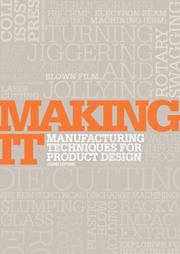
A visually rich, process-focused guide to manufacturing methods; bridges the gap between a designer's intent and what is actually buildable at scale.
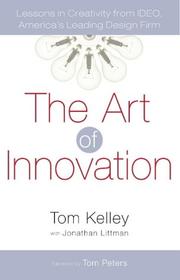
Goes deeper than Creative Confidence into IDEO's full product development process, with detailed case studies on prototyping, user testing, and bringing physical products to market.
Strategy, Systems & Products People Love
ExpertSynthesize design craft with business strategy and emotional resonance—understanding why certain products become beloved cultural objects and how to design with that ambition.
▸ Study plan for this stage
Pace: 6–8 weeks, ~25–30 pages/day with reflection pauses. Allocate 3–4 weeks for "Emotional Design" (320 pages), then 2–3 weeks for "The Shape of Design" (250 pages), with 1 week for synthesis and project work.
- The three levels of emotional design: visceral (immediate aesthetic response), behavioral (usability and function), and reflective (meaning, memory, and identity)
- How emotions drive product preference and loyalty more powerfully than rational features alone
- The role of narrative and storytelling in making products meaningful and culturally resonant
- Design as a systems problem: balancing constraints, context, and human needs within larger ecosystems
- The designer's responsibility to shape culture and influence behavior through intentional choices
- How constraints and limitations can spark creativity and lead to more elegant, purposeful solutions
- The relationship between form, function, and feeling—why beautiful, beloved products integrate all three
- Design thinking as a bridge between business strategy, craft execution, and emotional impact
- What are the three levels of emotional design, and how do they work together to create products people love?
- Why does Norman argue that attractive things work better, and what does this reveal about the relationship between aesthetics and usability?
- How does Frank Chimero define the role of a designer, and what does he mean by 'the shape of design' as a metaphor for the designer's influence?
- What is the relationship between constraints and creativity in design, and how can limitations lead to more meaningful products?
- How can a designer intentionally build narrative and emotional resonance into a product to make it culturally significant?
- What does it mean to design 'systems' rather than isolated objects, and why does this perspective matter for creating beloved products?
- Emotional audit: Select a beloved product (personal or cultural). Map its appeal across Norman's three levels—what makes it viscerally attractive, behaviorally intuitive, and reflectively meaningful? Write a one-page analysis.
- Constraint challenge: Take a familiar product and redesign it under a severe constraint (e.g., 50% fewer materials, half the cost, or one-tenth the size). Document how the constraint forced creative choices and whether the result became more elegant or meaningful.
- Narrative mapping: Choose a product you admire and reverse-engineer its story. What problem does it solve? What values does it embody? What cultural moment or human need does it address? Create a visual or written narrative.
- Systems thinking exercise: Map a product's ecosystem—its users, context, supply chain, cultural impact, and unintended consequences. Identify one design decision that ripples through the system and propose how it could be improved.
- Emotional journey storyboard: Create a storyboard showing how a user's emotional state changes through interaction with a product—from anticipation through use to memory. Identify moments where design could deepen emotional resonance.
- Design manifesto: Write a 500-word personal design philosophy that synthesizes Norman's emotional framework with Chimero's systems thinking. What do you believe about the designer's role in shaping culture and creating beloved products?
Next up: This stage equips you to see products as emotional and cultural artifacts shaped by intentional strategy; the next stage will likely deepen your ability to execute this vision through specific methodologies, tools, or real-world case studies that translate philosophy into practice.
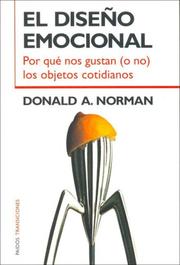
Norman's follow-up to DOET explores the three levels of emotional response to objects (visceral, behavioral, reflective), giving designers a framework for creating products that genuinely connect with people.

A philosophical capstone on why designers make things and for whom—read last to reframe everything learned in the curriculum through the lens of purpose, storytelling, and lasting impact.
Discussion
Keep reading
Paths that share books, cover the same subject, or open a related topic.