The Best Books to Learn Stage Management, in Order
This curriculum takes a beginner from the core vocabulary and daily duties of a stage manager all the way through the advanced craft of calling complex cues, managing large-scale productions, and developing a professional career. Each stage builds directly on the last: you must understand the role before you can master the paperwork, and you must master the paperwork before you can lead a room with authority.
Foundations: Understanding the Role
BeginnerGrasp what a stage manager actually does, the hierarchy of a production, and the essential mindset and responsibilities before touching any real paperwork or cues.
▸ Study plan for this stage
Pace: 2–3 weeks, ~25–30 pages/day (total ~150–180 pages)
- The stage manager as the organizational hub and communication center of a production
- The hierarchy of theatrical production (director, producers, designers, technical crew, cast) and where the stage manager fits
- Core responsibilities: maintaining order, managing communication, problem-solving, and serving the director's vision
- The stage manager's mindset: flexibility, attention to detail, diplomacy, and calm under pressure
- The distinction between pre-production, rehearsal, and performance phases and how the SM's role evolves
- Ethical responsibilities and professional standards in stage management
- Why documentation and systems matter before learning specific paperwork formats
- What is the stage manager's primary function in a theatrical production, and why is it often described as a leadership role without direct authority?
- How does the stage manager fit within the production hierarchy, and what relationships are most critical to manage?
- What are the key differences in stage manager responsibilities across pre-production, rehearsal, and performance phases?
- Describe the mindset and personal qualities Stern emphasizes as essential for effective stage management.
- Why does Stern argue that systems and organization are foundational before learning specific cue sheets or paperwork?
- What are the stage manager's ethical obligations to the director, cast, crew, and audience?
- Create an organizational chart for a fictional small theater production, clearly identifying where the stage manager sits and which departments they must liaise with daily.
- Interview a working stage manager (in person, by phone, or via email) about their typical day during rehearsals and during performance; document how their responsibilities shift between phases.
- Write a one-page 'stage manager manifesto' for a hypothetical production, outlining your personal approach to communication, problem-solving, and supporting the director's vision.
- Observe a live theater rehearsal or performance (or watch a recorded one) and note every moment you see the stage manager working—communication, problem-solving, coordination—and reflect on what you observed.
- Create a sample communication protocol document for a fictional production: how will the SM communicate with cast, crew, and director during different phases (pre-production, tech, performance)?
- Role-play three conflict scenarios (e.g., a designer and director disagree, an actor is consistently late, a technical problem arises mid-rehearsal) and practice the diplomatic, calm approach Stern advocates.
Next up: Understanding the stage manager's role, responsibilities, and mindset prepares you to learn the specific tools and paperwork—prompt books, cue sheets, run sheets, and communication logs—that operationalize these principles in real productions.
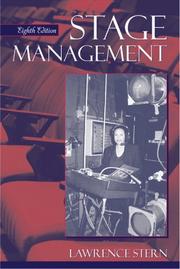
The single most widely adopted introductory textbook in the field. It walks a complete beginner through every phase of production—pre-production through closing night—establishing the vocabulary and workflow that every subsequent book assumes you know.
Core Craft: Prompt Books, Scheduling & Rehearsal Management
BeginnerBuild and maintain a professional prompt book, construct rehearsal and production schedules, and run rehearsals with confidence and authority.
▸ Study plan for this stage
Pace: 4–5 weeks, ~25–30 pages/day (approximately 150–180 pages total)
- The anatomy and purpose of a professional prompt book as the stage manager's operational bible
- Documentation standards: blocking notation, cue sheets, actor notes, and technical specifications
- Rehearsal scheduling principles: pacing, actor availability, technical needs, and production milestones
- Running effective rehearsals: communication protocols, note-taking, conflict resolution, and maintaining focus
- Production schedules: pre-production timelines, tech rehearsals, dress rehearsals, and opening night readiness
- Authority and professionalism: establishing credibility, managing personalities, and leading with clarity
- What are the essential components of a prompt book, and how does each serve the stage manager during rehearsals and performances?
- How do you notate blocking and cues in a prompt book in a way that is clear, consistent, and usable under pressure?
- What factors should you consider when constructing a rehearsal schedule, and how do you balance actor availability with production needs?
- How do you run a rehearsal that maintains focus, captures critical information, and keeps the cast and crew aligned?
- What is the relationship between rehearsal schedules and production schedules, and how do you prepare for the transition from rehearsal to tech and performance?
- How do you establish and maintain authority as a stage manager while remaining collaborative and professional?
- Create a sample prompt book for a one-act play (10–15 pages), including blocking notation, cue sheets, character notes, and technical specifications; practice using it as if running a rehearsal
- Draft a 4-week rehearsal schedule for a full-length play, accounting for actor conflicts, scene priorities, and technical needs; justify your choices
- Observe or record a rehearsal (live or video), then write detailed stage manager notes capturing blocking changes, actor questions, technical issues, and follow-up items
- Design a production schedule from first rehearsal through opening night, including pre-production, rehearsal phases, tech rehearsals, dress rehearsals, and contingencies
- Conduct a mock rehearsal with peers or actors, practicing cueing, note delivery, conflict de-escalation, and maintaining authority without being authoritarian
- Analyze a real prompt book (from a production or online resource) and critique its clarity, completeness, and usability; identify best practices and gaps
Next up: This stage equips you with the operational systems and leadership skills to manage rehearsals and production timelines; the next stage will deepen your ability to solve real-time problems, adapt to crises, and master the technical and performance elements that demand a stage manager's full attention and quick thinking.
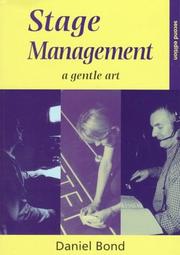
Bond's classic British text is celebrated for its clear, humane approach to running rehearsals and building the prompt book. It fills in the interpersonal and organizational nuance that purely American textbooks sometimes skip.
Intermediate Craft: Calling Cues & Technical Production
IntermediateDevelop the specific skill of calling lighting, sound, and fly cues with precision; understand the technical departments a stage manager coordinates; and manage the transition from rehearsal into tech and previews.
▸ Study plan for this stage
Pace: 4–5 weeks, ~40–50 pages/day. Start with Kelly's chapters on cueing systems and cue sheets (1–2 weeks), then move to Campbell's technical overview and department breakdowns (1–2 weeks), finishing with Kelly's tech rehearsal and preview management sections (1 week).
- Cue sheet architecture: how to format, organize, and execute lighting, sound, and fly cues with clear notation and timing
- The role of the stage manager as the central coordinator between actors, directors, and technical departments (lighting, sound, scenic, fly)
- Technical department functions and workflows: what each department does, how they communicate, and what the SM must know to manage them effectively
- Calling cues live: the mechanics of cueing (go buttons, timing, headset communication) and how to maintain precision under pressure
- The transition from rehearsal to tech: preparing cue sheets, running technical rehearsals, managing actor and crew adjustments
- Preview performances as a testing ground: how to troubleshoot cues, manage last-minute changes, and build confidence before opening night
- Communication protocols: headset discipline, cue language, and documentation that ensures all departments stay synchronized
- What are the essential elements of a well-formatted cue sheet, and how do you organize cues for different technical departments on a single document?
- How does a stage manager call cues live, and what communication tools and protocols ensure that lighting, sound, and fly operators execute cues at exactly the right moment?
- What are the primary responsibilities of the lighting, sound, scenic, and fly departments, and how does the SM coordinate between them during rehearsal and tech?
- What is the purpose of a technical rehearsal, and what specific tasks should the SM accomplish during this phase to prepare for previews?
- How do you troubleshoot a cue that is consistently late or early, and what adjustments can you make to timing and communication to fix it?
- What is the difference between how cues are managed during rehearsal versus during tech and previews, and why does the SM's role shift in each phase?
- Create a full cue sheet for a 10-minute scene from a play, including lighting, sound, and fly cues with precise timing, notation, and department-specific instructions based on Kelly's formatting guidelines.
- Conduct a mock tech rehearsal: work with 2–3 people playing lighting, sound, and fly operators; call cues from a script using headset communication and practice maintaining timing and clarity under realistic conditions.
- Map out the technical departments for a real or imaginary production: document each department's responsibilities, key personnel, communication needs, and potential conflict points that the SM must manage.
- Transcribe and analyze a real cue sequence from a published script or recording: identify how cues are staggered, what information each department needs, and how the SM's calls would sound in real time.
- Write a pre-tech checklist and a tech rehearsal schedule based on Kelly's guidelines, including what the SM must prepare, what questions to ask each department, and how to allocate time.
- Practice calling cues with a timer and a script: set up a simple sequence (e.g., lights fade, sound starts, fly drops) and execute it repeatedly, refining your timing and headset language until it feels natural and precise.
Next up: This stage equips you with the operational precision and technical literacy needed to move into advanced topics like complex cueing systems, special effects coordination, and crisis management during live performance.
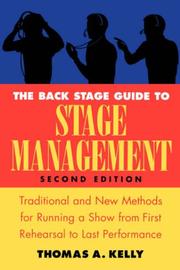
Kelly's guide is the go-to resource for the technical side of stage management, with dedicated attention to calling cues, headset communication, and shepherding a show through tech rehearsals—exactly the gap left by foundational texts.

A stage manager who understands lighting instruments, sound systems, and rigging calls better cues and earns the trust of technical crews. This book builds that literacy without requiring an engineering background.
Advanced Practice: Running Live Performances & Large Productions
ExpertManage the full arc of a live run—performance reports, maintaining the show, handling emergencies—and scale those skills to large, complex, or touring productions.
▸ Study plan for this stage
Pace: 4–5 weeks, ~40–50 pages/day with daily note-taking on systems and procedures
- Performance reporting systems: daily reports, incident logs, and documentation standards for Broadway productions
- Show maintenance protocols: preserving artistic intent, managing cast changes, and enforcing consistency across multiple performances
- Emergency response frameworks: identifying crisis types, decision-making hierarchies, and real-time communication during live performances
- Scaling stage management: adapting processes for large casts, multiple venues, touring logistics, and complex technical demands
- Broadway-specific workflows: union regulations, producer coordination, front-of-house integration, and stakeholder communication
- Preventive systems: pre-show checklists, contingency planning, and risk mitigation for high-stakes professional productions
- Post-show analysis: reviewing performance data, identifying patterns, and implementing continuous improvements
- What are the essential components of a daily performance report on Broadway, and how do they inform producers and creative leadership?
- How do you maintain show consistency and artistic integrity when managing cast absences, understudies, or last-minute changes in a live run?
- Describe the decision-making process and communication protocol for handling a major emergency (technical failure, medical incident, security threat) during a live performance.
- What specific adaptations must stage management make when scaling from a single-venue production to a touring or multi-location Broadway production?
- How do union regulations and Broadway labor agreements impact stage management procedures, scheduling, and emergency protocols?
- What preventive systems and contingency plans should be in place before opening night to minimize crisis impact during a long run?
- Create a complete daily performance report template based on Lawrence's Broadway standards, then practice filling it out with realistic scenarios (cast illness, technical glitch, audience disruption).
- Design a show maintenance manual for a hypothetical Broadway production, including protocols for cast changes, understudy rehearsals, and consistency checks across a 6-month run.
- Develop a tiered emergency response plan for three crisis scenarios: mid-show technical failure, cast member injury, and security incident—including communication trees and decision points.
- Map out the stage management workflow for a touring production with multiple cities, including logistics coordination, venue changeovers, and communication with local crews.
- Conduct a mock performance run (using a recorded show or live rehearsal) where you document all incidents, changes, and decisions in real time, then debrief on what you'd do differently.
- Research and summarize the Broadway union agreements (Equity, IATSE) relevant to stage management, then create a quick-reference guide for compliance in emergency situations.
Next up: This stage equips you to manage the full operational and crisis lifecycle of professional Broadway productions; the next stage will likely focus on mentorship, training the next generation of stage managers, and strategic leadership roles in theater organizations.

Written by a veteran Broadway PSM, this book addresses the highest-complexity end of the craft: union calls, multi-department coordination, and the performance-report discipline required to keep a long-running show consistent night after night.
Discussion
Keep reading
Paths that share books, cover the same subject, or open a related topic.