The Best Books to Learn Photojournalism, in Order
This curriculum builds from the foundational language of photojournalism—its history, iconic practitioners, and visual grammar—through the craft of documentary technique, and finally into the ethical, philosophical, and critical dimensions that define serious practice. Starting at an intermediate level, each stage assumes growing visual literacy and pushes toward a sophisticated, reflective understanding of the field.
The Canon: Photographers Who Defined the Form
IntermediateUnderstand the historical arc of photojournalism through the work and words of its most influential practitioners, building a shared visual vocabulary and sense of what the form can achieve.
▸ Study plan for this stage
Pace: 8–10 weeks, ~25–30 pages/day, with 2–3 days per week dedicated to visual analysis and reflection
- The decisive moment: Cartier-Bresson's philosophy of capturing the single, unrepeatable instant that crystallizes meaning
- The photographer's ethical responsibility: balancing aesthetic vision with truthfulness and respect for subjects (Agee's critique of documentary exploitation)
- Visual literacy and composition: how framing, light, and timing create narrative without captions
- The photographic essay as form: how sequences of images build argument and emotion across a body of work
- Modernism in photojournalism: the shift from illustration toward interpretive, subjective witness
- The tension between objectivity and subjectivity: how photographers impose vision while claiming to document reality
- Poverty, dignity, and representation: the moral stakes of photographing vulnerable subjects (Agee and Rothstein's Depression-era work)
- What does Cartier-Bresson mean by 'the decisive moment,' and how does this concept shape his approach to composition and timing?
- How does James Agee's text in *Let Us Now Praise Famous Men* complicate or critique the photographic medium itself, and what ethical concerns does he raise about documentary photography?
- Compare Rothstein's and Cartier-Bresson's approaches to the same historical moment (Depression/WWII era): what are their different visual philosophies?
- How do the photographers in these works use sequence, juxtaposition, and visual metaphor to create meaning beyond what a single image can convey?
- What is the relationship between the photographer's subjective vision and the claim to documentary truth in the works you've studied?
- How do these three practitioners define the purpose and power of photojournalism—what can it do that words or painting cannot?
- Create a visual glossary: collect 8–10 images from Cartier-Bresson that exemplify 'the decisive moment,' annotate each with what makes it decisive, and write a one-paragraph reflection on the pattern you notice
- Close-read a photo essay: select one complete photo essay from Cartier-Bresson or Rothstein (10–15 images), map how meaning builds across the sequence, and write about how removing or reordering images changes the narrative
- Dialogue exercise: write a conversation between Agee and one of the photographers about the ethics of representation—use direct quotes from the texts to ground the debate
- Shoot your own 'decisive moment' series: take 30–50 photographs of a single location or event over 2–3 hours, then edit down to 5–8 that capture different aspects of a single truth, and write about your selection process
- Comparative analysis: select one subject photographed by both Rothstein and Cartier-Bresson (or similar subjects from the same era), analyze the formal and philosophical differences, and write 2–3 pages on what each photographer's choices reveal about their worldview
- Annotated reading: as you read Agee's text alongside the photographs in *Let Us Now Praise Famous Men*, mark moments where his prose amplifies, contradicts, or undermines the images—create a visual map of these tensions
Next up: By internalizing the formal and ethical foundations laid by these canonical practitioners, you'll be prepared to examine how contemporary photojournalists either inherit or challenge these traditions in response to new technologies, global crises, and evolving questions about representation and truth.

Cartier-Bresson's own essays articulate the 'decisive moment' philosophy that underpins nearly all photojournalism; reading his thinking first gives you the conceptual foundation every later book assumes.
A clear, practitioner-written overview of the field's history, techniques, and standards—ideal for an intermediate reader who needs a structured map of the discipline before diving into specialized works.
The landmark collaboration between Agee and Walker Evans establishes the moral and aesthetic stakes of documentary work, showing how image and text together can bear witness to human dignity.
Visual Storytelling: Craft and Technique
IntermediateMaster the practical and narrative craft of making photojournalistic images—composition, sequencing, the photo essay form, and how pictures construct meaning.
▸ Study plan for this stage
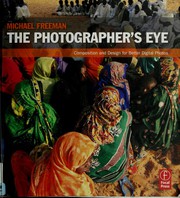
Pace: 5–6 weeks, ~40–50 pages/day. Week 1–2: "The Photographer's Eye" (primary focus on visual fundamentals). Week 3–4: "Photojournalism" by Kobre (narrative and essay structure). Week 5–6: Integration and applied practice.
- The five basic formal elements of photography: frame, time, focus, scale, and vantage point (Szarkowski's foundational framework)
- How composition and framing direct viewer attention and construct meaning in still images
- The photo essay as a narrative form: sequencing, pacing, and how individual images work together to tell a story
- The relationship between subject, photographer's intention, and viewer interpretation
- Editing and selection: how photographers choose which images to include and in what order to build narrative coherence
- The ethical and practical considerations of photojournalism—capturing truth while making deliberate aesthetic choices
- Visual syntax: how photographic language (composition, light, gesture, juxtaposition) conveys meaning without words
- What are Szarkowski's five basic elements of photography, and how does each one shape the viewer's experience of an image?
- How does the concept of 'frame' in Szarkowski's work relate to the photographer's editorial decision-making in photojournalism?
- What is a photo essay, and how does sequencing and juxtaposition of images create narrative meaning that individual photographs cannot achieve alone?
- How do Kobre's principles of photojournalism balance the tension between aesthetic craft and documentary truth-telling?
- Describe how vantage point, scale, and focus work together to guide a viewer's interpretation of a photojournalistic image.
- What role does editing (selecting and ordering images) play in constructing the meaning of a photo essay?
- Photograph a single subject or location using only Szarkowski's five elements as constraints: create one image emphasizing frame, one emphasizing time/moment, one emphasizing focus, one emphasizing scale, and one emphasizing vantage point. Analyze how each choice changes the story.
- Collect 15–20 images (your own or from published photojournalists) and sequence them three different ways to tell three different stories. Write a brief statement for each sequence explaining how the order changes meaning.
- Read a published photo essay from a photojournalism source (e.g., Magnum Photos, National Geographic, or a news outlet) and map its structure: identify the opening image, turning points, climax, and conclusion. How do individual images build narrative momentum?
- Shoot a 5–8 image photo essay on a single theme or subject over 2–3 days. Write captions and sequencing notes. Then edit it down to 3 images and explain what you cut and why—what does the shorter version gain or lose?
- Analyze a photograph from Kobre's examples or a professional photojournalist's work using Szarkowski's five elements. Write a one-page analysis of how the photographer used these formal tools to convey meaning and emotion.
- Create a mood board or contact sheet comparing how different photographers (find examples in both books or online) approach the same subject. What formal choices distinguish their interpretations?
Next up: This stage equips you with the visual language and narrative architecture of photojournalism; the next stage will deepen your understanding of how to deploy these tools in real-world reporting, ethics, and the business/editorial context of professional photojournalism.
Szarkowski's analytical framework for how photographs work—framing, moment, detail, vantage point—gives you a precise critical language to evaluate and improve documentary images.
The most widely used textbook in the field, covering the photo essay, spot news, features, and editing in depth; it bridges theory and hands-on practice in a way that rewards intermediate learners.
Bearing Witness: Documentary Ethics and Responsibility
ExpertGrapple with the ethical obligations of the photojournalist—truth, manipulation, trauma, consent, and the photographer's relationship to suffering—and develop a personal ethical framework.
▸ Study plan for this stage
Pace: 8–10 weeks, ~25–30 pages/day. Start with "On Photography" (192 pages, ~2 weeks), then move to "Regarding the Pain of Others" (131 pages, ~1.5 weeks). Allocate remaining time for re-reading key sections, note synthesis, and reflective writing.
- Photography as a form of consciousness and interpretation, not neutral documentation—Sontag's critique of the camera's supposed objectivity
- The predatory nature of photography: how the camera collects, appropriates, and transforms reality into aesthetic objects
- Accumulation and saturation: how repeated exposure to photographic images dulls moral response and creates emotional numbness
- The ethics of looking at suffering: the tension between bearing witness and voyeurism, between ethical responsibility and aesthetic pleasure
- Consent, agency, and the subject's dignity: the photographer's obligation to the person being photographed, especially in contexts of pain or vulnerability
- The photographer's complicity: how the act of photographing can be both an act of solidarity and an act of extraction
- The limits of photography: what images can and cannot do in terms of generating understanding, justice, or political change
- Developing a personal ethical framework: moving from abstract principles to concrete decision-making in the field
- According to Sontag, how does photography differ from other forms of representation in terms of its claim to truth and objectivity? What are the implications of this difference for photojournalism?
- What does Sontag mean by the 'predatory' nature of photography, and how does this concept challenge the idea of the photographer as a neutral observer?
- How does Sontag explain the phenomenon of moral numbness or compassion fatigue in relation to repeated exposure to photographs of suffering?
- What is the ethical distinction Sontag draws between bearing witness and voyeurism? How might a photojournalist navigate this tension?
- In 'Regarding the Pain of Others,' how does Sontag address the question of the subject's consent and dignity when photographing human suffering?
- What are the limitations of photography as a tool for generating political or social change, according to Sontag? How should this shape a photojournalist's expectations and responsibilities?
- Annotated image analysis: Select 3–5 iconic photojournalistic images (e.g., from war, disaster, or social crisis). For each, write a 1–2 page analysis addressing: What truth does this image claim to show? Whose perspective is centered or excluded? What emotional response is it designed to elicit? How might the subject have experienced being photographed?
- Ethical case study: Choose a real photojournalistic controversy (e.g., Kevin Carter's 'Starving Child and Vulture,' or images from a recent conflict). Write a 3–4 page analysis using Sontag's framework: What ethical questions does this image raise? What was the photographer's apparent intent? What were the consequences for the subject? How would you have approached the situation differently?
- Personal framework draft: Write a 2–3 page personal ethical code for photojournalism, addressing at least five specific scenarios (e.g., photographing a grieving family, deciding whether to intervene vs. document, handling images of children, navigating consent in conflict zones). Ground each principle in Sontag's arguments.
- Comparative image study: Find two photographs of the same subject or event by different photographers. Analyze how each photographer's choices (framing, distance, timing, context) reflect different ethical positions. How does Sontag's critique of photography illuminate these differences?
- Saturation experiment: Collect 20–30 images of a single type of suffering (e.g., poverty, war, displacement) from news sources. Arrange them chronologically and reflect in writing: How does your emotional response change as you view them in sequence? At what point does numbness set in? What does this reveal about the ethics of image accumulation?
- Stakeholder interview: If possible, interview a photojournalist, documentary photographer, or subject of photography about their ethical decision-making. Prepare questions based on Sontag's concepts (consent, complicity, witness, responsibility). Synthesize their responses in a 2–page reflection on how theory meets practice.
Next up: This stage equips you with a critical vocabulary and ethical foundation for interrogating photojournalistic practice; the next stage will likely move from theory to applied methodology—learning how to make ethical decisions in real-world reporting scenarios, navigate institutional pressures, and develop a sustainable personal practice grounded in the principles you've now internalized.
Sontag's foundational critique of photographic representation—its power, its limits, and its moral ambiguities—is essential reading before tackling more specific ethical debates in the field.
Read after On Photography, this later work directly interrogates war photography and compassion fatigue, refining and sometimes reversing her earlier positions in ways that deepen ethical thinking.
War, Conflict, and the Limits of the Frame
ExpertUnderstand photojournalism at its most extreme—conflict and war coverage—examining both the iconic images that shaped public consciousness and the personal cost to the photographers who made them.
▸ Study plan for this stage
Pace: 8–10 weeks, ~25–30 pages/day (with reflection breaks). Week 1–4: "War Is a Force That Gives Us Meaning" (approximately 200 pages); Week 5–8: "Shooting under Fire" (approximately 200 pages); Week 9–10: synthesis and capstone work.
- War's psychological and emotional grip on those who cover it—how conflict becomes a seductive narrative that shapes perception and meaning-making
- The photographer's ethical dilemma: the tension between bearing witness and exploitation, between creating iconic images and respecting human dignity in suffering
- How framing and composition in war photography both reveal and conceal—what the camera captures versus what remains invisible or cropped out
- The personal toll of conflict coverage: trauma, moral injury, and the long-term psychological consequences for photojournalists in the field
- The power of iconic war images to shape public consciousness, policy, and collective memory—and the responsibility that comes with that power
- The relationship between image, truth, and propaganda in conflict zones—how photographs can be manipulated, contextualized, or weaponized
- The distinction between bearing witness as a moral act and becoming complicit through documentation without intervention
- According to Hedges, what psychological and emotional needs does war fulfill for those who cover it, and how does this affect their objectivity and judgment?
- What are the key ethical tensions Howe identifies between a photojournalist's duty to document and their responsibility to the subjects they photograph?
- How do the concepts of framing and composition in 'Shooting under Fire' illustrate what war photography can and cannot show about conflict?
- What does Hedges mean by war as 'a force that gives us meaning,' and how does this apply to the work of war photographers specifically?
- What physical, psychological, and moral costs does Howe describe that photojournalists face during and after covering armed conflict?
- How have iconic war photographs shaped public understanding of specific conflicts, and what responsibility do photographers bear for these images' impact?
- Close-read 3–4 iconic war photographs discussed in either text (e.g., images referenced by Hedges or case studies in Howe). For each, write a 500-word analysis: What is in the frame? What is cropped out? What story does the composition tell, and what alternative narratives might exist?
- Create a personal reflection journal during your reading of 'War Is a Force That Gives Us Meaning.' After each chapter, write 1–2 pages exploring how Hedges's arguments about war's seductive power apply to the photojournalists' experiences described in Howe.
- Interview or conduct a written correspondence with a photojournalist (or watch a documentary featuring one). Ask them about the ethical dilemmas they face, the psychological impact of their work, and how they reconcile bearing witness with personal safety. Compare their answers to Hedges and Howe's arguments.
- Curate a small exhibition (physical or digital) of 8–10 war photographs from different conflicts and eras. Write wall text for each image that addresses: the historical context, what the frame reveals and conceals, and the photographer's ethical position.
- Write a 1,500-word critical essay: 'The Limits of the Frame—What War Photography Cannot Show.' Use specific examples from both texts to argue what remains invisible or unsayable in conflict photography, and why this matters.
- Create a visual timeline or infographic mapping how a single conflict (e.g., Vietnam, Syria, Ukraine) has been photographed and framed differently across decades. Analyze how iconic images have shaped public memory and policy, using Hedges's ideas about meaning-making.
Next up: This stage establishes the moral, psychological, and technical foundations of conflict photojournalism; the next stage will likely explore how photographers navigate these tensions in practice—whether through specific regional conflicts, individual photographer profiles, or the evolution of visual ethics in contemporary journalism.
Though written by a war correspondent rather than a photographer, Hedges' meditation on the seductive and destructive nature of conflict coverage provides the essential psychological and moral context for war photojournalism.
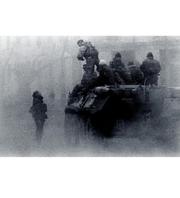
First-person accounts from the world's leading conflict photographers—including James Nachtwey and Sebastião Salgado—reveal the human, ethical, and practical realities of working in war zones.
Discussion
Keep reading
Paths that share books, cover the same subject, or open a related topic.