Become a UX designer: the best books to start and get hired
This curriculum takes a beginner from zero UX knowledge to job-ready professional across four carefully sequenced stages. It starts by building the mindset and vocabulary of design thinking, moves through the craft of research and interaction design, sharpens skills in prototyping and usability testing, and finally focuses on the career layer — portfolio, process storytelling, and landing the job.
Foundations: Design Thinking & the UX Mindset
BeginnerUnderstand what UX design is, how designers think, and why human-centered design matters — building the core vocabulary and mental models needed for everything that follows.
▸ Study plan for this stage
Pace: 8–10 weeks, ~25–30 pages/day. Allocate roughly 3 weeks to Norman, 2–3 weeks to Krug, and 2–3 weeks to Knapp, with 1–2 weeks for review and integration.
- The concept of affordances and signifiers: how objects communicate their function through design (Norman)
- Mental models: how users form internal representations of how systems work, and why designers must align with them (Norman & Krug)
- Cognitive load and satisficing: users don't read—they scan and make quick decisions; design must minimize friction (Krug)
- Human-centered design philosophy: placing user needs, behavior, and psychology at the center of every design decision (all three)
- The design of everyday things: how small details in visibility, feedback, constraints, and consistency prevent user error (Norman)
- Usability testing and iteration: the Sprint framework shows how rapid prototyping and user feedback drive better design (Knapp)
- The power of constraints: how limitations and structure (like a 5-day sprint) focus creativity and accelerate decision-making (Knapp)
- Designing for real behavior, not ideal behavior: users are lazy, impatient, and distracted—design accordingly (Krug)
- What is an affordance, and how does it differ from a signifier? Give an example from a physical object or digital interface.
- Explain the concept of mental models. Why do designers need to understand and align with users' mental models rather than impose their own?
- According to Krug, why do users not read web pages thoroughly, and what design principle should guide how you present information?
- Describe the seven stages of action from Norman's framework. How can understanding this help you identify where users might struggle with a product?
- What is the core premise of the Sprint methodology, and how does it differ from traditional design processes?
- How would you apply Norman's principles of good design (visibility, feedback, constraints, consistency, mapping) to redesign a frustrating everyday object?
- Affordance hunt: Photograph or sketch 5 objects (physical or digital) and identify their affordances and signifiers. Note where they succeed or fail to communicate function.
- Mental model mapping: Interview 3 people about how they think a specific app or website works internally. Document their mental models and compare them to the actual design.
- Usability friction log: Spend a week documenting moments when you or others struggle with a product. Categorize each friction point using Norman's seven stages of action.
- Redesign exercise: Choose one frustrating everyday object (door handle, thermostat, form, etc.). Sketch a redesign applying Norman's principles of visibility, feedback, constraints, and consistency.
- Sprint simulation: Run a condensed 1-day sprint with a small team on a simple design problem (e.g., improve a campus bulletin board). Follow Knapp's structure: map, sketch, decide, prototype, test.
- Cognitive load audit: Analyze a website or app you use regularly. Identify 3–5 places where cognitive load could be reduced through clearer hierarchy, fewer options, or better signifiers.
Next up: This stage establishes the *why* and *how* of human-centered thinking—the mental models and principles that guide all UX work—preparing you to move into the next stage where you'll learn the concrete research, wireframing, and prototyping methods that operationalize these ideas.

The canonical starting point for any UX designer — it teaches you to see the world through the lens of usability, affordances, and human error, giving you the foundational language of the field.

A fast, highly readable introduction to web usability that immediately grounds abstract design principles in practical, real-world decisions — perfect for building intuition early.
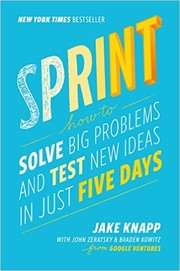
Introduces the design sprint process and design thinking in action, showing how teams move from problem to tested prototype in days — a motivating, concrete picture of UX work in practice.
User Research: Understanding People
BeginnerLearn how to plan and conduct user research — interviews, observation, and synthesis — so that design decisions are grounded in real human needs rather than assumptions.
▸ Study plan for this stage
Pace: 4–5 weeks, ~25–30 pages/day. "Just Enough Research" (~160 pages) in weeks 1–2, then "Interviewing Users" (~200 pages) in weeks 3–5, with overlap for synthesis and practice.
- Research is not optional: it grounds design in real human needs and reduces costly assumptions and bias
- Research planning requires clarity on goals, scope, and constraints before execution—not a free-form activity
- Interviews are a primary tool for uncovering motivations, behaviors, and mental models; they require careful preparation and active listening
- Observation and context matter as much as what people say—watch what users actually do, not just what they claim
- Synthesis and pattern-finding turn raw research data into actionable insights that inform design decisions
- Recruiting the right participants and asking the right questions are foundational to valid, useful research
- Research is iterative and ongoing; early-stage research informs prototypes, which generate new research questions
- Why is user research essential to UX design, and what assumptions or biases does it help you avoid?
- How do you plan a research project—what are the key questions you need to answer before you start recruiting or conducting interviews?
- What are the main differences between research methods (interviews, observation, surveys), and when would you use each?
- How do you conduct an effective user interview? What preparation, questioning techniques, and listening practices matter most?
- How do you move from raw interview notes and observations to actionable insights? What does synthesis look like?
- What makes a good research participant, and how do you recruit them without skewing your sample?
- Plan a small research project: define your research goal, key questions, method (interview or observation), target participant profile, and success criteria. Write a 1-page research brief.
- Conduct 2–3 practice interviews with friends or colleagues (15–20 min each) using a prepared guide. Record (with permission) and transcribe key quotes. Reflect on what you learned vs. what you assumed.
- Observe a user in their natural context (e.g., a colleague using a tool, a friend shopping) for 20–30 minutes. Take notes on behaviors, pain points, and workarounds. Compare observations to what they say they do.
- Synthesize interview or observation data: organize notes into themes, identify patterns and outliers, and extract 3–5 actionable insights. Create a simple affinity diagram or summary document.
- Write interview questions for a real or hypothetical design problem. Have a peer review them for leading questions, clarity, and openness. Revise and practice asking them aloud.
- Recruit 1–2 actual research participants (users of a product or service you care about) and conduct a 30–45 min interview. Analyze the results and write a 2–3 page summary of key findings.
Next up: Mastering user research and synthesis equips you to move into the next stage—translating insights into design direction—where you'll learn to create personas, user journeys, and design briefs that keep research at the center of your creative process.

The most practical and accessible guide to UX research methods; it teaches you which research technique to use when, and how to do it rigorously without over-engineering the process.

Goes deep on the single most important UX research skill — the user interview — with concrete techniques for asking better questions and uncovering genuine insights.
Interaction Design & Prototyping
IntermediateMaster the craft of designing interfaces — information architecture, wireframing, prototyping, and the principles that make interactions feel intuitive and delightful.
▸ Study plan for this stage
Pace: 8–10 weeks, ~40–50 pages/day, with 1–2 days per week for exercises and reflection
- Goal-directed design: understanding user personas, mental models, and designing for user goals rather than features
- Information architecture and interaction patterns: organizing content and designing intuitive navigation flows
- Wireframing and prototyping: translating design concepts into testable artifacts that communicate structure and behavior
- Cognitive psychology principles: how users perceive, process information, and make decisions in interfaces
- Usability testing and validation: running lightweight tests to identify friction points and iterate rapidly
- Affordances and feedback: designing visual and interactive cues that guide users toward correct actions
- Delight and polish: moving beyond functional interfaces to create experiences that feel responsive and human-centered
- How does goal-directed design differ from feature-driven design, and why does understanding user personas and mental models matter for interaction design?
- What are the key principles of information architecture, and how do you structure content and navigation to support intuitive user flows?
- What is the purpose of wireframing and prototyping, and how do these artifacts differ in fidelity and what they communicate to stakeholders?
- How do cognitive psychology principles (perception, memory, attention, decision-making) influence interface design decisions?
- What makes a usability test 'rocket surgery' — how do you run efficient, low-cost tests that yield actionable insights?
- How do affordances, feedback, and micro-interactions create interfaces that feel intuitive and delightful rather than frustrating?
- Create 2–3 detailed user personas for a product you're familiar with, including goals, pain points, and mental models; compare your personas to the product's actual design
- Conduct a competitive analysis of 3 similar products (apps, websites) and map their information architecture and key interaction patterns
- Wireframe a multi-step user flow (e.g., checkout, onboarding, settings) at low fidelity using pen and paper or a simple tool like Balsamiq
- Build a clickable prototype of one key user flow using Figma, Adobe XD, or Framer; test it with 2–3 peers and document feedback
- Run a moderated usability test with 3–5 participants on a product or prototype; use the 'rocket surgery' approach (simple setup, focused tasks, quick iteration)
- Redesign one frustrating interaction from a real product by identifying the cognitive friction point and proposing an improved affordance or feedback mechanism
- Document 5 examples of delightful micro-interactions from real products (animations, transitions, error messages) and analyze why they work
Next up: This stage equips you with the core craft of interaction design—how to structure, test, and refine interfaces—preparing you to move into visual design, design systems, and scaling these principles across products.
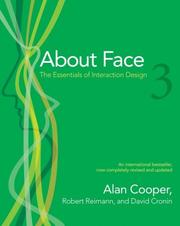
The definitive deep-dive into interaction design principles and patterns; reading this after research foundations lets you translate user insights into well-structured, thoughtful interface decisions.

Bridges cognitive psychology and UI design, explaining why certain design patterns work by grounding them in how human perception and memory actually function.

A practical, step-by-step guide to running your own usability tests — the natural next step after learning to design, so you can validate and iterate on your prototypes confidently.
Career: Portfolio, Process & Landing the Job
IntermediateTranslate your skills into a compelling UX portfolio, articulate your design process clearly, and navigate the job search — from case studies to interviews — with confidence.
▸ Study plan for this stage
Pace: 6–8 weeks, ~25–30 pages/day, with 1–2 days per week for portfolio and interview prep work
- Portfolio strategy: selecting, sequencing, and presenting case studies that demonstrate your design thinking and impact
- Case study structure: problem definition, research insights, design decisions, iterations, and measurable outcomes
- Articulating design decisions: translating your rationale into clear, persuasive narratives that stakeholders understand
- The design process as a storytelling tool: how to communicate your methodology, constraints, and trade-offs
- Job search navigation: resume positioning, networking, interview preparation, and salary negotiation
- Presenting under pressure: handling design critiques, defending decisions, and responding to stakeholder feedback
- Demonstrating impact: quantifying results, showing before/after, and connecting design to business outcomes
- Career positioning: identifying your UX specialization and communicating your unique value proposition
- What makes a strong UX case study, and how do you structure one to showcase both process and outcomes?
- How do you articulate design decisions in a way that persuades stakeholders who may not have a design background?
- What should your portfolio communicate about your design process, and how many case studies do you need?
- How do you prepare for and navigate a UX job interview, from initial screening to design exercise to final round?
- What strategies help you handle design critique and defend your decisions without becoming defensive?
- How do you quantify and communicate the business impact of your design work to non-designers?
- Audit your current portfolio (or create one from scratch): identify 2–3 of your strongest projects and map them against the case study framework from 'The UX Careers Handbook'
- Write a detailed case study for one of your projects, including problem statement, research findings, design decisions with rationale, iterations, and measurable outcomes (aim for 800–1200 words)
- Record yourself presenting a case study (5–7 minutes) and review the recording: are you articulating *why* you made decisions, or just *what* you did?
- Practice the 'design decision defense' exercise: pick a controversial design choice from your work and write 3 different ways to explain it to different audiences (executive, engineer, user researcher)
- Conduct a mock interview with a peer or mentor: prepare for both behavioral questions (tell me about a time you...) and a design exercise, then get feedback on how you communicated your process
- Create a 1-page 'positioning statement' that articulates your UX specialization, the types of problems you solve best, and your unique value proposition for employers
Next up: This stage equips you with a polished portfolio, clear communication skills, and job-search readiness; the next stage will likely deepen your expertise in a specific UX domain or advanced methodologies, building on the foundation of a successful career entry.

A comprehensive, honest guide to the UX job landscape — covering different UX roles, how to build your portfolio, write a resume, and break into the field from any background.

Teaches you how to present and defend your design work to stakeholders and hiring managers — an essential skill for portfolio presentations and design interviews that beginners often overlook.
Discussion
Keep reading
Paths that share books, cover the same subject, or open a related topic.