The Best Books to Learn Design Thinking, in Order
This curriculum takes you from the core mindset of human-centered design all the way through advanced facilitation, sprint methodology, and systemic innovation practice. Each stage builds on the last — first you absorb the philosophy, then you learn the process, then you master the tools and run real sprints, and finally you think at the level of organizational and systemic change.
Foundations: The Design Thinking Mindset
BeginnerUnderstand what design thinking is, where it came from, and why empathy and human-centeredness are its core principles — building the vocabulary and intuition needed for everything that follows.
▸ Study plan for this stage
Pace: 8–10 weeks, ~25–30 pages/day (approximately 2–3 weeks per book with time for reflection and exercises)
- Human-centered design: prioritizing user needs, mental models, and real-world behavior over assumptions
- The design thinking process: empathize, define, ideate, prototype, test—as a structured yet iterative approach to problem-solving
- Affordances and signifiers: how objects communicate their function and how poor design creates friction in everyday life
- Emotional design: the role of aesthetics, visceral response, and meaning in creating products people love
- Creative confidence: the belief that everyone can be creative and that creative thinking is a learnable skill, not innate talent
- Empathy as a design tool: deeply understanding user pain points, motivations, and contexts to drive innovation
- Prototyping and experimentation: learning through making and testing, embracing failure as feedback rather than defeat
- Organizational and personal mindset shifts: moving from expert-driven to collaborative, from fear of failure to learning-oriented culture
- What is the core difference between how designers approach problems and how most people do? How does Norman's concept of affordances illustrate this?
- Why does Tim Brown argue that design thinking is not just for designers? What makes it a broadly applicable problem-solving methodology?
- How do empathy and human-centeredness form the foundation of design thinking, and why does ignoring user mental models lead to poor design outcomes?
- What role does prototyping play in the design thinking process, and why is failing fast through prototypes better than lengthy planning?
- How does creative confidence relate to design thinking, and what specific barriers prevent people from believing they can be creative?
- Describe the emotional design framework from Norman's work. How do visceral, behavioral, and reflective levels of design interact?
- Everyday frustration audit: Spend a week documenting 5–10 objects or systems that frustrate you (door handles, apps, instructions). For each, identify the affordance failure or poor mental model design using Norman's vocabulary.
- Empathy interview: Conduct a 20–30 minute interview with someone about a routine task they find annoying or inefficient. Ask open-ended questions about their motivations, workarounds, and emotional responses. Document their mental model and unmet needs.
- Low-fidelity prototype sprint: Identify a small problem from your empathy interview. Spend 1–2 hours creating 3 different rough prototypes (sketches, cardboard, role-play) to explore solutions. Test each with your interviewee and iterate.
- Design thinking case study analysis: Choose one case study from Brown's *Change by Design* (e.g., the shopping cart redesign or hospital experience). Map it to the five-stage process and identify where empathy and iteration were critical.
- Personal creative confidence inventory: Reflect on moments when you felt creative and moments when you felt blocked. Identify the conditions (environment, people, stakes) that enabled or inhibited creativity, then design one small change to your routine to increase creative confidence.
- Affordance redesign challenge: Pick a poorly designed everyday object (a confusing sign, a bad interface, a frustrating tool). Sketch or prototype a redesign that improves affordances and mental model alignment. Explain your changes using Norman's framework.
Next up: This stage equips you with the vocabulary, mindset, and intuition to recognize human-centered problems and understand *why* design thinking works; the next stage will teach you the concrete tools and frameworks to systematically apply these principles to real projects and organizational challenges.

The canonical starting point for understanding how good design is rooted in human psychology and behavior — it trains your eye to see design problems everywhere before you learn to solve them.
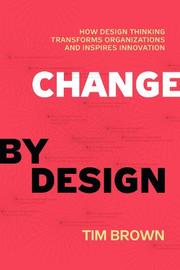
IDEO's CEO lays out the full design thinking framework in accessible terms; reading this second gives you a structured language to describe the empathize–define–ideate–prototype–test cycle.
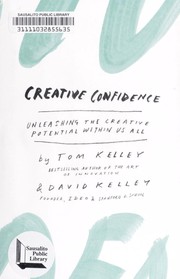
Addresses the biggest beginner barrier — fear of not being 'creative' — and builds the growth mindset and bias toward action that all later, more rigorous work depends on.
Process & Practice: Human-Centered Methods
BeginnerLearn concrete, repeatable methods for user research, insight synthesis, ideation, and early prototyping so you can run a basic design thinking project end-to-end.
▸ Study plan for this stage
Pace: 6–7 weeks, ~25–30 pages/day. Week 1–2: Field Guide (foundational methods); Week 3–4: Interviewing Users (deep dive into user research); Week 5–6: Review & synthesis; Week 7: Capstone project planning.
- The design thinking process as a human-centered, iterative cycle: empathize, define, ideate, prototype, test
- User research fundamentals: observation, interviews, and immersion as tools to uncover latent needs and behaviors
- Insight synthesis: moving from raw research data to actionable problem statements and design opportunities
- Structured interviewing techniques: asking open-ended questions, active listening, and avoiding leading questions to surface authentic user perspectives
- Rapid prototyping and testing: creating low-fidelity artifacts to validate assumptions and learn from users early
- Empathy mapping and persona development: translating research into shared mental models of users
- Ideation methods: brainstorming, concept generation, and collaborative problem-solving within constraints
- What are the five core phases of the design thinking process, and what is the primary goal of each phase?
- Why is observation and immersion important in user research, and how does it differ from simply asking users what they want?
- What are the key techniques for conducting effective interviews, and how do you avoid biasing or leading a user?
- How do you synthesize raw research data into insights, and what makes a good problem statement or design opportunity?
- What is the purpose of prototyping in design thinking, and why should prototypes be low-fidelity and quick?
- How do empathy maps and personas help teams move from research to ideation and design?
- Conduct a 30-minute observational study of a user in their natural environment (e.g., someone using a coffee shop, library, or workspace); document behaviors, pain points, and unmet needs without asking questions.
- Interview 2–3 people about a problem you're curious about using open-ended questions from Portigal's framework; record and transcribe key quotes and insights.
- Create an empathy map for one of your interview subjects, capturing what they say, think, feel, and do; identify the gap between their stated needs and observed behaviors.
- Synthesize findings from your interviews into a single problem statement or design opportunity using the format: 'How might we [challenge] for [user] so that [outcome]?'
- Run a 45-minute ideation session with 2–3 peers using a structured brainstorming method (e.g., SCAMPER or 6–3–5 brainwriting); generate at least 20 ideas without filtering.
- Create 3–5 low-fidelity prototypes (sketches, storyboards, or paper mockups) of different solutions to your problem statement; test each with one user and document their feedback.
Next up: This stage equips you with the foundational methods to run a complete design thinking cycle, preparing you to move into deeper specialization—whether that's advanced prototyping and testing, scaling design thinking across organizations, or applying these methods to specific domains like service design or innovation strategy.

A practical, method-by-method handbook that translates the philosophy from Stage 1 into step-by-step activities — the best 'how-to' companion for a first real project.

Deep user research is the engine of design thinking; this book gives you the specific conversational and observational techniques to uncover genuine human needs rather than surface opinions.
Prototyping & Testing: Making Ideas Tangible
IntermediateMaster the art of rapid prototyping, assumption testing, and iterative learning so that ideas are validated cheaply and quickly before significant resources are committed.
▸ Study plan for this stage
Pace: 6–7 weeks, ~40–50 pages/day (approximately 3–4 days per book, with 2–3 days for integration and exercises)
- The Sprint framework: a 5-day structured process for solving problems, testing assumptions, and validating ideas with real users
- Rapid prototyping and MVP (Minimum Viable Product) as tools to learn what customers actually want, not what you assume they want
- Build-Measure-Learn feedback loop: the core cycle of testing hypotheses, gathering data, and iterating based on validated learning
- Validated learning over vanity metrics: measuring what matters (actionable metrics) rather than misleading indicators of success
- Pivot or persevere decisions: using data from testing to decide whether to change direction or double down on your current approach
- Reducing waste and time-to-learning: getting to market quickly with minimal resources to test assumptions before committing large budgets
- Customer interviews and user testing as the foundation for understanding real needs and behaviors, not just opinions
- What are the five phases of the Sprint framework, and how does each phase move you closer to testing a critical assumption?
- How does an MVP differ from a fully-featured product, and why is building an MVP faster and cheaper than building the final product?
- Explain the Build-Measure-Learn loop: what do you build, what do you measure, and how do you learn from the results?
- What is the difference between vanity metrics and actionable metrics, and why do vanity metrics mislead entrepreneurs?
- When should you pivot versus persevere, and what data should inform this decision?
- How can you use a Sprint to test a specific assumption about your product or market, and what would constitute a successful or failed test?
- Run a 1-day or 2-day mini-Sprint on a real problem or business idea: map the problem, sketch solutions, storyboard a prototype, and conduct at least 3 user interviews to test your riskiest assumption
- Build a low-fidelity MVP (paper prototype, landing page, or clickable mockup) for a product idea and test it with 5–10 potential users; document their feedback and identify what you learned
- Design a Build-Measure-Learn experiment for a product or feature: define the hypothesis, specify what you'll build, decide what metrics you'll track, and commit to a decision rule (e.g., 'if X metric exceeds Y, we persevere; otherwise, we pivot')
- Conduct 3–5 customer interviews using the techniques from Sprint: ask open-ended questions, listen for unexpected insights, and identify your riskiest assumptions
- Create a metrics dashboard for a hypothetical startup: identify 2–3 actionable metrics that would tell you whether your product is gaining traction, and explain why you rejected vanity metrics
- Document a pivot or persevere decision for a real or fictional product: present the data you gathered, explain what you learned, and justify your decision with evidence from testing
Next up: This stage equips you with the tools and discipline to validate ideas quickly and cheaply; the next stage will deepen your ability to scale validated learning into sustainable business models and organizational practices.
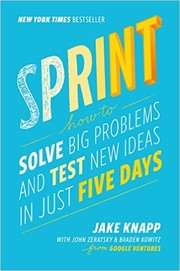
Introduces the Google Ventures five-day design sprint — a tightly structured process for prototyping and testing a big idea in one week; this is the gold-standard playbook for rapid iteration.
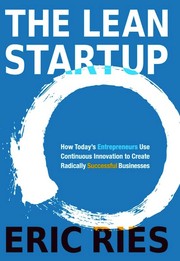
Extends the prototyping mindset into a build–measure–learn loop for ongoing product development, showing how design thinking principles scale beyond a single sprint into a continuous innovation engine.
Advanced Facilitation & Systemic Innovation
ExpertFacilitate design thinking workshops with teams, embed the process inside organizations, and tackle complex, systemic challenges that go beyond single products or services.
▸ Study plan for this stage
Pace: 8–10 weeks, ~40 pages/day (mix of reading and reflection; allow 2–3 weeks per book with overlap for integration)
- Design thinking as a business strategy and organizational capability—moving beyond project-level application to enterprise-wide transformation
- The four-question framework (What is? What if? What wows? What works?) as a structured method for facilitating innovation conversations
- The ten types of innovation (business model, platform, product, service, channel, brand, customer experience, process, organization, supply chain) and how to diagnose which levers matter most for systemic change
- Building organizational culture and structures that sustain continuous innovation rather than treating design thinking as a one-off initiative
- Facilitation skills for managing ambiguity, stakeholder alignment, and creative tension in complex, multi-disciplinary team environments
- Systems thinking applied to innovation—understanding interdependencies and second-order effects when intervening in organizational ecosystems
- Translating design insights into business models and operational strategies that create defensible competitive advantage
- How does Liedtka's four-question framework (What is? What if? What wows? What works?) enable teams to move from problem definition to business model innovation?
- What are the ten types of innovation identified by Keeley, and how do you diagnose which combination of innovation types is most relevant to a specific organizational challenge?
- How can you design and facilitate a design thinking workshop that produces actionable business outcomes rather than just creative ideas?
- What organizational structures, incentives, and cultural shifts are necessary to embed design thinking as a sustainable capability rather than a temporary program?
- How do you apply systems thinking to identify leverage points when addressing complex, multi-stakeholder challenges that span multiple business functions?
- What are the key differences between innovation at the product level versus the business model, platform, or organizational level, and when should you prioritize each?
- Facilitate a full design thinking workshop (4–6 hours) with a real team or organization using Liedtka's four-question framework; document the insights and business model implications that emerge
- Conduct a 'ten types of innovation' diagnostic on an organization or business you know well—map which innovation types are currently active, which are dormant, and which represent the highest-impact opportunities
- Design a 2–3 day innovation sprint or workshop agenda that integrates both Liedtka's questioning methodology and Keeley's innovation taxonomy; run it with a volunteer team and iterate based on results
- Create a business model canvas or similar artifact that translates design insights from a workshop into a concrete, testable hypothesis about how the organization should operate differently
- Interview 3–5 leaders or change agents in an organization about barriers to sustaining design thinking; map these barriers to organizational structure, incentives, and culture using systems thinking
- Develop a 6–12 month organizational change plan that embeds design thinking into a specific function (e.g., product development, customer service, strategy) with clear milestones, governance, and success metrics
Next up: This stage equips you to architect and lead innovation at the organizational system level; the next stage will likely deepen your ability to navigate resistance, measure impact, and scale design thinking across complex, distributed, or multi-stakeholder ecosystems.

Bridges design thinking and business strategy, teaching you how to facilitate the process with cross-functional teams and make the case for it inside real organizations.

Expands your innovation lens beyond products to business models, networks, and customer experience — essential for tackling systemic challenges and leading organization-wide design thinking initiatives.
Discussion
Keep reading
Paths that share books, cover the same subject, or open a related topic.