Best books to learn gymnastics fundamentals
This curriculum builds from the ground up — starting with how gymnastics works as a sport and how the body moves safely, then layering in skill progressions, conditioning science, and finally coaching methodology and program design. Each stage assumes the vocabulary and physical intuition developed in the previous one, creating a coherent path from curious beginner to knowledgeable coach or serious practitioner.
Foundations: Understanding the Sport
BeginnerGain a clear picture of what gymnastics is, how it is structured, and what physical qualities it demands — building the mental framework needed for everything that follows.
▸ Study plan for this stage
Pace: 2–3 weeks, ~20–25 pages/day (total ~150–180 pages). Read in focused 45–60 minute sessions to absorb foundational concepts without rushing.
- The four disciplines of gymnastics (artistic, rhythmic, trampoline, and aerobic) and their distinct characteristics and apparatus
- The historical development and evolution of gymnastics as an organized sport
- The basic physical demands and movement principles underlying all gymnastics (flexibility, strength, coordination, body awareness)
- How gymnastics is structured competitively: scoring systems, judging criteria, and competition levels
- The role of technique and form in gymnastics—why precision matters before progression
- Safety fundamentals and the importance of proper progressions in skill development
- The mental and physical preparation required to train safely and effectively in gymnastics
- What are the four main disciplines of gymnastics, and how do they differ in terms of apparatus, movement style, and competitive focus?
- How has gymnastics evolved historically, and what major changes have shaped the sport into its modern form?
- What are the core physical qualities (flexibility, strength, coordination, etc.) that all gymnasts must develop, regardless of discipline?
- How are gymnastics routines scored and judged? What distinguishes a well-executed skill from a poorly executed one?
- Why is proper progression and technique foundational to gymnastics training, and what role does safety play in skill development?
- What mental and physical preparation is necessary before beginning gymnastics training?
- Watch video clips of each gymnastics discipline (artistic, rhythmic, trampoline, aerobic) and identify the apparatus, movement patterns, and key differences between them.
- Create a visual timeline of gymnastics history based on Readhead's account, marking major rule changes, innovations, and shifts in the sport.
- Perform a basic flexibility and mobility assessment on yourself (shoulder rotation, hip flexibility, spinal extension) to understand the baseline physical demands discussed in the book.
- Observe a live gymnastics class or competition (in person or online) and identify examples of good technique vs. poor form, relating them to concepts from the reading.
- Write a one-page summary explaining why progression and safety are non-negotiable in gymnastics training, using specific examples from Readhead.
- Create a simple diagram or flowchart showing how gymnastics skills build upon foundational movements and why rushing progression is counterproductive.
Next up: This stage establishes the 'what' and 'why' of gymnastics—its structure, history, and physical demands—providing the conceptual foundation needed to move into the next stage, which will likely focus on specific techniques, progressions, and training methods for individual disciplines or skill categories.
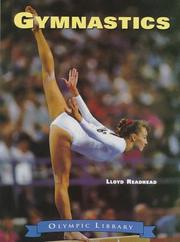
A comprehensive introductory overview of gymnastics as a sport — events, rules, and fundamental movement concepts — giving beginners an essential map of the discipline before diving into technique.
Body Preparation: Flexibility & Conditioning
BeginnerUnderstand how to systematically develop the flexibility, strength, and body control that gymnastics skills are built upon, and begin applying safe, structured conditioning methods.
▸ Study plan for this stage
Pace: 6–8 weeks, ~20–25 pages/day (alternating between books; ~2 weeks per book with overlap for integration)
- The neuromuscular basis of flexibility: how the stretch reflex, Golgi tendon organ, and proprioceptive neuromuscular facilitation (PNF) govern range of motion gains
- Systematic stretching protocols: the difference between static, dynamic, ballistic, and isometric stretching, and when each is appropriate in a training cycle
- Progressive overload in flexibility training: how to safely increase range of motion without injury through periodization and proper progression
- Foundational strength progressions: bodyweight movement patterns (pushing, pulling, hinging, squatting) as prerequisites for gymnastics skills
- Movement quality and body control: how to assess and correct movement dysfunction before advancing to complex skills
- Conditioning for gymnastics: building work capacity, managing fatigue, and structuring training sessions to balance flexibility, strength, and skill work
- The role of connective tissue adaptation: understanding how tendons, ligaments, and fascia respond to training over weeks and months
- Safe progression frameworks: how to identify readiness for advancement and avoid overtraining or compensation patterns
- Explain the stretch reflex and how understanding it changes your approach to flexibility training. What is the difference between working with and against this reflex?
- Compare and contrast static, dynamic, ballistic, and PNF stretching. When would you use each in a training week, and why?
- What does progressive overload mean in the context of flexibility, and how do you apply it safely over 8–12 weeks?
- Describe the foundational strength progressions outlined in Overcoming Gravity and explain why mastering these is essential before attempting advanced gymnastics movements.
- How do you assess whether your body control and movement quality are sufficient to progress to a harder skill variation?
- Design a simple weekly conditioning structure that balances flexibility work, strength progressions, and recovery. What principles guide your choices?
- Complete a full-body flexibility assessment (active and passive range of motion at major joints) and document baseline measurements; repeat weekly to track progress
- Practice all four stretching methods (static, dynamic, ballistic, PNF) on the same muscle group in separate sessions and journal the sensations, soreness, and ROM changes over 2 weeks
- Build a personalized 4-week stretching program using Kurz's protocols, targeting your three tightest areas, with progressive intensity increases each week
- Perform the foundational strength progressions from Overcoming Gravity (e.g., push-up variations, pull-up progressions, hollow body holds) 3× per week for 4 weeks, filming yourself to assess movement quality
- Create a movement quality checklist for 3–4 basic patterns (squat, hinge, push, pull) and use it to evaluate your own movement and a training partner's; identify and practice corrections
- Design and execute a full 6-week conditioning microcycle that integrates flexibility, strength, and skill work; track volume, intensity, and subjective recovery daily
Next up: This stage establishes the physical foundation—flexibility, strength, and body awareness—that makes learning actual gymnastics skills safe and efficient, preparing you to progress to skill-specific training where these capacities are applied to movements like handstands, levers, and tumbling progressions.

The definitive evidence-based guide to developing flexibility for athletic performance; gymnastics demands extreme range of motion, and this book provides the methodology to achieve it safely and efficiently.
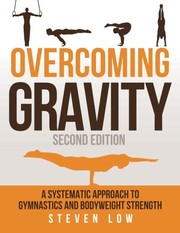
The most thorough resource on bodyweight strength and gymnastics-specific conditioning; read after Kurz so you can integrate flexibility and strength work into a coherent physical preparation plan.
Skill Progressions: Learning & Teaching Techniques
IntermediateLearn the step-by-step progressions for core gymnastics skills across apparatus, understand how skills are broken down for safe learning, and develop the ability to self-coach or teach others.
▸ Study plan for this stage
Pace: 4–5 weeks, ~25–30 pages/day, with 2–3 days per week dedicated to hands-on practice and skill breakdown analysis
- Systematic skill progressions: how to deconstruct complex gymnastics movements into teachable, safe micro-steps
- Apparatus-specific progressions: floor exercise, vault, bars, and beam progressions from beginner to intermediate level
- Spotting and safety techniques: proper hand placement, body positioning, and equipment use to prevent injury during skill learning
- Developmental readiness and prerequisite skills: identifying which foundational abilities must precede advanced movements
- Coaching cues and verbal instruction: how to communicate progressions clearly to athletes of different ages and abilities
- Common faults and corrections: recognizing technique errors and applying targeted drills to fix them
- Periodization and training cycles: structuring skill learning within a season to build competency progressively
- How would you break down a forward roll into 4–5 progressive steps suitable for a beginner, and what safety measures apply at each step?
- What are the key prerequisite skills an athlete must master before attempting a cartwheel, and how do you assess readiness?
- Describe the proper spotting technique for a back handspring, including hand placement, body mechanics, and when to reduce assistance.
- How do you identify and correct a common fault in a round-off (e.g., insufficient rotation, poor block, or uneven weight distribution)?
- What is the difference between skill progressions for floor exercise versus beam, and why do apparatus differences matter for teaching?
- How would you structure a 6–8 week training cycle to introduce three new skills while maintaining previously learned ones?
- Video analysis: Watch 3–4 skill progression videos (e.g., cartwheel, back handspring, beam walk progressions) and annotate each step with the prerequisite skills and safety cues from the books.
- Progression design: Write out a detailed 5–7 step progression for one skill per apparatus (floor, vault, bars, beam), including spotting methods, common errors, and corrections.
- Spotting practice: With a partner or coach, practice spotting techniques for at least 3 skills, focusing on hand placement, timing, and gradual release of support.
- Fault identification drill: Review 5–6 video clips of athletes performing skills with technique errors; identify the fault and propose 2–3 corrective drills based on the books' guidance.
- Coaching cue creation: Develop a set of 3–4 clear, concise verbal cues for teaching one complex skill (e.g., back handspring or beam turn), tested on a peer or athlete.
- Periodization plan: Create a 12-week training calendar that sequences skill progressions across all four apparatus while balancing conditioning and skill maintenance.
Next up: Mastering skill progressions and teaching techniques equips you to design safe, effective training programs—the foundation for the next stage, which will focus on program design, athlete assessment, and long-term athletic development planning.

Covers technical execution and skill development from a competitive coaching perspective, bridging the gap between basic drills and the precision required at higher levels of the sport.

The official USA Gymnastics resource for structuring beginner and youth programs; essential for understanding age-appropriate progressions and safety standards used by certified coaches.
Coaching Mastery: Pedagogy & Program Design
ExpertSynthesize everything into a coherent coaching philosophy — understanding how to design long-term athlete development plans, manage skill acquisition, and lead gymnasts from beginner to advanced levels.
▸ Study plan for this stage
Pace: 8–10 weeks, ~25–30 pages/day (alternating between both books; ~2 weeks per book with overlap for integration)
- Deep practice and myelin development: how deliberate, focused repetition builds neural pathways that underpin skill mastery in gymnastics
- The three elements of talent development: motivation, coaching quality, and environmental culture (from Coyle's framework)
- Periodization models: macrocycles, mesocycles, and microcycles as structural tools for planning long-term athlete progression
- Training phases and their purpose: preparation, competition, and transition phases in relation to gymnastics skill acquisition
- Peaking and tapering strategies: timing peak performance for competitions while managing fatigue and injury risk
- Individualization within periodized plans: adapting macrocycles and mesocycles to different gymnast levels and needs
- Ignition and coaching: how to create the conditions that spark and sustain athlete motivation and commitment
- Skill acquisition sequencing: using periodization principles to scaffold gymnastics skills from foundational to advanced complexity
- How does the concept of myelin development from *The Talent Code* inform the design of deliberate practice sessions in a gymnastics program, and what does this mean for coaching cues and feedback?
- What are the three elements Coyle identifies as essential to talent development, and how would you apply each to building a high-performing gymnastics club culture?
- Explain the difference between a macrocycle, mesocycle, and microcycle in Bompa's periodization model, and give a concrete example of how you would structure each for a gymnast preparing for a major competition.
- How do the four training phases (preparation, competition, transition, and recovery) align with the skill acquisition needs of gymnasts at different levels, and when would you emphasize each phase?
- What is peaking, and how would you use tapering strategies to ensure a gymnast is at peak performance for a specific competition without overtraining?
- How would you integrate Coyle's ideas about ignition and coaching culture with Bompa's periodization framework to create a long-term athlete development plan for a group of gymnasts with varying abilities?
- Read *The Talent Code* (Chapters 1–3) and identify three 'talent hotbeds' or high-performing gymnastics environments; analyze what elements of motivation, coaching, and culture they share using Coyle's framework.
- Design a 12-week mesocycle for a single gymnast preparing for a regional competition, specifying the focus of each microcycle (e.g., skill acquisition, refinement, peaking) and the rationale based on Bompa's periodization principles.
- Observe or video-record a 30-minute gymnastics training session; annotate it to identify moments of deep practice (myelin-building repetition) versus general conditioning, and reflect on how the coach could increase the proportion of deliberate practice.
- Create a full macrocycle (annual plan) for a hypothetical gymnastics program with three levels (beginner, intermediate, advanced); show how you would sequence training phases, competitions, and recovery periods for each group.
- Write a one-page coaching philosophy statement that synthesizes Coyle's three elements of talent development with Bompa's periodization approach; include specific commitments about how you would structure practice, feedback, and long-term planning.
- Develop a skill progression chart for one apparatus (e.g., bars, beam, vault) that maps foundational skills to advanced skills across a 3-year period, showing how you would use periodization to scaffold the learning and prevent overuse injuries.
Next up: This stage equips you with the theoretical and practical tools to design and lead a complete gymnastics program; the next stage will likely focus on implementation details—such as managing specific coaching scenarios, injury prevention, and adapting your philosophy to different athlete populations and competitive contexts.

Explores the neuroscience of deep practice and skill acquisition; directly applicable to gymnastics coaching, it reframes how to structure repetition and feedback for maximum learning — best read once you know what skills you are teaching.
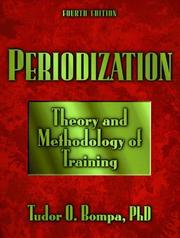
The canonical text on long-term athletic development and training periodization; gives coaches the framework to design season-long and multi-year gymnastics programs that peak athletes at the right time.
Discussion
Keep reading
Paths that share books, cover the same subject, or open a related topic.