Home workouts with no equipment: the best bodyweight training books, in order
This curriculum takes a beginner from zero bodyweight experience to advanced calisthenics mastery, progressing through four tightly sequenced stages. Each stage builds on the last — first establishing movement literacy and safe habits, then layering in structured programming, skill-based strength, and finally mobility and long-term athletic longevity. Every book is chosen because it adds a distinct layer the previous ones don't cover.
Foundations: Move Well, Start Safe
BeginnerUnderstand the basic principles of bodyweight training, learn fundamental movement patterns, and establish a consistent beginner routine with no equipment.
▸ Study plan for this stage
Pace: 4–5 weeks, ~20–25 pages/day (approximately 140–175 pages total across both books)
- Progressive calisthenics: how to systematically increase difficulty by manipulating leverage, range of motion, and volume rather than adding weight
- The six fundamental movement patterns: push, pull, squat, hinge, carry, and core stability—and why mastering these transfers to all bodyweight exercises
- Proper body alignment and movement quality over speed: the importance of form, neutral spine, and controlled tempo to prevent injury and maximize results
- The 'minimum effective dose' principle: how to build an efficient routine with minimal time investment that still produces measurable strength and conditioning gains
- Periodization and progression frameworks: understanding how to structure workouts (frequency, sets, reps, rest) and advance safely from beginner to intermediate levels
- The role of consistency and habit-building: establishing a sustainable training routine and mindset that prioritizes long-term adherence over short-term intensity
- Bodyweight exercise variations and scaling: how to modify standard movements to match your current fitness level and progress systematically
- What are the six fundamental movement patterns, and why is mastering these patterns more important than learning dozens of different exercises?
- How does progressive calisthenics differ from traditional weight training, and what are three ways you can increase difficulty in a bodyweight exercise without adding external load?
- Describe the key principles of proper form and body alignment for at least three basic movements (e.g., push-up, squat, plank). Why does movement quality matter more than speed or volume for beginners?
- What is the 'minimum effective dose' and how does it apply to designing a beginner workout routine? Give a concrete example of a time-efficient routine from the books.
- Explain the concept of progression in calisthenics: what are the typical stages a beginner should move through when learning a new movement pattern?
- How should a beginner structure their weekly training (frequency, rest days, exercise selection) to build consistency and avoid overtraining or burnout?
- Complete a full movement assessment: perform 5–10 reps of each fundamental pattern (push, pull, squat, hinge, carry, core hold) and video yourself or have someone observe your form. Identify one alignment or movement quality issue in each pattern and note it for correction.
- Design a personalized beginner routine (3–4 days/week, 20–30 minutes) using the principles from both books. Write out the exercises, sets, reps, and rest periods. Include at least one progression pathway for each movement.
- Practice the progressions for one movement pattern (e.g., push-ups) over 2 weeks: perform the beginner variation daily or every other day, focusing on form. Document your reps, how the movement feels, and when you're ready to advance to the next variation.
- Perform a 2-week training log: record every workout, including exercises, sets, reps, how you felt, and any form issues. Review the log and identify patterns (e.g., which days you're strongest, which movements need more work).
- Teach someone else one fundamental movement pattern (e.g., a proper squat or plank). Explain the key alignment cues, common mistakes, and how to scale it for different levels. This cements your understanding and reveals gaps.
- Create a 'form checklist' for 5 basic exercises (e.g., push-up, squat, plank, glute bridge, inverted row). For each, list 3–4 critical alignment or breathing cues. Use this checklist during every workout for the first 2–3 weeks.
Next up: This stage establishes the movement vocabulary and safe, consistent training habits needed to progress into intermediate calisthenics; the next stage will build on these foundations by introducing more complex movement combinations, increased volume and intensity, and sport-specific or goal-specific training adaptations.

The perfect entry point: Lauren demystifies bodyweight training for absolute beginners, explains the 'why' behind each movement, and provides a clear 10-week program. It builds the vocabulary and confidence needed for everything that follows.
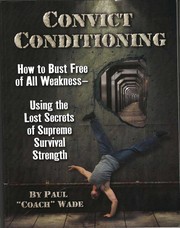
Introduces the concept of progressive calisthenics — the idea that every hard exercise has a beginner step. Read second so you already have basic movement literacy and can appreciate the logical progression from wall push-ups to one-arm push-ups.
Building Strength: Structured Bodyweight Programming
BeginnerApply structured, science-backed programming to build real strength using only bodyweight, and understand how to design and progress your own workouts.
▸ Study plan for this stage
Pace: 6–8 weeks, ~25–30 pages/day (alternating between both books; start with "Overcoming Gravity" for foundational theory, then "The Naked Warrior" for practical application)
- The Strength Pyramid: how to structure training from goals down to individual exercises, sets, reps, and recovery
- Movement patterns and progressions: understanding horizontal/vertical pushing and pulling, squats, and hinge movements as the foundation of bodyweight training
- Adaptation and progressive overload: how the body adapts to stress, and the specific methods to increase difficulty (volume, density, intensity, skill) without equipment
- The role of skill practice vs. strength training: why practicing movement patterns with low fatigue is essential for long-term progress
- Programming principles: frequency, volume, intensity distribution, and periodization for sustainable strength gains
- Tension, time under tension, and mechanical tension as drivers of muscle growth and strength
- The importance of mobility, stability, and movement quality as prerequisites for safe progression
- Autoregulation and listening to your body: how to adjust training based on daily readiness and recovery
- What are the main movement patterns in bodyweight training, and how do progressions work within each pattern?
- How do you structure a training week using the principles from 'Overcoming Gravity'—what should frequency, volume, and intensity look like for a beginner?
- What is the difference between skill practice and strength training, and why does Pavel emphasize practicing with low fatigue?
- How do you apply progressive overload without equipment? What are the specific methods outlined in both books?
- What role does tension play in building strength, and how do you create and maintain it during bodyweight exercises?
- How should you modify your training based on recovery and daily readiness, and what signs indicate you need to back off?
- Design a 4-week beginner strength program using the framework from 'Overcoming Gravity': choose 3–4 movement patterns, assign frequency and volume, and write out the progression scheme
- Practice the fundamental progressions from both books (e.g., push-up progressions, pull-up progressions, squat progressions, hinge progressions) for 2 weeks, focusing on movement quality and tension—film yourself to assess form
- Implement a skill practice routine from 'The Naked Warrior' (e.g., daily push-ups or pull-ups with low fatigue) for 3 weeks and track how your performance improves without traditional 'workouts'
- Create a simple autoregulation system: rate your readiness each day (1–10) and adjust your planned volume/intensity accordingly; track this for 4 weeks and reflect on how it affects your progress
- Analyze a sample program (yours or a published one) using the Strength Pyramid from 'Overcoming Gravity'—identify the goals, movement patterns, volume, intensity, and recovery strategy
- Perform a mobility and stability assessment on yourself; identify weak points and design a 5-minute prehab routine to address them before your main training
Next up: This stage equips you with the science and structure to build real strength independently; the next stage will teach you how to specialize, peak for specific goals, and handle advanced progressions when bodyweight alone becomes insufficient.
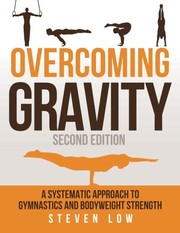
The most comprehensive programming guide in calisthenics — covers periodization, exercise selection, and injury prevention in depth. Read after the first stage so you have enough movement experience to make sense of its detailed frameworks.
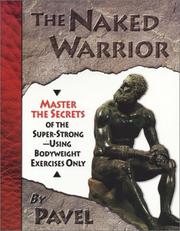
Focuses on maximizing strength from minimal practice using the pistol squat and one-arm push-up as teaching vehicles. Its 'grease the groove' and tension techniques add a crucial neurological dimension to the purely volume-based approach of earlier books.
Skill & Mastery: Advanced Calisthenics
IntermediateProgress into advanced bodyweight skills — handstands, levers, and gymnastics-style movements — and understand the specific training methods required to achieve them.
▸ Study plan for this stage
Pace: 4–5 weeks, ~25–30 pages/day with 2–3 rest days per week for practice and recovery
- Progressive overload through pull-up bar variations: from basic pull-ups to weighted, archer, and one-arm progressions
- Lever progressions and their biomechanics: front levers, back levers, and the specific strength requirements for each
- Handstand holds and transitions using the pull-up bar as a training tool for balance and shoulder stability
- Training methodology for advanced calisthenics: volume, intensity, frequency, and recovery protocols specific to skill work
- Grip strength and upper body tension as foundational elements for advanced movements
- Movement quality and body awareness: how to assess and refine form before progressing to harder variations
- Periodization and programming: structuring training cycles to build toward advanced skills without plateauing or injury
- What are the key progressions from a standard pull-up to an archer pull-up, and what specific strength adaptations occur at each stage?
- How do front lever and back lever training differ in terms of positioning, leverage, and the muscle groups they emphasize?
- What role does the pull-up bar play in developing handstand skills, and how does bar work complement floor-based handstand training?
- How should training volume and intensity be balanced when working toward advanced calisthenics skills, and what does recovery look like?
- What are the common form breakdowns in advanced pull-up variations, and how do you identify and correct them?
- How does grip strength development support progression in lever work and other advanced movements?
- Perform a baseline assessment: test your current pull-up max, archer pull-up range, and static hold times (if any) on levers; record these to track progress
- Practice pull-up progressions daily: standard pull-ups → wide-grip → archer pull-ups → one-arm pull-up negatives, spending 2–3 sessions per week on each variation
- Work front lever progressions 3–4 times per week: tuck holds → single-leg holds → straddle holds, holding each for max time and tracking duration
- Work back lever progressions 2–3 times per week: starting with scapular pulls, then tuck holds, progressing to extended positions
- Perform grip strength conditioning: dead hangs, towel hangs, and thick-bar work 2–3 times per week to build the foundation for advanced skills
- Film yourself performing pull-ups and lever holds weekly; review for form breakdown, range of motion, and body alignment before progressing
- Complete a 4-week training cycle: 2 weeks building volume, 1 week deload/technique focus, 1 week testing new progressions; repeat with increased difficulty
Next up: This stage builds the upper-body pulling strength, lever understanding, and bar mastery needed to transition into full-body gymnastics-style movements and handstand progressions, setting the foundation for the next phase of advanced skill integration.

Bridges the gap between basic calisthenics and advanced bar and floor skills with clear photo progressions and an encouraging tone. Al's approachable style makes intimidating skills like muscle-ups and levers feel achievable.
Mobility & Longevity: Move for Life
ExpertIntegrate deep mobility, flexibility, and movement quality work to complement strength training, prevent injury, and sustain a lifelong home practice.
▸ Study plan for this stage
Pace: 8–10 weeks, ~25–30 pages/day. Read "Becoming a Supple Leopard" (weeks 1–6, ~400 pages), then "Stretching Scientifically" (weeks 7–10, ~150 pages). Allocate 2–3 days per week for practical movement sessions.
- Movement quality and position: how to assess and correct movement patterns using the Mobility WOD framework (Starrett's systematic approach to evaluating joints and movement)
- The 90/90 rule and joint mechanics: understanding how to create stable, efficient movement by organizing joints in space before loading them
- Soft tissue mobilization and self-myofascial release: using simple tools and techniques to address tissue restrictions and improve movement capacity
- Flexibility vs. mobility: the distinction between passive range of motion and active, controlled range of motion that translates to real-world movement
- Stretching science and adaptation: how different stretching protocols (static, dynamic, PNF) trigger physiological changes and when to apply each method
- Movement quality as injury prevention: how proper positioning and mobility work reduce compensation patterns and chronic pain
- Sustainable long-term practice: building a repeatable, low-barrier home mobility routine that fits into daily life without equipment
- What is the difference between mobility and flexibility, and why does Starrett emphasize that mobility (active range of motion) matters more for functional movement?
- How do you use the Mobility WOD framework to assess a movement pattern, and what are the three main steps to identify and address a movement restriction?
- Explain the 90/90 rule and give an example of how organizing a joint in space before loading it prevents injury during a home workout movement.
- What are the main stretching protocols described in 'Stretching Scientifically,' and when would you use static stretching versus dynamic stretching in a home practice?
- How does soft tissue mobilization (using tools like a lacrosse ball or foam roller) improve movement capacity, and what is the mechanism behind why it works?
- Design a 15–20 minute daily mobility routine for someone with desk job restrictions (tight hips, rounded shoulders) using principles from both books.
- Complete a full-body movement assessment using Starrett's framework: film yourself performing a squat, lunge, and push-up; identify 3–4 movement restrictions or compensation patterns; document them.
- Practice 5–10 self-myofascial release techniques from 'Becoming a Supple Leopard' (e.g., lacrosse ball on glutes, calf smashing) for 2 weeks; track which restrictions improve and how movement quality changes.
- Create a personalized 15–20 minute daily mobility sequence addressing your top 3 movement restrictions; include dynamic stretches, static holds, and soft tissue work; perform it daily for 3 weeks and journal improvements.
- Perform a stretching protocol comparison: spend one week doing only static stretching (Kurz's approach), then one week doing dynamic stretching; note differences in mobility, soreness, and movement quality.
- Apply the 90/90 rule to three home workout movements (e.g., push-up, lunge, deadlift): film yourself, identify joint organization issues, and practice corrected versions until the pattern feels stable.
- Build a 'movement snack' routine: 3–5 minute mobility breaks to perform 4–5 times daily (based on Starrett's philosophy); track adherence and cumulative impact on movement quality over 2 weeks.
Next up: This stage establishes the foundational movement quality, injury prevention, and sustainable daily practices that enable safe progression into advanced strength programming and specialized training protocols in the next stage.
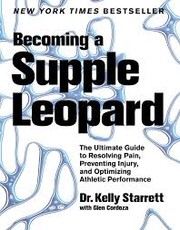
The definitive manual on mobility and movement mechanics — teaches you to identify and fix the restrictions that limit your calisthenics performance and cause injury. Best read after building a solid strength base so you can immediately apply its fixes.

Provides the science-backed theory behind flexibility development, including active and dynamic stretching methods. Pairs perfectly with Starrett's practical approach to give you both the 'how' and the 'why' of lasting mobility.
Discussion
Keep reading
Paths that share books, cover the same subject, or open a related topic.