Building muscle: the best books on hypertrophy training, in order
This curriculum takes a beginner from foundational fitness literacy all the way to advanced hypertrophy science and intelligent program design. Each stage builds on the last — first establishing the "why" and basic habits, then layering in the biomechanics and nutrition details, and finally diving into the cutting-edge science and self-coaching skills needed to keep progressing for life.
Foundations: Mindset, Movement & First Principles
BeginnerUnderstand why resistance training works, build a sustainable habit, learn fundamental movement patterns, and get your first real program in hand.
▸ Study plan for this stage
Pace: 6–8 weeks, ~40–50 pages/day (mix of reading and practical application)
- The biomechanics of the big compound lifts (squat, bench press, deadlift, overhead press, barbell row) and why they're the foundation of strength
- Progressive overload as the primary driver of muscle growth and strength adaptation
- The relationship between volume, intensity, and frequency in training stimulus and recovery
- Proper form and technique as non-negotiable prerequisites for safety and long-term progress
- Nutrition fundamentals: caloric surplus/deficit, macronutrient targets, and meal timing for muscle building
- Consistency and habit formation as more important than perfection or intensity
- Individual variation in response to training and the importance of tracking and adjusting based on results
- Recovery (sleep, stress, nutrition) as an active component of the training process, not an afterthought
- Why does Starting Strength emphasize the squat, bench press, and deadlift as the core of a beginner program, and what makes these lifts superior to isolation exercises for building foundational strength?
- What is progressive overload, and how do you apply it practically in your training week-to-week?
- Explain the difference between training volume, intensity, and frequency—how do these variables interact to drive adaptation?
- What are the key technical cues for performing a safe, effective squat and deadlift, and why does form matter more for beginners than advanced lifters?
- According to Bigger Leaner Stronger, what are your daily macronutrient targets if you weigh 180 lbs and want to build muscle, and why do these numbers matter?
- How do you know if your current program is working, and what metrics should you track to assess progress?
- Film yourself performing a squat, bench press, and deadlift with light weight (empty bar or 50% of working weight). Compare your form to the technical cues in Starting Strength; identify 2–3 flaws and practice correcting them daily for one week.
- Follow the Starting Strength Novice Linear Progression (NLP) program for 4–6 weeks: squat 3x/week, bench and deadlift alternating 2x/week. Log every set, rep, and weight in a spreadsheet or app. Aim to add 5 lbs to lower body lifts and 2.5 lbs to upper body lifts each session.
- Calculate your maintenance calories using the formula in Bigger Leaner Stronger (bodyweight × 14–16 for sedentary, ×16–18 for moderate activity). Plan a week of meals hitting your target protein (0.8–1g per lb bodyweight), carbs, and fats. Track one full week in MyFitnessPal or similar.
- Create a simple habit tracker (paper or digital) for the next 6 weeks: track gym sessions, sleep hours, and whether you hit your protein target. Aim for 90%+ compliance. Review weekly to identify barriers.
- Watch or read through the form tutorials in Starting Strength (or find the official video demonstrations online referenced in the book). Perform 3 sets of 5 reps of each main lift twice per week with a coach, experienced lifter, or mirror feedback—focus on one cue per session.
- After 4 weeks of training, write a one-page reflection: What lifts improved most? Where did you stall? What nutrition or recovery changes would help? Use this to adjust your approach for weeks 5–8.
Next up: This stage equips you with the mechanical and nutritional foundations to train safely and consistently; the next stage will layer in periodization, advanced programming strategies, and specialization to break through plateaus and accelerate progress toward specific physique or performance goals.
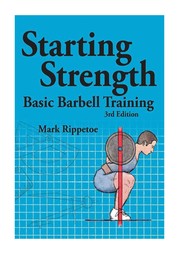
The single best introduction to the core barbell lifts and the logic of progressive overload. Reading this first gives beginners a precise movement vocabulary and a simple, proven program to start building muscle immediately.
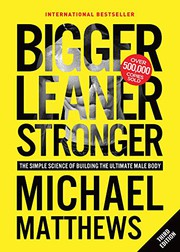
Bridges the gap between gym mechanics and everyday application by covering calories, macros, and beginner program design in plain language. Read after Starting Strength to understand how nutrition and training interact from day one.
Nutrition Science: Fueling Muscle Growth
BeginnerDevelop a solid, evidence-based understanding of protein, calories, and nutrient timing so that diet decisions actively support hypertrophy rather than undermining it.
▸ Study plan for this stage
Pace: 4–5 weeks, ~40–50 pages/day. Week 1–2: "The Lean Muscle Diet" (complete); Week 3–4: "Nutrient Timing" (complete); Week 5: Review, integration, and practical application exercises.
- Caloric surplus/deficit and how total energy intake drives muscle growth or fat loss independent of meal timing
- Protein requirements for hypertrophy (grams per pound of body weight) and how to distribute protein across meals
- Macronutrient ratios and their role in supporting training intensity and recovery
- The anabolic window and nutrient timing around workouts—what the science actually shows vs. common myths
- Carbohydrate timing and its effect on training performance, glycogen repletion, and muscle protein synthesis
- Micronutrients and hydration as often-overlooked factors in recovery and adaptation
- How to construct a sustainable, personalized nutrition plan that aligns with your training phase and goals
- What is the relationship between total daily caloric intake and muscle growth, and how does this override the importance of meal timing?
- How much protein should you consume daily for hypertrophy, and why is protein distribution across meals important according to Schuler and Ivy?
- What does the research in 'Nutrient Timing' reveal about the anabolic window, and how does this differ from popular gym mythology?
- How should carbohydrate intake and timing change based on your training intensity and phase (bulking vs. cutting)?
- What role do micronutrients and hydration play in muscle recovery and adaptation, and which ones are most critical?
- How would you design a day's nutrition plan that incorporates the principles from both books for a specific training goal?
- Calculate your daily caloric needs and protein target based on your body weight and training goal; track intake for 3 days to identify gaps
- Map out your current meal timing relative to workouts; redesign one week of meals using Ivy's nutrient timing principles and track performance/recovery
- Create a detailed nutrition plan for a full training week (including pre-workout, intra-workout, and post-workout nutrition) aligned with your phase
- Compare your current supplement/micronutrient intake against Schuler's recommendations; identify and address any deficiencies
- Perform a 2-week experiment: implement one key principle from the books (e.g., post-workout carbs + protein) and journal subjective recovery, strength, and body composition changes
- Write a one-page summary explaining the difference between what the science says about nutrient timing vs. what you believed before reading these books
Next up: This stage establishes the nutritional foundation—calories, protein, and timing—that makes training stimulus actually translate into muscle growth; the next stage will teach you how to structure that training stimulus itself to maximize the adaptation your nutrition now supports.

Alan Aragon is one of the most respected evidence-based nutrition researchers; this book translates peer-reviewed findings on protein targets, caloric surplus, and food quality into a practical eating framework for muscle gain.
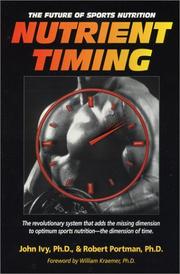
Digs specifically into when to eat around training — a question beginners often ask but rarely get a science-backed answer to. Reading it after Aragon means you already have the macro foundation and can now refine the timing layer.
Hypertrophy Science: How Muscle Actually Grows
IntermediateUnderstand the cellular and mechanical mechanisms of hypertrophy — tension, metabolic stress, muscle damage — and translate that science into smarter exercise selection, volume, and intensity choices.
▸ Study plan for this stage
Pace: 8–10 weeks, ~25–30 pages/day (approximately 200–250 pages total)
- The three primary mechanisms of hypertrophy: mechanical tension, metabolic stress, and muscle damage—and how each contributes to growth
- The role of protein synthesis, mTOR signaling, and satellite cell activation in the hypertrophic response
- How fiber type recruitment and motor unit activation patterns determine which muscles grow and under what conditions
- The relationship between rep ranges, load, and time under tension in driving hypertrophy across different muscle fiber types
- Exercise selection principles: compound vs. isolation movements, movement mechanics, and range of motion effects on growth
- The importance of progressive overload and how to manipulate volume, intensity, and frequency to optimize hypertrophic adaptation
- Individual variability in hypertrophic response based on genetics, training age, and recovery capacity
- What are the three primary mechanisms of muscle hypertrophy, and how does each mechanism operate at the cellular level?
- How do mechanical tension, metabolic stress, and muscle damage differ in their effects on protein synthesis and satellite cell activation?
- Why can hypertrophy occur across a range of rep ranges (6–35 reps), and what are the trade-offs of training in different rep ranges?
- How should exercise selection (compound vs. isolation, movement mechanics, range of motion) be informed by hypertrophy science?
- What is progressive overload, and what are the different ways to apply it to drive continued hypertrophic adaptation?
- How do individual factors like genetics, training age, and recovery capacity influence hypertrophic response, and how should programming account for this?
- Create a detailed breakdown of one compound lift (e.g., barbell back squat) analyzing how it creates mechanical tension, metabolic stress, and muscle damage—then design a 4-week progression plan using different rep ranges
- Compare and contrast two exercise variations (e.g., barbell bench press vs. dumbbell bench press) using Schoenfeld's framework: which mechanism does each emphasize, and what does this tell you about when to use each?
- Design a complete 8-week hypertrophy block for one muscle group, specifying exercises, rep ranges, sets, rest periods, and progression strategy—justify each choice using the three mechanisms
- Analyze your current or past training program: identify which hypertrophy mechanisms it emphasizes, where it may be deficient, and propose specific modifications based on the science
- Create a comparison table of rep ranges (6–8, 8–12, 12–15, 15–20, 20+) showing the primary mechanism emphasized, fiber type recruitment, fatigue management, and practical applications
- Write a 2–3 page explanation of how you would program differently for a beginner vs. an advanced lifter based on individual variability in hypertrophic response
Next up: This stage establishes the scientific foundation for why certain training variables drive growth; the next stage will apply these mechanisms to periodization models and long-term program design that optimizes hypertrophy across training cycles.
The definitive academic-yet-accessible textbook on hypertrophy by the field's leading researcher. It covers every mechanism and training variable with citations, making it the cornerstone of any serious muscle-building education.
Translates hypertrophy science into a hierarchical, priority-ranked training framework. Read after Schoenfeld so you can immediately map the mechanisms you just learned onto real programming decisions.
The companion nutrition volume applies the same evidence-based pyramid approach to calories, protein, and supplementation at an intermediate level — deepening and unifying everything covered in Stage 2.
Advanced Programming & Periodization
ExpertMaster the principles of long-term program design — periodization, autoregulation, fatigue management, and peaking — so you can write, evaluate, and adjust your own intelligent training plans.
▸ Study plan for this stage
Pace: 8–10 weeks, ~40–50 pages/day (mix of dense theory and application work)
- Periodization models (linear, undulating, block) and when to apply each based on training goals and athlete level
- Macrocycles, mesocycles, and microcycles: how to structure training phases and why each duration matters
- Autoregulation principles: RPE, RIR, and velocity-based training to adjust intensity in real-time without rigid percentages
- Fatigue management and recovery: distinguishing between productive fatigue and overtraining, and using deload weeks strategically
- Volume landmarks (MEV, MV, MAV, MRV) and how to dose training volume for hypertrophy, strength, and power adaptations
- Peaking strategies: tapering, deloading, and competition preparation to maximize performance at critical moments
- Program evaluation: assessing whether a plan is working and when/how to modify it based on individual response
- What are the three main periodization models, and what training goal or athlete profile is each best suited for?
- How do macrocycles, mesocycles, and microcycles relate to each other, and what typically happens in each?
- What is autoregulation, and how does it differ from percentage-based training? Give examples using RPE, RIR, or velocity.
- What are the five volume landmarks (MEV, MV, MAV, MRV, and one more), and how do you use them to set training volume for a given exercise?
- How do you design a deload week, and what is the difference between a deload and a taper?
- You've been running a program for 6 weeks and notice strength gains have stalled but fatigue is high. What does this tell you, and what adjustments would you make?
- Read 'Periodization' by Bompa (weeks 1–4): annotate the three periodization models, noting real-world examples for each. Create a one-page visual comparison chart.
- Design a 12-week linear periodization block for a beginner lifter targeting strength in the squat, bench, and deadlift. Include macrocycle phases, mesocycle structure, and rep ranges per phase.
- Read 'Scientific Principles of Strength Training' by Israetel (weeks 5–8): create a glossary of volume landmarks (MEV, MV, MAV, MRV) with definitions and practical examples for one exercise.
- Write a 4-week undulating periodization program for an intermediate lifter, varying intensity and volume across sessions. Justify each session's structure using autoregulation cues (RPE/RIR).
- Analyze a real program (your own or a published one) using Bompa's and Israetel's frameworks: identify the periodization model, volume landmarks, and fatigue management strategy. Propose one improvement.
- Design a 2-week deload and a 1-week taper for a lifter preparing for a competition. Explain the difference in structure and why each is necessary.
Next up: This stage equips you to design and defend intelligent long-term training plans; the next stage will likely focus on applying these principles to specific populations (beginners, advanced lifters, athletes) or contexts (sport-specific training, injury prevention, or nutrition integration).
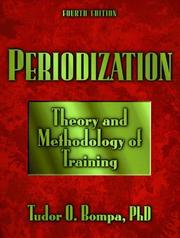
The foundational text on periodization used by coaches worldwide. Reading it here gives you the structural language — mesocycles, microcycles, loading waves — needed to make sense of advanced programming literature.

Distills modern sport science into a concise set of principles (specificity, overload, fatigue management, variation) and shows exactly how to apply them to hypertrophy programming. A perfect capstone that ties all previous stages together.
Discussion
Keep reading
Paths that share books, cover the same subject, or open a related topic.