Film Editing: Best Books on the Art and Craft of the Cut
This curriculum starts from the intermediate level, assuming the learner already understands basic filmmaking concepts, and builds toward a deep, craft-level mastery of film editing. Each stage layers new understanding — first internalizing the philosophy and instinct behind the cut, then studying continuity and technical grammar, then absorbing the wisdom of master editors, and finally engaging with advanced theory and scene-level analysis.
The Philosophy of the Cut
IntermediateInternalize why editors cut — the emotional logic, rhythm, and storytelling instinct that drives every decision before touching a timeline.
▸ Study plan for this stage
Pace: 6–8 weeks, ~20–25 pages/day, with 2–3 reflection days per week. Start with *In the Blink of an Eye* (4 weeks), then *The Conversations* (3–4 weeks). Allow time between books to absorb Murch's theory before encountering his practice through Ondaatje's lens.
- The 'eye blink' principle: cutting at moments of natural visual attention shifts to feel invisible and emotionally truthful
- Rhythm as the primary storytelling tool—how tempo, pacing, and silence shape meaning independent of content
- The editor's emotional logic: decisions driven by intuition and feeling, not technical rules or formulas
- Continuity of emotion over continuity of action: prioritizing the viewer's emotional journey over spatial or temporal logic
- The cut as a form of compression and revelation: what you remove is as important as what you keep
- Sound and image as equal partners in the cut, not image-first hierarchy
- The editor as the 'last writer' of the film: reshaping narrative and theme through structural choices
- Murch's five criteria for cutting (emotion, story, rhythm, eye trace, spatial continuity) and their hierarchy
- What is the 'blink of the eye' principle, and why does Murch argue it creates an invisible cut that feels emotionally true?
- How does Murch define rhythm in editing, and what role does it play independent of the film's narrative content?
- According to Murch, what is the hierarchy of the five criteria for cutting, and why does emotion take precedence?
- In *The Conversations*, how does Ondaatje's account of editing *The English Patient* illustrate Murch's philosophy in practice?
- What does it mean that the editor is the 'last writer' of the film, and how do Murch's examples demonstrate this?
- How do Murch and Ondaatje discuss the relationship between sound and image in the cutting process, and why is this balance critical?
- Watch a 3–5 minute scene from a Murch-edited film (*Apocalypse Now*, *The English Patient*, or *Ghost Protocol*) and identify moments where cuts align with natural eye blinks or attention shifts. Annotate the emotional logic of each cut.
- Select a scene from any film and re-edit it mentally (or on paper) by removing 20–30% of shots. Write a paragraph explaining how the rhythm and emotional arc changed, and what the removed material was doing.
- Record yourself describing a personal memory in 2 minutes, then in 30 seconds. Reflect on what you cut and why—how did compression change the emotional emphasis?
- Read a passage from *In the Blink of an Eye* about a specific film moment, then watch that moment in the film. Write about the gap between Murch's description and your own viewing experience.
- Create a 'cutting journal' while reading *The Conversations*: for each editing decision Ondaatje describes, note the emotional intention, the technical choice, and the principle from Murch it illustrates.
- Analyze the opening 2 minutes of *The English Patient* (or another Murch film) by charting the rhythm, shot lengths, and sound design. Identify where emotion overrides spatial logic in the cutting choices.
Next up: This stage establishes the *why* and *how* of editing as emotional storytelling; the next stage will translate this philosophy into concrete technical and structural methods—learning the grammar of cuts, transitions, and pacing patterns that execute these principles on the timeline.
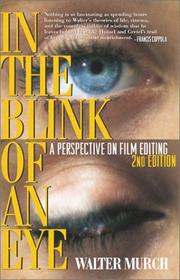
The single most essential book on editing philosophy. Murch's 'Rule of Six' and his ideas on emotion, story, and rhythm give the intermediate learner a profound framework for every cut they'll ever make.
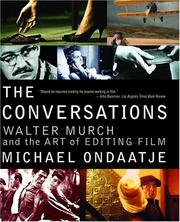
A deep, wide-ranging dialogue with Walter Murch that expands on his ideas in cinematic and literary context — read immediately after Blink of an Eye to let Murch's thinking breathe and deepen.
Continuity, Grammar & the Craft Toolkit
IntermediateMaster the technical and visual grammar of editing — continuity, screen direction, pacing, transitions, and the rules that make invisible editing possible.
▸ Study plan for this stage
Pace: 8–10 weeks, ~25–30 pages/day (Reisz first: 3–4 weeks; Katz second: 4–5 weeks, with overlap for integration)
- Continuity editing as invisible storytelling: maintaining spatial and temporal coherence so the audience follows the narrative without noticing cuts
- Screen direction and axis of action: the 180-degree rule and how to preserve consistent geography across shots
- Pacing and rhythm through shot duration, cut timing, and the relationship between editing pace and emotional tone
- Transitions and their grammar: cuts, dissolves, fades, and wipes as narrative and emotional tools, not mere technical devices
- The shot sequence as the fundamental unit of editing: how individual shots combine to create meaning through juxtaposition
- Visual continuity across cuts: matching action, eyelines, composition, and spatial relationships to guide viewer attention
- The editor's role in shaping performance and emotion through timing, repetition, and strategic use of reaction shots
- Planning for the edit: how shot selection, camera angles, and framing at the production stage enable seamless post-production editing
- What is the 180-degree rule, and why does breaking it disorient the viewer? How would you correct a screen direction violation in a scene?
- Explain the difference between a cut, a dissolve, and a fade. When would you use each, and what emotional or narrative effect does each create?
- How does shot duration and cut timing affect pacing and audience emotion? Give an example of how slowing down cuts can build tension versus accelerating them.
- Describe the concept of 'invisible editing.' What techniques does an editor use to make cuts unnoticeable, and why is this important for narrative clarity?
- How do eyeline matches and matching action maintain continuity across cuts? What happens to the viewer's experience when these are violated intentionally?
- What is the relationship between production planning (shot selection, camera angles, framing) and editorial flexibility? How does good coverage enable better editing choices?
- Continuity analysis: Watch a 3–5 minute scene from a classical Hollywood film (e.g., Hitchcock, Kubrick, or Kurosawa). Map out every cut, noting screen direction, eyelines, and spatial relationships. Identify how the editor maintains continuity and where, if anywhere, rules are broken for effect.
- 180-degree rule practice: Take a simple two-character dialogue scene (or film one yourself). Identify the axis of action, then edit it twice—once following the 180-degree rule strictly, once breaking it. Compare how each version affects viewer orientation and comfort.
- Pacing study: Edit the same scene three times with different cut timings—one slow and contemplative, one at natural rhythm, one fast and frenetic. Record how each pacing choice changes the emotional tone and audience engagement.
- Transition grammar exercise: Create a short sequence (30–60 seconds) using only cuts, then recreate it using dissolves and fades. Analyze how each transition type changes the relationship between shots and the overall narrative flow.
- Shot sequence reconstruction: Take a scene from Reisz's case studies or Katz's examples. Identify the intended shot sequence, then experiment with reordering shots to see how meaning shifts. Document what makes the original sequence work.
- Production planning for editing: Storyboard a simple scene (dialogue, action, or both) with multiple camera angles and shot sizes. Annotate which shots will cut together based on continuity principles. Then, if possible, shoot and edit it to test your planning.
Next up: This stage establishes the invisible grammar that makes narrative editing work; the next stage will likely explore how to break or manipulate these rules intentionally—using discontinuity, montage, and stylistic editing to create meaning beyond simple storytelling.
The canonical academic text on editing technique. It systematically covers continuity, cutting on action, and scene construction — essential vocabulary before moving to more advanced craft discussion.
Though aimed at directors, this book is indispensable for editors: it teaches visual storytelling, storyboarding logic, and how coverage is designed to be cut — giving editors the director's eye.
The Editor's Voice — Master Practitioners
IntermediateLearn from the lived experience of legendary editors — how they approach story, collaborate with directors, and solve real problems on real films.
▸ Study plan for this stage
Pace: 8–10 weeks, ~25–30 pages/day (alternating between books to maintain engagement with different editorial voices)
- The editor as storyteller: how editorial choices shape narrative meaning and emotional impact independent of what was shot
- Collaborative problem-solving with directors: negotiating vision, managing creative conflict, and finding common ground under pressure
- Rhythm, pacing, and intuition: developing an instinctive feel for when to cut, hold, or transition based on emotional truth rather than technical rules
- Practical craft decisions: managing dailies, organizing material, building sequences, and using sound and music as editorial tools
- The editor's creative autonomy: understanding when to push back on a director's vision and when to serve it, and building trust through demonstrated taste
- Solving story problems in the cutting room: restructuring scenes, fixing performances, and salvaging difficult footage through editorial ingenuity
- The psychology of watching: how editors understand audience attention, anticipation, and emotional readiness for cuts and reveals
- What does Oldham mean by the editor having a 'voice,' and how do Rosenblum's case studies demonstrate this principle in practice?
- Describe a specific example from either book where the editor solved a story or performance problem that the director or script could not solve alone.
- How do Oldham's interviews and Rosenblum's accounts differ in their approach to director collaboration? What does each reveal about editorial relationships?
- What role do rhythm, sound, and music play in the editorial decisions described in these books, and how do editors use them to control pacing?
- Based on the editors' experiences in these books, what does it mean to 'serve the story' versus 'serve the director,' and when should an editor choose one over the other?
- How do the editors in these books describe their process for organizing material and building sequences from raw footage?
- Read one interview from 'First Cut' and one chapter from 'When the Shooting Stops' back-to-back on the same topic (e.g., collaboration or pacing), then write a 1-page comparison of how each editor approaches the same challenge differently.
- Select a scene from a film you know well and, using Rosenblum's or Oldham's principles, write a detailed analysis of why the editor made specific cut choices and what emotional or narrative effect each choice creates.
- Recut a 2–3 minute sequence from a film using different pacing and rhythm (speed up cuts, extend holds, change music timing) and document how the emotional impact shifts—then compare your instincts to principles described in the books.
- Conduct a mock 'editor's conversation' with a peer: one person plays a director with a story problem (e.g., a scene that's too slow, a performance that doesn't land), and the other uses Oldham's or Rosenblum's problem-solving strategies to propose editorial solutions.
- Create an 'editorial decision journal' while reading: for each major case study or interview, note the problem faced, the editor's solution, and the principle behind it—build a personal reference guide of editorial wisdom.
- Watch a film mentioned in either book (if available) and annotate the editing choices you notice, then cross-reference the film with the editor's own account in the text to see what they prioritized and why.
Next up: This stage grounds you in the real-world wisdom and problem-solving mindset of master editors, preparing you to move into the next stage—whether that's studying specific editing techniques, analyzing editing in particular genres, or learning the technical tools editors use to execute their vision.
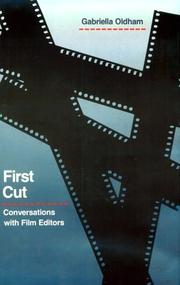
A collection of in-depth interviews with major Hollywood editors. Reading multiple voices back-to-back reveals the range of approaches to pacing, story, and collaboration — essential for developing your own editorial instinct.
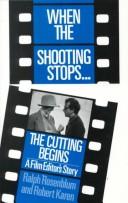
A memoir-style account of editing landmark films, including Annie Hall. Rosenblum shows how editing can fundamentally reshape — even rescue — a film, making the creative stakes of the craft viscerally real.
Story Structure Through the Editor's Lens
ExpertUnderstand how editing serves narrative architecture — how pacing, scene order, and the manipulation of time and tension build the emotional spine of a film.
▸ Study plan for this stage
Pace: 4–5 weeks, ~25–30 pages/day, with 2–3 days per week dedicated to hands-on editing practice
- Editing as narrative architecture: how cut placement, duration, and sequence determine story comprehension and emotional impact
- Pacing and rhythm as tools for controlling audience attention and building tension across scenes
- Manipulation of time through editing: compression, expansion, and non-linear sequencing to serve story logic
- The editor's role in shaping character development and subtext through juxtaposition and visual continuity
- Scene order and assembly as creative decisions that redefine meaning and emotional stakes
- The relationship between shot duration, transition type, and the viewer's psychological response
- Editing for emotional spine: how technical choices reinforce thematic intent and character arc
- How does Pepperman define the editor's responsibility in constructing narrative, and what examples does he use to show editing reshaping story meaning?
- Explain the relationship between pacing and tension: how do shot lengths and cut frequency create different emotional effects in the same scene?
- How can an editor manipulate time (compression, expansion, flashback) to serve the narrative without confusing the audience?
- What is meant by 'emotional spine' in film editing, and how do editing choices (juxtaposition, rhythm, scene order) reinforce it?
- Analyze a scene from a film you've watched: identify how the editor's choices in pacing, shot duration, and cut placement shaped your emotional response
- How does editing create or dissolve subtext between characters, and what technical tools does the editor use to achieve this?
- Read and annotate Chapters 1–3 of *The Eye is Quicker*, marking passages where Pepperman discusses how editing decisions alter narrative meaning; write a 1-page reflection on one key insight
- Watch a 5–10 minute scene from a film (provided or chosen) and create a detailed breakdown: list every cut, shot duration, transition type, and note how pacing builds or releases tension
- Re-edit a provided sequence (or use footage from a film) by changing only the cut points and shot order—keep all shots the same but rearrange them—and document how meaning shifts
- Analyze a scene with slow pacing vs. one with fast pacing from the same film; write a comparative analysis of how rhythm serves the emotional arc in each
- Create a 'pacing map' for a 15–20 minute film sequence: graph shot duration and cut frequency over time, then correlate spikes/dips with emotional beats in the story
- Conduct a juxtaposition study: identify two adjacent scenes in a film and explain how their visual, tonal, or rhythmic contrast amplifies the emotional impact of the second scene
Next up: This stage equips you to recognize editing as a storytelling language; the next stage will deepen your technical mastery by exploring specific editing tools, software workflows, and the practical craft of executing these narrative decisions in real-world post-production.
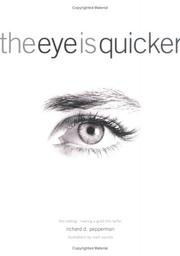
A scene-by-scene analytical approach to editing that bridges craft and story — Pepperman trains the reader to watch cuts critically, making this the ideal bridge between practitioner wisdom and advanced analysis.
Broadens the learner's frame beyond Hollywood continuity editing into montage theory and international traditions, adding conceptual depth and expanding the toolkit for advanced storytelling through cuts.
Theory, Montage & the Deeper Why
ExpertEngage with the theoretical and intellectual foundations of editing — from Soviet montage to contemporary film theory — to understand editing as an art form with its own history and ideas.
▸ Study plan for this stage
Pace: 4–5 weeks, ~20–25 pages/day, with 2–3 days per week dedicated to re-reading dense passages and working through exercises
- Montage as collision: how juxtaposition of shots creates meaning beyond individual images
- Intellectual montage: using editing to express abstract ideas and emotional states rather than literal narrative
- The shot as a unit of meaning: understanding how individual frames function as building blocks with inherent semantic weight
- Eisenstein's concept of the frame within the frame: compositional depth and visual hierarchy within shots
- Attraction theory: how shocking or unexpected juxtapositions provoke psychological and emotional responses in viewers
- The relationship between form and content: how editing technique directly shapes ideological and thematic meaning
- Rhythm and pacing as editorial tools: temporal relationships between shots as a language system
- Dialectical editing: synthesis of opposing visual or conceptual elements to create new meaning
- How does Eisenstein define montage as a collision rather than a mere joining of shots, and what philosophical framework underpins this distinction?
- What is intellectual montage, and how does it differ from narrative or emotional montage? Provide examples from Eisenstein's analysis.
- Explain Eisenstein's concept of 'attraction' in editing. How do unexpected juxtapositions create meaning and provoke viewer response?
- How does the composition within a single frame (the frame within the frame) contribute to the overall montage effect across a sequence?
- What does Eisenstein mean by the relationship between editing and ideology? How can formal editorial choices convey political or philosophical ideas?
- Analyze the concept of rhythm in Eisenstein's theory. How do temporal relationships between shots function as a language system?
- Close-read and annotate 3–4 key passages from Film Form (e.g., on montage of attractions, the Odessa Steps sequence analysis) and write a 500-word synthesis of Eisenstein's core argument in each passage
- Rewatch a sequence from Battleship Potemkin (1925) or October: Ten Days That Shook the World (1928) and map out the montage structure using Eisenstein's terminology—identify collisions, attractions, and how meaning emerges from juxtaposition rather than individual shots
- Create a visual diagram or annotated storyboard showing how a single scene could be edited three different ways (narrative, emotional, intellectual montage) and explain how each approach changes meaning
- Write a comparative analysis (800–1000 words) examining how Eisenstein's montage principles appear in one contemporary film or music video; identify which theoretical concepts apply and which don't
- Conduct a frame-by-frame analysis of 2–3 shots from a Eisenstein film, documenting internal composition, depth, and visual weight, then explain how these elements contribute to the larger montage effect
- Design a short 30–60 second montage sequence (using found footage, stills, or simple drawings) that deliberately applies one of Eisenstein's principles (attraction, intellectual montage, or dialectical editing) and write a 300-word statement explaining your editorial choices
Next up: This stage establishes the theoretical vocabulary and philosophical foundations of editing as an intentional art form, preparing you to critically analyze how contemporary filmmakers either inherit or challenge Eisenstein's ideas in modern practice.
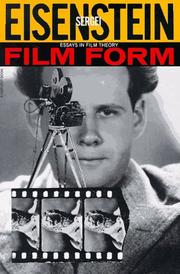
Eisenstein's essays on montage are the intellectual bedrock of editing theory. Reading him at this stage — after building practical craft — allows the learner to engage critically rather than abstractly with his radical ideas.
Discussion
Keep reading
Paths that share books, cover the same subject, or open a related topic.