Watch movies like a critic
This curriculum builds a genuine cinematic education from the ground up, moving from the basic grammar of film through its history and movements, and finally into the analytical and critical thinking skills needed to write and argue about movies with depth. Each stage assumes the knowledge of the last, so reading in order is essential — vocabulary and concepts introduced early become the tools for harder thinking later.
The Language of Cinema
BeginnerUnderstand how films are constructed — shot, edited, scored, and designed — and develop a working vocabulary for talking about what you see on screen.
▸ Study plan for this stage
Pace: 6–8 weeks total. Weeks 1–5: "Understanding Movies" by Giannetti (~30–35 pages/day, reading one chapter at a time and pausing to rewatch a short film clip before moving on). Weeks 6–8: "In the Blink of an Eye" by Murch (~20–25 pages/day — it's short but dense with insight, so slow down and journal af
- The shot as the basic unit of film language — framing, angle, distance, and movement all carry meaning (Giannetti)
- Mise-en-scène: how everything placed in front of the camera (lighting, costume, set design, actor positioning) communicates story and theme (Giannetti)
- Cinematography and visual style: how lens choice, depth of field, and camera movement shape the viewer's emotional experience (Giannetti)
- Editing as the assembly of meaning: continuity editing, montage, rhythm, and the 180-degree rule (Giannetti)
- Sound design and score: the distinction between diegetic and non-diegetic sound, and how silence is itself a tool (Giannetti)
- Murch's 'Rule of Six': the six criteria for a good cut — emotion, story, rhythm, eye-trace, two-dimensional plane, and three-dimensional space — ranked in that order of priority
- The 'blink' as a metaphor: how cuts mirror the natural human act of blinking and why emotionally motivated cuts feel invisible (Murch)
- The editor as a second author: Murch's argument that editing is not merely technical assembly but a creative, interpretive act that shapes the film's final meaning
- After reading Giannetti, can you identify and name at least five distinct camera shots (e.g., extreme close-up, medium shot, bird's-eye view) and explain what emotional or narrative effect each tends to produce?
- How does Giannetti define mise-en-scène, and can you walk through a single scene from any film you know and describe how its visual elements work together to communicate meaning?
- What is the difference between continuity editing and montage, and why does the choice between them matter for how an audience experiences a film?
- According to Murch, why is 'emotion' ranked first in his Rule of Six, above even the logic of the story? Do you agree with his reasoning?
- How does Murch use the metaphor of the 'blink' to explain why some cuts feel natural and others feel jarring — and how does this connect to Giannetti's earlier discussion of editing rhythm?
- Taken together, what do Giannetti and Murch suggest about the relationship between the director's vision and the editor's interpretation? Is a film's meaning fixed on set, or is it made in the edit?
- Shot journal: While reading Giannetti's cinematography chapters, watch any 10-minute scene from a film of your choice with the sound off. Pause every time the shot changes and write down the shot type, angle, and what you think it is communicating. Aim for at least 15 annotated shots.
- Mise-en-scène freeze-frame: Pick one frame from any film (a screenshot or DVD pause) and write a 200-word analysis describing every visible element — lighting, color, costume, actor placement, props — and argue how each element serves the story or theme, using Giannetti's vocabulary.
- DIY continuity edit: Using a smartphone, shoot a simple 10-shot sequence (e.g., a person making coffee) following the 180-degree rule and basic continuity principles from Giannetti. Edit it together in any free app (CapCut, iMovie). Then deliberately break one rule and note what feels 'wrong.'
- Rule of Six audit: After reading Murch, rewatch a scene you already know well (3–5 minutes). At each cut, quickly score it on Murch's six criteria — which criterion seems to be driving each cut? Write a one-paragraph reflection on whether emotion or story logic dominates the scene's editing.
- Sound-off / sound-on comparison: Watch the same 3-minute scene twice — once with picture only, once with sound only. Write two short paragraphs: what you understood from image alone, and what the sound added or changed. Relate your findings to Giannetti's chapter on sound.
- Synthesis essay (300–400 words): Choose one film scene and write a short analytical piece that uses at least one concept from Giannetti (e.g., a specific shot type or lighting style) AND one concept from Murch (e.g., an emotionally motivated cut or a violation of the Rule of Six). This is your first attempt at writing film criticism with a real vocabulary.
Next up: Mastering the technical and editorial language built in this stage gives you the analytical toolkit you'll need to move from *how* films are made to *why* filmmakers make the choices they do — the gateway into film history, genre, and directorial style.
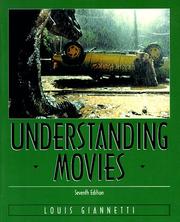
The single best entry-level textbook on film form, covering cinematography, editing, sound, acting, and mise-en-scène with clear examples. It gives you the essential vocabulary every subsequent book assumes you have.
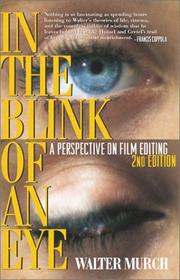
A short, elegant meditation on editing by one of Hollywood's greatest editors. Reading it immediately after Giannetti transforms abstract concepts like rhythm and continuity into something felt and intuitive.
A History of World Cinema
BeginnerTrace the major movements, periods, and directors that shaped cinema from its origins to the modern era, building a mental map of film history.
▸ Study plan for this stage
Pace: 10–12 weeks total. Weeks 1–7: "The Story of Film" by Mark Cousins (~40–50 pages/day, 4–5 days/week — the book is richly illustrated and narrative-driven, so allow time to pause and watch referenced films). Weeks 8–12: "An Introduction to Film Studies" by Jill Nelmes (~25–35 pages/day, 4–5 days/week
- The chronological arc of cinema: from the Lumière Brothers and early silent cinema through the Classical Hollywood era, the rise of world cinema movements, and into contemporary global filmmaking (Cousins)
- Landmark national movements and their defining aesthetics: German Expressionism, Soviet Montage, Italian Neorealism, the French New Wave, New Hollywood, and parallel cinemas in Asia, Africa, and Latin America (Cousins)
- The role of technology as a driver of cinematic change: the transition from silent to sound, black-and-white to color, widescreen formats, and the digital revolution (Cousins & Nelmes)
- Auteur theory: understanding the director as the primary creative voice of a film, and how to identify a director's recurring visual and thematic signatures (Cousins & Nelmes)
- Core formal elements of film language — mise-en-scène, cinematography, editing, and sound — as tools for both artistic expression and historical analysis (Nelmes)
- Genre as a historical and industrial framework: how genres evolve, mutate, and reflect the social contexts of their era (Nelmes)
- Ideological and representational analysis: how cinema constructs and reflects ideas about gender, race, class, and national identity across different historical periods (Nelmes)
- The relationship between film industry structures (studios, funding, distribution) and the kinds of films that get made in different countries and eras (Cousins & Nelmes)
- According to Cousins, what were the key social and technological conditions that allowed cinema to emerge in the 1890s, and which early filmmakers first pushed it beyond mere novelty toward storytelling?
- How does Cousins distinguish the aesthetic and philosophical differences between, say, Soviet Montage cinema and Italian Neorealism — what did each movement believe cinema was *for*?
- Using the framework Nelmes provides, how would you apply the concept of mise-en-scène to analyze a single scene from a film you watched alongside your reading?
- How does auteur theory, as discussed in both books, help explain why a director like Ingmar Bergman, Akira Kurosawa, or Jean-Luc Godard is studied as an individual artist rather than just a product of their industry?
- In what ways does Nelmes argue that genre is not just a marketing category but a historically meaningful form — and can you give a concrete example from film history to support this?
- How have questions of representation (gender, race, postcolonialism) evolved across the periods covered by Cousins, and what analytical tools does Nelmes offer for examining them critically?
- Build a living timeline: As you read Cousins, create a visual timeline (on paper, a whiteboard, or a tool like Miro) plotting movements, key directors, and landmark films by decade and country. Update it chapter by chapter so you finish with a complete mental map of film history.
- Watch one film per major movement: For each major movement Cousins covers (e.g., German Expressionism, French New Wave, Italian Neorealism, New Hollywood), watch at least one canonical film he discusses. Write a 150–200 word informal response connecting what you see on screen to Cousins's description.
- Close-reading exercise with Nelmes's toolkit: Choose any scene (3–5 minutes) from a film you watched and write a structured analysis using the formal categories Nelmes introduces — mise-en-scène, cinematography, editing, and sound. This trains you to move from historical awareness to analytical precision.
- Director deep-dive: Pick one auteur prominently featured in Cousins (e.g., Orson Welles, Akira Kurosawa, or Jean-Luc Godard) and watch two of their films back-to-back. Then write a one-page note identifying recurring stylistic or thematic signatures, using auteur theory as framed by both books.
- Movement comparison essay (500 words): After finishing both books, write a short comparative piece on two national cinema movements from different continents — argue what each reveals about the relationship between cinema, culture, and historical context. Draw evidence from Cousins's narrative and Nelmes's analytical frameworks.
- Teach-back summary: At the end of each book, write a one-page 'briefing note' as if explaining the book's core argument to a friend who has never studied film. This forces consolidation and reveals any gaps in your understanding before moving to the next stage.
Next up: By completing this stage, the reader has a firm chronological and conceptual map of film history and a basic analytical vocabulary from Nelmes — the ideal foundation for moving into deeper genre studies, national cinema focus, or advanced film theory, where historical context and formal terminology will be assumed knowledge.

A sweeping, passionate global history of cinema that goes far beyond Hollywood, introducing the movements — German Expressionism, Italian Neorealism, the French New Wave, Iranian cinema — that define serious film study.
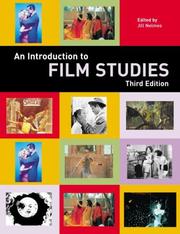
Bridges history and theory by pairing key movements with the analytical frameworks used to study them, preparing the reader to think about film not just as entertainment but as art and cultural artifact.
The Director's Vision
IntermediateStudy cinema through the eyes of its greatest practitioners, learning how auteur directors develop a personal style and how to recognize and interpret it.
▸ Study plan for this stage
Pace: 8–10 weeks total: Weeks 1–5 for "Hitchcock" by Truffaut (~30–35 pages/day, reading the interview in thematic chunks — one or two films per session); Weeks 6–10 for "Sculpting in Time" (~15–20 pages/day, given its dense philosophical prose — pause after each chapter to reflect before moving on).
- Auteur theory: the director as the primary creative author of a film, stamping it with a recognizable personal vision across their entire body of work
- Hitchcock's grammar of suspense: the distinction between surprise and suspense, the use of the MacGuffin, audience manipulation through point-of-view editing, and pure cinema as visual storytelling
- The interview-as-criticism method: how Truffaut's structured dialogue with Hitchcock reveals craft decisions film-by-film, demonstrating that close analysis of a single director's choices is a form of film theory
- Tarkovsky's concept of 'sculpting in time': cinema as the only art form that captures and shapes real, passing time — the shot as a time-pressure mold rather than a sequence of images
- Poetic cinema vs. dramatic cinema: Tarkovsky's rejection of plot-driven, cause-and-effect structure in favor of atmospheric, image-driven rhythm that mirrors the logic of dreams and memory
- The director's moral responsibility: Tarkovsky's belief that cinema is a spiritual act and that the filmmaker has an ethical duty to the audience's inner life
- Personal style as a coherent worldview: how both Hitchcock and Tarkovsky demonstrate that visual and narrative choices are inseparable from a director's philosophy of life
- Mise-en-scène as language: how the arrangement of space, light, duration, and movement within the frame communicates meaning that dialogue cannot
- After reading Truffaut's interviews, how would you describe Hitchcock's theory of suspense in his own words, and can you identify at least three specific techniques he uses to generate it?
- What does Tarkovsky mean by 'sculpting in time,' and how does this concept fundamentally differ from the way Hitchcock — as revealed in the Truffaut interviews — thinks about editing and the construction of a scene?
- How does Truffaut's method of interviewing Hitchcock film-by-film function as a model for auteur criticism — what does it reveal about a director's style that a single-film review cannot?
- Tarkovsky argues that cinema's unique material is time itself. How does this idea challenge conventional notions of storytelling in film, and which of his own films does he use as primary examples in the book?
- Both books deal with the relationship between a director's personal life/worldview and their films. How do Hitchcock (via Truffaut) and Tarkovsky each articulate — or resist articulating — this connection?
- What is Tarkovsky's critique of films that prioritize plot and dramatic logic over image and atmosphere, and how does his argument relate to the auteur principle that Truffaut implicitly champions throughout his Hitchcock interviews?
- Director's log — Hitchcock: Watch five Hitchcock films discussed in depth by Truffaut (e.g., Rear Window, Vertigo, Psycho, North by Northwest, The Wrong Man). After each, write a one-page note cross-referencing what Hitchcock told Truffaut about that film with what you actually see on screen. Note where the director's stated intention and the film's effect align or diverge.
- Suspense vs. surprise breakdown: Choose one 5-minute sequence from a Hitchcock film and diagram it shot-by-shot, labeling each cut according to Hitchcock's own vocabulary from the Truffaut interviews (point-of-view shot, reaction shot, MacGuffin reveal, etc.). Then rewrite the sequence on paper to turn its suspense into surprise — and reflect on what is lost.
- Tarkovsky viewing journal: Watch at least two films Tarkovsky discusses in 'Sculpting in Time' (e.g., Andrei Rublev, Solaris, The Mirror, Stalker). After each, identify two or three shots or sequences that exemplify his concept of 'time-pressure' — long takes, elemental imagery (water, fire, earth), or non-linear memory structures. Write a paragraph on each explaining how the shot 'sculpts' time.
- Comparative style essay (500–800 words): Using only evidence from the two books and your film viewings, argue whether Hitchcock and Tarkovsky share any common ground as auteurs, or whether their visions of what cinema is for are fundamentally incompatible. Anchor every claim in a specific scene or a direct quote from either book.
- Personal auteur audit: Choose any director whose work you admire (outside the two books). Watch three of their films and write a one-page 'auteur profile' modeled on Truffaut's method — identifying recurring visual motifs, thematic obsessions, and stylistic signatures. This trains you to apply the analytical framework from both books independently.
- Mise-en-scène still analysis: Pause a Tarkovsky film on any single frame and a Hitchcock film on any single frame. Write a detailed description of each — composition, light, depth, figure placement, implied movement — without mentioning plot or character names. Then compare: what does each frame 'say' purely as a visual object? How does each reflect its director's philosophy as described in the bo
Next up: By internalizing how two radically different masters — one a craftsman of commercial suspense, one a poet of spiritual cinema — each built a total and coherent visual language, the reader is now equipped to move beyond the individual auteur and examine how broader movements, national cinemas, and historical forces shape the language of film itself.
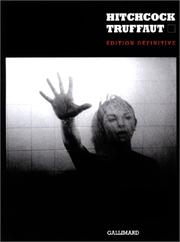
The landmark book-length interview between two master filmmakers is the definitive model for auteur analysis — it shows exactly how to read a director's choices as a coherent artistic vision.

Tarkovsky's own account of his filmmaking philosophy pushes the reader to think about cinema as a distinct art form with its own relationship to time, memory, and image — essential for moving beyond surface-level appreciation.
Critical Thinking and Film Theory
IntermediateEngage with the major theoretical lenses — semiotics, psychoanalysis, ideology, genre — used by critics and scholars to interpret films, and begin applying them to your own viewing.
▸ Study plan for this stage
Pace: 10–12 weeks total: Weeks 1–6 cover Robert Stam's "Film Theory" (~25–30 pages/day, 4–5 days/week), pausing after each major theoretical section to reflect before moving on; Weeks 7–12 cover Pam Cook's "The Cinema Book" (~20–25 pages/day, 4–5 days/week), which is denser and reference-heavy, so allow e
- Semiotics and the film sign: how Stam draws on Saussure and Peirce to explain how cinema produces meaning through codes, icons, indexes, and symbols
- Psychoanalytic film theory: Stam's account of Metz's 'imaginary signifier,' the gaze, scopophilia, and the spectator-screen relationship
- Ideological critique and apparatus theory: Althusser-inflected readings of how cinema interpellates viewers and naturalizes dominant values, as introduced in Stam and expanded in Cook
- Genre theory: the conventions, iconography, and ideological functions of genre as a system, addressed across both Stam and Cook's genre chapters
- Feminist and gender theory in film: Laura Mulvey's male gaze, female spectatorship, and the critique of classical Hollywood representation, covered in both books
- Postcolonial and race-based theoretical lenses: Stam's chapters on Third Cinema, Eurocentrism, and multicultural film theory
- Auteur theory revisited critically: Cook's treatment of authorship as a critical construct rather than a neutral description of directorial genius
- Narrative theory and structuralism: how Propp, Lévi-Strauss, and Barthes are applied to film narrative in both Stam and Cook
- After reading Stam, can you explain the difference between a Peircean icon, index, and symbol, and give a concrete film example of each?
- How does Christian Metz's concept of the 'imaginary signifier' explain the unique psychological experience of cinema spectatorship, and how does Stam situate it within broader psychoanalytic theory?
- Using the ideological/apparatus theory outlined in both Stam and Cook, how does mainstream Hollywood cinema 'interpellate' its audience, and what formal techniques are implicated in this process?
- How do Stam and Cook each approach genre — as a set of textual conventions, as an industrial category, or as an ideological system — and where do their emphases differ?
- Drawing on Cook's feminist film theory sections, how has the concept of the 'male gaze' been both applied and critiqued since Mulvey's original 1975 essay?
- How does Stam's discussion of Third Cinema and postcolonial theory challenge Eurocentric assumptions embedded in mainstream film criticism and theory?
- Semiotic close reading: Choose one 3–5 minute scene from any film and write a 500-word analysis identifying at least five distinct cinematic 'signs' (lighting, costume, sound, framing, editing), explaining what each signifies and how they combine to produce a coherent ideological message — using Stam's semiotic vocabulary as your toolkit.
- Theoretical lens rotation: Pick a single film and write three separate 200-word micro-analyses of the same scene, each applying a different lens from Stam (psychoanalytic, ideological, postcolonial). Compare what each lens reveals and conceals — note your findings in a dedicated theory journal.
- Genre deconstruction exercise: Using Cook's genre chapters as a guide, select a film that self-consciously subverts or hybridizes a genre (e.g., a neo-noir or a revisionist Western). List the genre conventions it invokes, which it breaks, and what ideological work those choices perform.
- Gaze and spectatorship audit: Watch a 20-minute segment of a classical Hollywood film with the sound off. Using Mulvey's male gaze framework (as discussed in both Stam and Cook), log every shot that positions the camera as a gendered look — then re-watch with sound and note whether the soundtrack reinforces or complicates your findings.
- Annotated bibliography sprint: After finishing both books, compile a list of 8–10 theorists cited by Stam and Cook (e.g., Metz, Mulvey, Althusser, Barthes, Fanon). For each, write two sentences: what their core idea is and exactly how Stam or Cook applies it to cinema — this builds the scholarly vocabulary needed for the next stage.
- Comparative review essay: Write a 700–900 word essay comparing how Stam's 'Film Theory' and Cook's 'The Cinema Book' handle ONE shared topic (e.g., genre, authorship, or spectatorship). Argue which treatment you find more analytically useful and why, citing specific pages from each book.
Next up: Mastering these theoretical lenses through Stam and Cook gives you the critical vocabulary and interpretive confidence needed to engage with more specialized or advanced scholarship — such as national cinema studies, film history, or contemporary digital/media theory — where these frameworks are assumed knowledge rather than introduced from scratch.
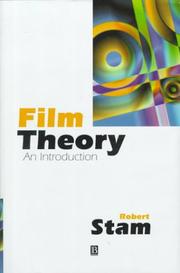
A rigorous but accessible survey of film theory from early formalism to contemporary cultural studies, giving you the full intellectual toolkit that serious critics draw on.
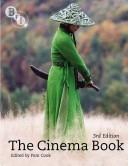
A comprehensive reference that ties theory to history and practice, ideal for consolidating everything learned so far and seeing how genre, narrative, and ideology intersect in real films.
Writing and Thinking Like a Critic
ExpertDevelop your own critical voice by studying how the best film writers argue, evaluate, and illuminate cinema — and begin writing with that same rigor and passion.
▸ Study plan for this stage
Pace: 8–10 weeks total: Weeks 1–4 on "Awake in the Dark" (~20–25 pages/day, reading 2–3 reviews per sitting with annotation); Weeks 5–9 on "Negative Space" (~15–18 pages/day, slower pace to wrestle with Farber's dense prose); Week 10 reserved for comparative re-reading, synthesis writing, and exercise com
- Ebert's 'relative scale' of criticism — judging a film by what it attempts, not by a universal standard, and how this shapes fair, generous, yet rigorous evaluation
- The review as argument: how Ebert structures a piece with a clear evaluative claim, evidence drawn from specific scenes, and a persuasive conclusion accessible to general readers
- Voice and persona in criticism — Ebert's conversational authority vs. Farber's combative, painterly intellectualism — and how each voice is a deliberate rhetorical construction
- Farber's 'termite art' vs. 'white elephant art' distinction: the value of small, unpretentious, undermining work versus grand, self-important prestige cinema
- Close visual reading: Farber's method of describing mise-en-scène, movement, texture, and space as if painting a picture in prose — treating the frame as a physical, tactile object
- Negative Space as a concept: how Farber attends to what is NOT shown, the edges of the frame, dead time, and peripheral action as carriers of cinematic meaning
- Evaluative criteria and how to make them explicit: both writers reveal (implicitly or explicitly) the standards by which they judge — identifying and articulating your own criteria as a critic
- The ethics of the critic's voice: enthusiasm, accountability, and the responsibility to the reader, the filmmaker, and the art form
- After reading Ebert's reviews in 'Awake in the Dark,' how does he balance accessibility for a mass audience with genuine intellectual and aesthetic depth — and where do you see that balance succeed or strain?
- What does Farber mean by 'termite art,' and can you identify two or three filmmakers or films from 'Negative Space' that he uses to illustrate the concept? Do you find his argument convincing?
- How do Ebert and Farber differ in their use of plot summary, scene description, and evaluative judgment — and what does each approach reveal about their intended audience and critical philosophy?
- Farber writes about visual space and physical texture in an almost sculptural way. Pick one passage from 'Negative Space' and break down exactly how he constructs meaning through description alone.
- Both writers have a strongly recognizable critical voice. What specific stylistic and rhetorical choices — sentence rhythm, vocabulary, use of analogy, tone — define each voice, and how do those choices serve their arguments?
- What evaluative criteria can you reverse-engineer from each writer's body of work in these books? Are those criteria stated explicitly, implied, or both — and how does that affect the persuasiveness of their criticism?
- 'Ebert Imitation Sprint': Choose a film you know well and write a 400-word review in Ebert's style — open with a hook, build a clear evaluative argument, cite at least two specific scenes as evidence, and close with a verdict. Then annotate your own draft: mark every sentence where you are arguing vs. merely describing.
- 'Termite or White Elephant?' Audit: Screen three films — one mainstream prestige release, one genre film, one experimental or low-budget work — and write a one-page Farber-style classification for each, using his termite/white elephant framework. Defend your classification with visual evidence from the films.
- Negative Space Description Exercise: Watch a 3–5 minute scene with the sound off. Write a 300-word Farber-inspired description focusing exclusively on space, movement, texture, and what exists at the edges or outside the frame. No plot summary allowed — treat it as a painting.
- Criteria Excavation: Re-read five reviews from 'Awake in the Dark' and five essays from 'Negative Space.' For each writer, build a bullet-point list of their implicit evaluative criteria (e.g., 'Ebert values emotional authenticity'; 'Farber values physical specificity over symbolism'). Then write your own criteria manifesto — a half-page statement of what YOU value in cinema and why.
- Debate-on-Paper: Find a film that both writers might plausibly have reviewed (a classic Hollywood film, a foreign art film, or a genre work from the relevant eras). Write two 250-word mini-reviews of the same film — one in Ebert's voice, one in Farber's. Then write a 150-word reflection on what each approach illuminated and what it missed.
- Full Critical Essay Draft: Write a 700–900 word critical essay on any film of your choice. It must include: a governing argument (not just an opinion), at least one passage of close visual description in the Farber tradition, an accessible evaluative claim in the Ebert tradition, and an explicit statement of the criteria you are applying. Revise it once after a 48-hour gap.
Next up: Mastering how Ebert argues for an audience and how Farber sees with a painter's eye gives you the twin foundations — rhetorical persuasion and visual precision — needed to engage with more theoretically rigorous or historically specialized film writing in subsequent stages.
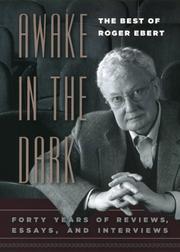
A curated anthology of Ebert's finest reviews and essays, modeling how to write about film for a general audience with clarity, empathy, and genuine critical judgment — the best stylistic model for aspiring critics.
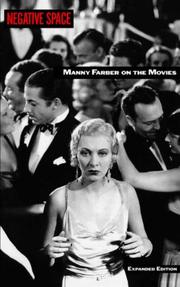
Farber's dense, original essays represent the opposite pole from Ebert — demanding, idiosyncratic, and deeply visual. Wrestling with his prose forces you to develop your own critical perspective and raises the ceiling of what film writing can be.
Discussion
Keep reading
Paths that share books, cover the same subject, or open a related topic.