Make your first film: a filmmaking reading path
This curriculum takes a complete beginner from the language of cinema through hands-on production craft, then into the director's eye and editor's mind, and finally into the practical realities of low-budget short filmmaking. Each stage builds on the last: you must understand how stories work before you can shoot them, how images work before you can cut them, and how all of it works before you can manage a real production.
The Language of Film
BeginnerUnderstand how movies communicate — story structure, visual grammar, and the director's fundamental toolkit — before touching a camera.
▸ Study plan for this stage
Pace: 10–12 weeks total. Week 1–4: "Story" by Robert McKee (~30–35 pages/day, focusing on structure, character, and scene construction). Week 5–7: "In the Blink of an Eye" by Walter Murch (~20–25 pages/day — it's short but dense; re-read key chapters). Week 8–12: "Film Directing Shot by Shot" by Steven D.
- Story structure: the three-act paradigm, inciting incidents, turning points, climax, and resolution as defined by McKee — understanding that structure is not a formula but a map of how meaning is delivered over time.
- Scene construction: McKee's concept of the 'scene as the smallest unit of story,' how every scene must turn on a value change (positive to negative or vice versa), and how subtext drives dialogue.
- Character vs. characterization: McKee's distinction between the mask a character wears (characterization) and who they truly are under pressure (character), and why this matters for every visual choice a director makes.
- The six criteria for a good edit: Murch's hierarchy of cuts — emotion first, story second, rhythm third, eye-trace fourth, two-dimensional plane of screen fifth, and three-dimensional space sixth — and why emotion is weighted at 51%.
- The blink as a metaphor: Murch's insight that cuts work because they mirror the way humans blink to punctuate thoughts, making editing a psychological as well as technical craft.
- Visual grammar and shot vocabulary: Katz's systematic breakdown of shot types (extreme wide, wide, medium, close-up, extreme close-up), camera angles, and lens choices as the 'words' and 'sentences' of cinematic language.
- Storyboarding and pre-visualization: Katz's methodology for translating a script into a sequence of images — thumbnail sketches, shot lists, and continuity — as the director's primary planning tool.
- Continuity and coverage: the 180-degree rule, eyeline matches, and how Katz shows that breaking or honoring these rules is always a deliberate expressive choice, never an accident.
- According to McKee, what is the difference between a 'story event' and a mere 'scene,' and how does a value change determine whether a scene earns its place in a screenplay?
- Murch ranks emotion as the most important criterion for a cut. Using a specific example from a film you've watched, explain how cutting on emotion differs from cutting on action — and why the former tends to feel more powerful.
- What does Murch mean when he says the cut is 'a sudden switch from one field of vision to another,' and how does the metaphor of the blink explain why audiences accept this discontinuity as natural?
- Using Katz's shot vocabulary, how would you describe the visual grammar of a scene that opens on an extreme wide shot and progressively cuts to an extreme close-up? What emotional or narrative effect does this progression create?
- How does McKee's concept of subtext connect to Katz's advice on shot selection — specifically, when should a director choose a close-up over a wide shot to reveal what a character is really feeling versus what they are saying?
- Katz emphasizes pre-visualization through storyboarding before a camera is ever picked up. How does this practice reflect McKee's argument that story structure must be solved on the page before production begins?
- Scene autopsy (McKee): Choose any 5-minute scene from a film you admire. Write a one-page breakdown identifying the scene's opening value, the turning point, and the closing value. Then ask: what would be lost if this scene were cut? This trains McKee's 'earn your scene' discipline.
- Emotion-first re-edit (Murch): Watch a 3–5 minute sequence from any film with the sound off. Using Murch's six criteria, write a shot-by-shot log noting where YOU would cut and why — prioritizing emotion over action. Compare your instincts to the actual edit.
- Blink journal (Murch): For one week, pay attention to when you blink during conversations and films. Keep a small notebook. After reading Murch's blink metaphor, write a one-page reflection on how your natural blinking rhythm maps to the cuts you noticed in a film scene.
- Shot vocabulary drill (Katz): Pick a single page of any screenplay (or write a 1-page scene yourself). Draw at least 8 thumbnail storyboard panels for it — no artistic skill required, only stick figures and frame lines. Label each panel with the shot type, camera angle, and lens implication (wide vs. telephoto) using Katz's terminology.
- Visual grammar analysis (Katz + McKee): Select a 10-minute sequence from a film and create a shot list after the fact — log every shot type, angle, and approximate duration. Then map the shot choices back to McKee's story beats: do close-ups cluster around emotional turning points? Does the director go wide during exposition? Write a 300-word analysis of what you find.
- Integrated scene plan: Write a 1-page original scene (with a clear value change per McKee), then produce a full storyboard for it (per Katz), and finally annotate each cut with Murch's criteria — noting which of his six reasons justifies each transition. This single exercise synthesizes all three books.
Next up: By internalizing how stories are structured (McKee), how cuts create meaning (Murch), and how shots are planned and sequenced (Katz), the reader has built a complete conceptual grammar of film — and is now ready to move from analyzing other people's films to picking up a camera and making deliberate, informed choices of their own in the next stage of production practice.
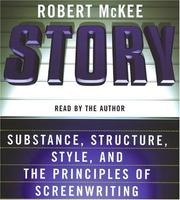
Establishes the bedrock principles of narrative structure and dramatic tension that underpin every filmmaking decision you will ever make. Read this first so every later craft book has a story-driven purpose.
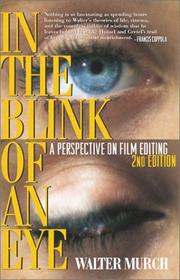
A short, luminous meditation on why cuts work and what film rhythm feels like, written by Hollywood's most celebrated editor. Reading it early rewires how you watch movies and think about time.
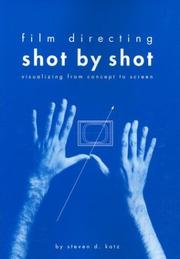
Introduces visual storytelling through storyboards, shot types, and scene construction — the essential vocabulary of directing. It bridges abstract story ideas to concrete images on screen.
Seeing Like a Cinematographer
BeginnerDevelop a working understanding of light, lens, and camera movement so you can make intentional visual choices on set.
▸ Study plan for this stage
Pace: 6–8 weeks total. Week 1–3: Read "Painting with Light" by John Alton (~20–25 pages/day, including re-reading key chapters on night photography and lighting mood). Week 4–7: Read "Cinematography" by J. Kris Malkiewicz (~20–25 pages/day, pausing to review diagrams on lenses and camera movement). Week 8
- Light as a storytelling tool: Alton's philosophy that light (and shadow) creates mood, atmosphere, and narrative tension — not just visibility
- Hard vs. soft light and the emotional register of each, as demonstrated through Alton's practical set examples and noir-influenced aesthetic
- The three-point lighting system (key, fill, back) and how deliberate deviations from it — as Alton champions — produce expressive, non-naturalistic images
- Lens choice and its psychological effect: focal length, depth of field, and perspective distortion as covered in Malkiewicz's technical breakdowns
- Camera movement vocabulary: the difference between a pan, tilt, dolly, and crane shot, and how Malkiewicz frames each as a dramatic — not merely mechanical — decision
- Exposure fundamentals: the relationship between aperture, shutter speed, and film speed (ISO/ASA) as a triangle of creative control, per Malkiewicz
- Composition principles for the moving image: rule of thirds, headroom, leading lines, and how they interact with lens choice and camera placement
- The cinematographer's collaborative role: both authors position the DP not as a technician but as a visual author working in service of story
- After reading Alton, can you explain why he argues that darkness and shadow are as important as light itself — and give two specific lighting scenarios from the book that illustrate this?
- How does Alton differentiate between 'painting' a scene for a thriller versus a romance, and what specific lighting instruments or techniques does he associate with each mood?
- According to Malkiewicz, how does focal length alter the perceived relationship between a subject and its background, and when would you choose a wide-angle lens over a telephoto?
- What is the exposure triangle as described in Malkiewicz, and how does changing one variable force a trade-off in the others?
- How does Malkiewicz distinguish between camera movements that follow action (motivated movement) and those that editorialize or comment on it — and why does the distinction matter creatively?
- Taken together, what do Alton and Malkiewicz suggest is the cinematographer's primary responsibility: technical accuracy, emotional impact, or something else entirely?
- Shadow mapping exercise (from Alton): In a single room, use only one practical light source (a desk lamp or flashlight). Photograph or film the same subject five times, moving the light to a different position each time. Write one sentence describing the emotional tone each position creates — then compare your instincts to Alton's descriptions of low-key and high-key lighting.
- Recreate a lighting setup: Choose one still image from a film in the noir or thriller genre (the visual tradition Alton helped define). Using household lamps, attempt to recreate the lighting on a willing subject or a simple still-life. Identify which of Alton's principles (motivated source, shadow as character, etc.) are at work.
- Lens comparison shoot (from Malkiewicz): If you have access to a camera with interchangeable lenses or a zoom lens, photograph the same subject from a fixed distance at the widest and longest focal lengths available. Then reframe so the subject is the same size in both shots. Document how background compression and spatial relationships change — matching your observations to Malkiewicz's focal-len
- Exposure triangle log: Shoot the same scene in at least six different exposure combinations (varying aperture, shutter speed, and ISO) while keeping the overall exposure roughly correct. Record each combination and note the creative side-effects (depth of field change, motion blur, grain/noise). Use Malkiewicz's exposure chapters as your reference guide.
- Camera movement storyboard: Pick a simple dramatic scenario (a character receives bad news; two people meet for the first time). Using Malkiewicz's movement vocabulary, storyboard the scene twice — once using only static shots, once incorporating at least three different camera movements. Write a short paragraph explaining what emotional information each movement adds.
- Dual-book reflection journal: After finishing both books, write a one-page synthesis answering: 'If Alton is the poet of light and Malkiewicz is the engineer of the image, what does a cinematographer need from both?' Use at least one specific passage or idea from each book to support your argument.
Next up: Mastering light, lens, and camera movement through Alton and Malkiewicz gives you the visual grammar you'll need to analyze and construct scenes with intention — the natural next step is learning how those individual shots are assembled into a coherent cinematic language through editing, directing, and narrative structure.
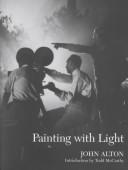
Written by a legendary cinematographer, this classic teaches you to read and design light as an expressive tool rather than a technical necessity — the right mindset before diving into gear.
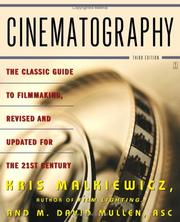
A clear, practical reference covering exposure, lenses, camera movement, and lighting setups. It translates Alton's artistry into actionable technique you can apply immediately.
The Director's Craft
IntermediateLearn to work with actors, break down a script, and translate a vision into a coherent shot plan — the full pre-production and on-set directing process.
▸ Study plan for this stage
Pace: 6–8 weeks total: Weeks 1–4 on "Directing Actors" (~25–30 pages/day, reading in focused sessions with a notebook for actor-direction notes); Weeks 5–7 on "On Directing Film" (~15–20 pages/day — it's shorter but denser, demanding slow, analytical re-reading); Week 8 reserved for review, synthesis, and
- Actable vs. unactable direction: Weston's core argument that directors must give actors specific, playable intentions ('verbs') rather than emotional states or adjectives ('be sad', 'be angry')
- The concept of 'want' and 'doing': every character in every scene must have a concrete, active objective that drives behavior, drawn directly from the script's given circumstances
- Spine and through-line: identifying a character's overarching want across the entire film, and how individual scene objectives connect to it — a framework Weston applies to script breakdown
- Substitution, sense memory, and the director's empathy toolkit: understanding the actor's process well enough to speak their language and troubleshoot a stuck performance on set
- Mamet's Aristotelian unit structure: breaking a script into beats/units based purely on what the protagonist wants and what changes — stripping away all 'literary' or psychological decoration
- The primacy of the shot: Mamet's argument that film storytelling happens through the juxtaposition of uninflected images, not through actor performance or dialogue — the director's job is to design that sequence of images in pre-production
- Storyboarding as a logic problem: Mamet's method of asking 'what does the hero want, what happens if they don't get it, where am I?' to generate only the shots that are necessary — eliminating coverage for coverage's sake
- Synthesis — pre-production as translation: combining Weston's actor-centered preparation with Mamet's image-centered shot logic to arrive at a complete, coherent directing plan before stepping on set
- According to Weston, why is telling an actor to 'feel grief' or 'be more intense' counterproductive, and what should a director say instead? Give a concrete example of converting an adjective note into an actable verb.
- How does Weston define a character's 'want' in a scene, and how does a director extract it from the script's given circumstances rather than imposing it from outside?
- Mamet argues that a film should be broken into units based on the protagonist's objective, not on location or dialogue. How does this unit-based breakdown change the way you approach a scene's shot list?
- What does Mamet mean when he says the shot should be 'uninflected'? How does this philosophy challenge the instinct to use close-ups or camera movement to signal emotion to the audience?
- How do the two books' approaches to script breakdown complement or tension with each other — Weston's character/psychology-first method versus Mamet's action/image-first method?
- If an actor is consistently 'indicating' (performing the emotion rather than pursuing the objective), what specific diagnostic questions and redirects drawn from Weston's framework would you use to correct this on set?
- VERB SUBSTITUTION DRILL (Weston): Take any three scenes from a screenplay you know well. Write down every direction you instinctively want to give each actor as adjectives or emotional states. Then systematically convert each one into a transitive, active verb ('to seduce,' 'to expose,' 'to reassure'). Read both lists aloud and notice the difference in playability.
- SCENE SPINE MAP (Weston): Choose a short film or a single act of a feature. For each character in each scene, write one sentence: '[Character] wants to _____ because _____ .' Connect each scene-level want to the character's overall spine. Check whether the scene objectives create escalating conflict.
- MAMET UNIT BREAKDOWN (Mamet): Take a 5–10 page script excerpt and break it into Mamet-style beats — each unit defined by a single, changing objective. Label each unit with only: (a) what the hero wants, (b) what obstacle appears, (c) what changes by the end. Resist writing anything about emotion, theme, or subtext.
- SHOT LIST FROM LOGIC, NOT COVERAGE (Mamet): Using your unit breakdown above, generate a shot list by asking Mamet's three questions for each unit: 'What does the hero want? What happens if they don't get it? Where am I?' Allow yourself only the shots that answer those questions. Compare this minimal list to a conventional coverage plan and articulate what each approach sacrifices.
- TABLE READ DIRECTION PRACTICE (Weston): Organize a table read of a 10–15 page scene with two or more actor friends or classmates. Direct the scene twice: once using only adjective/emotional-state notes, once using only active-verb/objective notes. Record both sessions. Transcribe the notes you gave and evaluate which produced more specific, alive behavior.
- INTEGRATED PRE-PRODUCTION DOCUMENT: Choose one scene (3–5 pages). Produce a single document that includes: (a) a Weston-style character breakdown with wants, spines, and actable directions for each role; (b) a Mamet-style unit breakdown with a justified, minimal shot list; (c) a one-paragraph director's statement explaining how the images you chose will carry the scene's meaning without relying on
Next up: Mastering the director's internal language — how to think in objectives, images, and units — creates the precise creative vocabulary needed to collaborate with cinematographers, editors, and production designers, making the next stage on visual storytelling and the filmmaking collaboration pipeline a natural and necessary expansion.
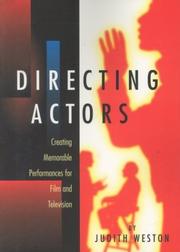
The most widely used guide to giving actors useful, specific direction. Strong performances are the single biggest differentiator in short films, and this book gives you the language to get them.
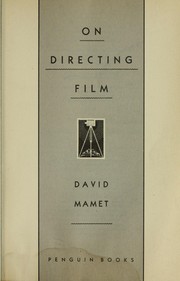
A short, provocative masterclass on scene construction and the director's obligation to tell stories in pure images. It deepens your shot-planning instincts with a rigorous, Aristotelian logic.
Editing and Post-Production
IntermediateUnderstand the editor's grammar deeply enough to shoot for the edit and to shape a rough assembly into a finished, emotionally coherent cut.
▸ Study plan for this stage
Pace: 8–10 weeks total: Weeks 1–4 on "The Conversations" (~25–30 pages/day, including re-reading key exchanges); Weeks 5–9 on "The Lean Forward Moment" (~20–25 pages/day with active pausing to apply concepts); Week 10 reserved for review, exercise completion, and synthesis across both books.
- The editor as co-author and dramatist, not merely a technical assembler — as explored through Walter Murch's philosophy in The Conversations
- The 'Rule of Six': Murch's six criteria for a good cut (emotion, story, rhythm, eye-trace, two-dimensional plane, three-dimensional space) and their strict priority order
- Invisible vs. expressive cutting: when to be seamless and when a cut should be felt by the audience
- The 'lean forward moment' — Hollyn's central thesis that every scene must contain a pivot point that propels the audience into the next beat, and how to identify and protect it in the edit
- Shooting for the edit: understanding coverage, overlapping action, and giving the editor options vs. trapping them with locked choices
- Sound design as an editorial tool: Murch's deep treatment of how sound layers (dialogue, ambience, music, effects) shape the emotional reality of a cut
- Pacing as an emotional instrument, not a metronome — how rhythm is dictated by the internal energy of a scene rather than clock time, per both authors
- The assembly-to-fine-cut pipeline: how a rough assembly is interrogated, restructured, and refined into an emotionally coherent finished cut
- According to Murch in The Conversations, what is the single most important criterion for making a cut, and why does it outrank technical considerations like screen direction?
- How does Hollyn define the 'lean forward moment,' and what practical steps does he recommend for locating it when a scene feels flat or inert?
- In what ways do Murch and Hollyn agree — and disagree — on the relationship between pacing and emotional truth? Use specific ideas from each book.
- How should a director 'shoot for the edit' differently after reading these two books? What on-set decisions directly expand or constrain the editor's choices?
- Describe the pipeline from rough assembly to fine cut as synthesized from both books: what questions should the editor ask at each stage?
- How does Murch treat silence and sound design as editorial decisions, and how does that reframe the idea that editing is purely a visual craft?
- Rule of Six audit: Watch a 10-minute sequence from any film you admire. Pause at every cut and score it against Murch's six criteria (from The Conversations). Note which criteria are consistently honored and which are sacrificed — then ask whether the sacrifice was intentional and expressive.
- Lean Forward mapping: Take a short film or a single episode of a TV drama and, scene by scene, write one sentence identifying the 'lean forward moment' as Hollyn defines it. Flag any scene where you cannot find one, and propose a re-edit that would create it.
- Assembly-to-fine-cut simulation: Using any free footage pack (or your own material), build a rough assembly of 2–3 minutes. Then apply the editorial questions from both books in sequence — first Murch's emotional/story criteria, then Hollyn's momentum and pivot-point framework — to produce a second, tighter cut. Write a one-page editor's note explaining every structural change.
- Sound-as-editor exercise: Take a 60-second dialogue scene and re-edit it three times using only sound changes (music in/out, ambient shifts, silence) without changing a single picture cut. Screen all three versions and document how the emotional meaning of the identical images shifts.
- Shoot-for-the-edit pre-production drill: Write a one-page scene. Then produce two shot lists — one from a director who has NOT read these books, and one from a director who has. Annotate the second list, citing specific Murch or Hollyn principles that drove each coverage decision.
- Reverse-engineering a cut: Find a scene with a published or available rough cut alongside the final cut (many director's commentaries or making-of documentaries show this). Map the differences using the vocabulary of both books — which lean forward moments were found in the edit? Which Murch criteria drove the picture changes?
Next up: Mastering the editor's grammar and the assembly-to-fine-cut pipeline naturally raises the question of how visual language, production design, and cinematography generate the raw material the editor works with — making the next stage, which addresses image-making and visual storytelling on set, a logical and necessary deepening of everything learned here.
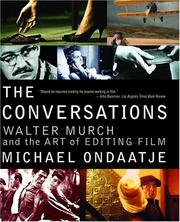
An extended dialogue with Walter Murch covering editing, sound design, and the entire post process at a deep conceptual level — essential reading before you sit at an editing timeline.

A practical, scene-by-scene editing guide that teaches you how to build tension and pace through cut decisions. It bridges theory to the actual workflow inside an editing suite.
Making Your Short Film
ExpertExecute a complete short film — from idea and script through production and finished cut — on a real, constrained budget with professional-level intentionality.
▸ Study plan for this stage
Pace: 6–8 weeks total: Weeks 1–3 read "Making Movies" by Sidney Lumet (~20–25 pages/day, paired with active annotation); Weeks 4–6 read "Rebel Without a Crew" by Robert Rodriguez (~25–30 pages/day, including his production diary entries); Weeks 7–8 are reserved for synthesis, review, and executing the han
- Lumet's concept of 'style as meaning' — every visual and sound decision must serve the story's emotional truth, not decoration
- Pre-production as the director's primary creative act: Lumet's exhaustive script analysis (spine, intention, relationship breakdowns) before a single frame is shot
- The director-collaborator relationship: how Lumet works with cinematographers, production designers, and actors to build a unified vision from a shared script interpretation
- Rehearsal as discovery: Lumet's method of using rehearsal not to fix performances but to find them, allowing actors to surprise and inform the film
- Micro-budget as creative constraint and liberation: Rodriguez's 'El Mariachi' production demonstrates that limitation forces ingenuity and sharpens storytelling instincts
- The 'produce as you direct' mindset: Rodriguez's simultaneous wearing of multiple hats (director, DP, editor, sound) and how integrated ownership accelerates decision-making on a shoestring
- Shooting for the edit: Rodriguez's practice of capturing coverage with post-production in mind at all times, minimizing waste and maximizing usable footage on limited resources
- Professional intentionality at any budget level: the synthesis of Lumet's rigorous pre-production discipline applied to Rodriguez's guerrilla production reality
- According to Lumet, what is the 'spine' of a script, and how does identifying it shape every subsequent directorial decision from casting to camera placement?
- How does Lumet describe the director's responsibility during the editing phase, and why does he argue that the edit is where the film is 'written' a third time?
- What specific production constraints did Rodriguez face on 'El Mariachi,' and how did he turn each constraint — location, cast, props, schedule — into a storytelling asset rather than a liability?
- How does Rodriguez's approach to pre-production differ from Lumet's, and what does each method reveal about the relationship between budget and preparation?
- Lumet argues that 'style' is inseparable from content — using examples from his own films, how does he demonstrate that a camera angle or lens choice carries moral and emotional weight?
- What does Rodriguez's production diary reveal about the day-to-day problem-solving mindset required on a micro-budget shoot, and which of his improvisational decisions had the greatest narrative payoff?
- Script Spine Analysis (Lumet-inspired): Take your short film idea and write a one-sentence 'spine' — the single human need driving the story. Then break down every scene by character intention and obstacle, exactly as Lumet describes. Do not move to any other step until this document exists on paper.
- Location-as-Production-Design Audit (Rodriguez-inspired): Scout 3–5 real, free or nearly-free locations accessible to you. For each, write a one-page breakdown of how the location's existing props, lighting conditions, and geography could dictate or enhance scenes — letting the world shape the script, as Rodriguez did with the turtle ranch and bar in 'El Mariachi'.
- Micro-Budget Shot List with Intent (Lumet + Rodriguez synthesis): Write a complete shot list for one 3–5 minute scene of your short. For every shot, annotate WHY — what emotional or narrative information this specific framing communicates (Lumet's discipline), and HOW you will achieve it with available gear and crew (Rodriguez's resourcefulness).
- One-Day 'El Mariachi' Shoot: Produce a fully edited 2–3 minute short scene in a single day with a maximum crew of two people (including yourself). No rented gear — only what you own or can borrow. Edit it to a locked cut within 48 hours. The constraint IS the exercise.
- Director's Journal (Lumet's reflective method): Throughout the full production of your short film, keep a daily written journal documenting every decision made and why — casting choices, lens selections, location changes, performance notes. After the final cut, re-read it and write a 1–2 page reflection on where your original intentions held and where the film surprised you.
- Post-Mortem Budget & Creative Audit (Rodriguez-inspired): After completing your short film, create a two-column document: Column A lists every resource limitation you faced; Column B lists the creative solution you found or wish you had found. Identify which constraints produced your best creative decisions — the core lesson Rodriguez draws from the 'El Mariachi' experience.
Next up: Completing a real short film with Lumet's intentionality and Rodriguez's resourcefulness gives the reader a lived, concrete reference point — a film they actually made — from which they can now study advanced topics like distribution, festival strategy, and feature development with genuine, hard-won context.

A master director walks through every phase of a production — script, casting, design, shooting, editing — with candid, hard-won wisdom. It synthesizes everything learned so far into a unified creative process.
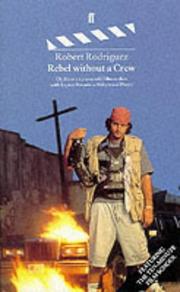
Rodriguez's diary of making El Mariachi for $7,000 is the definitive case study in ultra-low-budget ingenuity. It closes the curriculum by proving that constraints are creative fuel, not excuses.
Discussion
Keep reading
Paths that share books, cover the same subject, or open a related topic.