Cinematography: an ordered reading path to shooting cinematic images
This curriculum takes a beginner from the fundamental language of the moving image all the way to advanced lighting theory and personal visual style, building in four deliberate stages. Each stage assumes the vocabulary and intuition of the one before it, so reading in order is essential — you'll move from seeing like a cinematographer, to operating like one, to lighting like one, and finally to thinking like a master of the craft.
Foundations — Learning to See
BeginnerDevelop a cinematographer's eye: understand visual grammar, shot composition, and how images communicate emotion and story before touching a camera.
▸ Study plan for this stage
Pace: 4–5 weeks, ~25–30 pages/day. Start with "The Visual Story" (weeks 1–2.5), then "Film Directing Shot by Shot" (weeks 2.5–5). Allow 2–3 days per week for exercises and review.
- Visual grammar: how line, shape, color, and value create meaning and emotional tone independent of narrative
- Composition and framing: rule of thirds, depth, balance, and how camera placement guides viewer attention
- Shot types and their psychological effect: wide shots establish context, medium shots create intimacy, close-ups demand emotional engagement
- Continuity and spatial relationships: how editing and shot sequencing maintain clarity and control pacing
- Blocking and camera movement: motivated movement that reveals character, advances story, and maintains visual clarity
- Light and shadow as narrative tools: how contrast, direction, and quality of light shape mood and hierarchy
- The director's visual language: developing a consistent visual approach that serves the story and characters
- How do line, shape, color, and value communicate emotion and meaning without dialogue or plot?
- What is the difference between a wide shot, medium shot, and close-up, and what does each tell the viewer emotionally and narratively?
- How does the rule of thirds and compositional balance guide where a viewer's eye goes in a frame?
- Why does camera movement need to be motivated, and what happens when it isn't?
- How do you maintain spatial clarity and continuity when cutting between shots of different sizes and angles?
- What role does light direction and contrast play in establishing mood, hierarchy, and visual storytelling?
- Visual grammar study: Collect 10 film stills (from films or online) and annotate each with the dominant lines, shapes, colors, and values present. Write one sentence on how each element creates emotional tone.
- Shot composition analysis: Watch 3 scenes from different films (5–10 minutes each). Pause every 10 seconds and identify the shot type, framing choice, and what the composition reveals about character or story.
- Blocking and movement: Choose a simple scene (dialogue between two characters). Sketch 4–6 different camera positions and blocking arrangements. Write why each choice would change the viewer's relationship to the scene.
- Continuity mapping: Take a 2–3 minute scene and create a shot-by-shot breakdown showing camera angle, shot size, and character position. Identify how spatial relationships are maintained across cuts.
- Light study: Find 5 images (film stills, photography, paintings) with strong directional lighting. For each, describe the light source direction, quality (hard/soft), and how it shapes mood and visual hierarchy.
- Original composition exercise: Photograph or sketch 8 different compositions of the same subject (a person, object, or space) using different framings, depths, and angles. Reflect on how each composition changes the viewer's emotional response.
Next up: This stage equips you with the visual literacy and compositional thinking needed to move into pre-production planning and technical execution—understanding *why* you'd choose a shot before learning *how* to light, focus, and operate the camera.
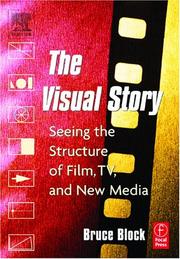
The single best starting point for any image-maker — Block breaks down every visual element (line, shape, tone, color, space, movement) into clear principles that apply equally to film and photography. Reading this first gives you the vocabulary every later book assumes you already have.
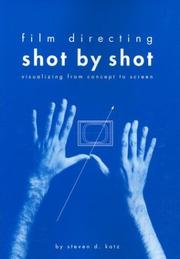
Builds directly on visual principles by showing how individual shots are sequenced into scenes. Katz's storyboard-heavy approach teaches you to think in cuts and coverage, bridging pure composition into the practical language of production.
Camera & Lens Fundamentals
BeginnerUnderstand how cameras and lenses work — exposure, focal length, depth of field, sensor size — and how each technical choice shapes the image aesthetically.
▸ Study plan for this stage
Pace: 4–5 weeks, ~25–30 pages/day. Start with Blain Brown's foundational chapters (Weeks 1–3), then move to Elkins' practical manual (Weeks 4–5) for hands-on reinforcement.
- Exposure triangle (aperture, shutter speed, ISO) and how each element controls light and image quality
- Focal length and its relationship to angle of view, perspective distortion, and visual storytelling
- Depth of field (DoF) as a creative tool: how aperture, focal length, and sensor size determine what stays in/out of focus
- Sensor size and format (full-frame, APS-C, Super 35mm) and their impact on image characteristics and lens behavior
- Lens types (prime vs. zoom, wide vs. telephoto) and their aesthetic and practical applications in cinematography
- T-stops vs. f-stops and why transmission matters in cinema lenses
- Camera-to-subject distance and how it interacts with focal length to shape composition and depth
- Practical camera setup, maintenance, and assistant workflows that protect image quality on set
- How do aperture, shutter speed, and ISO interact in the exposure triangle, and what creative trade-offs does a cinematographer face when adjusting each?
- Explain the relationship between focal length, angle of view, and perspective. Why might a cinematographer choose a 35mm lens over a 50mm for a particular scene?
- What is depth of field, what three factors control it, and how can you use it as a storytelling device?
- How does sensor size affect focal length behavior and depth of field, and why is this critical when choosing cameras and lenses?
- What is the difference between a T-stop and an f-stop, and why do cinema lenses use T-stops?
- Describe the workflow and responsibilities of a camera assistant in maintaining focus, lens cleanliness, and camera settings during production.
- Using a DSLR, mirrorless camera, or smartphone: shoot the same subject at three different apertures (e.g., f/2.8, f/5.6, f/16) and compare depth of field. Document how background separation changes.
- Photograph or film the same scene with three different focal lengths (e.g., 24mm, 50mm, 85mm) from the same camera position. Analyze how perspective, compression, and framing differ.
- Create an exposure chart: shoot a static scene at different combinations of shutter speed and ISO while keeping aperture constant. Identify the exposure triangle trade-offs.
- Lens comparison exercise: if available, borrow or rent a prime lens and a zoom lens. Shoot the same scene with both and compare sharpness, contrast, and light transmission.
- Simulate a camera assistant task: practice measuring focus distance, marking focus points on a lens barrel, and pulling focus manually during a short handheld shot.
- Read and annotate the sensor/format sections in both books, then create a comparison chart of common cinema formats (Super 35mm, digital cinema, full-frame) and their depth-of-field characteristics.
Next up: Mastering camera and lens fundamentals gives you the technical vocabulary and visual intuition to move into lighting and color—the next stage—because you now understand how the camera *captures* light, and you're ready to learn how to *shape and control* it on set.

The most comprehensive beginner-to-intermediate cinematography textbook in print. Brown covers camera systems, lenses, exposure, and color in plain language with clear diagrams — the ideal first technical reference after you've learned to see.
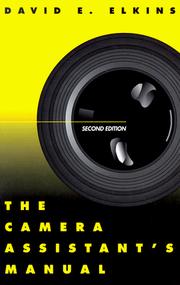
Grounds abstract camera knowledge in real on-set practice. Understanding how a focus puller and 1st AC manage the camera gives you a precise, hands-on feel for lenses, marks, and depth of field that no theory book alone can provide.
Lighting — From Basics to Craft
IntermediateLearn to control and shape light: understand quality, direction, color temperature, and how to build a lighting setup that serves the story and the mood.
▸ Study plan for this stage
Pace: 8–10 weeks, ~25–35 pages/day. Start with Lowell (2–3 weeks), move to Brown (3–4 weeks), then Box (2–3 weeks). Allocate extra time for Brown's technical depth and Box's reference-heavy material.
- Light quality (hard vs. soft) and how it shapes form, texture, and mood—foundational to all lighting decisions
- Direction and angle of light (key, fill, back, side) and their roles in creating dimension and visual hierarchy
- Color temperature and white balance: how to match, shift, and use color as a storytelling tool
- The inverse square law and practical light falloff: controlling intensity and coverage on set
- Lighting ratios and contrast: balancing exposure and mood through key-to-fill relationships
- Practical lighting setups for different scenarios: how to build a rig that serves narrative and technical constraints
- Equipment fundamentals: fixtures, modifiers, gels, and their practical applications in real production
- Continuity and consistency: maintaining lighting across shots, scenes, and production days
- What is the difference between hard and soft light, and when would you choose each for a dramatic scene versus a comedic one?
- Explain the three-point lighting system: what does each light do, and how do you adjust ratios to change mood?
- How does color temperature affect the emotional reading of a scene, and what tools do you use to correct or intentionally shift it?
- Describe the inverse square law and give a practical example of how you'd use it to control light falloff on a set with limited space.
- What is a lighting ratio, and how would you adjust one to create intimacy versus drama in a close-up interview?
- Walk through building a complete lighting setup for a two-person dialogue scene: what fixtures would you use, where would you place them, and why?
- Lowell foundation: Set up a single light source in a dark room with a simple object (sphere, face, or still life). Photograph it from the same angle with hard light, then soft light. Compare the results and note how quality changes form and texture.
- Direction study: Using one soft light, move it through key, fill, back, and side positions on a subject. Shoot at each position and analyze how dimension, separation, and mood shift.
- Color temperature experiment: Light the same scene with tungsten, daylight, and mixed sources. Shoot white-balanced and unbalanced to see how color temperature reads emotionally.
- Ratio building: Create a three-point setup (key, fill, back). Meter the key and fill, then adjust the fill light to create three different ratios (2:1, 4:1, 8:1). Photograph and compare contrast and mood.
- Inverse square law in practice: Place a light at 4 feet from a subject, meter the exposure, then move it to 8 feet and 2 feet. Record the stops of difference and verify against the inverse square law formula.
- Scene lighting challenge: Light a two-person dialogue scene using Box's practical approach—work within real constraints (limited fixtures, practical sources, time pressure). Document your choices and rationale.
Next up: This stage equips you with the technical and aesthetic vocabulary to control light intentionally; the next stage will apply these tools to specific genres, camera movement, and dynamic storytelling scenarios where lighting must evolve and support complex visual narratives.
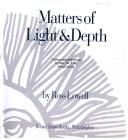
A beautifully written, concept-first guide to lighting by a legendary gaffer and designer. Lowell focuses on the why behind every lighting decision — reading this before technical manuals ensures you light with intention rather than formula.
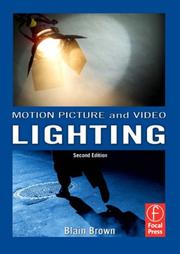
Brown's dedicated lighting volume is the practical companion to his cinematography textbook. It covers every fixture type, grip equipment, and lighting setup with on-set diagrams, making it the go-to technical reference at this stage.
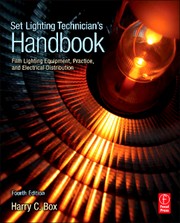
The industry-standard reference for gaffers and cinematographers alike. Reading it after Lowell and Brown lets you cross-reference real equipment and crew workflows against the aesthetic and technical principles you've already internalized.
Visual Storytelling & Master Perspectives
ExpertSynthesize everything into a personal visual language — learn how great cinematographers make creative decisions, collaborate with directors, and use image to carry narrative meaning.
▸ Study plan for this stage
Pace: 8–10 weeks, ~25–30 pages/day (with breaks for reflection and practice between books)
- Light as a narrative tool: how contrast, direction, and quality of light shape mood, character, and story (Alton's foundational principle)
- Composition and framing as meaning-making: using depth, lines, and spatial relationships to guide viewer attention and reinforce themes (Mercado's visual grammar)
- The cinematographer's collaborative role: translating directorial vision into visual language while maintaining artistic integrity
- Intentionality in every frame: eliminating visual noise and making deliberate choices that serve the story (Bresson's minimalist philosophy)
- Visual continuity and coherence: developing a consistent visual language across sequences that reflects character, setting, and emotional arc
- The psychology of the image: understanding how viewers read visual information and how to use this to create emotional and narrative impact
- Technical mastery in service of storytelling: knowing when and how to use camera movement, lenses, and lighting to enhance rather than distract from narrative
- How does Alton use light direction (key, fill, back) to create psychological depth and reveal character? Provide a specific example from a film you've studied.
- What is Mercado's definition of visual storytelling, and how does composition (framing, depth, lines) communicate narrative information without dialogue?
- How does Bresson's concept of 'cinematography' differ from conventional filmmaking, and what does he mean by 'using the camera as a tool of discovery rather than description'?
- Describe a moment where you would make different lighting, framing, or compositional choices than a conventional approach, and explain how your choice serves the story better.
- How do the three authors' philosophies complement or challenge each other? Where do they align on the role of the cinematographer?
- What is your personal visual language emerging from these texts? What are your signature choices in light, composition, and camera work, and why do they matter to you as a storyteller?
- Lighting analysis: Watch a scene from a classic film (e.g., Citizen Kane, The Third Man, or a Bresson film). Diagram the light sources, identify the key/fill/back light setup, and write a paragraph explaining how the lighting choices reveal character psychology or advance the plot.
- Composition breakdown: Select 5 shots from 'The Filmmaker's Eye' examples or from a film you admire. For each, identify the dominant compositional principle (leading lines, depth, rule of thirds, negative space, etc.) and explain what narrative or emotional information it conveys.
- Reframe an existing scene: Take a scene from a film and sketch or describe 3 alternative framings/lighting setups. For each, explain what emotional or narrative meaning changes, and which choice you believe serves the story best and why.
- Minimalist exercise (Bresson-inspired): Plan and shoot a 1–2 minute sequence using only natural light, minimal camera movement, and deliberate framing. Write a brief reflection on what you had to eliminate and why each remaining element was essential.
- Collaborative translation: Read a short script excerpt and write a detailed cinematography plan (lighting approach, key compositional choices, camera movement) that interprets the director's vision. Annotate your choices with references to concepts from all three books.
- Visual language statement: Write a 500–750 word personal cinematography manifesto that synthesizes Alton's lighting philosophy, Mercado's compositional grammar, and Bresson's minimalism. Include 2–3 specific examples of how you would apply these principles to a project you want to make.
Next up: This stage establishes your personal visual language and decision-making framework, preparing you to apply these principles in real-world production contexts—whether through advanced technical studies, genre-specific cinematography, or collaborative case studies with working cinematographers.
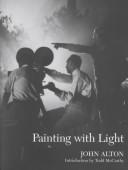
Written in 1949 by one of Hollywood's greatest cinematographers, this is the original master-class text on using light as a dramatic tool. Its poetic, opinionated voice challenges you to think about light the way a painter thinks about a brush.
Mercado analyzes real film frames shot-by-shot, explaining the compositional and psychological reasoning behind each choice. At this advanced stage it acts as a capstone — testing whether you can now read and justify cinematic images at a professional level.
A short, aphoristic masterwork by one of cinema's most rigorous directors. Reading Bresson last strips away every technical comfort zone and forces you to ask the deepest question of the craft: what is the image actually for?
Discussion
Keep reading
Paths that share books, cover the same subject, or open a related topic.